Archive
ST Vincents and the DUCTULATOR
After a blogging space I thought I’d let you all know what I’m up to. Shortly before Christmas I finished with John Holland and moved across to the Sydney office of Norman Disney and Young, Norman Disney and Young are a services design consultancy that cover the full spectrum of services consulting (hyd, Fire, Mech, Elec, Comms etc…) and employ 600 employees spread over about 13 offices worldwide. For the time being that includes Ollie in Perth an Me here in Sydney.
My main project at the moment is the Mechanical Services design development of an extension/newbuild and refurbishment of a private hospital in Sydney. The refurbishment includes 5 floor of wards with some 40 beds per floor in an existing 70s built hospital, upgrading the existing to ensure the design is code compliant. The seventies seem to have been a laisse faire time over here with respect to building design and the upgrade includes upgrading of the fire and exhaust systems, as well as upgrade of all he Mech plant. Staged in such a way that the hospital can remain open while the work is done, taking out 2-3 floors only at a time, which poses SIGNIFICANT design constraints. The slab to slab of the existing hospital is 3 metres, with the slab 300mm ‘waffle’ type construction. The ceiling heights are required to be 2.4 meters which gives only 300 mm ceiling void to run all services.
The second part is the construction of a new 14 storey hospital extension. which I am currently developing the Mechanical design for. The building has a number of different uses, all of which help make the design a real headache. The basement is a Laundry, the floor above is a canteen, then office space, operating theatres and the associated sterile spaces, wards, and the top 3 floors are consulting suites for private consulants, all on a floor print of less than 100 square metres.
The design development is due around April which should keep me busy, and NDY is also leading on Electrical and Fire design for the same project, so i’m intending to get some experience in both these areas as well.
Duct Design
For all you E&M 56s out there, I wanted to let you know about the Ductulator! Having struggled to get to grips with the constant friction loss method of duct sizing, I wrote a TMR last year going into detail of Friction loss duct sizing approach verses static regain, so I fully understood the process. It turns out there is an easier way:
Step in the duculator:
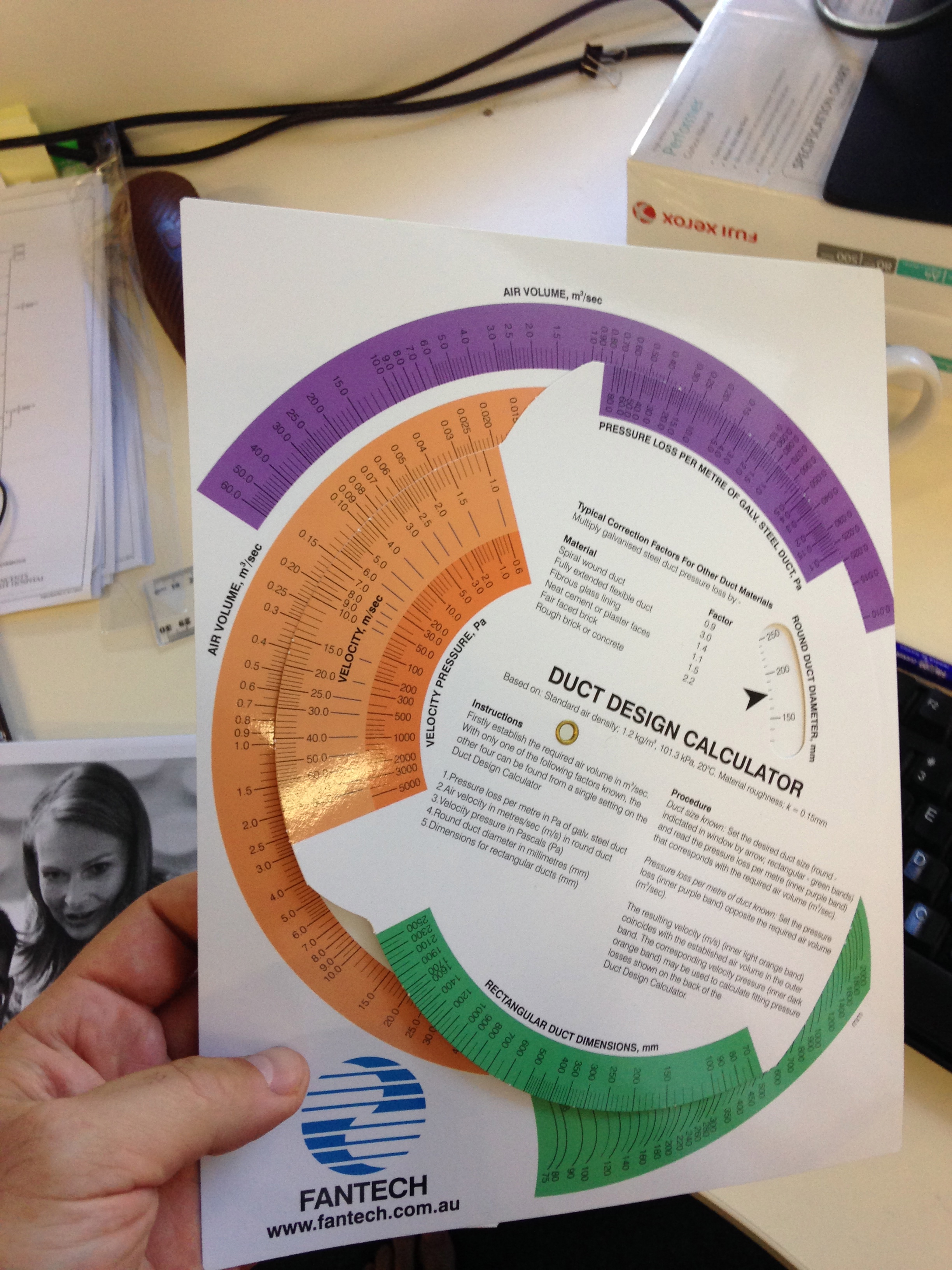
This simple but effective bit of kit is, apparently an essential on any self respecting Mech designers desk. As I’m not a self respecting Mech Designer I stole this one. It uses the friction loss method for duct sizing, to give rough duct sizes. how it works –
1. Rotate the dial to compare velocity verses volume flow rate – The orange part of the dial,or pressure loss per metre against volume (Purple)
2. Read off the associated rectangular duct size (green) or circular duct size (white)
3. Go make a coffee, you’re done.
Design calcs may be required further down the line but for design in principle this works a treat. available from all good TECHnical FAN suppliers.
In other news
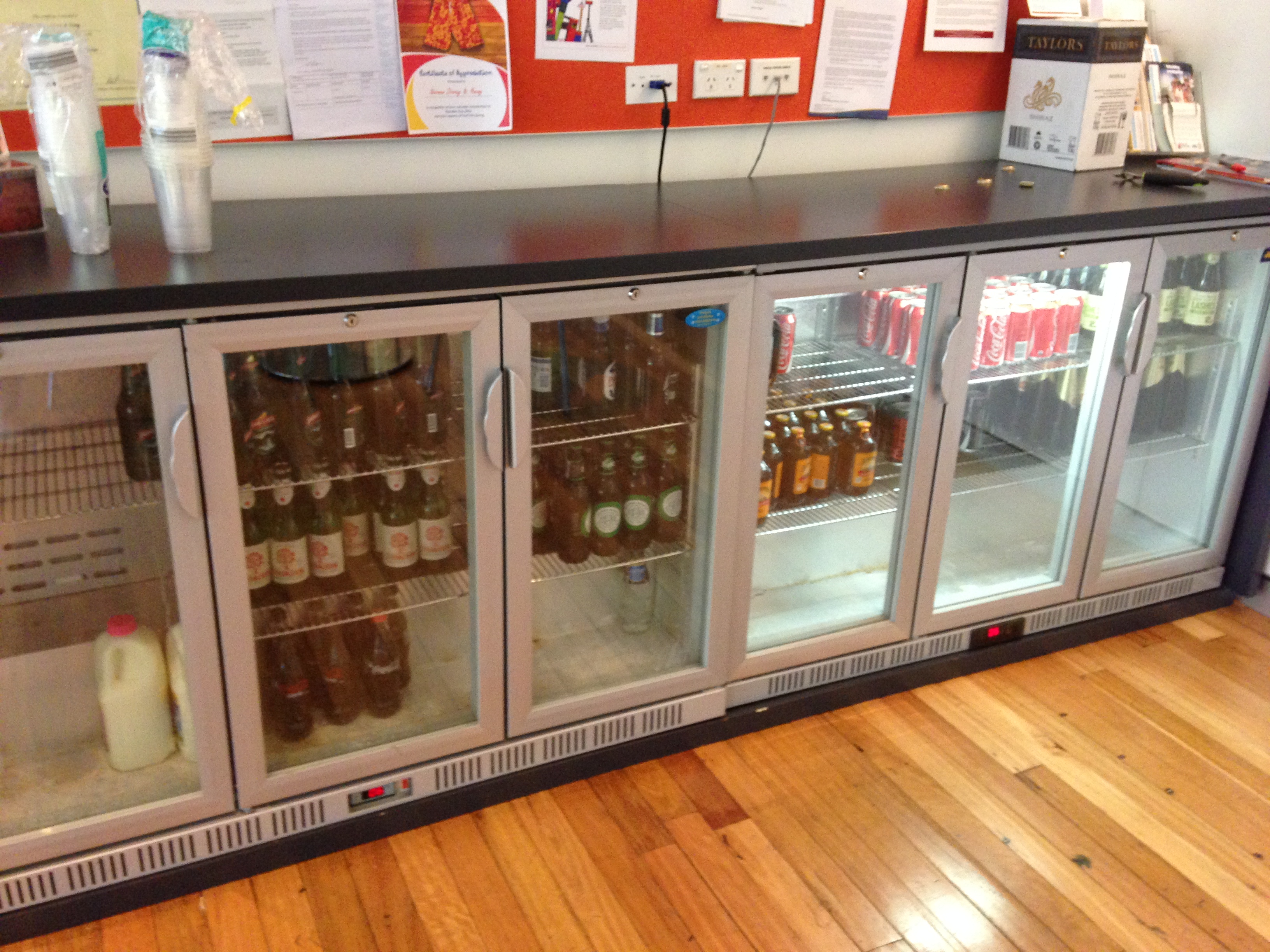
Australia is still awesome. And the consultants here have a friday afternoon beer fridge.
Topped out Aerial shots.
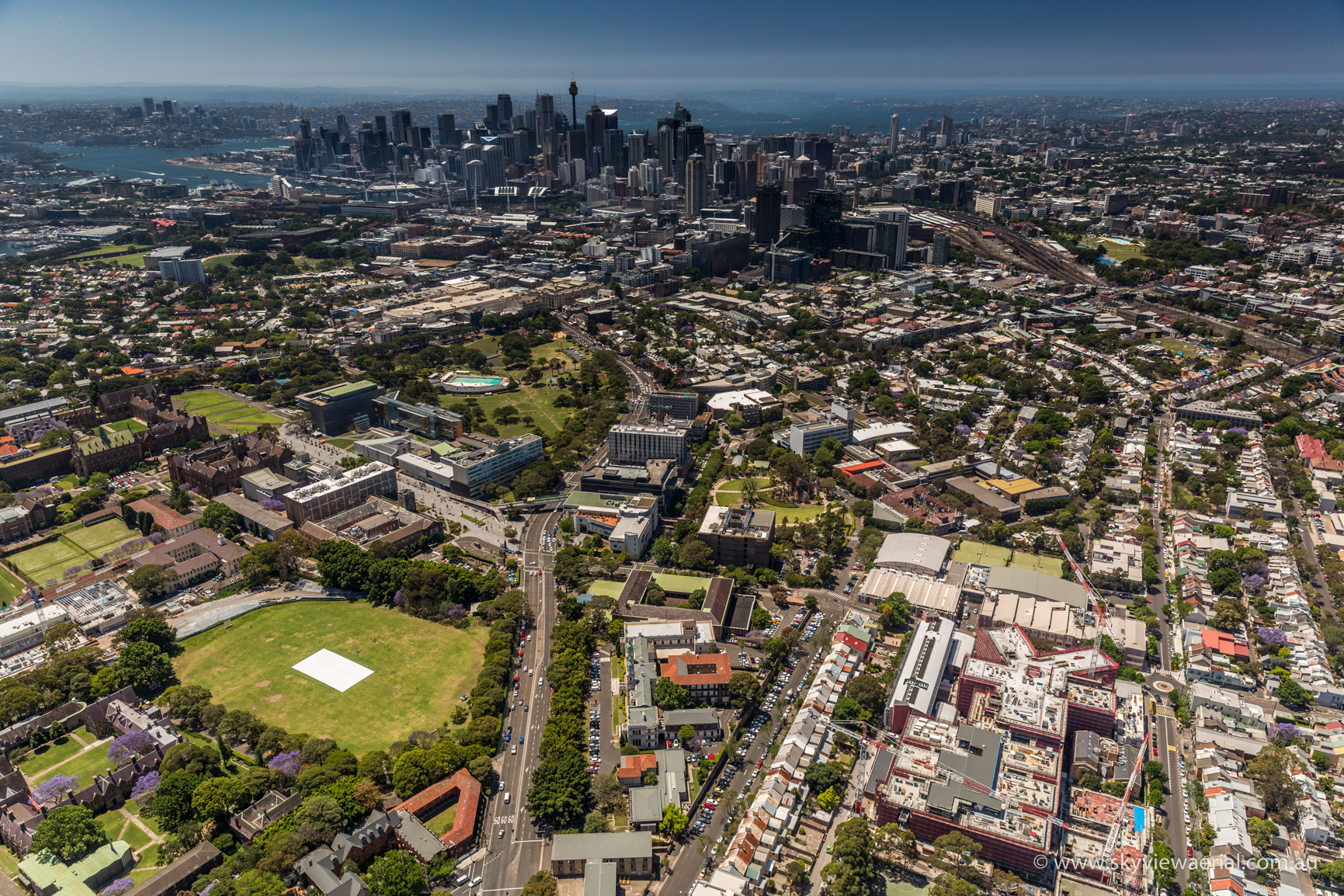
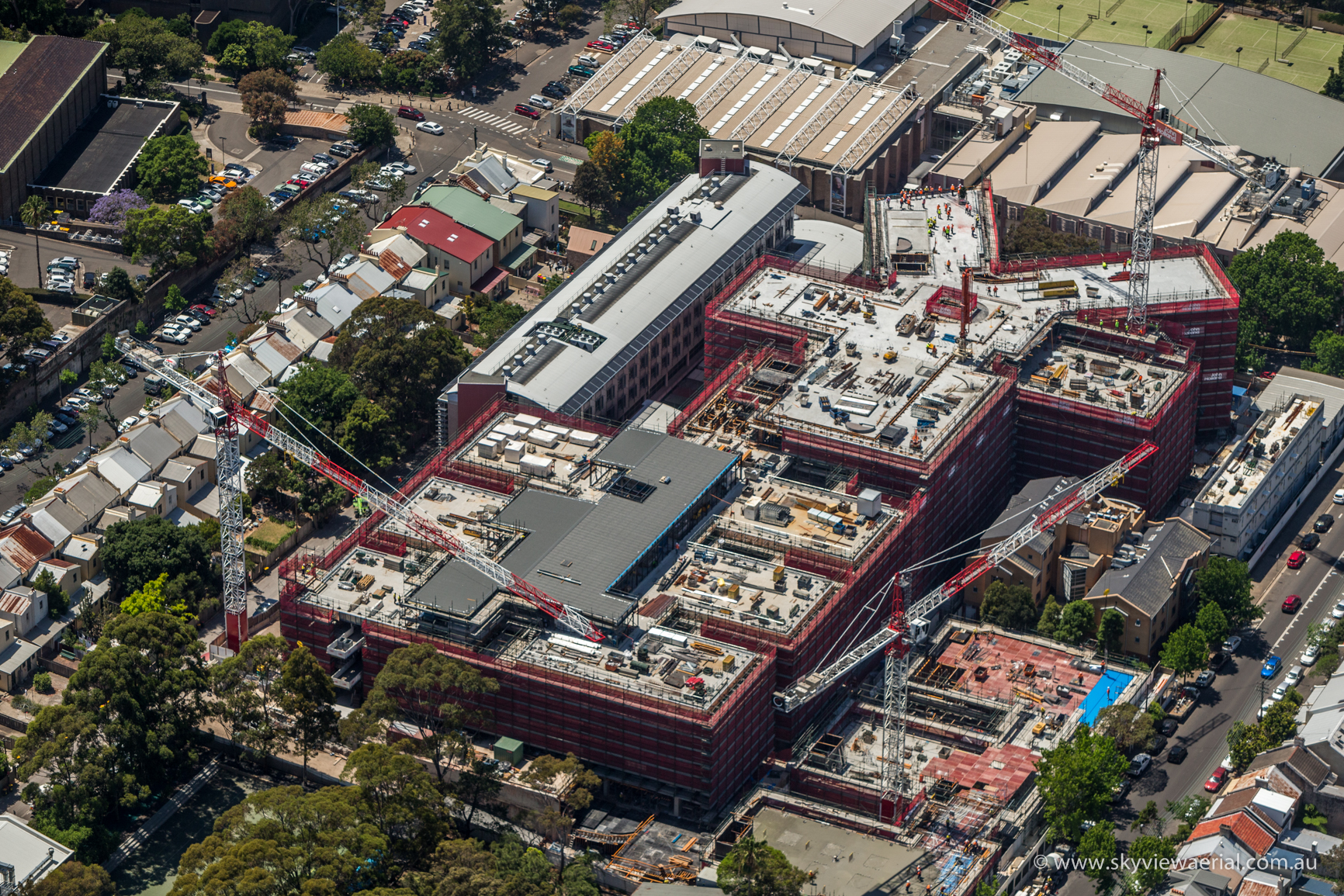
The work site is in the bottom right corner
Back to Blog.
Noting that it’s been a while since i blogged. I intend to use a number of blogs to comment on what I’ve been doing, using this first one as a general comment on the project progress before highlighting specific engineering issues in the next couple.
This week has seen some significant milestones for the Abercrombie business school, allowing opportunity to reflect on a number of issues.
1. Main Structure Topping Out.
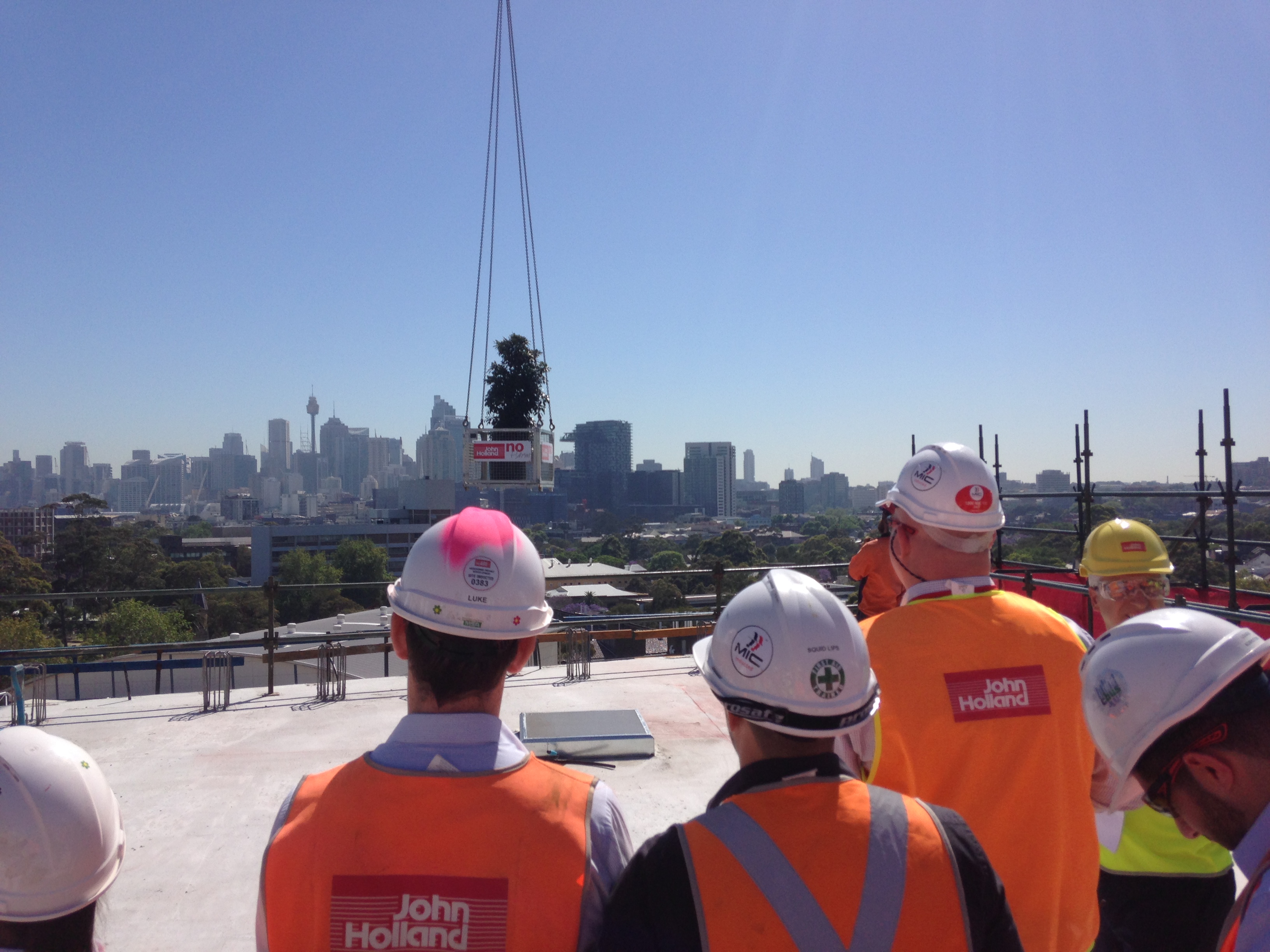
After many months of blood sweat and tears the final concrete pour for main structure of the Abercrombie Business school occurred last wednesday, with a topping out ceremony on Friday Morning, with guests and dignitaries from the university, John Holland and the Army of consultants and architects employed on the job. with a floor plan of 7000 square metres, 6 floors above ground and 3 basement floors and considering the partial deck collapse experienced earlier this year, as well as inclement weather and this has been no small achievement considering the first on ground slab was poured on 17th December last year. That having been said, the project is no running approximately 4-5 months behind schedule.
From a services perspective topping out is excellent news, Largely due to the fact attention and focus for resources will now switch fire to fit out, with access available to all floors expected in a week or so, following the full stress of the top deck and formwork stripping below.
2. HV Substation Structure Handover to Ausgrid (National Grid)
From a services perspective, achieving handover of the HV substation structure to Ausgrid to begin HV fit out has been a personal and services team victory. With superstructure of the business school running so far behind schedule a deal was struck between clients and John Holland team, that if the structure could be finished by the end of September all LDs could be waived. As a result all formwork and concreting resources had been focussed somewhat myopically on structure (and still not achieving the september deadline – LDs are now in negotiation) , whereas the actual Critical path of the project ran through the substation ‘Power On’ date, in order to achieve commissioning timelines and meet the new extended deadline. Similarly getting the project team to understand that pushing the completion of internal elements of the structure such as Main switch rooms and comms rooms will ultimately cut large chunks of time out of the overall program, allowing staggered handover of comms rooms to the university for their own fit out teams to commission, significantly reducing the deadline to commissioning.
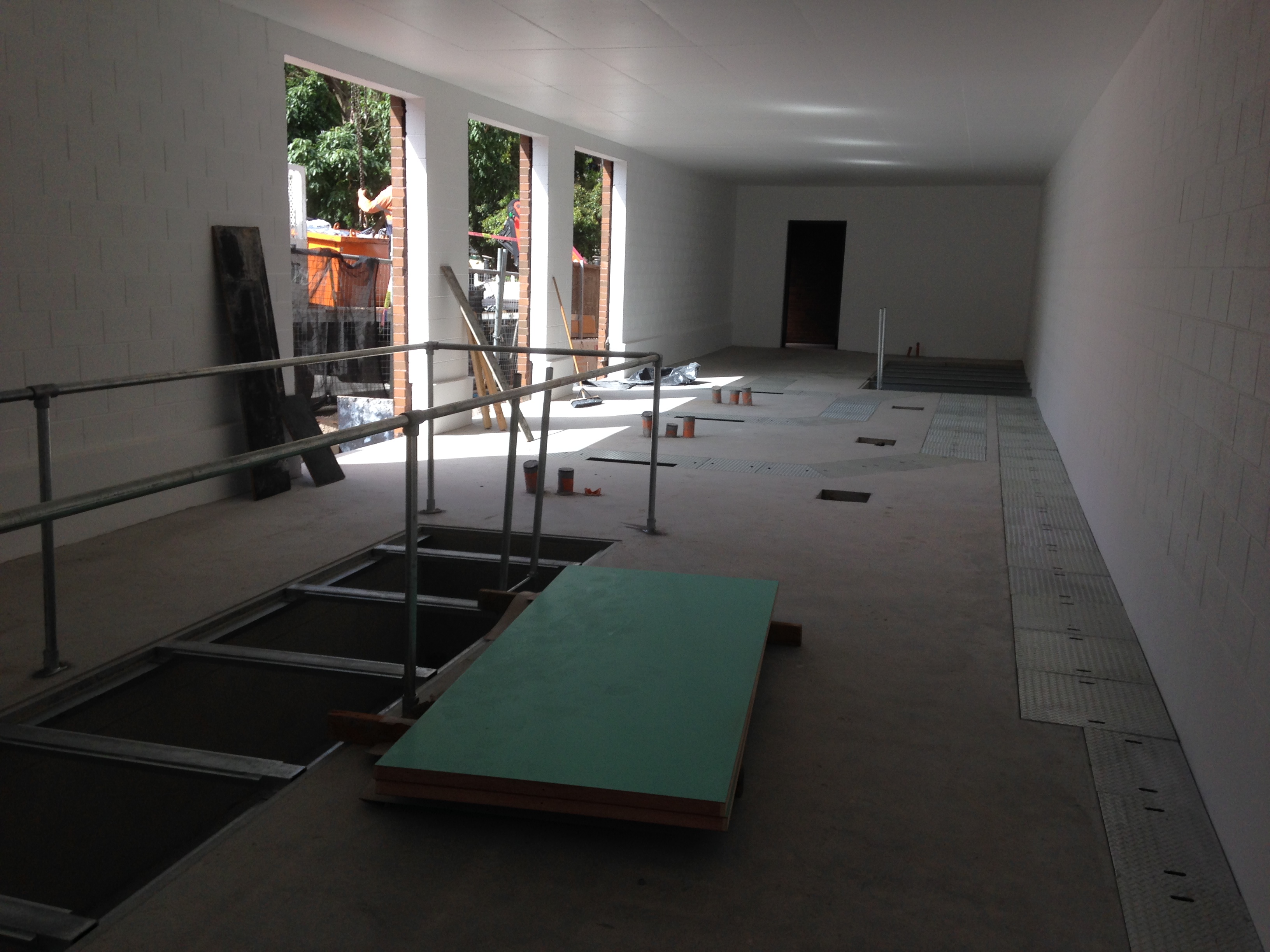
The Internals of the new business school HV substation prior to handover
 Main LV switch room
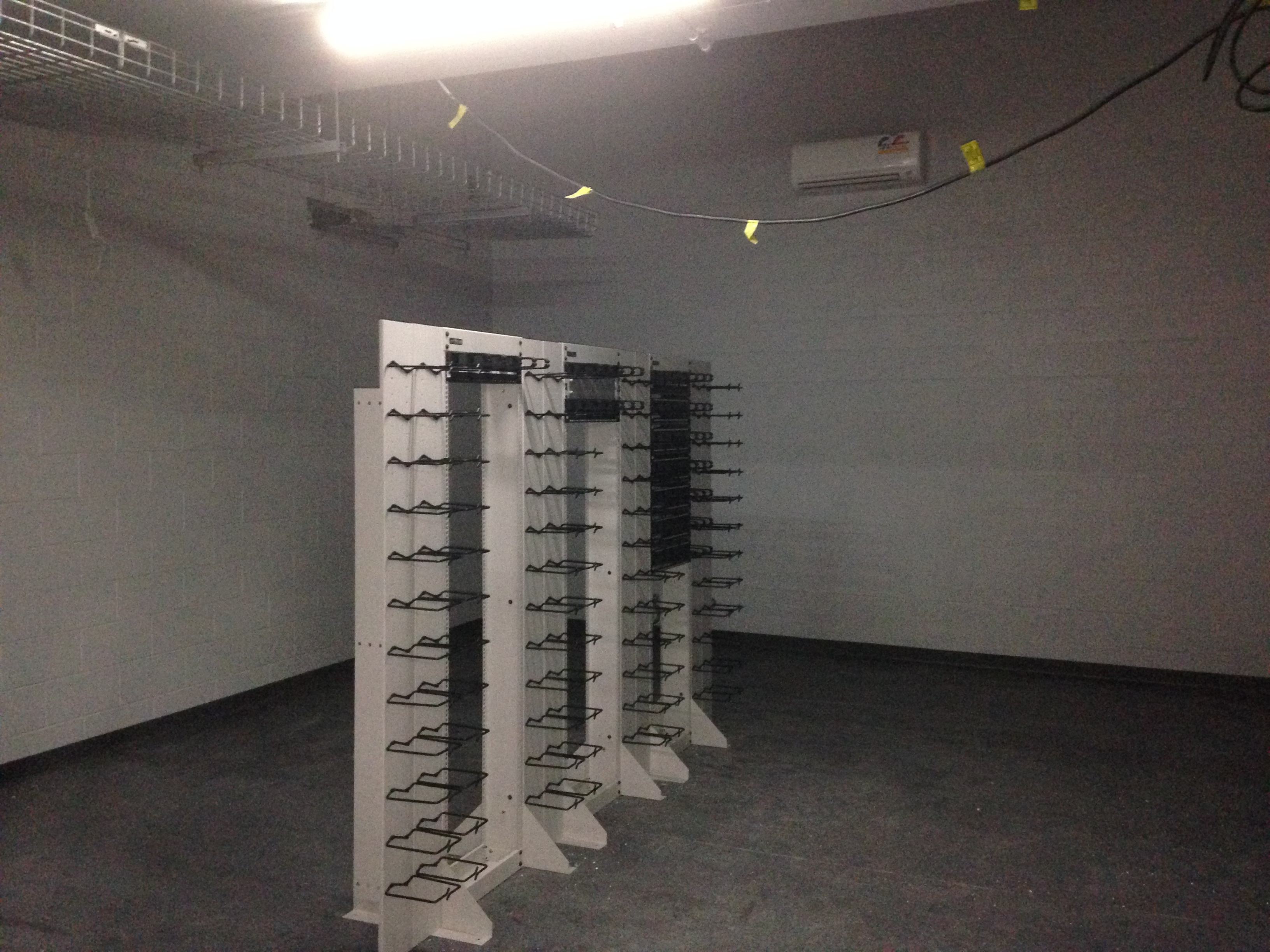 Main Comms room
3. Variety of project involvement.
While admittedly the bulk of activity has been focussed on structure, that does not mean to say that throughout the bowels of the building Services have not been busy. The scale of the Abercrombie business School project has meant that I have received what I feel is good exposure to a whole range of disciplines Including but not limited to coordinating all the Mechanical, Hydraulic, drainage, stormwater and sanitation, as well as heavy involvement in Electrical, including various H&S policies and Method statements. I have been running the services subcontractors meeting and assessing progress claims for sub contractors, as well as acting as the main services point of contact for construction related issues as well as services related QA and defecting. Fortunately for me, culturally, the project team here have been welcoming, as early on in the job a long serving but relatively junior services engineer left the job, allowing me to step into his role.By my calculation, with accommodation costs taken into account I represent a $150000 annual saving to the project on salary alone.
That having been said, as I’m sure Ben and Ollie have found, early negotiations with the project director over working hours, accommodation costs etc, had to be handled delicately as there is really no passage of information between JH head office and the projects as to what to expect from a PET student. The benefits to this is that following early frustrations you can carve out a direction for yourself. An early interest in BIM has meant hat I have ended up largely taking on delivery of a ‘BIM 360’ solution – BIM Models downloaded to Ipads to allow remote access on site, for defecting and as builting the BIM model, and last week I spent two days with our BIM consultant learning how to assemble the overall design model from the subcontractors designs, publish, clash detect and issue direction to the designers for completion of the 3D design, with a view to me taking on responsibilities for the completion of BIM Coordination for the last few turns of the handle. My line manager seems to be as focussed on my development as contributing to the project, and as a result has arranged for me to shadow the commercial team for a few days later in the month.
Now i have returned to the Blog, my next post will focus on some of the actual engineering issues that I have encountered however I will finish this one by just commenting on how Impressed I was at the breadth of disciplines encountered during phase 1 I have actually received exposure to so far, including the civil and project management aspects. A shortcoming would be Comms equipment and infrastructure, Understanding that in our world the technicalities of such systems will be handled by the Corps Signals, but with the volume of IT systems likely to be encountered a working knowledge of IT infrastructure may be of some use, at the expense of the depth of detail of others disciplines.
When Deck Pours go Bad
So I’ve had a request from one of you excited civils out there to expand upon my throw away comment this morning about a deck collapse on site. I should have known that simply mentioning a concrete pour would have caused a ‘Civil Twitch’
Three days before a site closure for the Easter long weekend a concrete deck pour had been scheduled. In the region of 300m^3 were scheduled to be poured on a deck half suspended over a previously poured concrete slab and half over formwork suspended off a sloped batter. Halfway through the pour the formwork gave way and a partial deck collapsed occurred causing the site to be evacuated and effectively closed for five days.
No one was injured during the incident – Through the use of exclusion zones and Partially due to the fact that the collapse occurred half an hour before a scheduled evacuation rehearsal – The site staff had been prepped and ready for an emergency drill.

Concrete deck pour complete with undersigned additional ventilation/ natural lighting
Investigation into the incident uncovered a number of key failings which led to the deck collapse:
1. The Pre pour formwork inspection by an engineer had occurred a number of days before the pour.
2. A significant amount of rainfall had occurred the night before the pour – enough to cause standing water in the basement of the project– changing the condition of the batter upon which the formwork supports had been placed. (effectively the surface of the batter had water running down it, an
3. The ‘shelves’ cut into the batter to place the formwork supports on were insufficient to distribute the load
4. No post rain, or pre pour inspection occurred the morning of the pour (no Question 2.4 moment, Has the situation changed?)
The result? an industrial investigation, union action, a new site manager and add 4 weeks and thousands of dollars to your program please!
Abercrombie Update
Life at the Sydney business school build has been suitably hectic, hence my recent lack of blogging, For which I thoroughly apologise. A deck collapse on a concrete pour before Easter put the construction program back 3 -4 weeks and ended the reign of the somewhat haphazard site manager. The new site manager has been keen to drive things forward in terms of remediation and it has been all hands to the pump in order to attempt to recover lost time.
Tasks that have been added to my gradually growing portfolio of responsibilities has been the running of the services section of the weekly site subcontractors meeting – deconflicting issues between the subcontractors on site and managing the services portion of the four weekly program in conjuction with the site foremen. As the vertical of the building increases (The western end of the building is due to pour the first slab of the top floor later this week) and formwork is removed from the lower levels, access for services trades has opened right up and managing the trades in the lower levels has become a real challenge,- The application of deconfliction is apparently a new concept! The value of careful (military esque!) sequencing and programming is being demonstrated to the organisation and is gathering momentum. Construction of the higher levels of the building has also required me to design and arrange the installation of temporary, charged fire hydrant and hozereel systems for the lower floors in order to meet increasingly stringent health and safety requirements during construction.
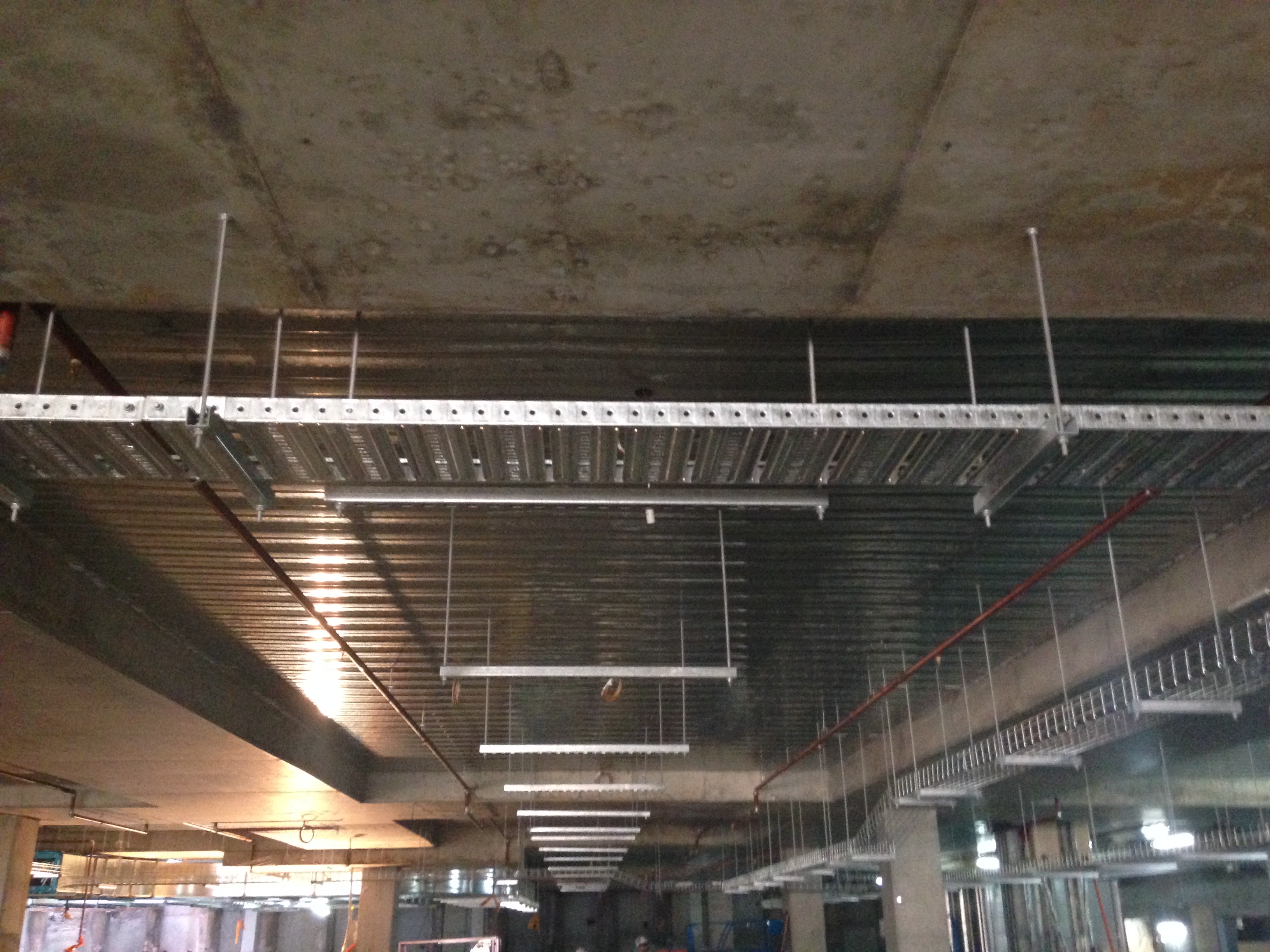
Services ‘Flying in’
This week saw the last slab on ground pour for the main building of the business school, a momentous occasion which has meant that across the site we are no officially ‘Out of the Mud’ which means for the most part that I can begin to stop being concerned (as Angela is) at the risk of In ground services strikes. This is less the two big ones which are coming up – Undergrounding of overhead power cables in the streetway (a seemingly innocuous task less, were it not for the fact that the area in question is a minefield of existing services including a number of high pressure gas mains) and the construction of a new chamber HV substation, in an area that has had temp 3 phase power for one of the sites tower cranes run through the ground. Needless to say I’m heavily involved in designing the methodology for both these tasks.

Apparently, There is going to an HV substation in there one day.
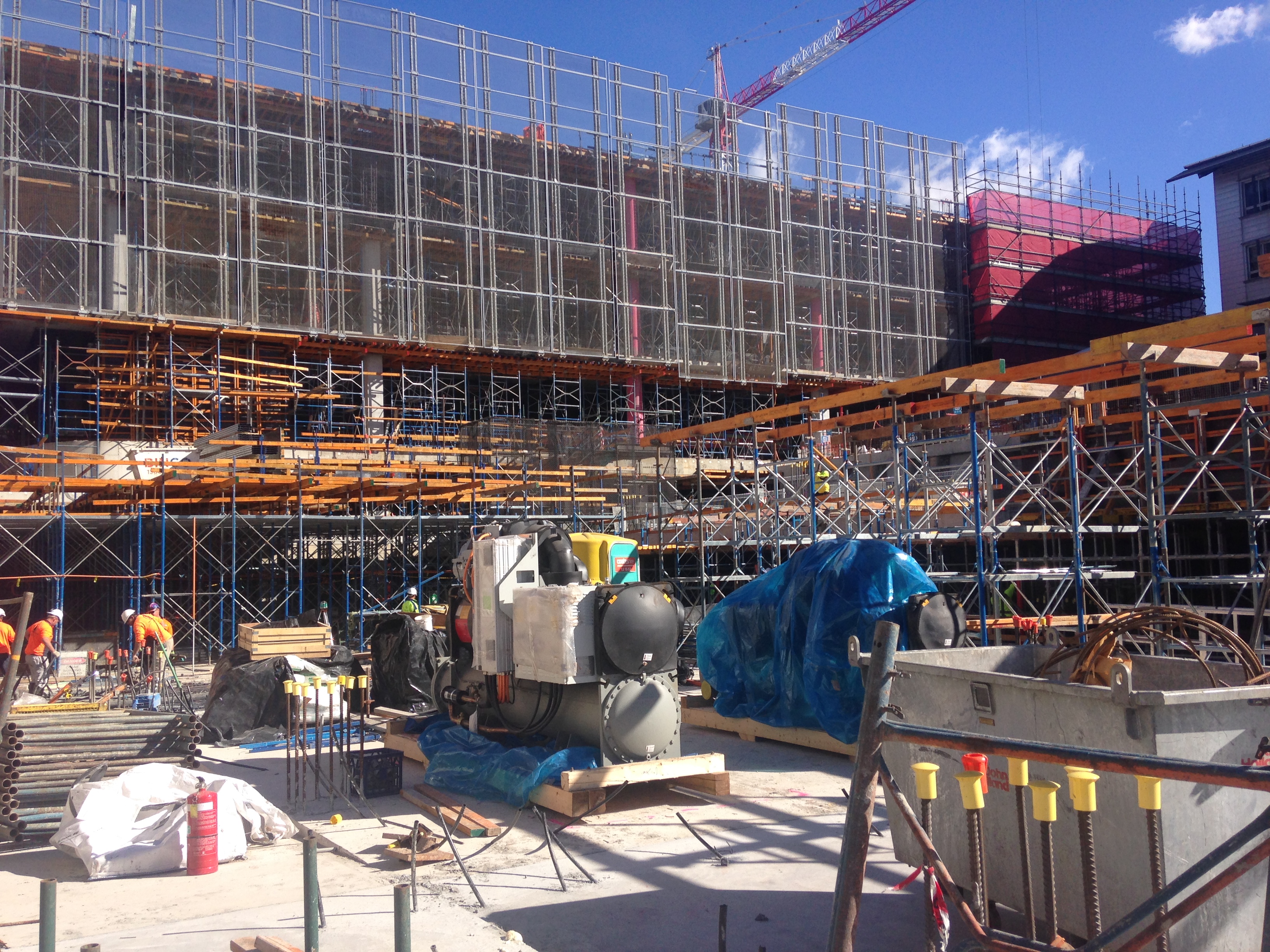
As the building goes up storage for plant and equipment becomes tight. Arrival, unloading and storage of 8 ton chiller required careful planning.
Procedurally I have had my hands full as well – Reviewing and rewriting the Site’s electrical works management plan as well as Activity Method Statements for the installation of services (The overarching Health and Safety Framework for the services installation).
Quality Assurance and problem solving on site continue apace. Delays to the BIM 360 role out has meant that clash detection, recording and solving on site as the services trades role through the building has been undertaken manually, with myself as the primary conduit.

Pressure testing of Ductwork to ensure stringent university and not so stringent SMAKNA standards are met.
The entire services team has now relocated to site, and while the other two members of the team continue to be focussed on completing the design, my focus remains primarily on the construction as well as being the main mechanical services engineer. This will expand over the coming weeks as the Services Manager goes on a 5 week holiday, next Friday, and as a result a gradual hand over of responsibilities has begun to myself and the AV and commissioning Engineer. Sink or swim time. Watch this space!
Sappers in the Sydney
So with the definition of a time to Blog being the advent of a significant occurrence, and having conquered the mountain of post arrival in Australia administration (and having done as much sightseeing as I can bear for the time being) I thought it time to get involved.
Overview
I have been immersed in the (currently) 3 strong Services Delivery team for the University of Sydney Abercrombie Precinct Redevelopment project. The project is a $180 million Design and Construct of a new world class business School to house over 5000 students. Tendering was completed in early 2013 and construction started on site in Summer 2013. The Abercrombie Precinct redevelopment is the single largest increase in teaching space at the university since the 1960s and represents part of a redevelopment and expansion plan for the University that is expected to be worth > $1 billion over the next ten years. John Holland are keen to perform over the coming months in order to potentially win additional business and a slice of that $1billion
Consisting of 3 below ground floors and 6 above, Earthworks remain ongoing however the bulk of excavation of basement levels was complete in late, 2013 with construction originally scheduled for completion in Dec 14, however this is unlikely to be met owing to recent events which I will elaborate on later. In Nov 13 John Holland tendered for and won a $30 million variation to the contract to build a 3 story student accommodation block adjacent to the site. Demolition for works to start on the Student accommodation project began this week.
In terms of services the building includes
◾a 550-seat lecture theatre
◾three lecture theatres (300 seats each)
◾eight 100-seat case study rooms
◾40 seminar rooms of varying size
◾a learning hub
◾1500sqm of informal learning space
As a result AV plays a large part in the design, on top of the conventional Mechanical and Electrical Services (including AirCon) all designed to meet stringent 5 ‘Green Star’ Australian environmental standards.
Construction on a tight site has presented it’s own challenges. The site is hemmed in on three sides by university computer Sciences building (H69), privately funded university accommodation / college, and a public primary school. Access to the fourth side of the site is limited by the presence of a listed Blue Australian Gum Tree, which the planning office has said cannot be removed from site and is forming part of the architectural design of the building. Staged construction is taking place from one end of the site to the other and the Limitations on ingress and egress routes mean that careful planning must be undertaken on a daily basis. The below video highlights the phased construction of the facility, layout and access issues. .
![IMG_1595[1]](https://pewpetblog.com/wp-content/uploads/2014/04/img_15951.jpg)
A cramped site that is hemmed in on all sides makes for multiple trades working on top of each other.
![IMG_1596[1]](https://pewpetblog.com/wp-content/uploads/2014/04/img_15961.jpg)
Possibly the most expensive tree I have ever seen – An Australian Blue Gum worth $250000 to the client in LDs if it is damaged.
Design Philosophy
Until last week the construction of the business school was expected to be running approximately 3 weeks behind schedule. The design for the Business school has been subcontracted to a consultancy called Kannefinch, who are continuing to develop the design in conjunction with specialist subcontractors, over seen by John Holland engineers. This means that for the bulk of the three weeks I have been on Site, the Services manager and other Services Engineer have been based out of the design office in central Sydney. A holistic approach to design has been undertaken with the entire design (including Services) being modelled in BIM 360 from the outset (a first for the design team and contractors employed, if not John Holland as a whole) as opposed to as built drawings being used to design and manage the ongoing building life. This has presented significant challenges, not least the requirement for subcontractors to become conversant with the new software, but has allowed multiple advantages – The design can evolve while construction is underway, with designs for the higher levels of the building being undertaken with work underway on site, reducing overall design to construction time. Weekly clash detection meetings between the design team highlight areas that will cause issues, which are resolved on an ongoing basis. An example of this would be a significant conflict between the volume of air that is required to be moved by the Air conditioning system (against strict University Guidelines) verses the ceiling space that is available to house ductwork, which is governed by the usable space and limits on the building height. By having the entire design team attend clash detection meetings, including the structural engineers, design solutions could be achieved that included ‘notching of beams’ (highlighted well before the beams are poured and with the approval of the structural engineers)
As a result the remaining two members of the services team are continuing to be involved in design refinements, and are expected to move from the design office to the task site within the next week.
Tasks so far
My role so far has been as the Services Engineer on Site, replacing the previous Site services engineer who left the job last week, and whom up til now I have been conducting handover training with and attempting to extract as much information from as possible. With slab pours for the various floors ongoing my work so far has been focussed around quality assurance, designing and carrying out Inspection and Test Plans (ITPs) for services penetrations in slabs, and highlighting areas where the Formwork has been incorrect. I have also been involved with ground penetration permits and authorising permits to dig, looking for and testing for existing in ground services, as well as reviewing air conditioning designs for construction detail, allowing the designs to be manufactured and installed rather than the engineering physics of duct sizing (which incidentally has been conducted by the static regain method), and the practical applications of sequencing construction on site.
Aussie life.
It’s not bad. I think i’ll leave it at that, Brendan may have an aneurism if I say any more.
![IMG_1571[2]](https://pewpetblog.com/wp-content/uploads/2014/04/img_15712.jpg)
That’s the view from My flat in Neutral Bay , so New years is sorted, and I cycle to work across SHB everyday, KY has been to stay and I’m even beginning to get the rules of Aussie rules….
That should about do it for my first blog. Watch out for the sequel, coming soon – “When Good Pours go Bad’
 Holdfast Training Services Trial Blog