Headache
Clair Manifold Support Bracing
I have been trying to schedule this small piece of work for the last two months. I originally had it in the plan for December to execute during a well head maintenance period. Due to taking on the Clair coolers and the number of issues we saw at the close of that project, this one wasn’t ready for delivery.
Front End Loading
This particular job is the final part of a larger project to standardise the supports on the production manifold on Clair. Development of wells is such that this had been developed somewhat ad hoc, with each flowline or group thereof being a separate project and therefore subject to different design in the supports. In 2011 the standardisation piece was completed but a Project Change saw the development of additional cross bracing to reduce vibration resulting from the modifications. The vibrations are not so severe as to threaten integrity, but it is something that should really be address when considering preserving the long term integrity of the system.
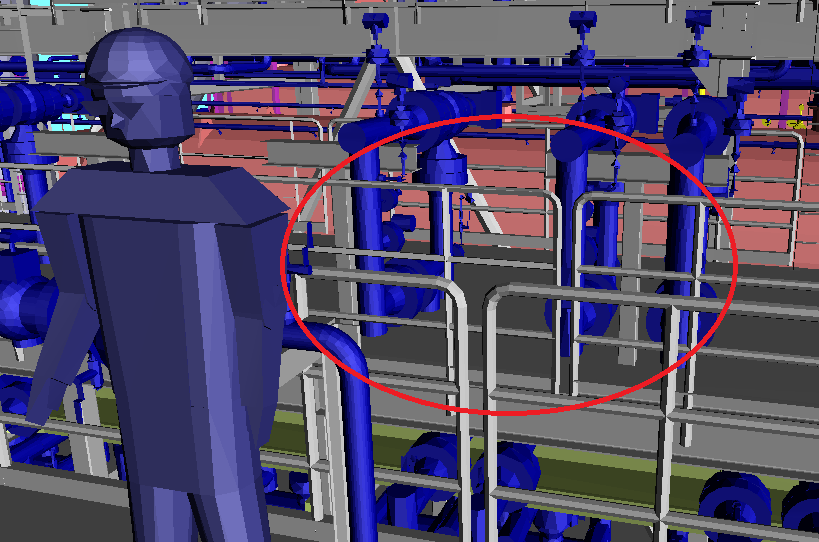
(Above – T support on the production manifold)
(Below – Proposed new bracing to these T supports)
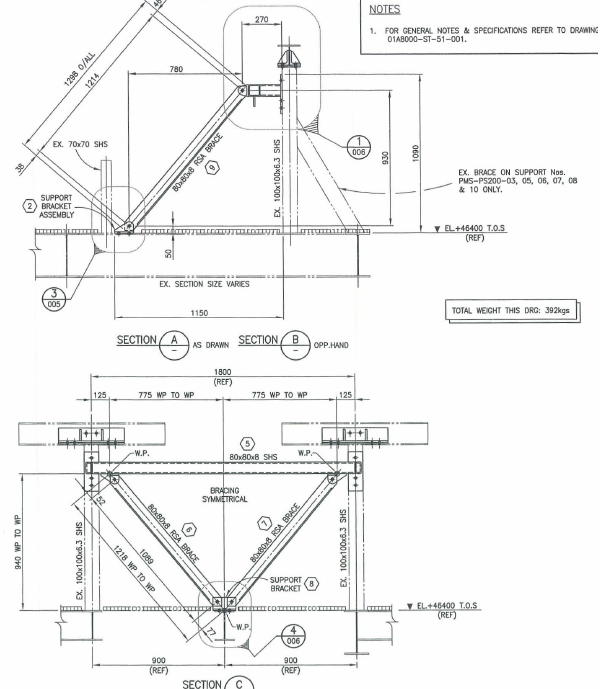
The bracing itself is not the issue, it does not breach containment and is affixed to the primary bracing. It is all drilled and bolted and therefore can be installed during normal production. However, the bracing results in a clash with the existing temperature sensors which requires for them to be removed and replaced with longer stems. The manifold cannot be flowed while these transmitters are removed. A simple probably £20-50k project is stalled because to run it in isolation would cost around a days production, 30,000 barrels at $100….
This part of the wider project was developed as a project change when it was identified that the new supports would not mitigate against vibration effects sufficiently. So the initial Define was not completed properly, that much is clear. This has been compounded because the project change has been developed with no thought to the schedule implications of replacing the transmitters. It is clear from the Workpacks and the WGPSN plan for the work, that an assumption was made that the transmitters could simply be replaced prior to installing the new bracing. I can find no evidence that any other solution was looked at for this problem. I would have thought that connecting the horizontal part of the T supports and diagonals down to the floor from there would avoid any clash and if can’t schedule this project into a planned outage, then I will be recommending that the project goes back into Define to better understand and develop a solution.
Time is Money
The hardest part of this process has been finding the right person to discuss the problem with to identify a way forward. The only planned outages generally fall into the category of TAR (Turn Around) or Wellhead Maintenance. There is no way that this work would get into a TAR, and if it did it would be the first to get thrown out again. The well head maint period is my best bet and they happen about twice a year with individual wells taken off-line for various workscopes to get completed. Clearly, no engineering manager is overly enamoured of the idea that I parachute some extra work into their plan and getting traction with the Wells team has been tricky. I now have the ear of the Wells team lead and I am hoping to get to a definite yes or no (expecting a no).
Bottom Line
This is probably the least important piece of work I have going on at the moment, but it is causing a disproportionately large headache. As an engineer, design should never take place in isolation, even if an SOR or other such mandate imposes project limitations, surely we must be professional enough to look beyond these boundaries for complications that the original author may not have foreseen?
End of the Chapter
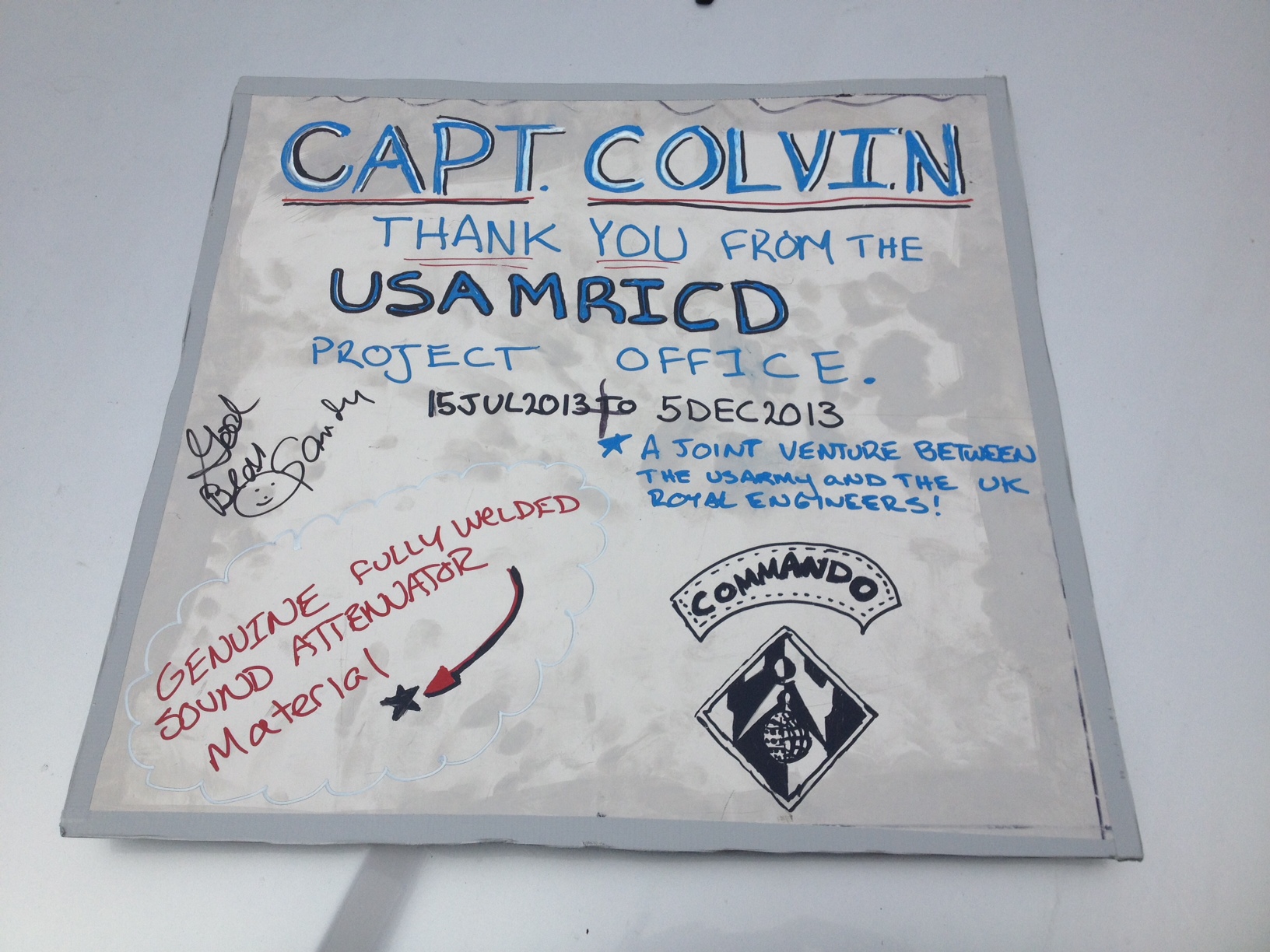
I have just returned from my leaving breakfast having received a presentation piece from the whole office, a piece of a welded attenuator to help remind me of my experience!
 <
<
In the last few weeks I have been winding down and handing over and have the following to report:
Commissioning – Pressure Integrity Testing – The animal holding rooms were checked for air tightness. These rooms are used to hold animals prior to and post testing so they need to be sealed inorder to prevent the ingress of contaminents or anything that may affect results. The testing is done by sealing the door with a vacuum pump so that the pressure becomes negative (pressure differential of 0.25 inches of water) then soapy water is sprayed on areas a leak is suspected of occuring. If there is a leak bubbles develop (see below).
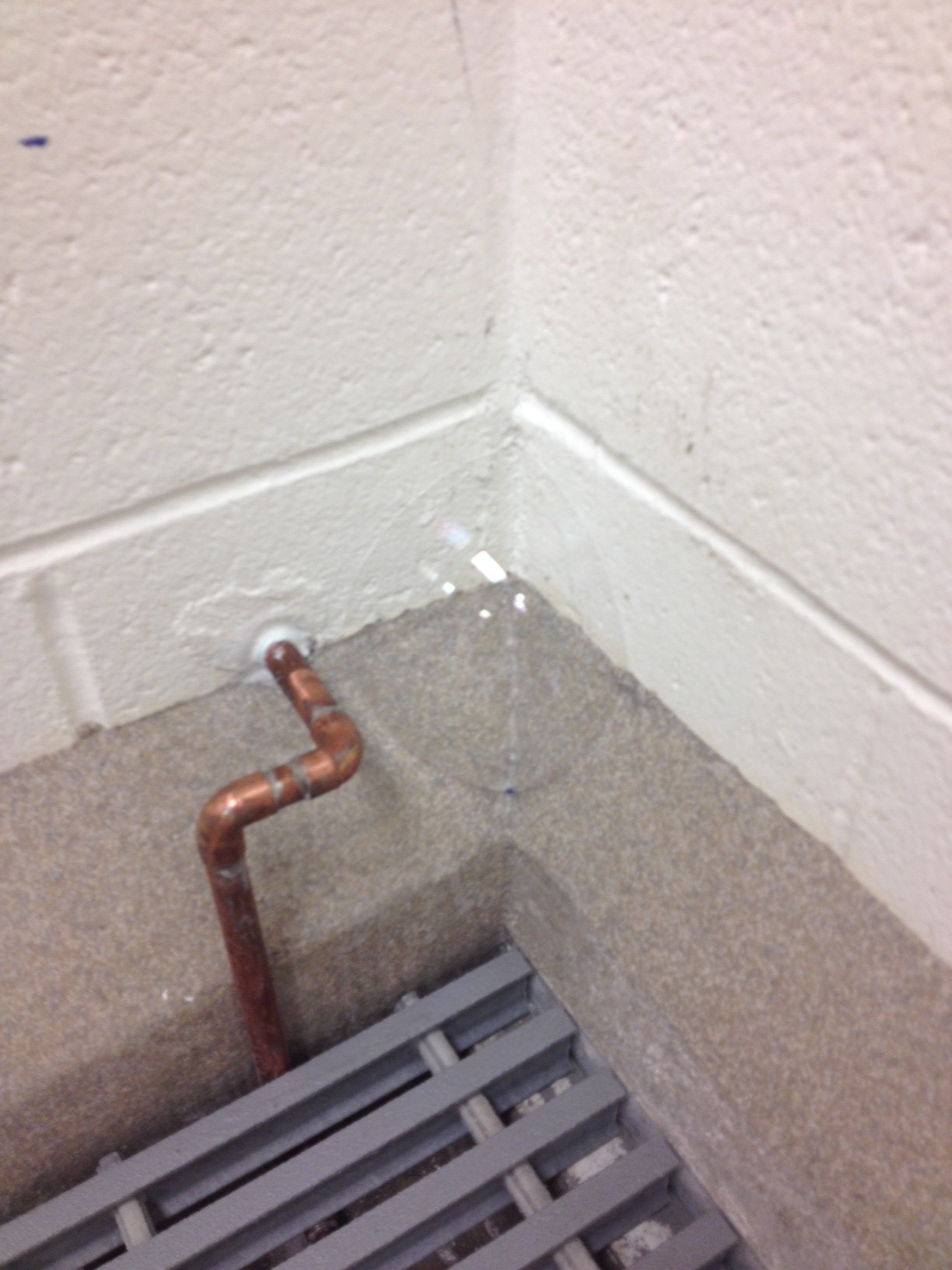
Considering this was a retest it was disappointing that all 5 rooms failed. Most corners leaked, all the air tight plug sockets leaked and all the data points leaked. It has taken them 3 weeks to caulk these up so far…
Filter Installation – The sub attempted to install the pre filter (particulate), HEPA (High Efficiency Particulate Absorption) and HEGA (High Efficiency Gas Absorption – charcoal) in to all the lab filters. In the initial installation meeting the manufacturer stated silicon grease is need on the filter edges to stop them adhering to the housing. If not the filters stick and tear open releasing allsorts of nasties and creating a big clean up problem. This was agreed by all as essential until the actual event when the sub decided he could save money and get the job done quicker by not greasing. On investigation we found this was a recommendation and not specified in the contract so $14,000 later the sub is now greasing, on the grounds that this is a safety issue and should have been in the contract.
Sound Attenuators – I have now visited all 572 sound attenuators in the building and established all the parts of the change have been carried out – that one crew of 3 was used to change over 372 of them to the welded standard, that the bolted flanges with butyl gaskets above and below the floor (as opposed to the clamped sleeve fit originally installed) are installed and the rooms are all sealed between floors. This took 240 days which the Contractor is claiming as an extension to the contract time. Although I will miss the argument on why only one crew was used (a welder and 2 workers, not really technical) the time will be given because there is no physical way the project will be complete by Feb 14. This will take them over the current finish date of Jun 14 which I still think is optimistic. There is a reluctance to call for liquidated damages because the subs on this project are nearly all going bust (bad for the Government to be seen destroying business) and the project is too big to fail. However the cost is still negotiable as $12,000,000 seems excessive! This due to a number of overheads and the fact that relate to the change occuring in 8 parts. However our estimate is currently $3,000,000 for 100 days.
Vacuum pumps – Finally the designer gave me the calculations for the vacuum pump sizing. The issue boiled down to an error in the specification the designer added to the drawing. The pumps were listed at 104 ACFM at 28″ Hg each and should have been 330 ACFM at 28″Hg each. This meant the expected flow rate for 2 pumps running to support a diversity of 35% is 37.85 Standard Cubic Feet per Minute (SCFM). The filter is rated for 25 SCFM, so really is undersized. The parallel arrangement for the extra 25 SCFM filter was correct. We had a teleconference with the sub, designer and pump manufacturer who all agreed by the end that this would work with no back pressure issues for the extra resistance. Mission complete. The designer admitted fault and will do the revised drawing for free. The filter is still going to cost $5000 each to install, one in both B and C building.
Floor Drains – our cracked floor drain issue never really ended. On review we convinced the contractor that we needed to check the drains again. The first test is to run water in the drains to check they are not cracked too. We then requested that the drains be tested by pouring water into the drain to simulate the flood condition they are designed floor. This is because the drains were all installed in 2 parts. The recommendation is that plastic flashing is incorporated in the joint to so that water going between the drain body and concrete is directed to the weep holes.
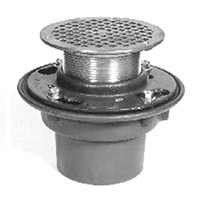
The flashing should sit between the base piece and the plate below the strainer
However the spec did not call for flashing so we are now worried that the drains are going to get leaks round them when the concrete shrinks and cracks. As some of these drains are above the labs this could be disastrous. We have agreed to test 20% focusing on the accessible ones to minimise damage. However if over 10% leak we will need to consider remediation which looks like core drilling a hole around the drain an inch deep then filling the void with caulk! Testing starts next week.
Pump 17 – The sub organised a meeting for the designer, contractor team, USACE and the motor manufacturer to discuss the motor performance. As anticipated the manufacturer rep was a sales rep and had not understood the test results sent to him, paniced and promised a new motor! It arrived a week later but has not been fitted yet. We are still waiting to hear what the in rush currents should be. I suspect if this motor runs well enough the whole episode will be forgotten and we will continue with the oversized pumps, throttled to death and wasting money through inefficiency before burning out prematurley.
Whole Building Maintenance – the contractor was unable to produce the revised operation and Maintenance program for the building in time for me to assess it. The recent maintenance report is better but still needs tweaking so I leave the system in a better state with all parties talking amicably and my successor starting dealing with a nearly finished product.
Tomorrow I am giving a presentation on the Corps to my fellow officers before starting phase 3 on Monday.
And in other news:
We had another Staff Ride for the military guys to Gettysburg, this time all day with a lecturer from the War College to further explore leadership. There is always something new to learn here.
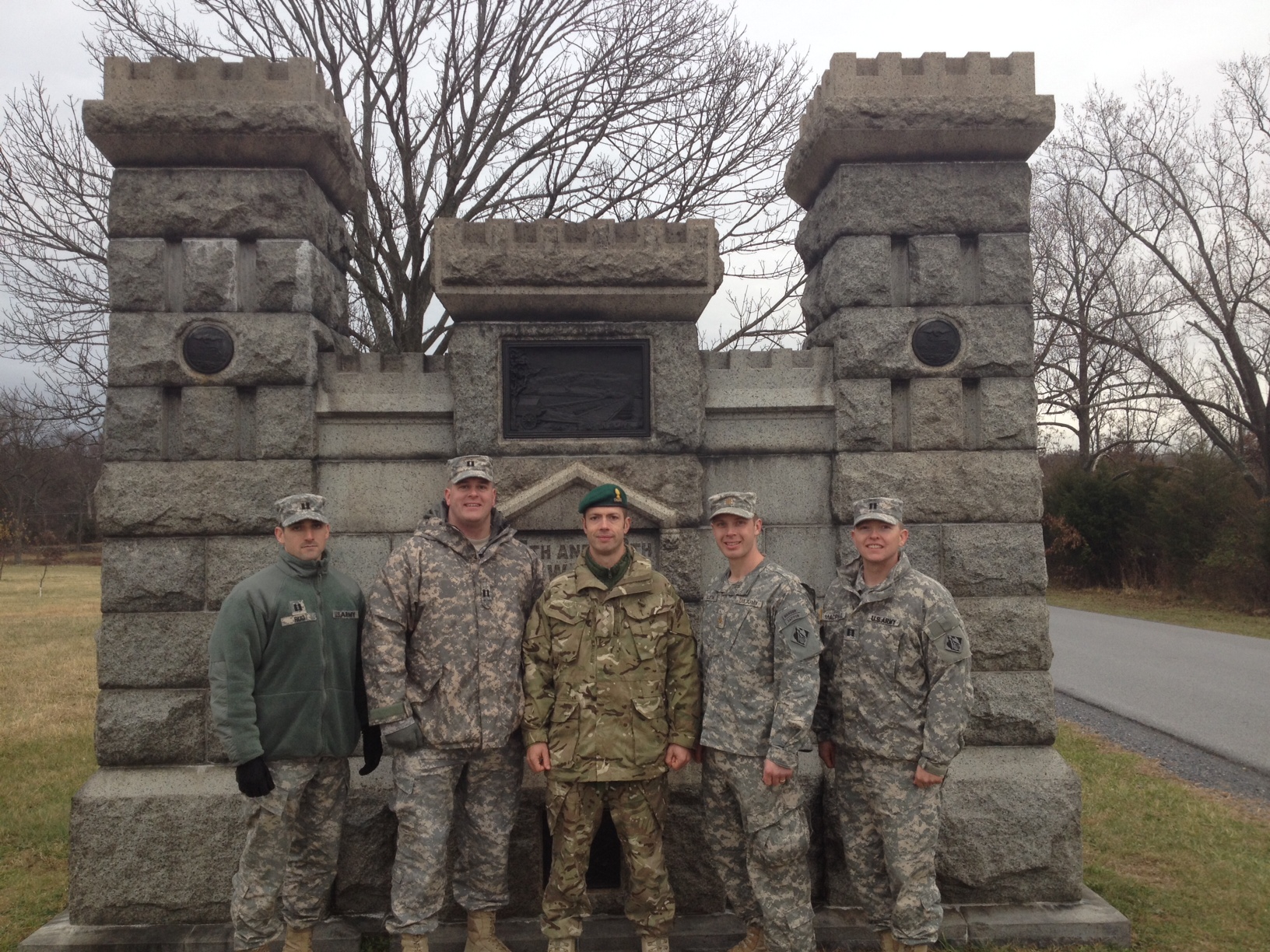
The Engineer Memorial at Gettysburg, ironic because there were no engineers at the battle!
The Ravens have won a few games now and are in the playoffs for the SUperbowl but their chances of a double are slim. We were invited by friends of mine in harrisburg to Thanksgiving. We ate turkey and ham until we couldn’t move then had pumpkin pie for dessert, great training for Christmas. The Black Friday sales were not too bad in Hunt Valley so I have done half the Christmas shopping and we took the kids to the Mummies (think egyptian) exhibition in Baltimore, stopping by the German Market on the way for a gluwein. We had back to New York this weekend to see the Christmas sites and neet Santa at Macy’s. Silly Season is well and truly here.
Back in!
A 3 week delay enforced because I have not been in the office much means I have lots to tell! 3 weeks ago was the annual British Army Staff Conference (BASCON) held every year for all UK Army personnel to receive an update on the current Army issues. This was briefed by a number of generals looking at the current challenges and giving us the latest news which we are not able to get over the US intranet. For those coming out this is a great time to make contacts. I have now got a POC at Quantico where the USMC is pioneering research in my thesis field, deployable energy production and integration. I have been invited to come and see how the USMC is tackling the situation which will prove invaluable I am sure. Time of visit is still TBC but hopefully in the next week before the Thanksgiving/Christmas shut down. There is also the Association of US Army Annual (AUSA) meeting where defence manufacturers descend on DC to show off their wares. Attendence is by invitation according to the Embassy so I missed it, but I know others organised their own tickets and got in. Luckily a colleague of mine grabbed a load of literature for my thesis so I was ablt to get some benefit even if I did not get in.
In Aberdeen work is ramping as people leave the Office Engineer realises I only have 3 weeks left in office. Current issues include:
Equipment Maintenance: The customer, contactor and I have been working to ensure that the everyone understands what is expected. Recently we have had design firm representatives on site to brief up the boiloer operators on how to use the kit more efficiently, a tricky problem especially as the boilers have no real load to supply. After my visit to see the automated boiler water quality monitoring system and seeing how the manual method of water quality management is not very effective I have asked the designer and Customer to consider an early upgrade prior to or as part of the service contract. This has met with an encouraging response as everyone is aware of the potential problems and expense of a boiler breaking.
Pump 17: Having asked the design team to review the design for the whole system for the condenser cooler they have agreed that the pump is oversized (to allow for scaling!) and should face remedial action. An impeller reduction is their prefered solution because they are hoping to pin this back on the contractor. The electrical issue with the pump is still not resolved but Pump 19 is now tripping the same way that Pump 17 is. It was agreed that a VFD would be the best solution but the purse is pretty empty and long term cost saving is rarley considered an investment. The motor manufacturer has yet to reply to any questions.
Surge Tank: The blow down seperator to the boiler, which removes debris from the boiler tank currently empties in to a 4inch drain which floods because it is to small. It was thought that a surge tank would alleviate this issue so I was sent to investigate. Initially it seemed the best option although at $30,000 an expensive one. There were a number of issues. Location was a problem because of existing pipe work but more importantly how could the tank actually get in to the building with the only access a standard door. When I reviewed the as builts it did not match the “current plans” we were issued. In fact there was a 6 inch drain 6 feet from the blow down point. So instead I proposed a new floor drain be installed at a cost of $5,000 instead which went down well on all sides. It proved the importance of updating team documents too!
Sound Attenuator: As previously mentioned our exhaust sound attenuators from the NEAT labs (where the nasty experiments go down) were to be replaced with welded ones as the screwed and glued type were not sarin proof. This has had a Request for Equitable Adjustment for $2.3 million and 236 days from the contractor. It is now my job to work out if the work has been done, by how many workers, with what kit and how long it took. Initially I thought there were only 178 to review. However this was on old plans. After review there are actually 573 to review. That will keep me busy until I leave and reinforces the importance of updating documents!
Generator Commissioning: Our 12.5 kW generators have been going through their precommissioning tests involving running them at various levels for long periods on mobile load banks (truck mounted resistors with fans to cool them down). These have been going well once the subcontractor got the load banks working (3 days lost) with all criteria being met which is a relief because most other commissioning tests have been problematic due to failures in the systems.
Lab Vacuum Pumps: This started as a previous RFI on the size of filters for a lab vac system. As this has been going round the houses a while I have decided to investigate to close the loop. Having looked at the spec the information is confusing. Apart from the fact vacuum is measured using Standard Cubic Feet per Minute (SCFM) in standard conditions and Actual Cubic Feet Per Minute (ACFM) based on atmosheric pressure, temp and humidity. Installed are 3x vacuum pumps rated at 330 ACFM at 28″ of Hg (more imperial units!) but the spec calls for 2 pumps to provide 104 ACFM, with one in reserve, so it appears the pumps are 6x oversized! I have asked the designer to show me the calcs to confirm that the pumps are sized right and apparently under vacuum the pumps produce 25ACFM. They are however being very cagey about how this was worked out. Even if this is correct the single charcoal filter rated at 25ACFM would be irrelevant if 50ACFM is going through it. THis was my first authorised change for the 2 filters in parallel in July. Now I not sure that even this configuration will work especially asa in the other building wing 2 filters identified for this system but in a different location are actually 350ACFM rated. I have very little data to work this out my self other than the number of outlets and the diversity factor so I will wait until I receive the information before I go further.
Payment Assessments: the monthly investigation into the works of fiction the contractor submits as pay requests. These never match up.
In Harrisburg one of the QA guys has been sacked and escorted off the premesis by security. After being told his contractor was not being renewed the guy went to the contractor and off loaded a whole loaded of information they did not need to know thus putting USACE in an awkward position. Once this was found out he was off the site but there could be issues in the future. The roof is still going well with 35% covered but the Contractor still has no plans to get equipment on to the roof. A submission to cut the 45 ft roof beams in to 3 to make the more managable on the roof is being considered. In 3 weeks they have removed on 15ft Air Handler off the roof in pieces. There is still no plan on how a replacement unit will be installed.
And in Other News:
Halloween was a mental experience. The whole neighbourhood was decked out ghoulishly with most parents sat out giving out candy while the kids and teenagers topped up on sugar and food colouring. It was 20 degrees so great for the kids and finished at 2000hrs on the dot because the heavens opened, but a merry time was had by all. We handed out 6lbs of candy and the kids brought just as much back! A trip to New York with my parents was very enjoyable, with trips to the empire state building (reduced entry for military personnel – not free!) Central Park, Times Square, The Statue of Liberty and Ground Zero. The Ravens are still struggling and temperatures are now freezing which means roof work is stopping soon. Shortly it is Thanksgiving then silly season starts just as I arrive at the district design office. Fun times!
Offline for 3 weeks
I was planning on writing my final phase 2 blog but I have run out of time as I race to try and leave the site in good order for 3 weeks and also submit AER3 before I fly out to NZ early Sun morning.
I will leave you with a teaser which I will wrap up when I get back. Needless to say slipforming is not as easy as it looks to get right!
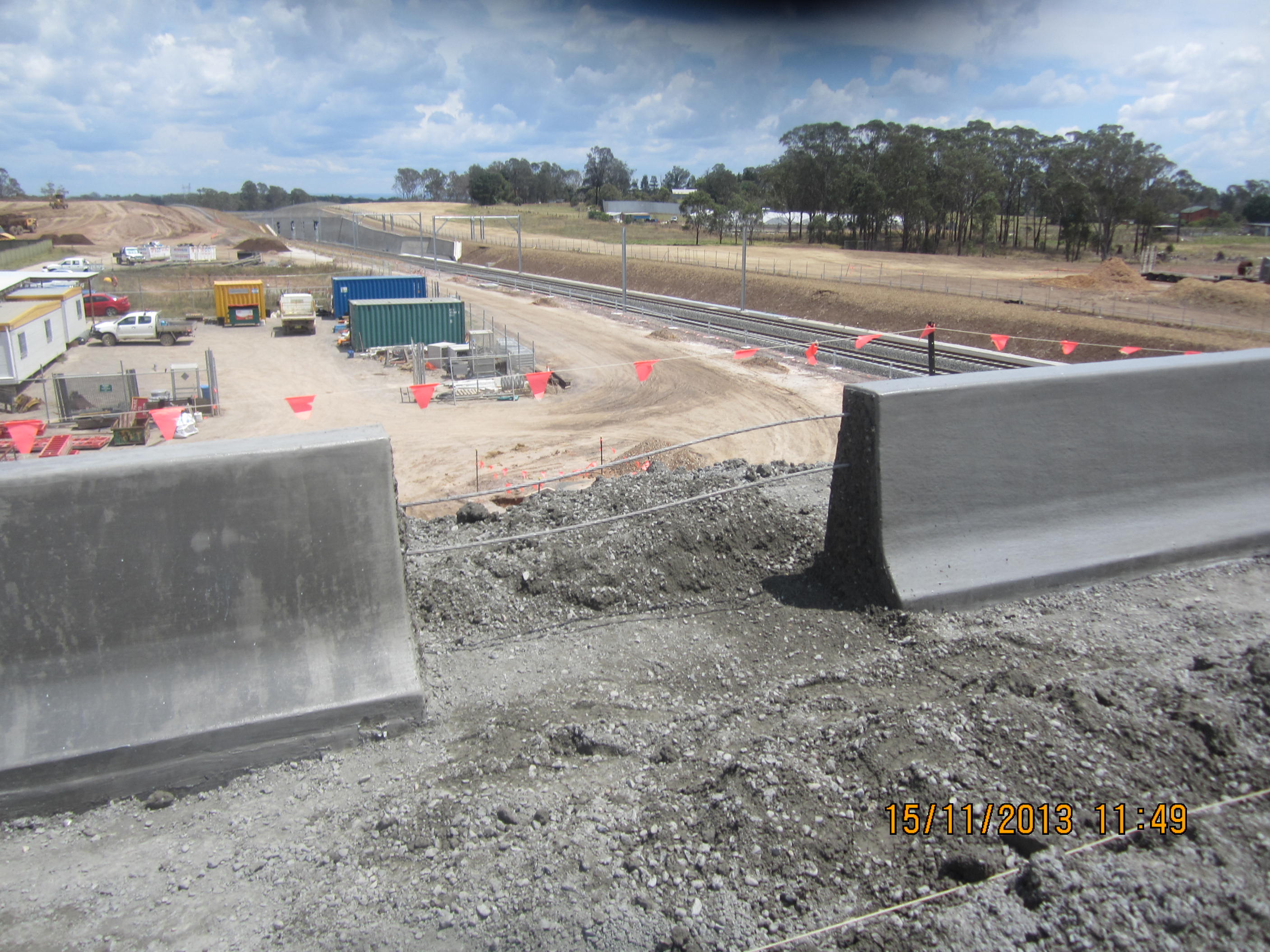
The rain may defeat me!
This last week has seen slower progress than I wanted, however we have managed to complete the walkway along the eastern side of the bridge and installed the water main and the six conduit runs. We also managed to pour a total of 18m of traffic barrier out of the 108m along both sides of the bridge, although I was hoping to get 27m complete I had further issues with the reinforcement supply. The steel scheduler rarely seems to get the schedule right which has forced me to check every schedule he sends me to try and spot the error ASAP so I can get a timely resupply. In this instance he forgot the end transition barrier steel completely and some for the barriers on the wingwall but after stressing to him the urgency it still took a week for delivery and what was delivered was about 2T more than I was expecting – at $1123.50 a T I’m inclined to send it back and not pay the invoice or cash it in with the steel bin so we can have a final BBQ!
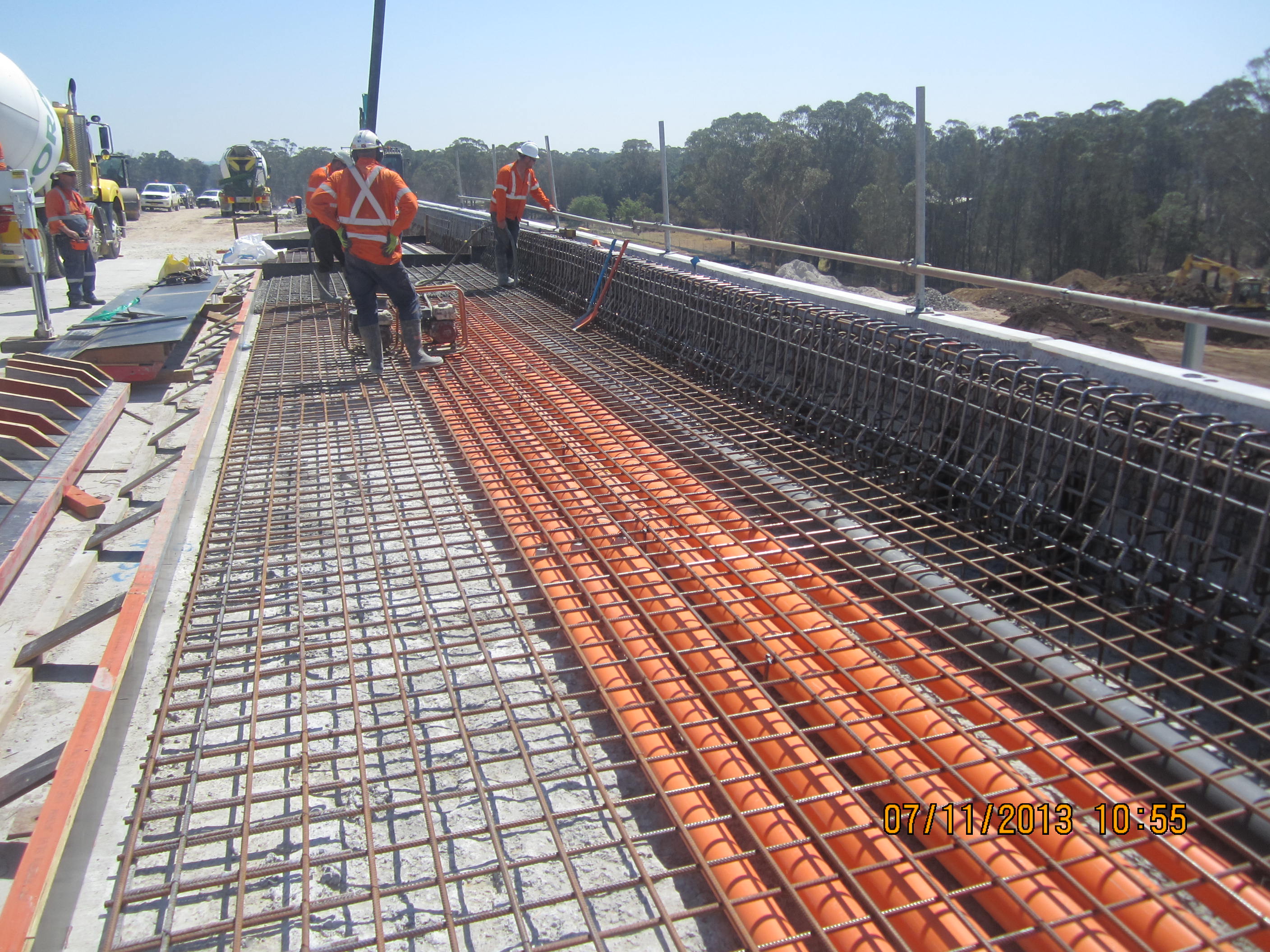
I have had to move the slipforming to the right by two days due to rain forecast for early next week. Usually the weather forecast is pretty useless and the weather can be very different out in the west than it is on the coast but as we haven’t had rain for a long time the met gurus have put up a convincing argument that Mon will be a washout. I am almost looking forward to some rain as it means I will have a chance to catch up with a large portion of my QA paperwork and load it on to the worklot register to pend to the quality coordinator. The main hassle with trying to close lots is waiting for the concrete test results which almost never get issued at 28 days and often take 40 days+ before they reach you. I am currently badgering the concrete supplier the day the cylinders are tested so they can send me the results so that I can pend as many lots before I go on holiday this sunday.
Another issue that stops worklots being closed is outstanding NCR’s. The RMS spec only allows surface concrete cracks of less than 0.1mm after 28 days which basically means any cracks you can see have to reported as an NCR and an RFI also needs to be raised even though the repair method is always the same. This does generate a lot of paperwork and takes time from the engineer.
I was trying to think back to the issues I have raised through the blogs so far (I could look back over the blogs I suppose but hopefully I can remember the pertinent ones) and it has occurred to me that most are still an issue and have not been resolved as they are either sitting with the designer or we have no resources available to currently do anything about them.
Pile concrete mix. The initial issue was that the concrete did not meet the required strength at 28 days but after applying age correction factors to 56 day results (the concrete supplier argued that it was a 56 day product therefore it may not reach 50MPa after 28 days) and an assessment of – there near enough – the designer accepted the strength results we had. A later issue was that when we looked through the batch records they had actually supplied the wrong concrete mix for two of the ten piles which was a mix that was not even a project authorised mix. This mix had a high cement content, higher than the max allowable limit according to the Durability Assessment Report (DAR) so an RFI was submitted to accept as is. The designer and Project Verifier (PV) had concerns about Early Age Thermal Cracking and that is still where we are. The advice from the designer who produced the DAR was that we conduct a PIT which in theory we could do if we exposed some of the pile and notched into the face of it but that is a lot of effort for potentially unreliable results so our response was no, please review again considering our solution to ‘leave as is’ which does seem to be the default setting for RFI’s at JHG.
Conduit expansion allowance. Scalabrini Creek underbridge had the Combined Services Route cast into the walkways without allowing for expansion of the HV conduits at either expansion joint of the bridge between the deck and approach slabs. After going back and forth numerous times with the RFI procedure I finally managed to get the services designer to agree that simply cutting the conduits flush to either face to create a 50mm gap would be the most practical and cost effective approach. Concerns about damage to an exposed cable at the joint were dismissed once it was highlighted that a steel cover plate is installed at the top of the walkway and along the deck which will protect the cable. Other concerns regarding pulling the cables through along cut and potentially sharp edged conduits were also toned down once reassurance was given that strict operational procedures would be followed to ensure firstly that the conduits would be cut cleanly and the edges smoothed off and secondly the installation would be conducted with care and spotters at each joint to monitor the cable pull. The actual process of cutting the cables was not an easy process and took me about 3weeks to achieve. In the end I had to get in another concrete cutting subcontractor as the two we had been using were useless. The only thing we could do to reach the lower conduits was to stitch core them using concrete core bits – it didn’t look very neat at first but its amazing what a motivated labourer with a file can achieve. The cables are now installed and the client has accepted the work so issue closed.
Settlement issues. I think I have mentioned a few issues with initial settlement at some of the retaining walls and practically all the bridge approaches. I was asked by the Construction manager to compose an RFI to ask for the settlement tolerances expected and request that any movement below this value be ‘left as is’ and I suppose we are just hoping that there is no movement greater than the figure the designer gives us. The initial response came back quoting something out of an initial design report by the JHG design manager but I have spoken to Senior designer at SMEC who had designed the retaining walls and he said he expected vertical movement of up to 100m on some of the RW’s and certainly on two of the walls we have had 80mm movement which has resulted in the corner of the wall resting and crushing against the corner of a bridge pile cap. I haven’t really had time to pursue this any further as I was instructed to focus on completing Dickson Rd and that all defect work will be addressed in the new year. If I have time I may revisit this with the Construction manager to at least close the RFI. Eastwood Rd overbridge settled 5mm over a 3 week period but it seems to have stopped and the cause has be blamed on poor material being used for the backfill against the abutment. It was probably due to poor compaction methods as well having watched the civil team at work at Dickson Rd doing layers much deeper than the specified 150mm, using a pad footed bulldozer to compact and employing a rather dubious subcontractor to conduct the compaction testing at supposedly every 300mm.
There may be more issues I need to close but I think this is enough for now. Richard, I think you are probably one of the few who are still reading my blogs so if you think of any issues I haven’t covered I am sure you will let me know. The monsoon has just started outside as expected.
WOW!!! has it been that long
I can’t believe it has been that long since my last blog. Things have been quite busy here for me, however the site has progressed slowly. The original completion date for the shaft was the 9 Sept it then moved to 31 Oct, 7 Nov, 17, Nov and now it currently rests at 27 Nov. My hope is that I will see the final shaft construction complete before I leave for the 3rd phase placement.
As you can see from the overview below, we have only completed a very small part of the Fisher Street works. Once the Shaft has been completed the Crossover section will begin, taking approx 1 year to complete.
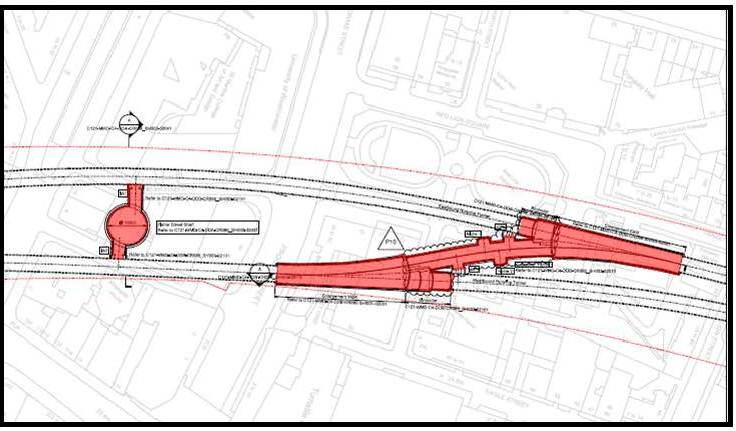
The process that we have used for the vertical excavation of the Shaft will be repeated for the horizontal sections of both the Adit eyes (the connection between the running tunnel and shaft) and the Crossover.
Looking in detail at the shaft there have been a number of phases that have been completed to ensure the overall success of the project. We are finally placing the Secondary/Insitu lining that will see the shaft completed
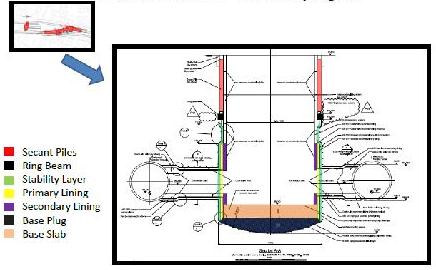
However, as all ways, it has not gone that smoothly. The idea was that a meter high ring would be poured each lift. Once the ring had reached a specific strength the shuttering would be lifted and another pour completed.
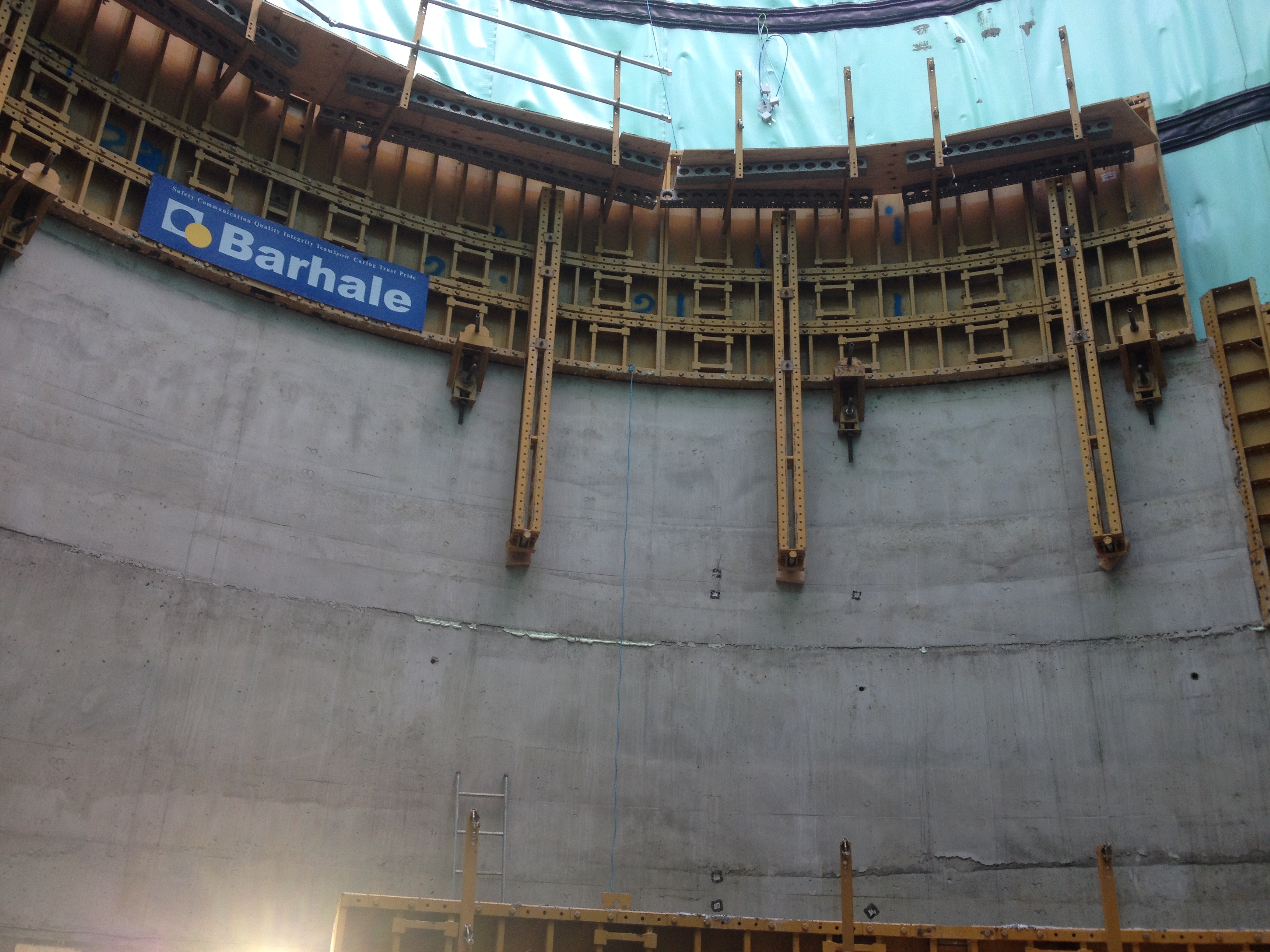
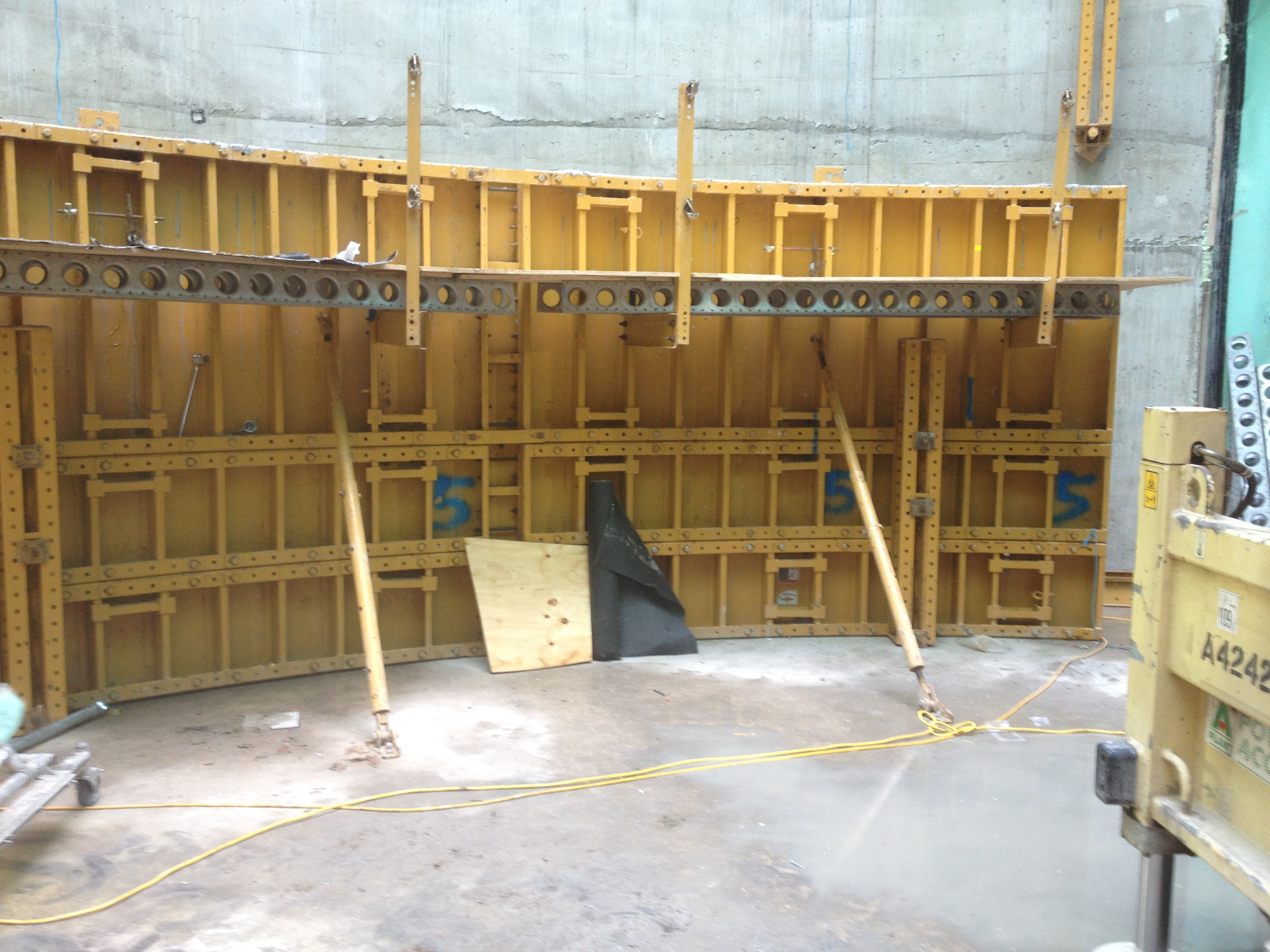
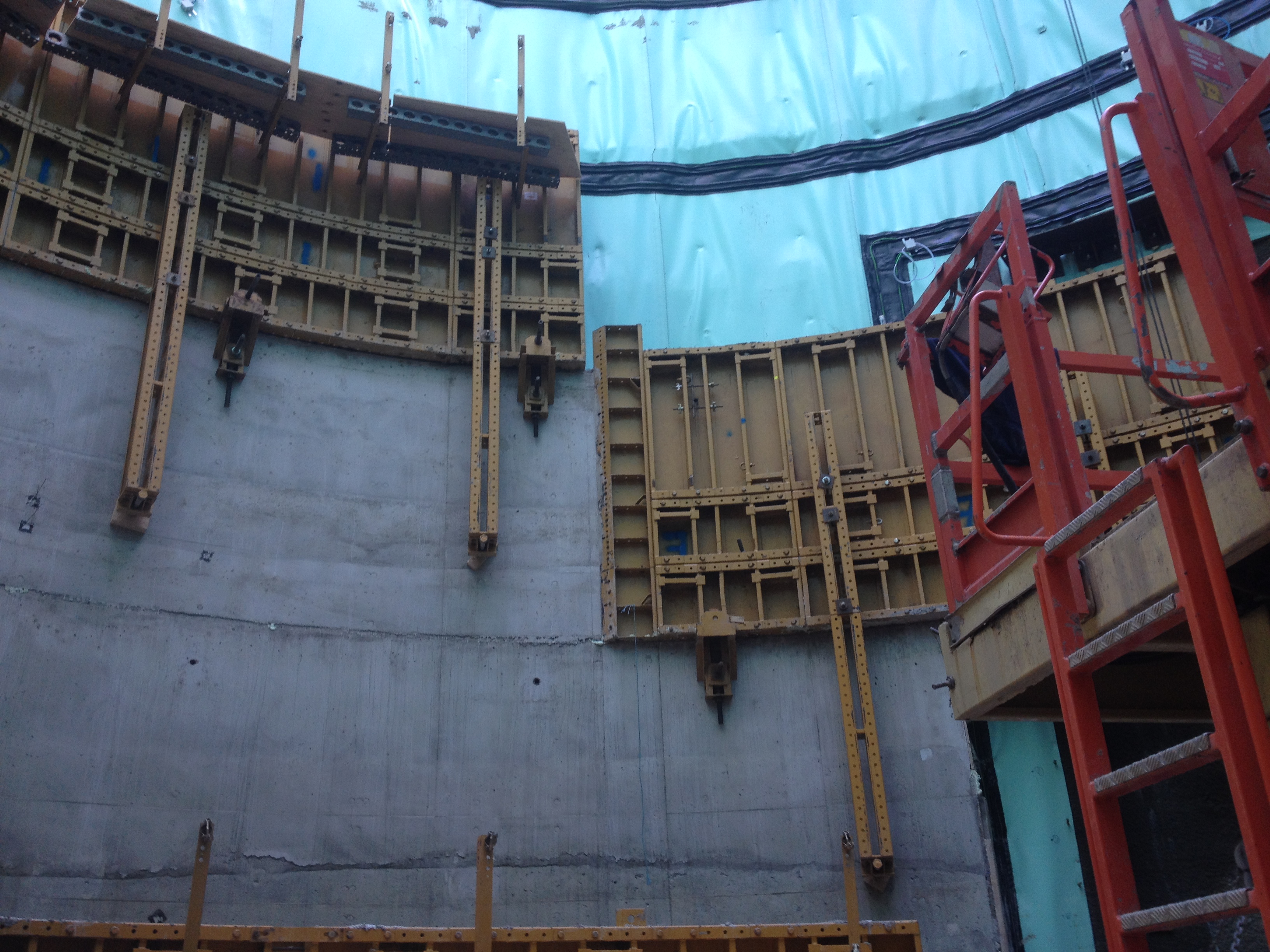
The plan was to complete three lifts per week. We have only achieved 1 per week. This has been due to a number of issues: cold joints being formed due to poor concrete delivery planning, cracks in the surface as Barhale forgot to spray the curing agent and the time it takes to deconstruct the shuttering and raise to the next level.
Whilst this has been going on I have been planning for the next phase. This has involved liaison with Camden Council again in order to secure a Section 61 for the Crossover works. Ordering new equipment, as Barhale leave on the 27th Nov along with all their equipment. Ensuring the new equipment is calibrated and conforms with the appropriate BS and CRL specs.
The planning of the next phase has raised other issues. The most significant has been the delivery process of concrete and ventilation to the Crossover Section. As a result we have had to enter Kings Tramway Tunnel (KTT) that runs perpendicular to the running tunnels. We are in the process of drilling holes from the KTT into the running tunnels, allowing ventilation and concrete delivery. The paperwork required to undertake works in a listed tunnel, such as KTT, has been vast. Not only are we producing Method Statements and Inspection Test Plans (ITPs) for Adit Eye breakout, Frame installation , Enlargement of the running tunnels etc, we are also producing documents for London Heritage. Nightmare!!!!!!
Although on the positive side of things TMR 3 finally got handed in and I have started work on AER3. Additionally I was collecting money yesterday for the London Poppy Appeal. Started at Fenchurch station at 0600hrs untill 1700hrs, raised a lot of money. As a reward went drinking with the Chelsea Pensioners, WOW they can drink!!!
Parapet Installation
The installation of the parapets got off to a slow start last week which I expected as every bridge seems to have had its issues. There have been over 2000 parapet sections installed across the project so I initially tried hard to bargain with the superintendent to get the seasoned parapet crew to install the Dickson Rd parapets. It became apparent by Fri that I couldn’t rely on their availability if I were to keep to my own tight programme so we made sure we had prepared well and installed them ourselves using a hired in 20T Franna crane and a trusty Kiwi labourer. We only managed to start at lunchtime on the Mon due to the initial anchor bolts being slightly out of position and had only 2 in place by the end of the day. When I went to inspect the work it looked a little off to my keen eye and after getting the surveying out to re-check the positions it became apparent he had marked the entire western side out of position by 90mm at its worst. Equipment failure was blamed but little harm was done as we managed to catch it early. The next day we only managed another 2 and I had planned for all 24 by Fri. At this point I decided to hire another 20T Franna and got the two most competent guys I knew from the FRP subcontractor on Dayworks to start installing parapets from the opposite abutment and side. This paid off as we managed 9 parapets on Wed and had them all installed just after lunch on Fri.
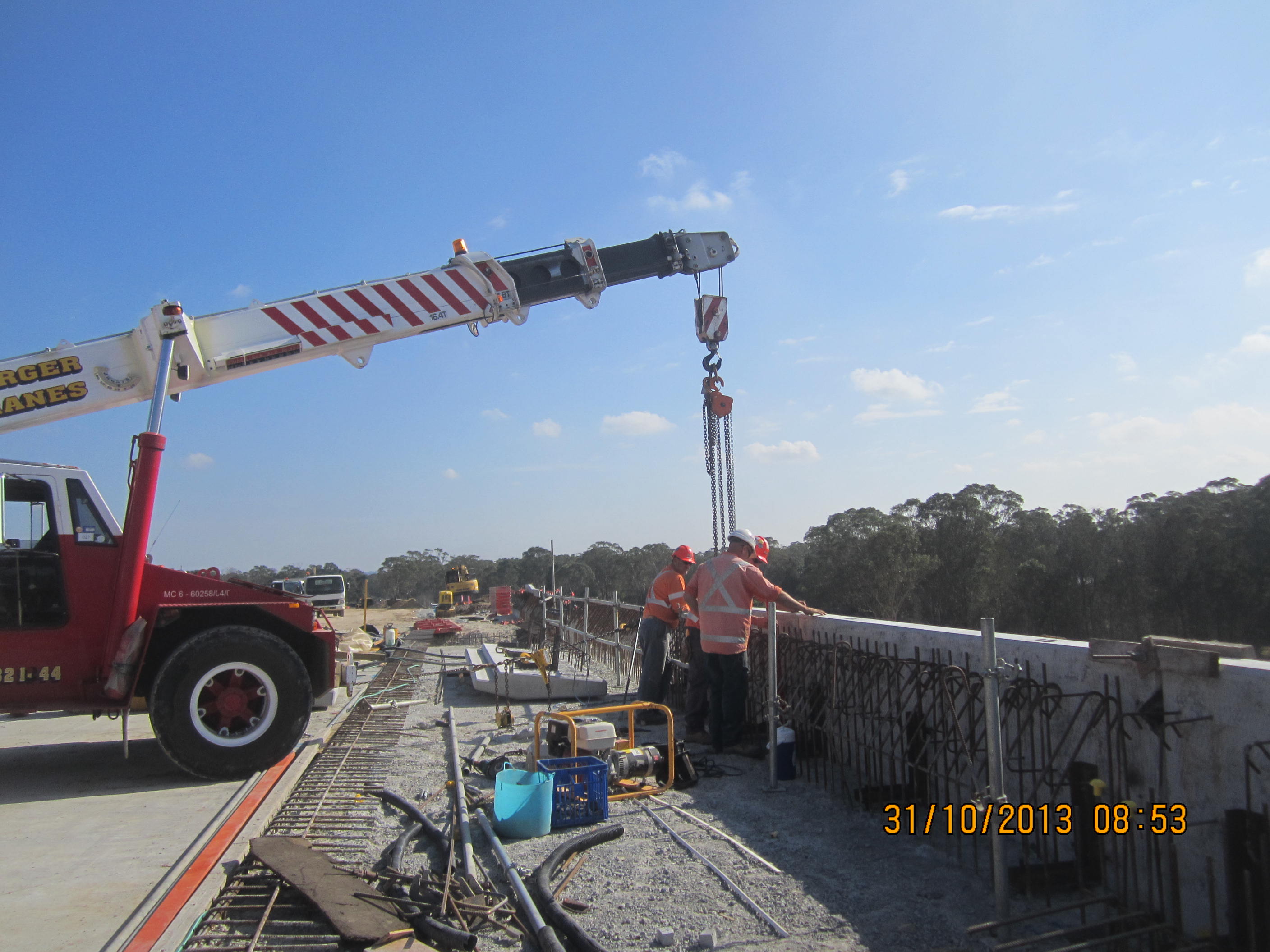
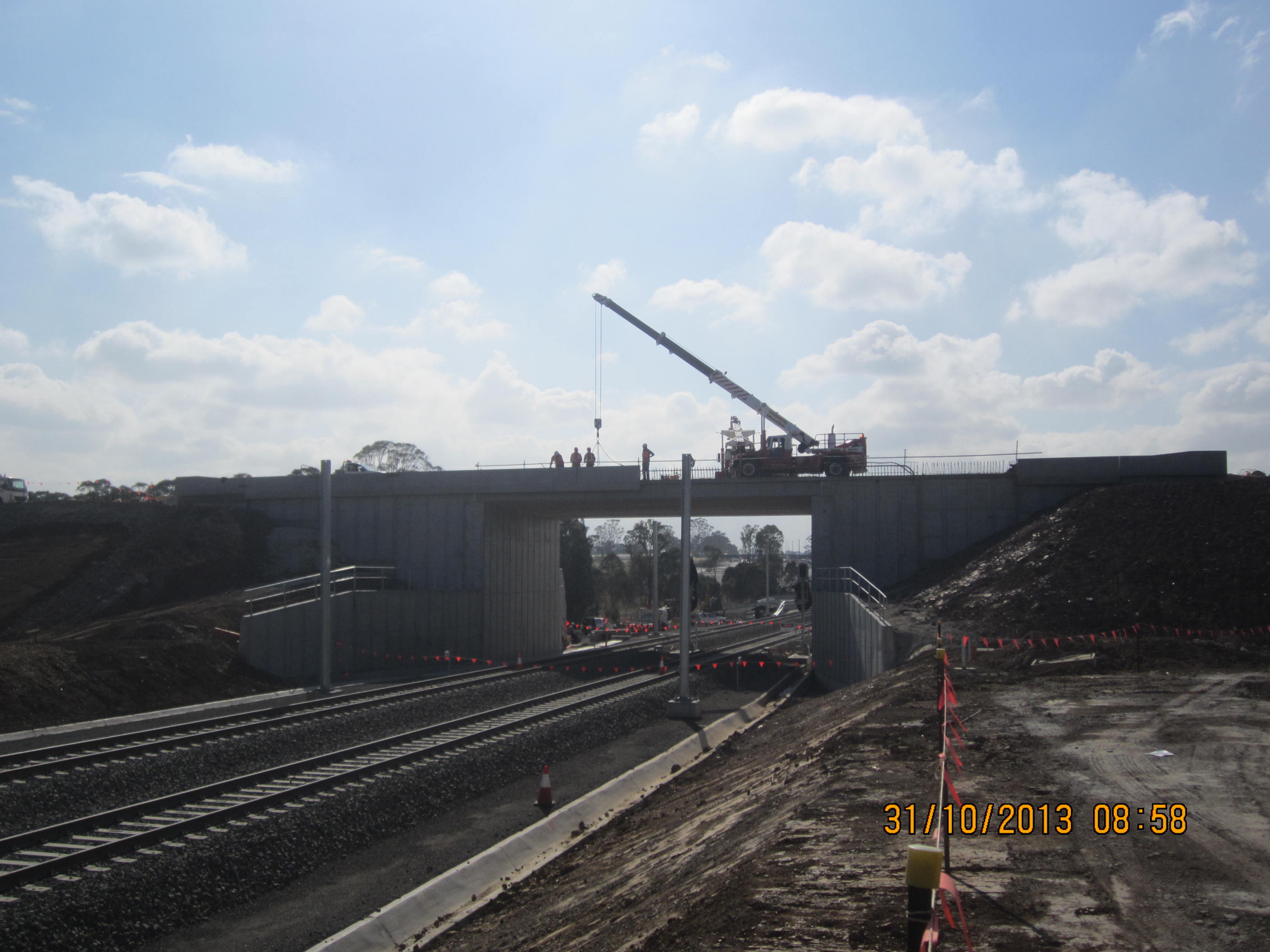
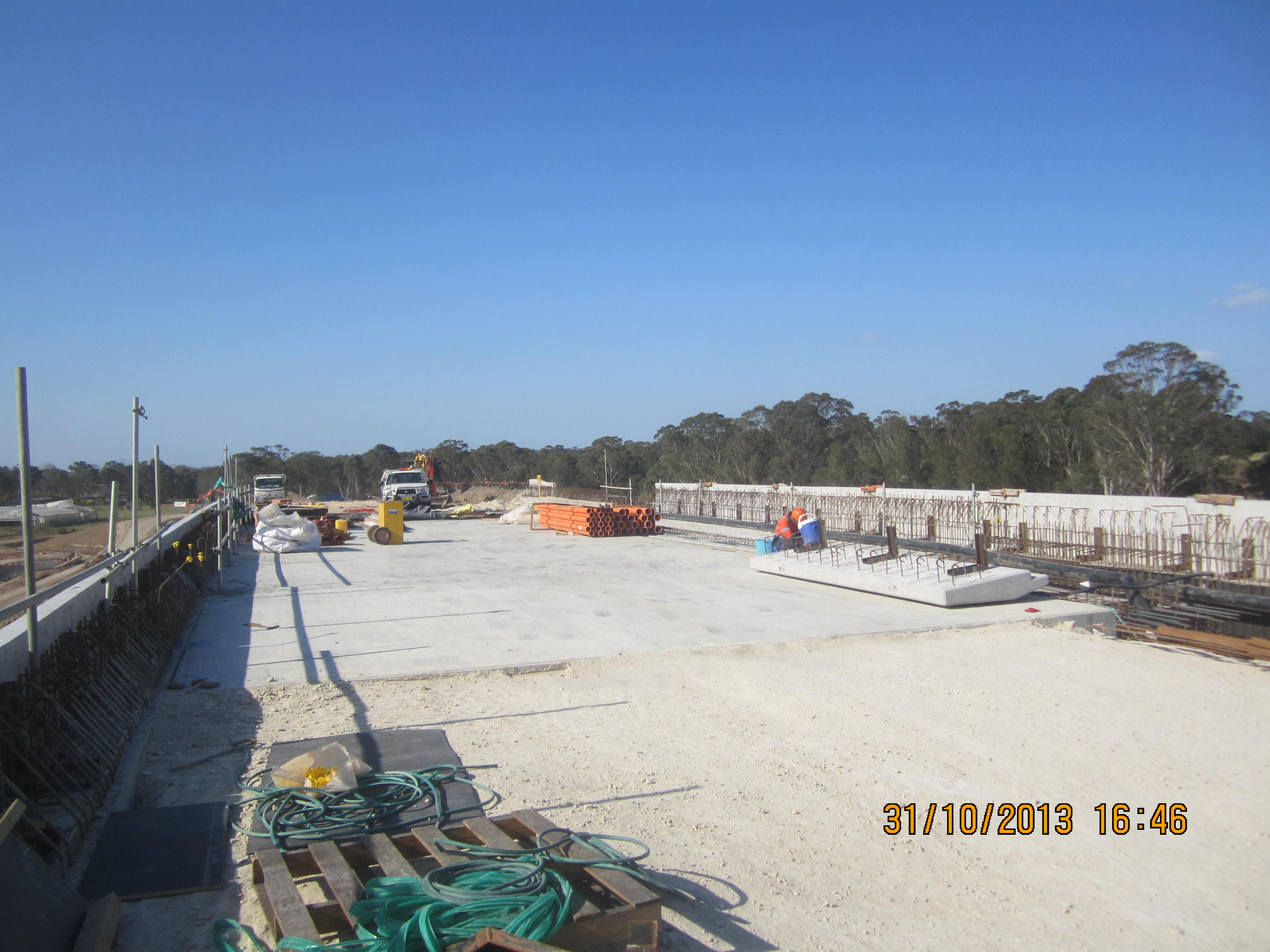
Concurrently to this we worked in with another subcontractor to install the water pipe through the walkway and fixed the top matt of steel on the walkway as well as some of the traffic barrier steel. I timed the barrier steel to be delivered at the start of the week as we have very little storage space with the road works racing ahead but not for the first time the steel scheduler did a poor job and so I am still waiting for some of the barrier steel which was forgotten. Unfortunately this is the steel for the end transition barriers which we need to fix and pour first so that the type F barriers which are being slipformed can butt up against these.

I managed to get the slipforming subcontractor back on site again mid week and he agreed to carry out the barrier extension work next week, the week before I leave for holiday so I will at least see the paving machine in action and as it stands at the moment I should complete all the concrete works by the end of next week. The only outstanding work will probably be the metal work installation consisting of the traffic railings and throw screens.
Just a short blog but I will post again at the end of the week and again next week to tidy up a few issues as everything starts to wrap up.
Round Up
This is the post that was going to be written on Friday, basically a round up of my portfolio, since I haven’t done that in a while…
Clair Coolers
Leak testing completed last Wednesday which means that commissioning is pretty much there and with start up scheduled for Thursday, all fingers are crossed that the new coolers and pipework do what they are supposed to. It has been a manic month and a half getting this project finished, but worth it. We are just over £1m over budget and about 5 days late, but the TAR is off by 2 weeks and none of that is our fault, so we are looking good. The budget bust was probably a given based on the emergent nature of the work, but I have secured the necessary expansion to the financial note and at the end of the day the partners did not really have a choice.
The next 90 days will be spent completing the technical and financial close out and I am intent that this is completed on time. We shall see.
Clair Minox B Blower
This is my next biggy with off shore execute scheduled for Feb 2014. This is a scope that has been engineered and is awaiting the slot to execute. It probably deserves a post in its own right to explain the ins and outs (of which there are several), but it is offering me a couple of interesting opportunities. Not in the least the issue of a safety critical interlock arrangement on the modification which has been identified as not being necessary. I think that it has potential to satisfy my B competencies as I am planning on writing a draft technical note to cover the issue and support a decision to proceed without it being implemented. Time is tight, so this is high on my to do list.
There is a fair amount of schedule and planning work to be done on the project as a whole to make sure it goes off without a hitch. This Thursday I will be flying down to Stroud to visit the firm who are reconditioning the blower of my post from last week.
Clair HP Cooler
I’ve still got to find the time to write the SOR for this project. It is halfway there and I am getting increasing pressure to get it over the line to support the design estimate that is just beginning. Yes, I know, how can the estimate go ahead when the SOR is not written. Well, this is the fourth leg of the Clair coolers saga that was dropped from the 2013 TAR due to increasing complexity threatening the execution schedule of the other three coolers. It has been estimated before so this is really just a revision to include the cost that were not picked up in the original estimate, the SOR is more of an update that a brand new document. This is due for 2015 execution and therefore almost certainly going to fall one of the two new secondees.
Bruce P60 Bridge
Yes, this is still going on. I now have all of the deliverables for this project in Define and will be writing a project sanction DSP over the next 2 weeks. This one has snuck under the radar a little bit and I need to create a document that presents the engineering challenge vs the financial benefit to the asset so that they can decide to go or no go. With the Rhum field now definitely coming back on line there is potential for a change in atmosphere on this issue what with the extension of life of field by a fair few years. This is my personal mission to get some kind of resolution on the project.
Bruce Caissons
C13 is chuntering along in the background and I won’t really be doing any work on it until the new year. Suffice it to say that bringing Rhum back on line may have a significant effect on this project. When Rhum starts up the asset will have no redundancy in sea water lift unless this caisson comes back on line. We shall see if it changes any, my guess is not in the next 12 months but it is likely to be a priority for 2015 installation.
Clair Flowline Support Mods
Not much to say here. I’ve bumped the execute into May 15 because there is no appetite from the asset to give me information while the TAR is ongoing. I will keep plugging away at it, but I am not overly optimistic.
In other news:
Hugo has started walking so, being Swiss, he should be skiing by Christmas. I have started home brewing, my first batch is homebrew version of St Austells Tribute. It is merrily bubbling away in the spare room and hopefully in a few weeks should be a decent pint. The home made heat exchanger (single pass immersion coil) and aerator (car pump + aeration stone) worked very well. I will post some pics at some point. There is a striking correlation, Hugo finds his legs just a few week before his dad loses his!
Repetitive Issues
As JM always said the biggest risk in construction is the ground conditions, and hopefully that is firmly behind the South Team now (though the basement team will have to deal with the slab-on-ground down there). The Upper Basement and Ground floor are finally complete, meaning we no longer need to backprop the slabs to the foundation making construction a much cleaner and less risky business. The issues with concrete continue though.
Not only is the level 1 slab a much more intricate beast in profile and finish it also uses a combination of concrete mixes to accommodate external areas that require additional waterproofing. Fig 1 shows the structural drawing detailing what concrete mix is required.
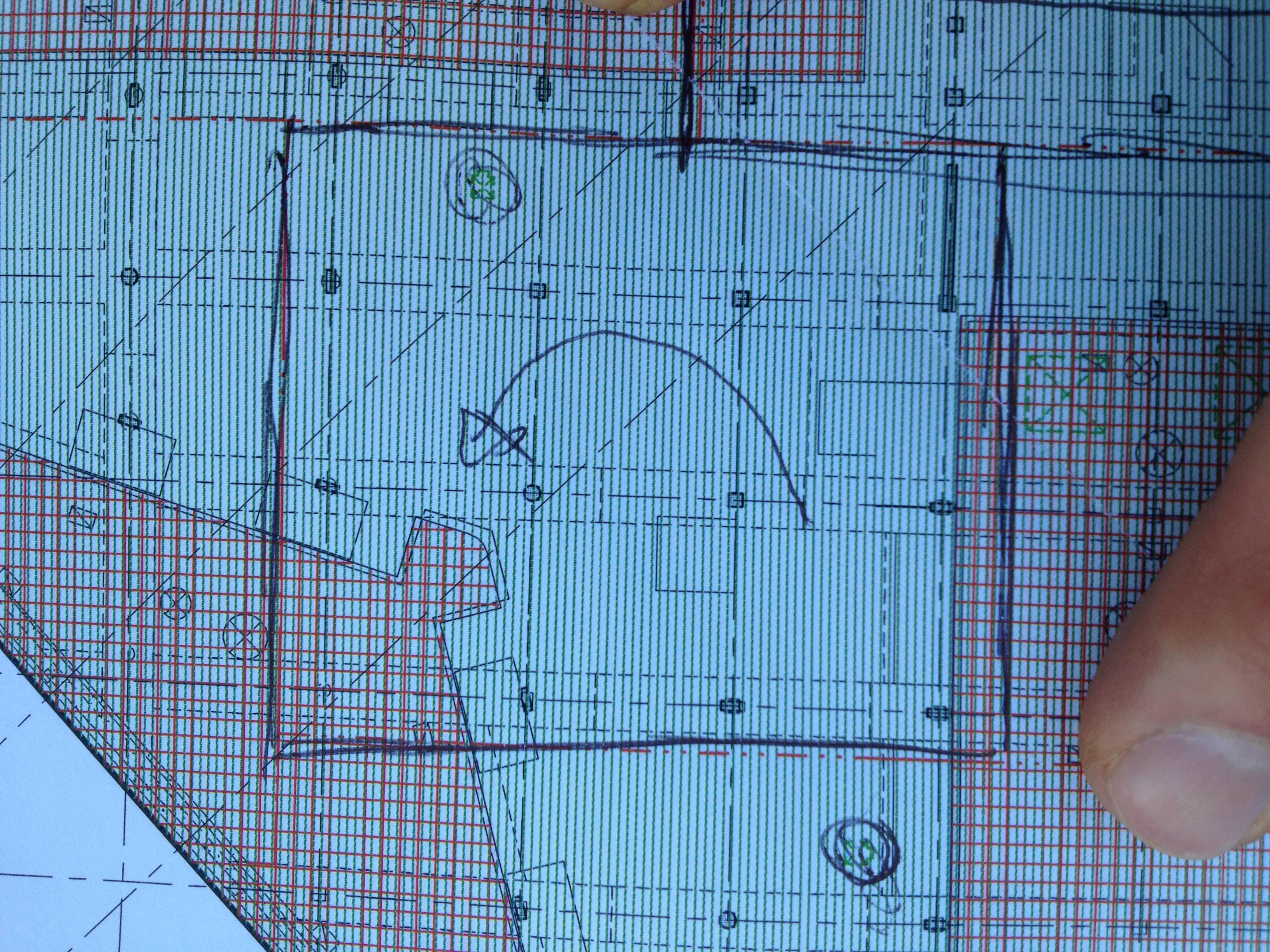
Fig 1: Concrete Spec Drawing
The white background denotes a 32MPa mix, the green hatching denotes that it should have a shrinkage reducing additive included to restrict shrinkage to 450micons/m (Eclipse) and the red hatching that there should be a waterproofing additive included (Xypex). From the figure it is now clear what the shape of the building will be for the subsequent floors. There are several awkward aspects of this:
1. A close control of the concrete entering the pump is required, and also skill in ensuring that the correct mix ends up in the correct location, in short competent concrete placing subcontractors (something we are lacking – see later).
2. The external areas all require falls to drainage points. As I have discussed in previous blogs, JHG design team, against delivery team advice, have decided to pour falls integrally with the slabs. In my opinion this is a money and time saving initiative that due to poor placement skill will ultimately cost more money and take more time to rectify.
The following images are examples of poor concrete placement on the last pour:
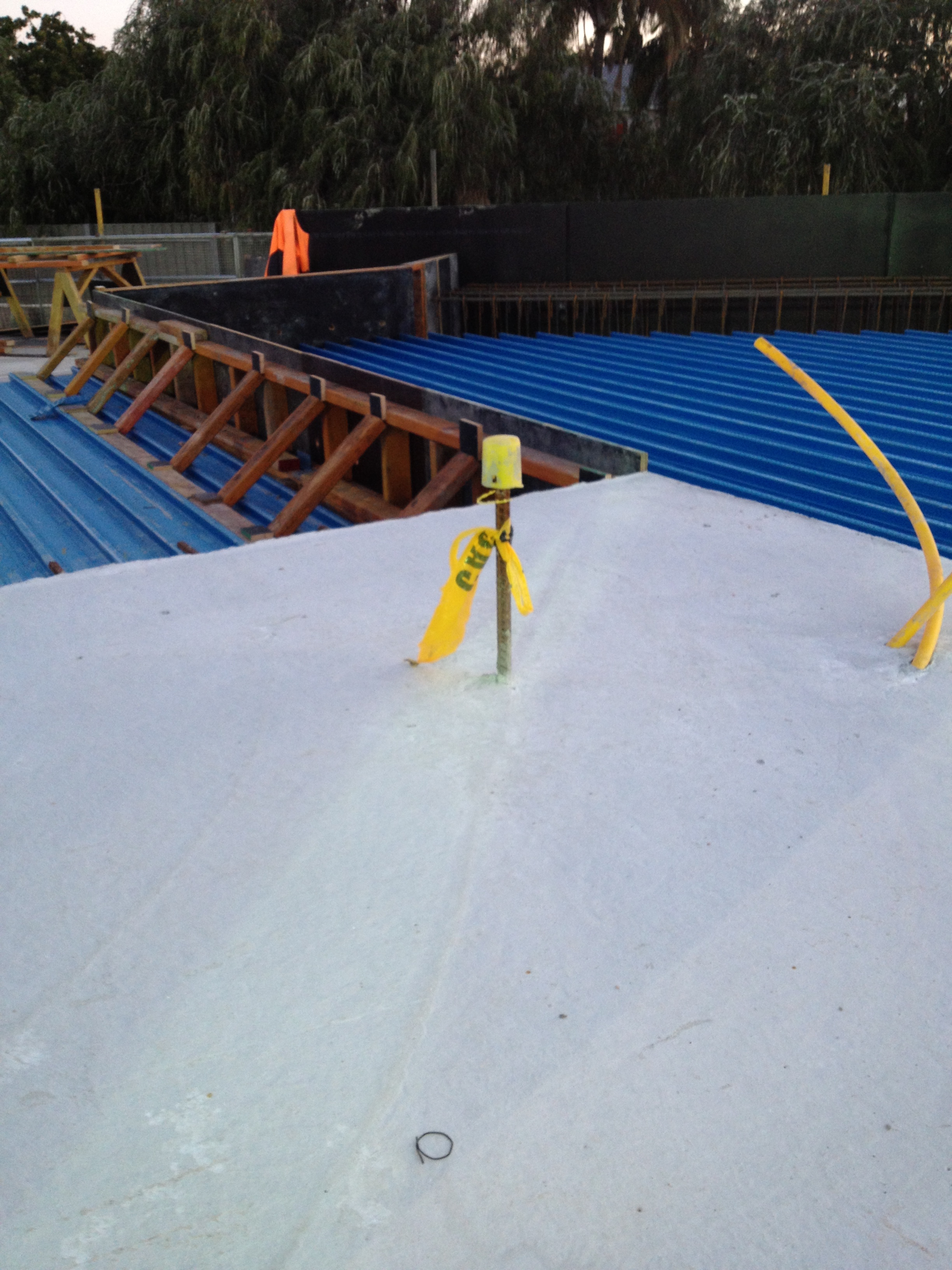
Fig 2: Height Marker left in
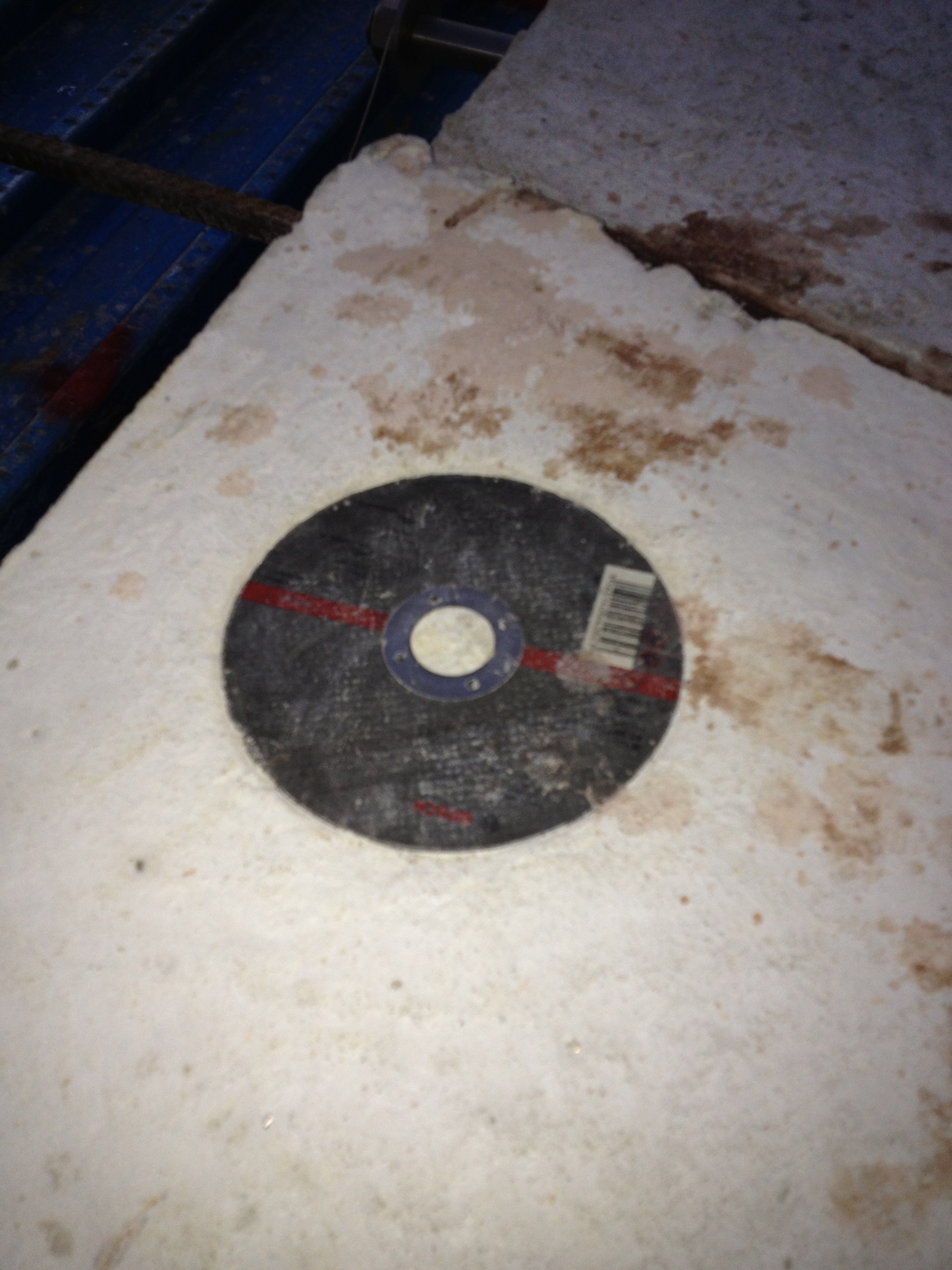
Fig 3: Cutting disc on surface of concrete
Fig 2, shows where the concrete placement subcontractor has placed a height marker to indicate the ridge line of the top of the slab falls – a good idea, as long as you remember to remove it. Fig 3. Shows a cutting disc that has been lovingly placed into the top of the slab and pushed in for good measure. These are just 2 of the many issues I have found with the finish of this slab. The others:
- Surface finish not steel trowel float to allow follow on trades to waterproof
- Set-down levels not adhered to and concrete poured too high resulting in edge gullies in what is meant to be a flat drainage channel.
- Concrete poured above the height required (no excuse as they use a laser height monitor.
- Footprints in set-downs (claimed to be formworkers returning to remove stakes used to hold in set-down forms)
Whatever the issues, whether it be poor concreting or trades walking over a finished slab, it states in the concrete placement subcontractors contract that they are responsible for the concrete finish, and for protecting their work. NCR’s are going to rain, especially a separate concrete contractor has now been contracted for the basement and is producing an incredibly better finish. The client even made a joke in the pre-pour meeting about it.
We have started forming up level 1; it is taking twice as long as expected though for 2 reasons.
- The formwork contractor has run out of competent carpenters to do the intricate angles and curves
- The formwork contractor no has no incentive to perform as he is now on a costs + contract where JHG are paying the invoices + a percentage.
All that said the formwork is looking quite good. It is nice to see some curves after 7months of straight edges. What the image also shows is the cast in Halfen channels that the precast walls lock into. The locations of the channels had to be estimated by the delivery team as the shop drawings from the precast panels had not been produced due to a delay in procurement. This may turn out to be another problem to fix down the line if the channels do not allow enough flexibility to accommodate the panel brackets.
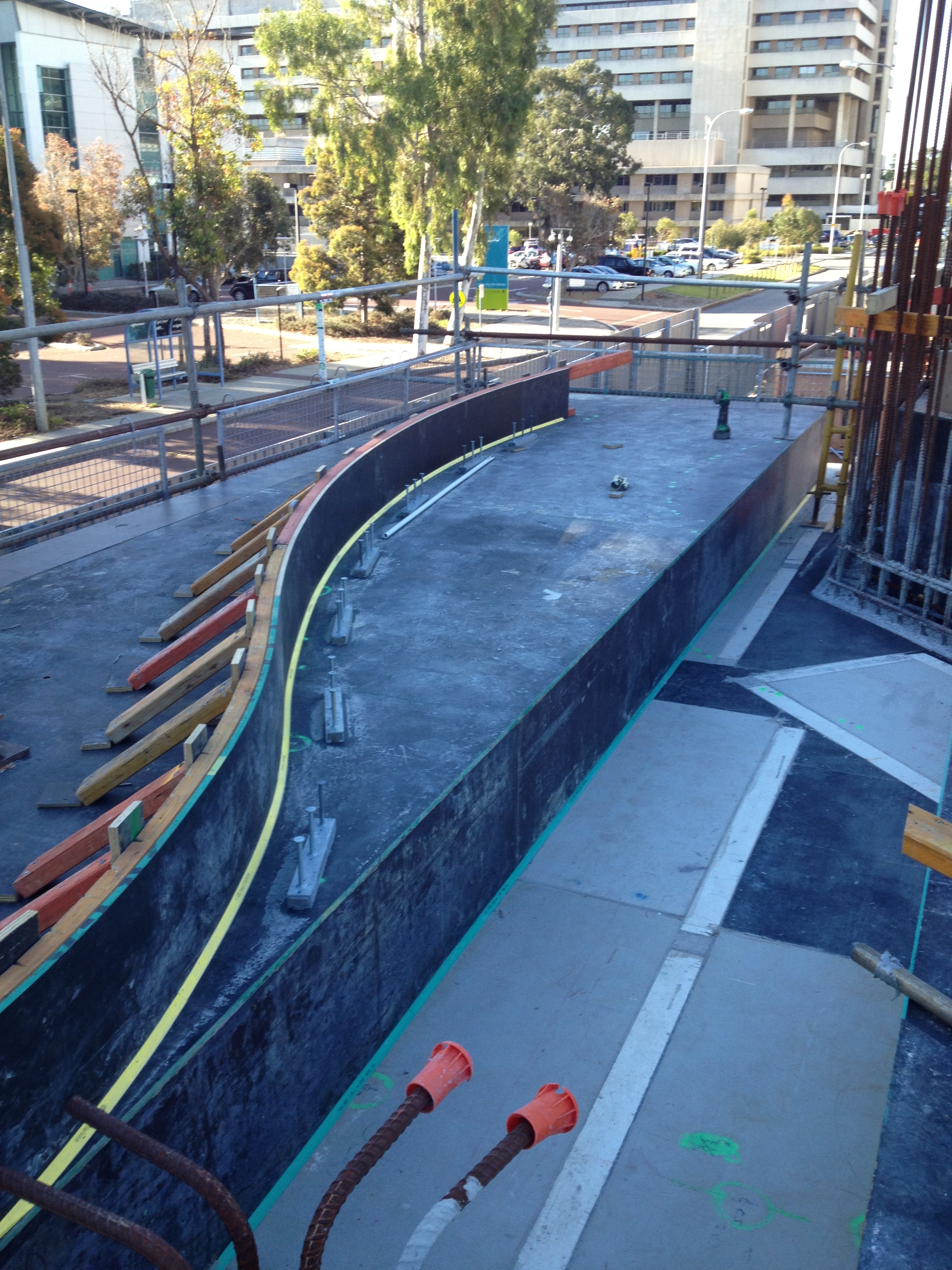
Fig 4: Interesting (?) Formwork (Halfen channels shown around edge)
The current issue that I have found with Level 1 is that the structural design has not effectively checked the design of the reinforcement, cast ins, services or PT for clashes. It is causing many issues on site that are not helped by the individual subcontractors inability to liaise with each other. It is actually in their contract to liaise with other trades but none appear capable of doing so and resort to just complaining to any JHG employee who is available. It really is very petty. The issue shown in Fig 5 however is purely the structural engineers issue of not deconflicting PT and reinforcement. The issue is not in the alignment of the ducts or placement of the anchors but in allowing in the design of the reinforcement for the placement of the pans that allow the stressing of the cables to take place. As it stands the pans (400mm wide) do not fit side by side as designed between the vertical links, spaced at 600mm across the beam. My proposal was to stagger the PT ducts to allow them to fit between the links. This is only possible at this point at the PT is effectively being used to create a cantilever over a column to increase the capacity of the adjacent beam (See fig 6). It occurs to me that many of these issues could have been avoided by using a single BIM system and good communication.
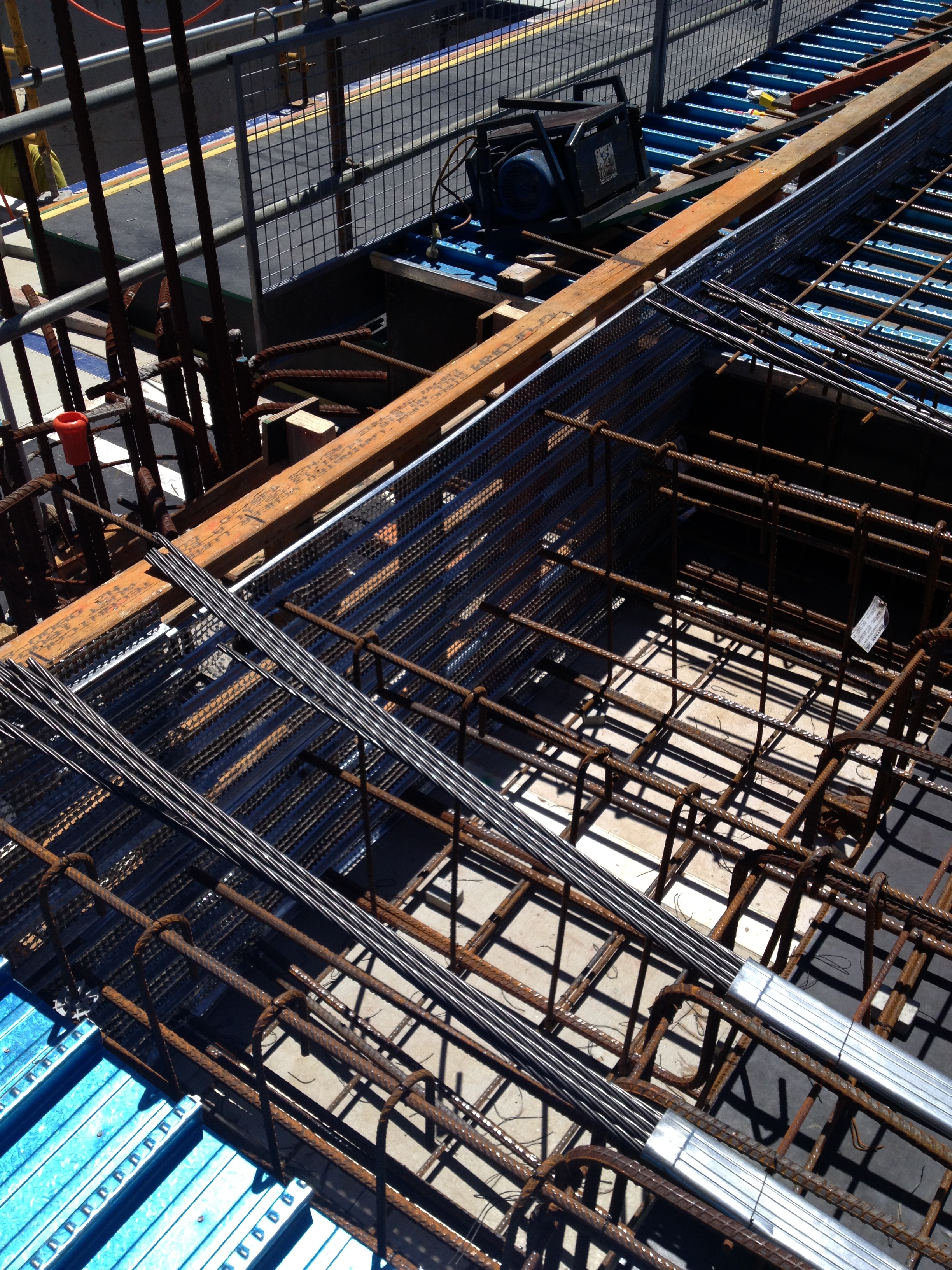
Fig 5: Clash between PT pans and Reinforcement. Lack of understanding of how the structure is constructed.
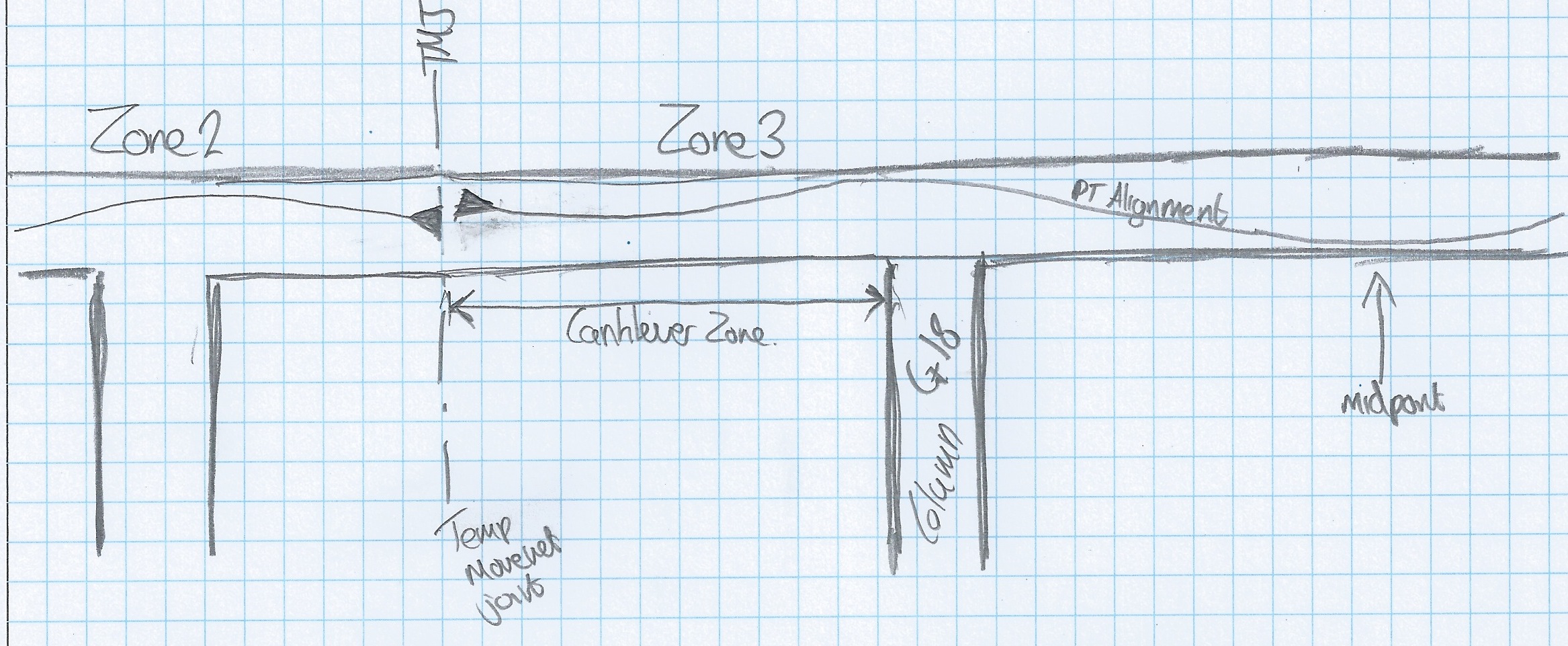
Fig 6: PT Cantilever effect
In other news, I went on a site visit to Perth City Link (the project Rob Ridley worked on), which is nearing completion, 6months ahead of schedule and on budget – I am sure it has everything to do with Rob’s input. It was good to spend a bit of time with engineers from other projects to share experiences.
The PCH project has decided not to replace me when I leave in Dec. Not bigging myself up at all, but I think this is a decision based purely on cost and not thinking about the repercussions on the remainder of the team. Even a grad engineer would be a bonus, especially when a Grad engineer costs approx $75k a year and the value of liquidated damages in $180k/day. The maths is simple. The ongoing joke(?) is that i don’t do anything anyway – funny!
It was good to get across to see the Bainger’s in Sydney, if only for a little while. While the girls and little ones took in the sun and café culture, Jon and I went out to his site for a wander around. It was good to see how things are done on the East side of the country, and to be honest a little scary how different some of the procedure are at the PCH. I even caught Jon working when away from playing solitaire at his desk. David, I think this is a contender for the new prospectus!
Bainger working
It was also good to catch up with a few ex-RE’s to take part in the Tough Mudder event. As it turns out the ‘Wrestler’ fancy dress resembled more of a gay 80’s fitness instructor, but it held up well and nobody got broken. This weekend was the Perth Tough Mudder event with chicks, so a slightly fast pace than that with ex-Army lads who have embraced the civvy-spread.

The hardest part of Tough Mudder: Straight arming the VB
Time for a little break now, so off to NZ next week to gather seismic research for my thesis, and may take some time off to spend with Nicky for our anniversary too.
Cracking the whip.
The reality is that the bridge would be complete by now if the initial backfill had been completed within the programmed 6 days and not drawn out to 6 weeks by the Civil Team but as it stands we are on course to complete before xmas. I realise I haven’t blogged for nearly 4 weeks and I am not sure where that time has gone, I did have good intentions during the week but with a TMR to write and trying to push productivity on site before I know it its 7 in the evening and with an hour commute I should be getting home if I want to remain married. The last 2-3 weeks have been extremely exhausting if I’m honest, I go on holiday in 3 weeks’ time and I am trying to push for the bridge works to be complete by then which if I can achieve will be 12 days ahead of programme. To the credit of the subby they have bought into my vision and stepped their game up and we have now completed all abutment retaining walls, both approach slabs and will start installing the pre-cast parapet sections next week. I feel like I am constantly badgering (persuading) people to work that little bit faster or smarter and feel like I actually own this bridge and want to see it come to fruition before I leave. As a result I have at times lost complete confidence in the supervisor as he has no interest in working at the same capacity as I currently am and I have found I have taken on more of his responsibilities in order to keep momentum when I should be gradually giving him more responsibility. Most of the supervisors from what I hear have a fairly poor work ethic and rarely supervise anything at times, this has been an immense cause of frustration for me coming from a background where a SNCO is generally highly competent and can be left alone to manage quite complex tasks to having a supervisor who can barely spell and will spend 2 hours at lunch shopping. The main issue is how JH trains his people, which is adhoc at times but largely non-existent. The supervisor I have for instance is a really nice guy and we do get on very well but his work effort is sporadic at best, he has good weeks and then it seems he needs a bit of a rest before he gets another wind. I have often had chats with him about how to improve how he operates and to his credit he takes it on board and he has improved as a supervisor over the last 8 months. This is largely due to the fact he received no training to be a supervisor in the first place and received a field promotion form leading hand to foreman as there was a slot to fill. The majority both supervisors and engineers seem to be on contract for this project only and so have no job security and most have been applying for the next employment over the last 2 months since all contract staff will be gone by xmas. The constant message from JH is that there is no work probably until the end of next year and by the way your all off the project by the end of Nov but will try to find you work if we can – this has not had a good effect on morale and most importantly productivity.
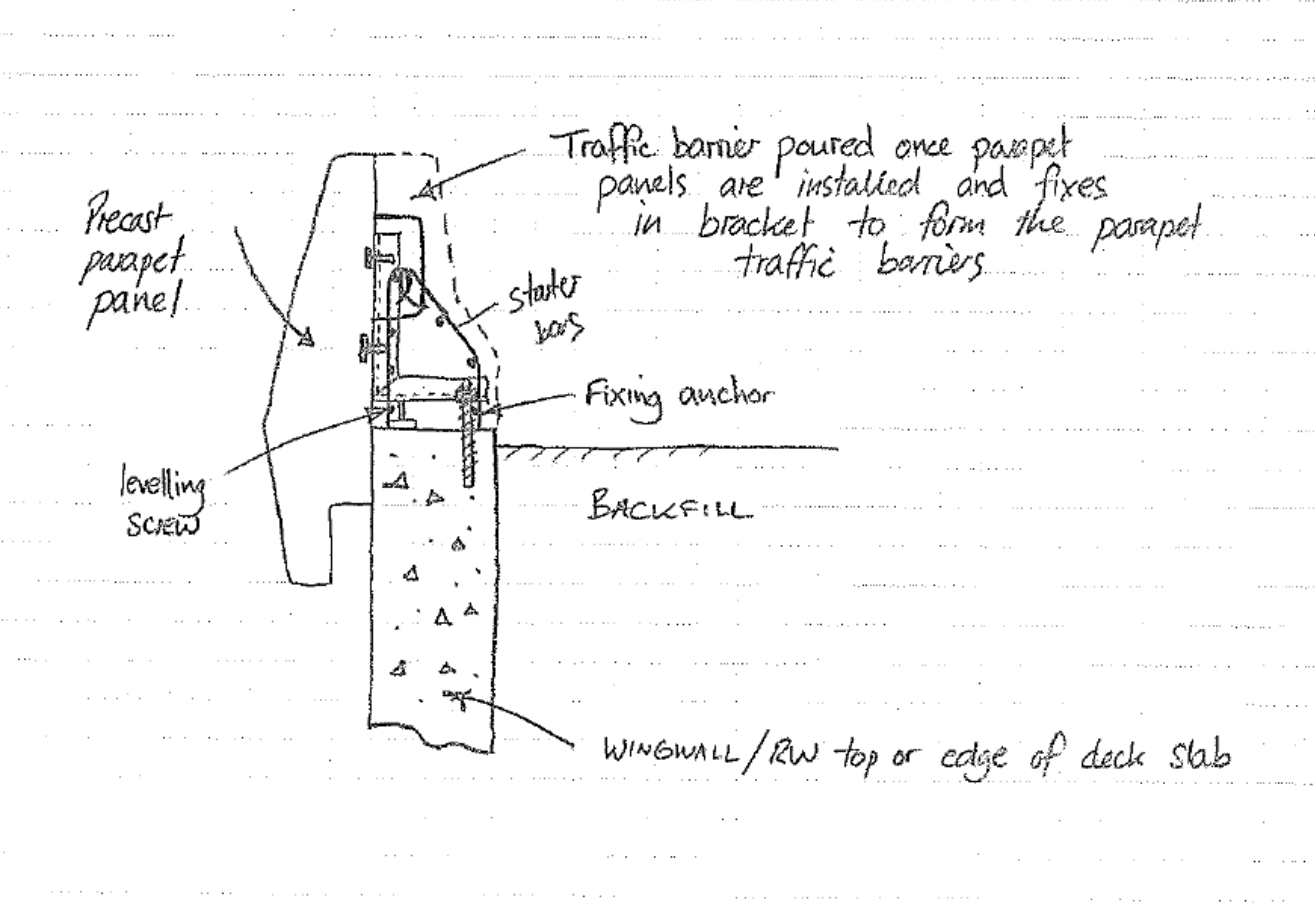
Well, slight rant over I’ll get back to the bridge. At present we are about 4 days ahead of programme with a key activity coming up which is installing the parapets. In reality we should be able to install the 24 panels at a rate of 6 a day but that is only if we get the prep work right. Each panel weighs 3T and is held in place by three L shape brackets that fix onto the deck/wingwalls/retaining walls. The fixing anchor as you can see from the diagram has been cast into the appropriate element and there is a levelling screw at the back edge that can be adjusted and sits on a steel plate that is epoxy glued on to the concrete. This has the potential to take a long time if the prep is not right as the tolerance is only mm between each panel. Once the panels are in the traffic barriers are formed over the bracket which tie in the panels and form the parapet barriers along the length of the bridge. On Eastwood Bridge we had one of these panels move out when we poured the barrier which gave us issues when we installed the metal traffic railings and throw screens which sit on top. I think this was due to the anchor fixing slipping as the bolt sits through a slotted hole and I think the additional force generated from wet concrete caused the bracket to slip which tilted the panel outwards as opposed to the bracket actually failing. To remedy this I intend to weld all the nuts and reinforce the brackets with straight bar diagonals welded on once all the panels are installed and we are ready to pour the barriers.
Other issues last week were with the approach slabs where the steel was wrongly fixed. I went out to check the steel 2 hours before we were meant to pour as I couldn’t get out earlier due to end of month cost reports due that day and the Project Verifier was already there who also spotted the mistake which I didn’t think looked good. The supervisor should really have spotted this when they started but it seems no one decided to look at the drawings beforehand. The chief steel fixer is a grumpy git but extremely good at its job and it has been very rare that he has got something wrong although I have picked up a few things recently. I can only assume he thought the steel was the same arrangement as the RW bases which have the larger dia steel bars at the top of the slab due to the increased tensile stress at the top generated from the wall resisting the backfill. The approach sabs have the larger dia bars at the bottom and so at the 11th hour we had to strip both approach slabs which lost us a day which is quite crucial at this stage. It also means I lose a day on the parapet installation as I need to be able to traffic the slab early in order to get on the deck to install the deck parapets. Looking at previous concrete strength we have achieved 80% strength which is required for loads over 15T at around 5 days. As a result I requested an extra cylinder to be tested at 5 days as well as the usual 7 and 28 days which will be tested on Wed next week and I can make a call as to whether we can traffic the deck or wait until 7 days.
The remaining work on Dickson following the parapet installation will be the traffic barriers, walkway (including services installation), traffic railing and throw screens and the type F traffic barriers that extend out from the parapet barriers for a further 25m on both sides and abutments. I am still negotiating with a slipforming subcontractor to do the type F barriers in 2 weeks’ time so I can see it done before I go on holiday as I have done a lot of leg work (plus a TMR on it) and would really like to see the process in action.
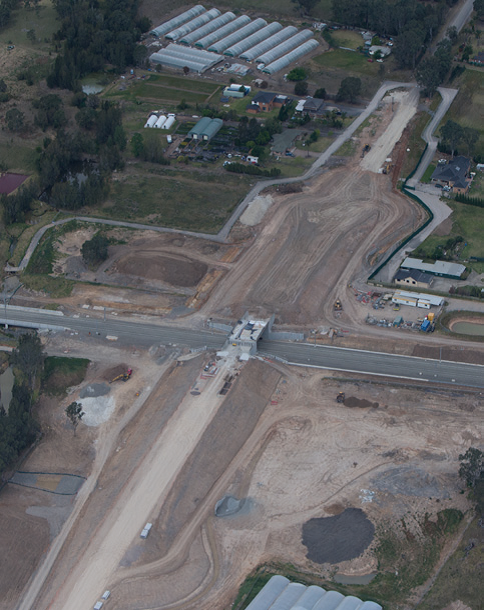 Aerial photograph taken of Dickson Rd Overbridge for the recent edition of the project newsletter
As for work on any of the other bridges it is all on hold at the moment and I don’t intend to get side tracked from Dickson to carry out any further defect work. I have been told that will fall to someone else once I have left but I am still costing 9 out of the 14 bridges on the project. Luckily I have just done that for the last time last week although I only managed 6 within the 24hrs we were given to get the forecasts in. The only major movements of money on the bridges are primarily Dickson Rd but this should also start to slow as the major structural work is now complete.
In other news little Ethan is just about walking and is enjoying his new found freedom. We went to the international fleet review at the start of the month and managed to get a prime view of the fireworks display (which was apparently bigger than new year’s) right in front of the opera house and harbour bridge. Ethan managed to stay awake until the last big fireworks crescendo which you would think would wake him up a bit. The bush fires in the Blue Mountains have been pretty horrific with the air full of smoke at times even in the city centre. The project is not that far from some of them and coming into work last mon you could taste it in the back of your throat. It also affected visibility around the local roads. One of the girls in the commercial team lost her house after leaving in the morning to take her daughter to a hospital appointment she returned and it had gone but her neighbours 2 houses down were untouched. Apparently the embers can travel for up to 50km and still burn your house down.
 Holdfast Training Services Trial Blog