Same old, same old
Everyday and with every new part of construction the same issues keep popping up, no power (or faulty generator), water logged floors or roofs, inadequate storage or working areas, unscheduled deliveries. Occasionally a real problem rears its head but that is usually squirreled away to the designers before we have a chance to really look at it. I’m getting to saturation point on what I feel I can gain from the site, it is becoming very frustrating, I have asked to spend some time at head office with the pre-construction team to see how the bid process can be got so wrong as it has been in Southampton.
I do find myself wondering whether I’m completely missing the point, one of my early posts ‘A Building is a By-Product’ talked about the fixation of winning prizes like Considerate Constructors but what I wonder now is whether cashflow really is more important than product or profit even. This project almost certainly won’t be profitable, it won’t be on time (massive LADs) and has been beset by design and management issues from the outset and yet nobody seems to be getting angry about it, especially the levels above contracts manager who you would expect to be getting nervous. The only solution that I can guess at is that there is some clever back room processes that can get ‘Sad Ken’ across the line ahead of the field in the 1530 at Chepstow and turn a profit by some miracle. People that are clever with contracts any views?
One thing that has kept me interested recently is being given pretty much the entire responsibility for bringing ALL the utilities onto site in the same week on the same road. A planning condition is for a single road closure for service installation (in reality we pushed our luck with the transfer beam and got away with it) and so starting next week in a stretch of road about 80m long I will overseeing the circus that will see geothermal heating, gas, mains water, HV electricity, BT and the foul water system all connected in 5 days. In sorting some of this stuff out I’ve had an interesting blast from the past, it started off a little like this:
PM ‘You need to either speak to Keith Olbury or Frank Dickinson at Lanes for Drains’
Rich’s internal monologue ‘No it can’t be even with that name’
Later on the phone man with distinctive squeaky Yorkshire accent ‘Hi is that Rich’
We talk business and then I say : ‘You’re not a former Royal Engineer are you?
‘Yeah I was’
‘A plant operator?’
‘Yeah, why?’
‘I thought it might be you’
‘Where do you know me from then?’
‘I was your Troop Commander in Tidworth’
‘Really?’
I guess I made a real impression then.
Yes Frank Dickinson was a particularly poor LCpl in my Troop that I was now relying on for a service in the real world, both of us with ‘manager’ in our titles, oh dear.
No concrete!!!!!……………Again
The last post finished off at the point of the base plug being poured and the Waterproof sheet membrane being fitted to the shaft bottom. This week has seen 75T of steel being fitted into the base prior to the “2nd” base slab being poured.
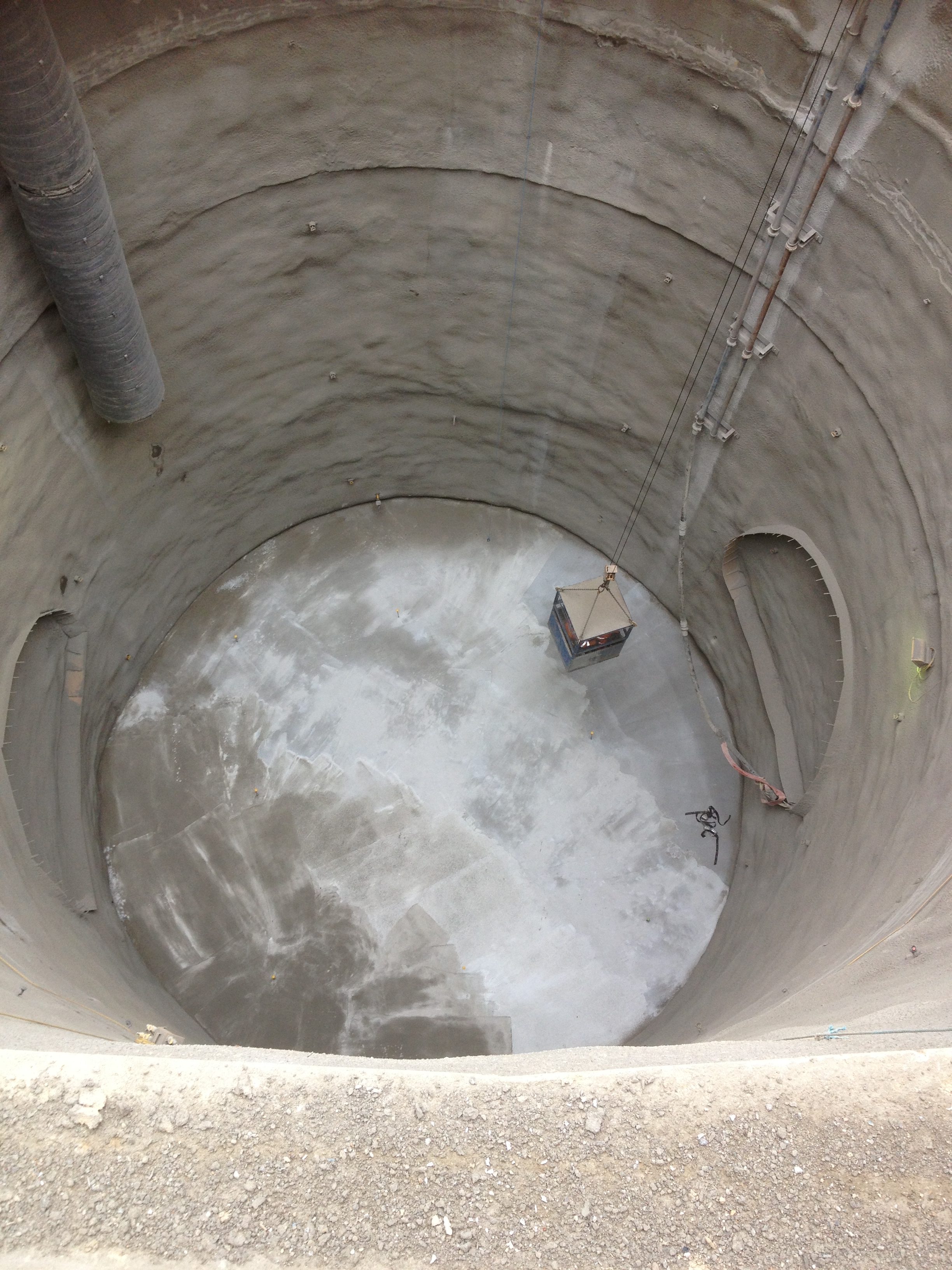
Base Plug pour
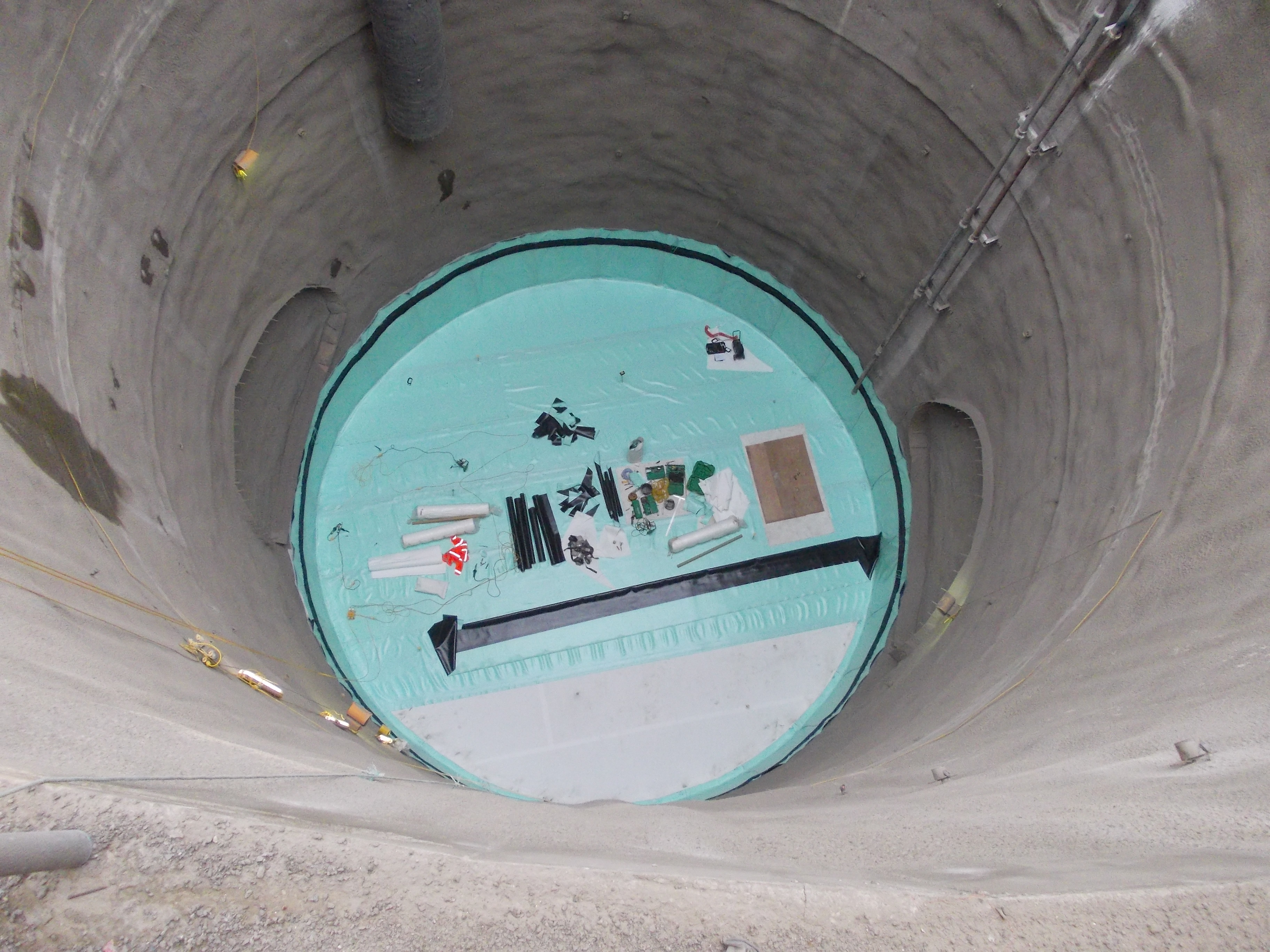
Waterproof sheeting installed
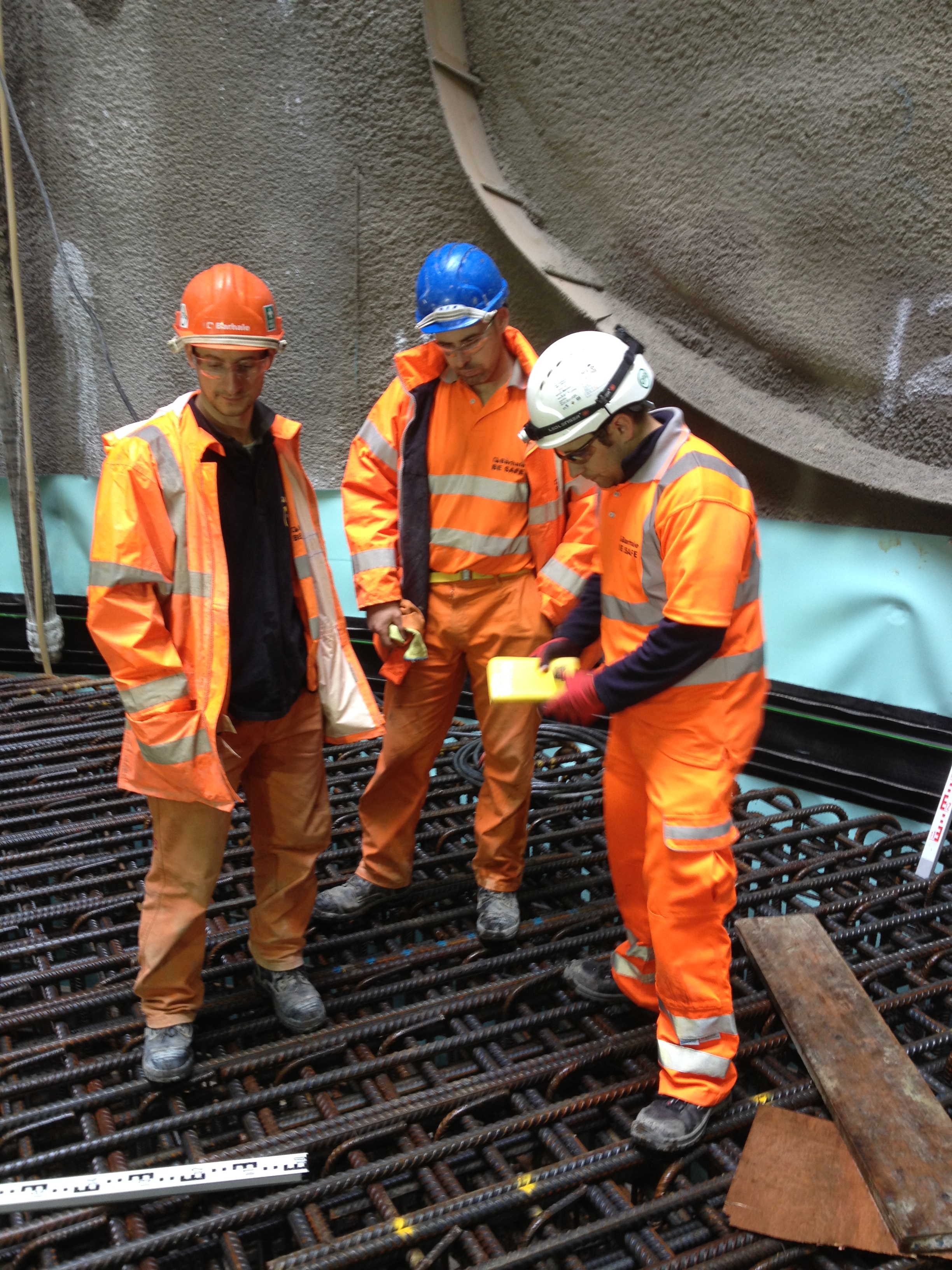
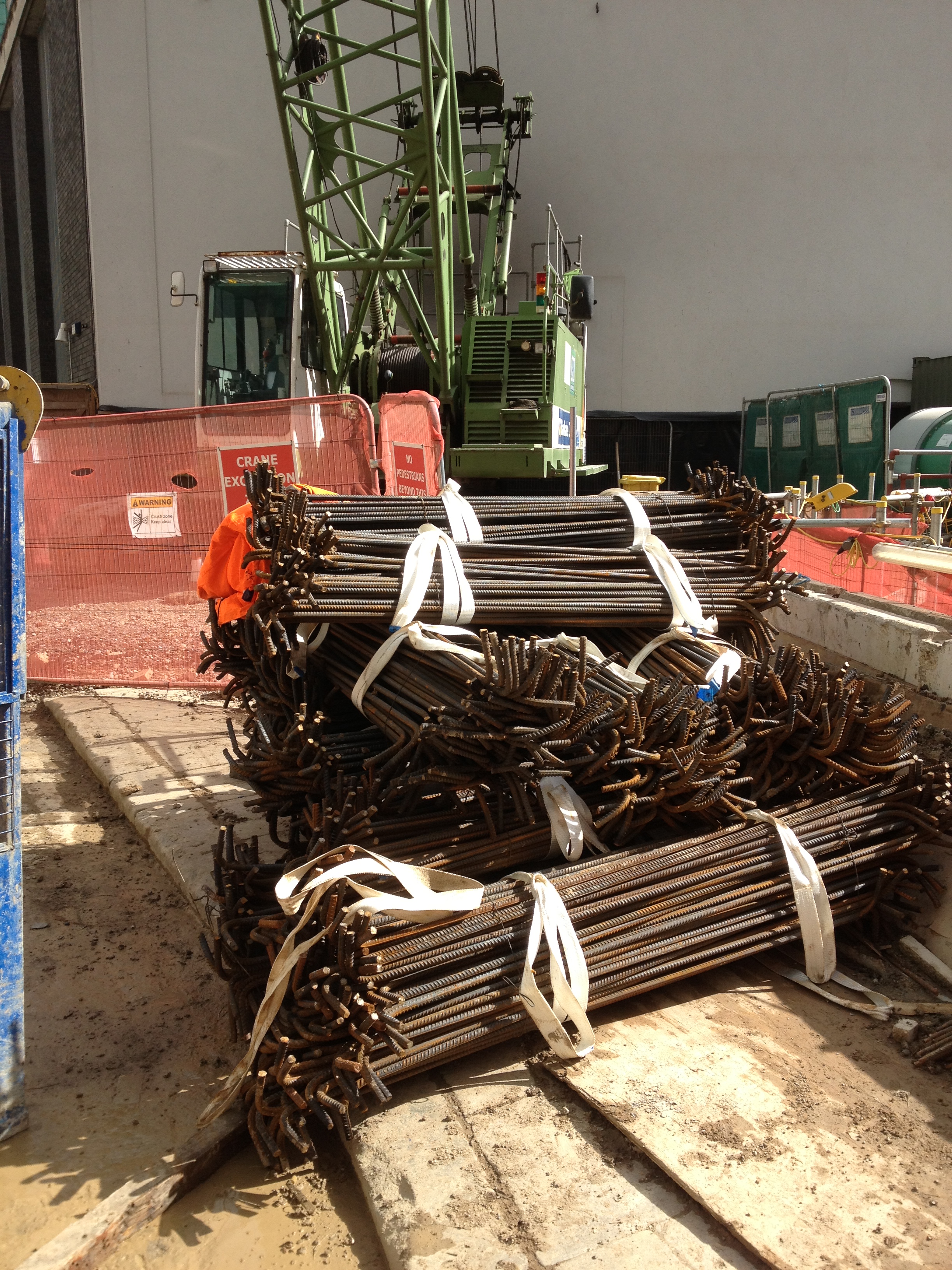
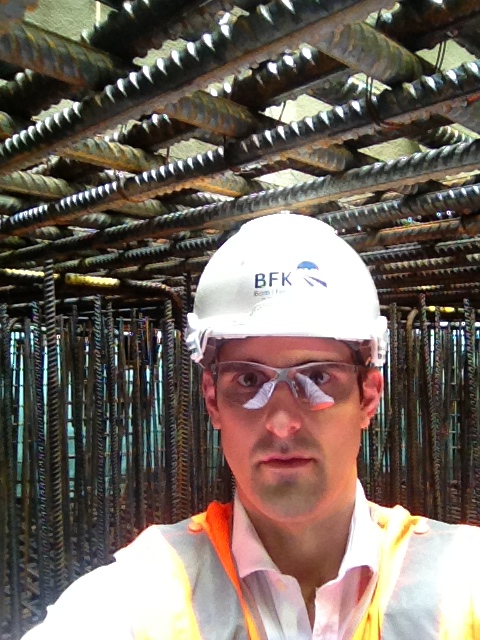
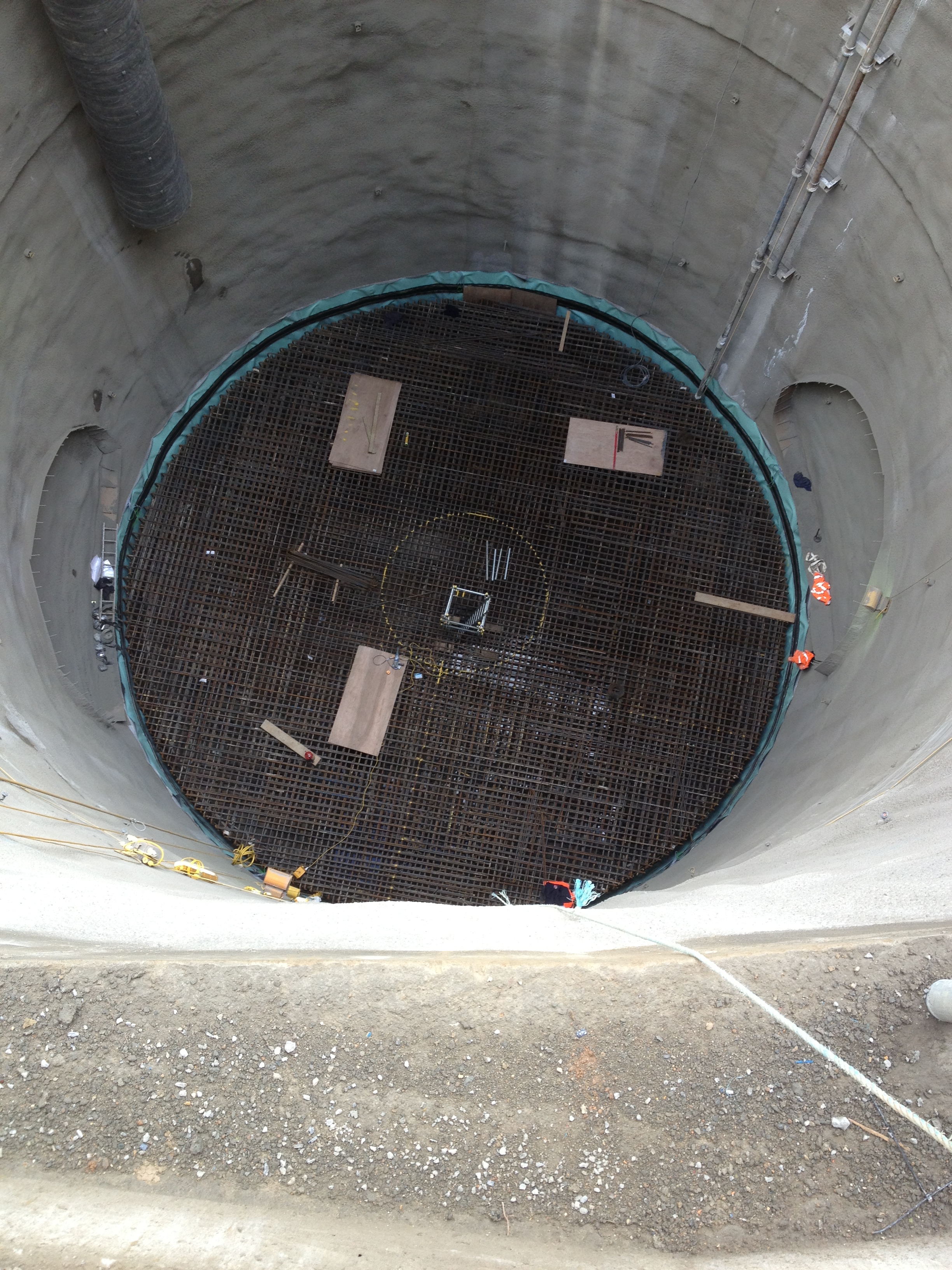
Whilst the job of installing the rebar has been taking place, the new Sub Agent (Filipe) and I have been trying to coordinate the next two phases. The next phase in the construction of the shaft is to pour the base slab (430m3). However there have been a number of issues. The Concrete mix design that was submitted by the Sub Contractors (Barhale) failed to reach the spec required by KF10 ( Materials and Workmanship Spec – In Situ Concrete). This is because it had not been tested for ‘Dry Shrinkage’ . The result of this has meant that I have been going through legacy concrete mixes, approved for other component ie Piling, Ring Beam to see if the mix complies with KF10. However there is no mix that has been tested for Dry Shrinkage. As a result the construction could be placed on hold for 90 days whilst a new concrete mix is designed and trialed/tested (requiring 90 day results) or continue with the pour and hope that the samples taken today reach the ‘dry shrinkage’ requirements in 90 days. THerefore I have just sent them this recorded Email:
‘1. They have failed to provide a mix with the appropriate testing information to confirm compliance with the relevant specifications (KF10) 2. It is their decision to proceed with pouring the base slab with a non compliant mix, and therefore is their risk 3. Any remedial works that are required to be carried out as a result of excessive shrinkage occurring will be covered entirely by Barhale 4. They will need to take appropriate samples at the time of the concrete pour and organise testing to confirm compliance of the placed material with relevant standards (KF10).’
Fast forward 28 days and hopefully the base slab will be poured, it will pass the dry shrinkage tests and the remainder of the shaft is waterproofed with sheeting. At this stage the In Situ lining will be poured. Amazingly again Barhale have failed to provide a concrete mix that reached the KF10 requirement. Again myself and Filipe have tried to recover the situation. THe only mix that complies with the In Situ lining requirement is the Segment mix. This mix is designed with a 30min life cycle. THe idea being that 250 pre cast segments are produced each day at Old Oak common. These segments are then delivered to site. However in our case we need to get the wet mix to Fisher street and let it cure in situ. Clearly the life cycle needs to be extended to approx 4hrs. This requires approx 4% retarder, however this is a change in the Mix design. AS a result we need to carry out trials and testing, hence I am going to Old Oak Common on Monday to pour 4.2m3 of “Segment Mix” and 5.5ltrs of retarder and probably an extra 50ltrs of water (the water is required as our mix will be pumped and the segment mix is too dry for pumping). Hopefully I will be able to record the correct slump (S4) and the correct life cycle (approx 4 hrs). If I can do this I will pour it into 3 x panels, then Test Consult (concrete laboratory) can collect the panels and carry out the required testing (Compressive strength, water penetration, dry shrinkage etc). CRL have agreed that if the 7 day results are OK then we can use the mix for the insitu lining, as adding retarder should not effect the qualities of the already approved “segment” mix. As you can see, how it has got to this position I do not know. I would have thought that before the shaft construction went ahead, someone would have double checked that we had all the required mixes in place and ready to go. Im being a little harsh, as the detail of this saga is a little more complex but unless Filipe and I can produce a concrete mix with 4 hrs life cycle and a S4 slump, the shaft project will go on hold….again.
However on a positive point, Im off to the ICE presentation on the London Super Sewer in an hour and Donaldson Associates have accepted me for my 3rd phase placement, meaning I will be located at the base of the Shard by Jan next year.
Rolling in the deep.
Quick post this week.
Everything has pretty much fallen by the wayside for two of my Clair scopes. The first is the Clair coolers replacement project which, as you know, is about 90% complete offshore and is on the TAR critical path. The mechanical window for the TAR is 27 Sept (3 days later that originally planned due to delays) at which point all process and safety systems are required to be buttoned up and ready for pre-commissioning testing such as low pressure nitrogen leak testing. The last two of my closing spools were sitting on the quayside as of COP last Friday and their boat should be leaving today. This leaves a very tight window for their installation and I have all of my fingers and toes crossed that they are going to fit first time. Should they be out then I have 2 spools sitting at the fabricators partly made up, but the lead time to have them off-shore would still be about a week. So, if the final closing spools don’t fit I will still be delaying the TAR completion at a cost of around £3.5M a day. I am really hoping this doesn’t happen, as you might imagine.
Further to this, I have fusible loop modifications which need to be installed by 20 Sept in preparation for testing by my contractor. With 4 days to go I am not confident that we are going to be ready although the off-shore team have been aware that this needs completing for over a week. Then there is the corrosion coupon being fitted to one of the process lines which again I am awaiting a progress report on. It seems that Stuart jumped ship at the right time and my days are generally filled with trouble shooting the issues that remain with this project.
By far and away the most pressing is the fact that the TAR plan has not incorporated any of the E&I scope (about 600hrs in total). I discovered this early last week, basically the WGPSN plan over estimated the job card hours and quite early on the TAR team mugged off the WGPSN plan in favor of their own baselined plan with more accurate job duration forecast. The fallout from this is that they have only concentrated on the jobs directly under their noses, removing the old coolers and pipework and fitting the new, as is their wont. It seems most people were aware that there existed a discrepancy between the plans and that the TAR team were riding on a wave of false security, but nobody thought to action it until early last week. With the TAR plan re-baselined to include the new E&I scope the project went from 5 points ahead of schedule to 5 points behind. I am hoping that with off-shore input to include what in the E&I scope has actually been completed we will come a little closer to the ‘S’ curve, but I am confident that we are going to remain behind it until the close now. It just goes to show how important accurate planning is and how damaging having two plans can be.
The other scope featuring on my plate at the moment is the installation of additional bracing to the Clair production manifold. I am inside the 12w gate now and following some fancy footwork I have managed to narrowly avoid being red-flagged. However I still don’t have a workable plan to get this executed off shore. My issue is that to install the new steel I need to replace 8 temperature transmitters with longer assemblies. To this the instruments must be removed and the pipework can’t be flowed while this is done. The project does not have the clout to warrant an outage and so I have to fit it in to a planned outage. There is one planned for December and I am making progress, but I have a feeling it is going to be a messy execute which is not ideal. The wells are taken down based on the requirement dictated by the controls team off-shore and the process engineers offshore, so there is no defined plan of which well will be down and when. My feeling is that I am going to have a team off-shore who will be sitting around waiting for the right well to be off-line to do their work over a period of 2 or 3 weeks. If this is the case then my justification for running the project is weakened I might get bumped out of my slot. At this stage, the more robust I can make the plan, the more likely it will get through the next gate. What would be hand would be a JRE to handle the material and workforce coordination, but I am still waiting for confirmation on who this is.
In other news…
I ran the Great North Run on Sunday and was narrowly beaten by Mo Farah finishing with a time of 2 hrs 3 mins (me not him). Not the fastest time in the world, but then I’ve never been the fastest runner in the world. I was just chuffed to finish so close to the 2hr mark considering how sporadic my training has been.
Scotlands’ summer is well and truly over and we have had the heating on every morning in the last week. It’s going to be a long cold winter methinks.
The Waiting Game
Right now we should be on the verge of commissioning the mechanical and electrical services but there are quite a few issues to resolve before that can happen. The weeks are filled with meetings where we discuss at length what needs to be done but nothing ever seems to get done. The disagreements are getting few thanks to the system of referring them up the chain of command but the results are no quicker, as predicted! Part of the problem in commissioning is down to the people trying to reinvent the wheel. USACE employ a contractor to produce the specifications for successful commissioning. They also require the contractor to employ an independent Commissioning Contractor who is under the Contractor’s pay (so not that independent), so that all testing is impartial. However the Contractor can also have a say in how the Commissioning is carried out and can over rule their own Commissioning Contractor. They can in turn be over ruled by our Commissioning Contractor thus leading to multiple conflicts of interest. The main issue revolves around the check list for the various stages of testing. Initially you must have a Start Up when the equipment is turned on for the first time, then a Pre Functinal Check (PFC) which gets the system running then a Functional Performance Test (FPT) to show that the system works as per the specification before having an Interactive System Functional Performance Test to show that all the systems are working in harmony and not in isolation. Our commissioning contractor has written very detailed lists that need to be used but the Contractor’s Commissioning Contractor does not want to deviate from their own standard lists which often get rewritten by the Contractor when they are submitted to try and speed up progress by removing any “unnecessary” tests. A perfect recipe for a hold up! Of course the Contractor is cutting its own detail by carrying out its own PFCs without notifying the Corps to try and get round us and speed up which as quite annoying form our point of view because we are meant to sign off that the tests met our standards which we are being asked to do without seeing the tests. Apparently it is illegal for our commissioning contractor to carry out the commissioning testing themselves which is crazy. It is not as if they installed all the equipment themselves!
Further more there are still on site issues.
We finally had the electrical testers out to look at the pump motors that keep tripping the circuit breakers. I took it upon myself to look at the co-ordination study which identifies how the circuit breakers and fuses are rated to avoid discrimination. This study (which had been approved!) had a lot of conflicts! When I challenged the Contractor they said this one was out of date, but we didn’t know that. When the tester arrived he brought the wrong tester which could not test for trips at less than a second. The next day the correct tester was used and we established the following:
1. All motors are drawing far too much in rush current on start up. For a 220A motor 1300A in rush was expected (6x running current). The regular motors were drawing 2200A probably because they are oversized for the job.
2. The faulty motor is drawing 3600A in one phase, 3450A in another and 3300A in the third. This probably due to damage in the windings where the insulation is susceptible to degradation by the ingress of water.We are still waiting on the results to be confirmed but it looks like this motor will be getting swapped out.
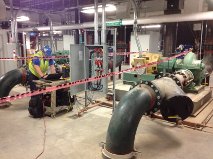
Motor testing
The Mechanical Contractor has also failed to establish why the drain over the BAS server leaks. They are going to cut it out to work out why.
A new project is happening next to the Lab. The office will be expanding by 40% to accommodate the in rush of Medical Corps personnel (mostly civvies) who will be needed. However the contract has just been stamped Ready To Advertise (put out to tender) and the Contract Officer’s Representative has noticed that there is no design for the upgrade. As the drawings have been stamped 100% any changes now will be expensive. I have been tasked with designing the new trailer. Not sure to what level of detail yet but it is very similar to one of course projects except that civvies take 2 weeks to give you an answer, not 2 minutes. There is no budget to work to either. When I pointed out that the longest side of this office was going to be south facing which would mean higher energy bills because the HVAC will be working hard the response was “And?”. Should keep me busy for a couple of days…..
This week I also took part in the Officer Professional Development day where all the military guys in the District get together and swap war stories whilst doing some work with the local community. This got off to an exciting start with an RV at 0600hrs next to the National Security Agency gate (think GCHQ) heavily sign posted with Keep Out signs (not mentioned in the instructions), where going to the gate by accident can result in a full body cavity search and vehicle strip down even for the US soldiers. After a few near misses we set off for the project. In this instance we installed nets to prevent the Canada Geese from eating the plant life in a designated Wet Land area of the Anacostia River just east of DC. This land was created by dumping dredge material in an underused river to create new wetlands and encourage the growth of wildlife. When the plants are eaten they fail to hold the dredged material in place and it washes away. We were given waders then had to go across a waist deep stagnant river to hammer in pickets and zip tie on the netting.
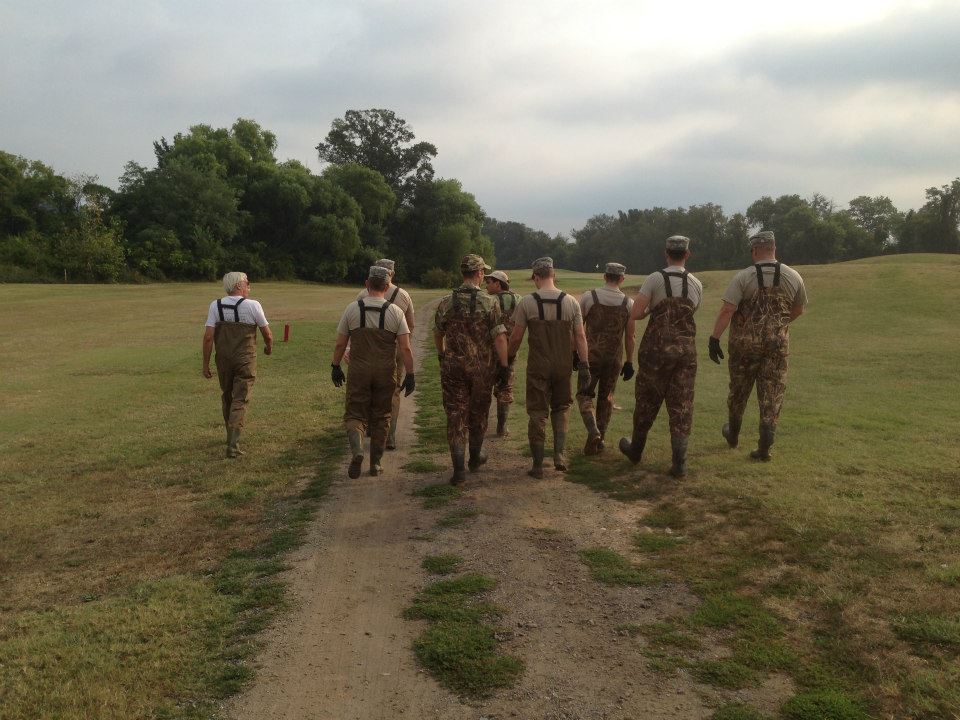
Unfortunately the civvie in charge had not banked on us being very efficient and we ran out of zip ties in 30 minutes. We did manage to carry material over to the site and put all the pickets in place (daily trivia – they call a monkey a pounder over here) before heading off to remove invasive weeds from the municipal golf course adjacent to the river. This was followed by a presentation on how civil works projects in the Corps are funded. This was interesting because Civil Projects (such as our wetland creation) must have a civilian organisation as a financial partner before they are approved. This is quite hard to achieve because these projects can take 20 years to come to fruition so finding somebody who is financially strong enough to last that long is quite hard. This project was part funded by Walmart, fitting really considering the banks of the river were covered in plastic bottles and other supermarket trash. The day concluded with lunch at a micro brewery and a fun day was has by all.
Harrisburg is still progressing well. The new roof insulation being installed will take the R value from 12 to 30m2K/W which should make a difference to the bills. We have finally managed to get the world’s worst Site Safety and Health Officer sacked for not performing up to the standards expected. Apart from his inability to submit useful paperwork and carry out relevant tool box talks (he actually did the same talk 3 weeks in row) he considered the best place to inspect his site was from the safety of his truck which would have been fine if the truck was on the roof not 40 feet below it.
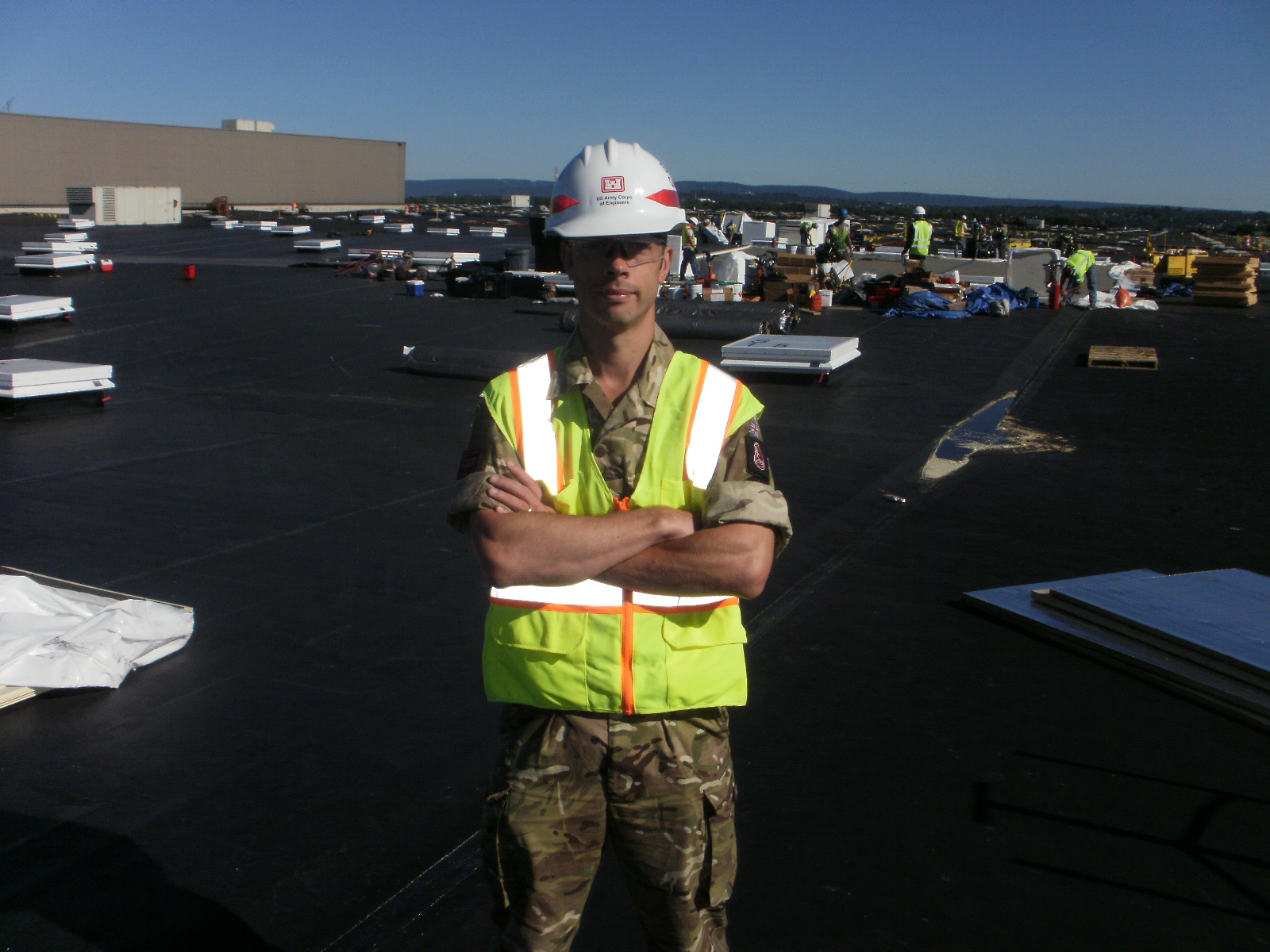
A roof replacement in progress.
And in other news:
I have won a 3 day holiday courtesy of the Maryland State Fair we went to 2 weeks ago. All I have to do is pay $75 and attend a timeshare brief for 90 mins and I get a 3 day holiday in North Virginia. I am also going to the opening home match for the Ravens football team courtesy of a work colleague with a spare ticket. These are like rocking horse stuff and generally cost $300 so this is an awesome opportunity. We spent Labor Day weekend on the beach with the kids picking up fossilised shark teeth and going to the the State fair which cost $60 to get the kids on 5 rides!
As requested the top 5 things this week that I have discovered in which the US and UK differ:
1. American Army Officers’ Clubs do not hold the same status as a Mess. They are generally avoided and do not have living in members.
2. Smart Casual in the US Army is flip flops, shorts and T Shirt.
3. American Public schools (think UK comprehensives) get by financially by getting parents to sign contracts that “encourage” them to “donate” large amounts of cash to help fund the school. We have already donated $50 and a joined the PTA for $5!
4. In the state of Maryland you do not need a license or background check to own a shotgun, a muzzle loading deer rifle (accurate to 350 yards with a scope and fires a 0.5inch round), crossbow or compound longbow.
5. It is now deer season but only if you are using a bow. In some states crossbows cannot be used because they are deemed too accurate. (As you can tell there are a lot of hunters in my trailer!)
Proof the old Pope is alive and well and living in Baltimore whilst commuting to DC.

Has anyone come across this in the work place?
My Big Swimming Pool
As I mentioned in the last blog, the SCL works for the shaft are now complete. As a result the base plug, some 230m3 of concrete was poured to ensure there was no effect from the uplift heave. The plug was left to cure and then the 3 x depressurisation wells were grouted to seal them.
The next phase was to start installing the waterproof sheeting. However this could not be put in place untill the protective layer was installed. The protective layer is essentially a sheet of thin white foam. The foam stops the steel fibers that are in the SCL from penetrating the waterproof sheeting.
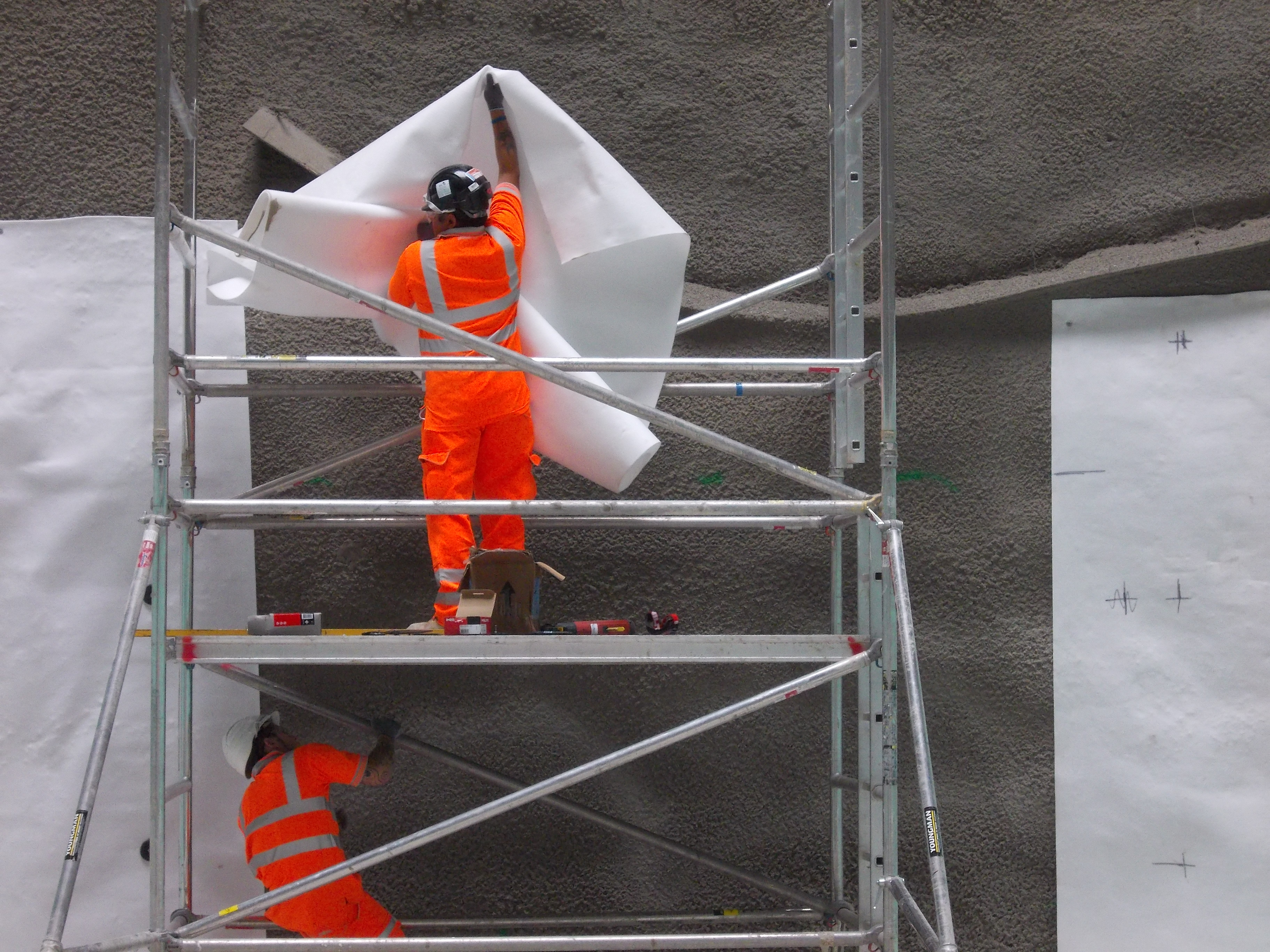
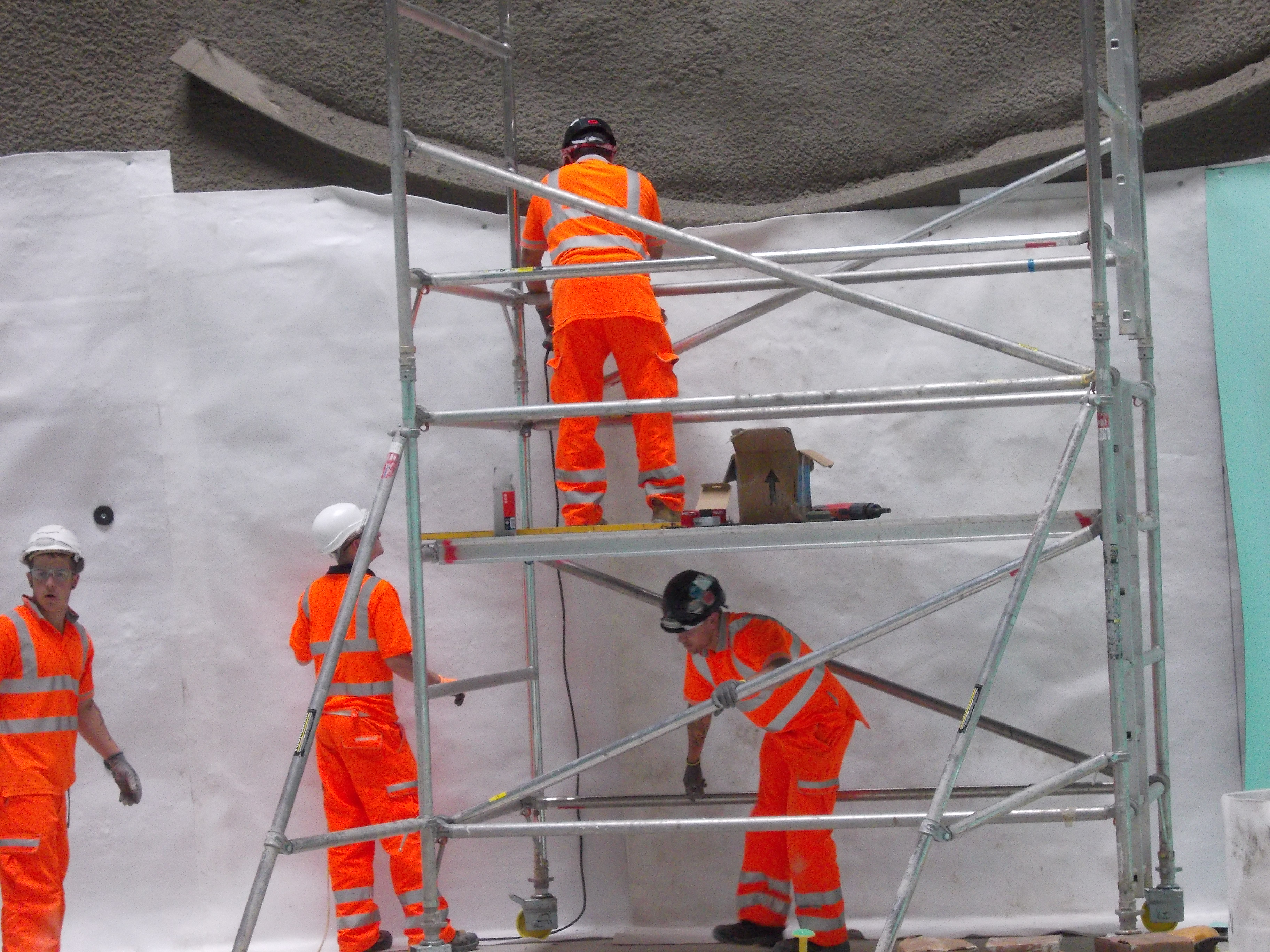
The protective layer is nailed into place, allowing a large washer to be installed allowing the waterproof sheeting to be welded. This ensures that the waterproof layer is never punctured by nails.
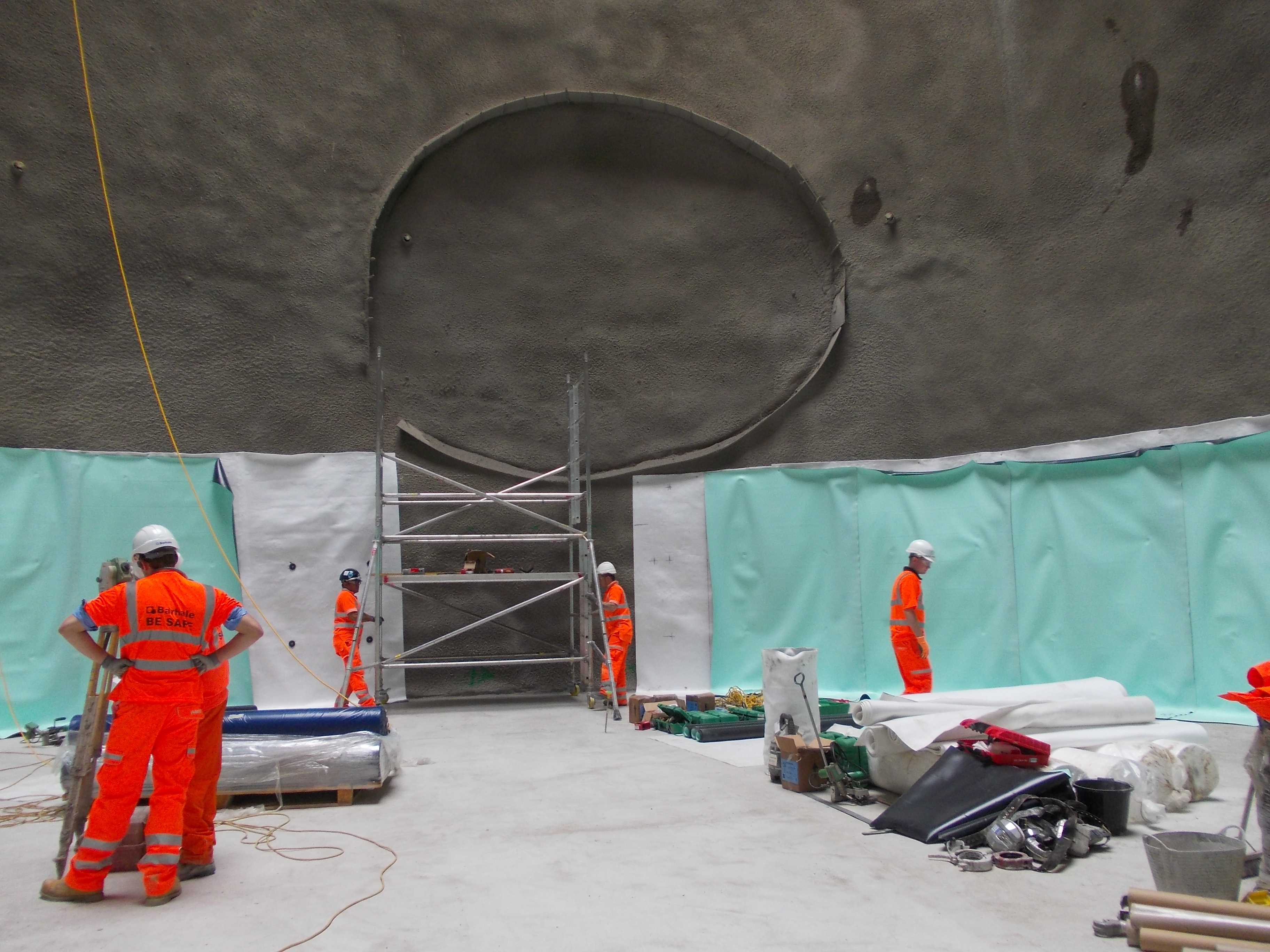
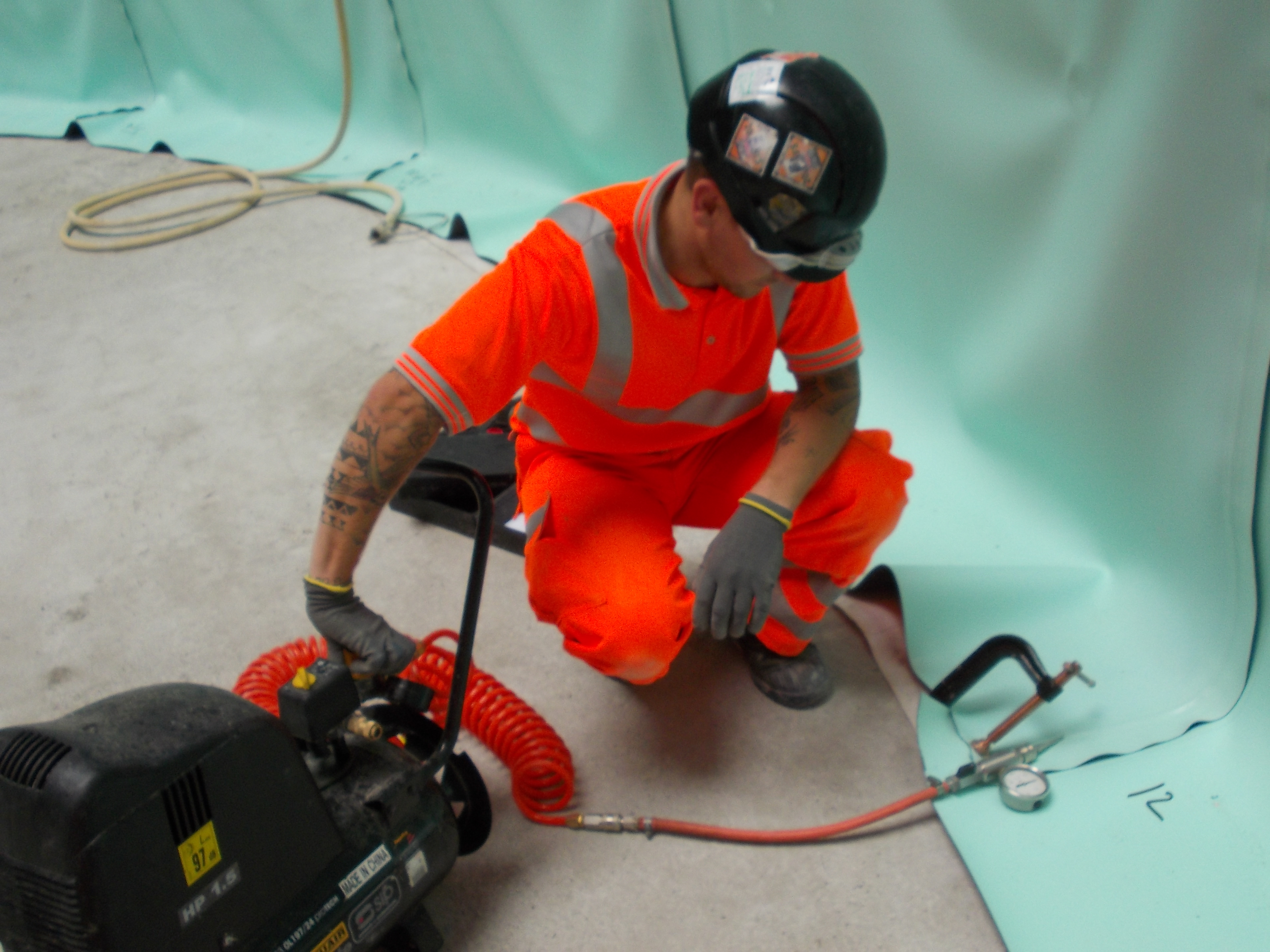
As you can see from the photos the waterproof sheeting comes in rolls of approx 2m. As a result the sheeting needs to be heat welded to each other to ensure a watertight fit. To make certain that the waterproof sheeting has been welded together correctly the joints are pressure tested. The overlap between each sheet is filled with air and the pressure is taken for 10 mins. If the pressure decreases the seal is not 100% perfect, as a result the weld is redone.
The final result is that the base is looking like a giant swimming pool.
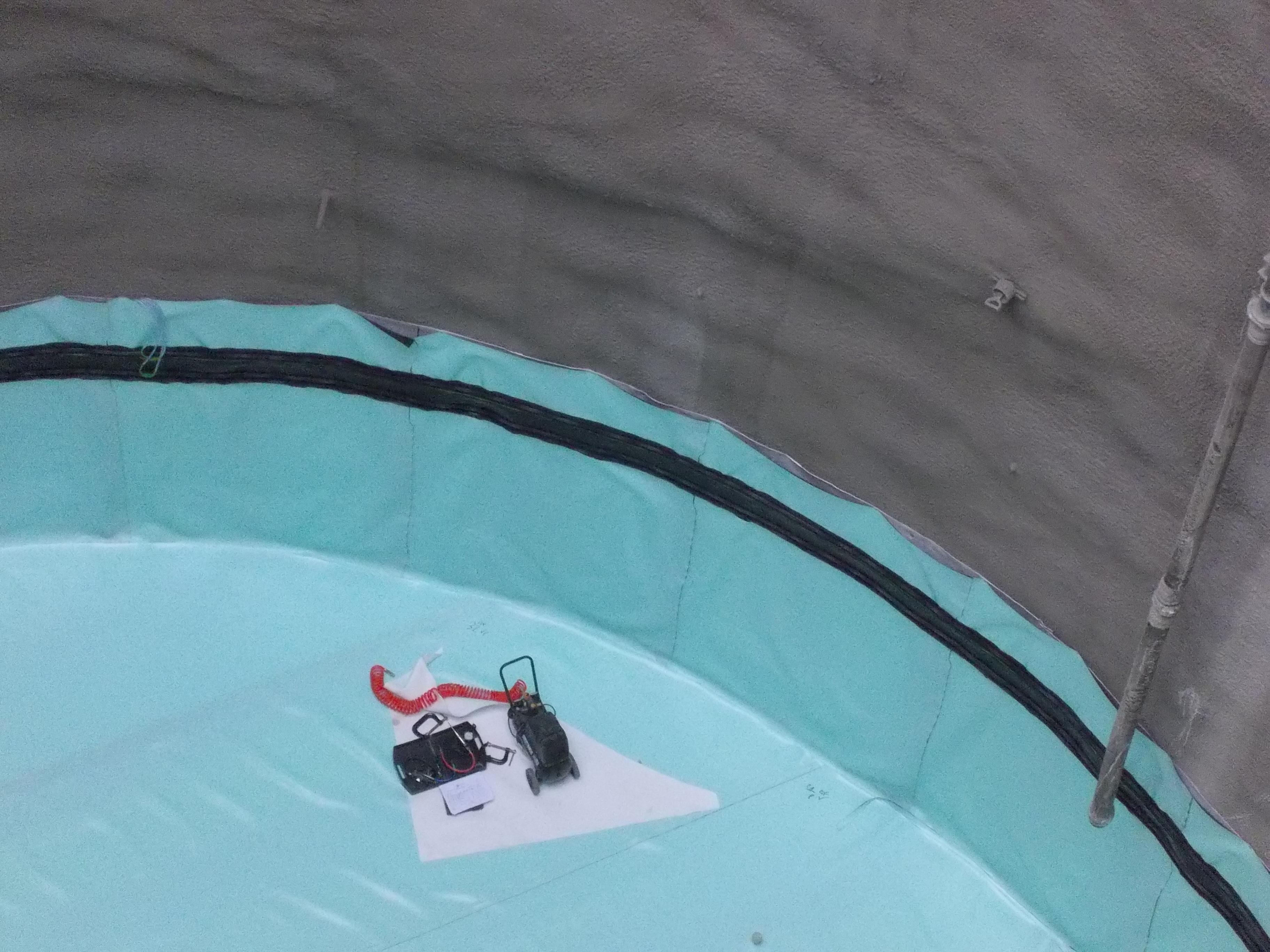
The next phase is to install the huge reinforcement cage into the base and then pour a further 450m3 of concrete. It seems like a huge overdesign but the designers have insisted on the second pour. Once the second pour has been completed we will be at the Adit level. This will be the point that the waterproofing for the shaft sides will be installed, shortly followed by the Insitu lining.
On a different point, Gemma Quickenden (Sub Agent) has now left the project. This has allowed me to take over the running of the Compensation Events. With the completion of the SCL works the SCL CE’s are being dealt with. I arranged the first meeting with Barhale yesterday to talk through all their CE’s. I had hoped we could agree on the majority of the 26 CE’s however we have agreed upon 5. This has been the most enjoyable part of the secondement so far, as it allows you to debate/argue with those individuals you have been wanting to shout at for the past 6 months.
Backfill issues
The last few weeks have been hectic to say the least trying juggle sevral different sites. Dickson Rd Overbridge progresses but not in synch with the programme. I have re-written the programme which has been scrutinised by the Construction Manager and he concedes that a completion date of 20 Dec is realistic. The issue here is the backfill, we requested the backfill to be done quite specifically (recall my sketch in an earlier post) which battered back to the level of the top RW. We intended to step up to the next RW level by forming up shutters and vertically blinding with snape sand to the required RL then we would repeat for the next one. This was the method used at Eastwood Rd Overbridge but with hindsight we should have just backfilled to the level of the wingwalls and then backfilled to the formation level of the next RW as we progressed. Because Eastwood Rd has displayed signs of settlement due to poor backfill/compaction the Construction Manager has stressed to me that we must get it right this time and so I have decided to prioritise the deck so that we can backfill against the blade wall before starting the RW’s. We have currently completed the wingwalls at both abutments and will pour the deck/diaphragms in one pour this week. Once the deck is complete this props the structure so that we can start to backfill either side simultaneously up to the RL of the first RW’s. Meanwhile I hope to prefab the steel for the first RW bases so that we can lift them into place once we have backfilled, excavated part of the batter and blinded the area. We can then keep alternating from abutment A to B backfilling and pouring the RW’s in pairs. This issue with the battered back backfill means we have significantly reduced our working areas at either abutment which coupled with the fact that we have rail track through the span means the requirement for craneage (if that is a word) has significantly increased and will continue to do so. I had no choice but to hire a 130T crane the other day to strip the shutters from abut A wingwalls and move them over to the abut B purely because of reach where normally I would use a mobile 25T Franna crane – the cost was $7000/day compared to $3000/day and this will be typical from now on as we complete the RW’s. The batter also means the backfill at the edges will not be adequate enough and we will have to excavate and then re-compact.
![IMG_2154[1]](https://pewpetblog.com/wp-content/uploads/2013/09/img_21541.jpg)
Eastwood Rd Overbridge is showing signs of settlement on both sides which has been attributed to poor compaction by the civil team doing the backfill – not the first time this has happened. As this bridge is open to the public I am currently monitoring to see if it still moving which early indication says no it isn’t. However there are some worrying looking cracks on the traffic barriers as you can see from the photos.
![IMG_2129[1]](https://pewpetblog.com/wp-content/uploads/2013/09/img_21291.jpg)
![IMG_2130[1]](https://pewpetblog.com/wp-content/uploads/2013/09/img_21301.jpg) Down Under!
Down Under!
I have also had 6 x LV pits and conduit runs to build at Cowpasture Rd Substation. These look simple but have been an absolute nightmare, they seem to be massively over designed and the 200m walls are practically full of steel. We have poured 4 of the 6 with the 2 pits that lead up an access track to a utility metering panel not yet started. The lids are placed on top at the moment but we will need to concrete them in and over them but I plan to do all 6 at the same time as I will have to order a small quatity of our usual 40MPa mix but with agg of 10mm or less so that the concrete will form into the metal lids. I have had to get another FRP subcontractor in for these pits as the one I was using also works on Dickson Rd and I need all their available manpower for the bridge. Their steel fixer practically refused to do another one after the trouble he had fixing the first two and the constant moaning that came with it I was happy to hire in another subby! All this work is on dayworks which I estimated to take 650 hrs, I last calculated I had about 100 hrs left in the budget to complete the last 2 but with a bit of JH labour in reserve.
![IMG_2144[1]](https://pewpetblog.com/wp-content/uploads/2013/09/img_21441.jpg)
I also have a number of Non Conformance Reports (NCR) and associated RFI’s to deal with on practically all the remaining bridges and a few retaining walls but nothing exciting. These are mainly crack repairs, patching work and out of tolerance ‘as-built’ surveys. Settlement at the approach slabs on just about all the bridges has occurred up to about 30mm which is noticeable on the pre-cast parapet sections and on Cowpasture Rd viaduct the approach slab has settled showing a gap between the walkwy and slab which you could get your hand down. This has bee recorded by the client but has subsequently been covered over by ballast and tracj by the rail team so if any remedial work will be required it will be a complicated job. The RW’s in this section have also settled and a gap has appeared between two adjacent panels. The movement has been 70mm back and 20mm down which the designer has said is acceptable has they were expecting movement of up to 100mm. The rectification method will be to fill the gap with a grout but this is on the back burner for now as I have no manpower or time to invest in it at the moment. There is also the issue of improving the access track that is below the wall so we can carry out the work. This small RW (RW14Ua) sits on top of a larger RW (RW14U) which has also settled but the corner of the wall rests upon the corner of the pile cap to Byron Rd bridge. This has resulted in the corner of the wall being crushed and the concrete has broken away. This is also another job on the list but will require the corner to be broken out the ‘stiffjoint’ material and appropriate gap reinstated between the wall/abutment/pile cap and then the corner re-formed. There are also another two corners which have not crushed but will have to have the same treatment so that if the wall does settle on that side then it will not crush. The fourth corner does not rest on the pile cap.
![IMG_2119[1]](https://pewpetblog.com/wp-content/uploads/2013/09/img_21191.jpg) RW 14U
RW 14U
![IMG_2122[1]](https://pewpetblog.com/wp-content/uploads/2013/09/img_21221.jpg) RW 14Ua
RW 14Ua
The Scalabrini Creek Underbridge conduit issue continues. I have had acceptance from the client and the services designer to cut the conduits that do not have a joint for expansion providing that we have operational controls in place for installing the cables. This basically consists of liaising with the rail team so that they are aware of what we are doing and making sure that they have procedures in place for installing the HV cables with a gap of about 50mm at the EJ’s. As all the pulling ropes have been installed using a compressor that blows a sock down the conduit with the cable attached to its tale, the only real concern is any sharp edges on the conduits that have been cut. As the forces involved when they pull theses cables through can be quite high any burring on the edges could damage the cables along its entire length. The metal cover plates will remain off so that a visual can be maintained while the cables are installed but will be bolted back down once they are in place. The main issue at the moment is how to actually cut the conduits. Myself and the supervisor had a go ourselves last week as we had no other labour available at the Rail Team are hounding us to get this done so that they can install power to Leppington station ASAP. We managed to cut the top ones easily enough with a Panel saw from Bunnings (B&Q) but the lower 150mm dia conduits are about 700mm down within the joint and there is only a 70mm gap, not really enough to even get your hand down. I have had two different concrete cutting subbies out to have a look and one said they had a wire cutting diamond saw which sounds hopeful. The construction manager was concerned it might not give a smooth enough cut and asked me to look into Hydro dem (UHP water cutting). He hasn’t yet seen the handy work of the two oxygen thiefs I had to employ on dayworks the other day to cut the upper conduits on the other abutment – if he had he wouldn’t be worried about a rough finish! Having looked into hydro dem companies in the area and having seen this sort of stuff in action when cutting into bomb casings I really don’t want to mess around with that stuff for the sake of cutting a few UPVc conduits so I intend to give the diamond wire saw a go as soon as they can do it – which I was hoping would be this afternoon but they have now said next week.
Shaft complete……..almost!!!
Finally we have got to the bottom of the shaft. The excavator has been lifted out of the shaft, allowing the base slab to be poured.
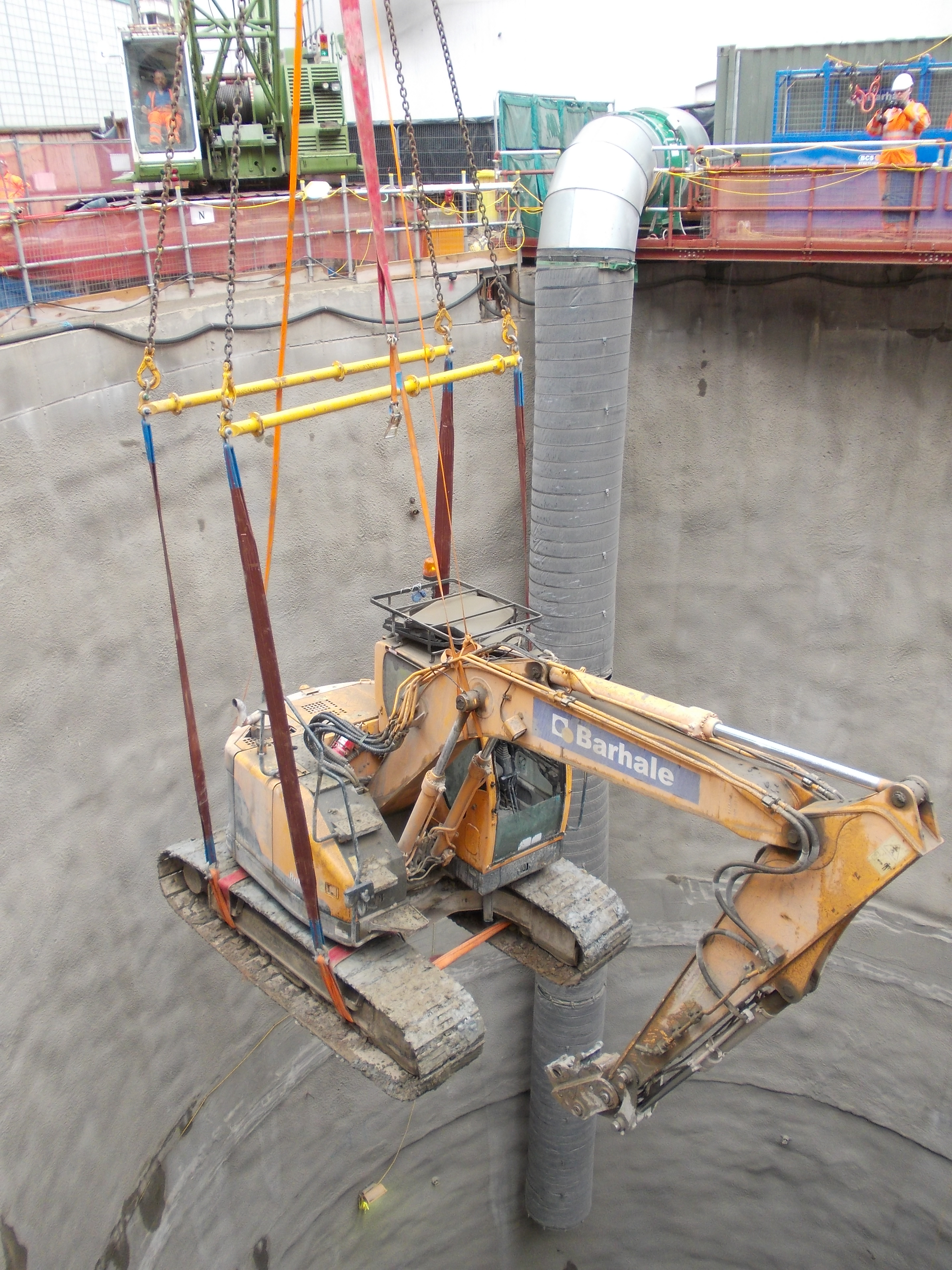
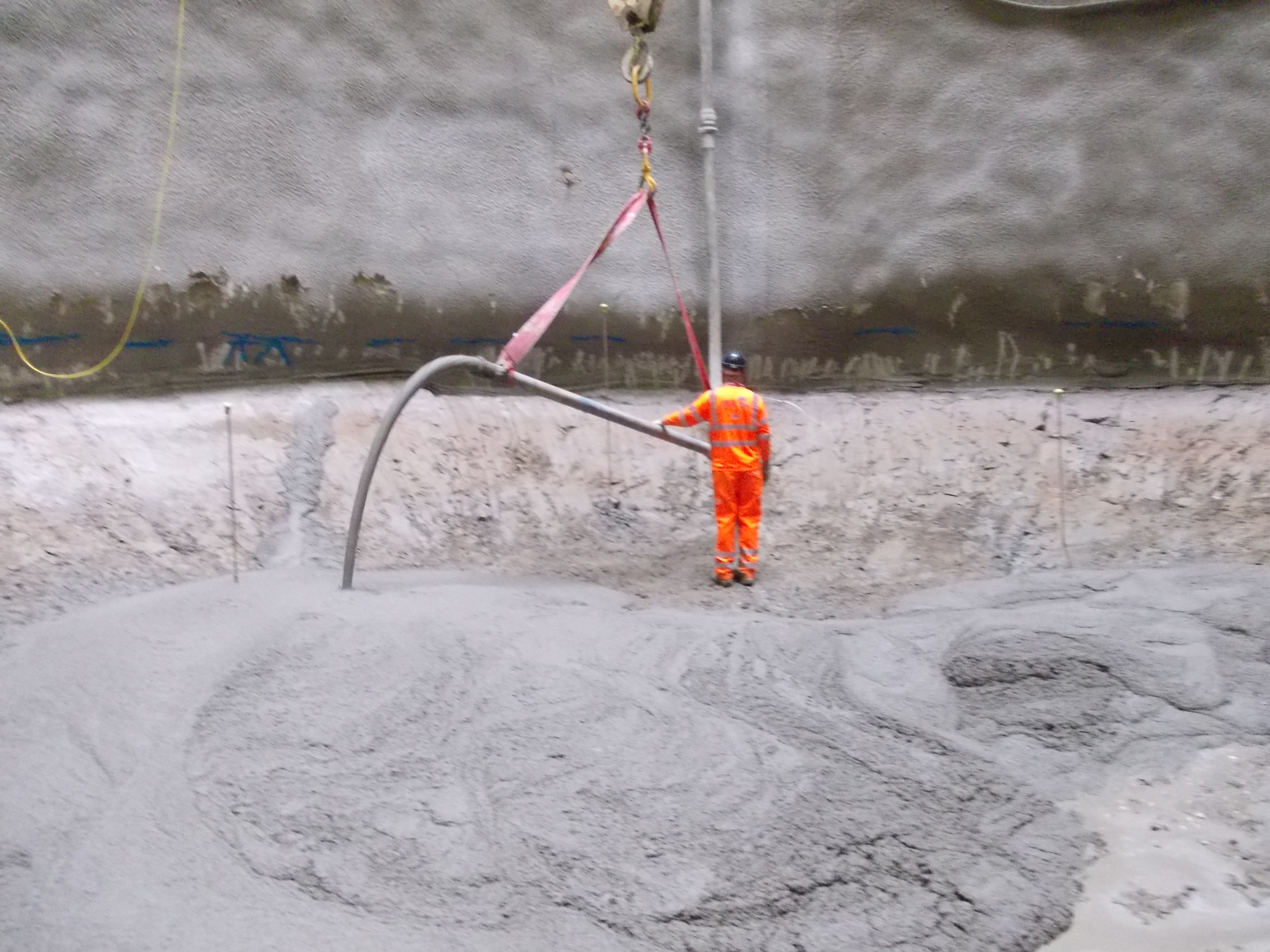
So what is the next step?
Well the Waterproofing sheet membrane needs to be installed over the slab and the walls of the Sprayed concrete lining (SCL). However the water proof sheet membrane requires a regulating layer to be sprayed over the reinforced SCL as the steel fibres could pierce the sheeting allowing water ingress. THe waterproofing sheet will be lowered onto the slab and a huge sheet will be rolled to the top of the shaft. Once it has been nailed in place the sheets will be welded together using a heat roller. Once the sheeting has been sealed and connected to the shaft it will be tested for any leaks. They use compressed air to find the leaks, much like looking for a puncture in a tyre. The gap between the sheeting is filled with compressed air, if the pressure decreases…you have leak.
Once the waterproofing is in place the next step is the In Situ lining. The concrete will be the first non sprayed concrete we have used since the installation of the ring beam. The concrete will be placed into position using ‘climbing shuttering’. This will allow the first lift of concrete to be poured, once that has cured and reached the correct compressive strength, the shuttering is raised into the next position ready for the following pour.
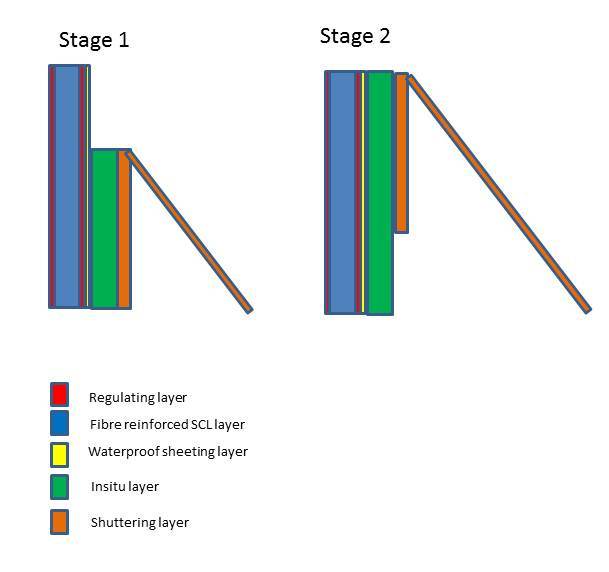
So far the project has run relatively smoothly, however with this new waterproofing material I predict a few issues next week. Additionally, we are still trying to find a concrete design mix that fits the required specification for the In Situ lining. So far the concrete design that was selected by our Sub contractors has failed to reach the specification. AS a result I am trying to find a legacy design that meets with the spec, however they are mostly falling short. The major culprit for this seems to be the amount of polypropylene monofilament fibre and the drying shrinkage requirements. Hopefully we will find a mix before the 26th, when we start pouring. unfortunately, the one design that did meet the spec had a working life of 30mins and it takes 45mins to get to site from the batching plant. The amount of concrete required is a problem area as well, as we need 60m3 every 3 days, not many of the batching sites can provide with their current work loads.
Any way I shall let you know how it goes next week. The good news is that the Sprayed Concrete lining is complete and the slab is being poured as I type. Nearly there!!!!
Contract Acceleration
It is often necessary to accelerate a contract in order to meet a specific contractual or construction milestone. This is done to maintain project programme and in the case of the New Children’s Hospital (NCH) improve cash-flow through payment via milestone achievement.
Acceleration may be requested by either the client or the contractor and the process for implementation should be documented in the contract. It is most usual for a client to accelerate works to bring forward a completion date or maintain programme after a delay or design change.
If acceleration is requested by the client, the contractor should have the opportunity to respond with a decision stating any terms of contract that he considers he will be entitled to; this will usually be financial remuneration. If the acceleration is as a result of activity that is not the fault of the contractor, such as design changes or delays by others, then the contractor is entitled to these additional payments, however if the acceleration is as a result of a delay caused by the contractor, he is not entitled to any additional payments. In this situation, if the contractor cannot fulfil the terms of the acceleration the client can employ others to complete the work at the contractor’s expense or invoke a contractual liquidated damages clause to offset the cost of the delay to project completion. If the contractor requests acceleration, the client has no obligation to accept, but if he does, he will negotiate any additional payment prior to work commencing. Payment is usually on a day-works or schedule of rates basis.
A contractor can accommodate an acceleration by increasing the working hours, increasing the workforce, or both depending on its intensity and duration. For shorter periods it will usually be sufficient to work longer hours and additional days, however this is not sustainable for longer time frames. To increase the workforce at short notice for a small contractor is difficult as to sustain a large workforce is not financially viable and it is not often possible to generate the required labour at short notice. This is a particular issue in Western Australia where the prevalence of the Fly In Fly Out (FIFO) contracts attract the vast quantity of skilled tradesmen with the lure of a wage that is often up to 50% higher that the wage paid in the large cities. This reduction of the pool of tradesmen available for employment at short notice, and the inconsistent nature of accelerated work periods can often result in a contractor being unable to accelerate.
On the NCH project, John Holland Group (JHG) as Managing Contractor has let many smaller subcontracts instead of employing one Main Contractor. This has the effect of reducing costs due to smaller subcontractor overheads, but increasing the demand on organic management. By removing several layers management that a Main Contractor would provide and assuming control of separate subcontracts JHG may save direct costs but increase the indirect costs associated with the friction between trades and the effort required to implement and enforce the contracts.
The transfer of risk associated with acceleration sits largely with the party who requested it though once accepted and documented the subcontractor is obligated to meet the requirement and will be held accountable if it is not met. This may be enforced contractually with a liquidated damages clause or conversely, an early completion bonus.
The Clients contract with JHG transfers much of the risk in the construction to the Managing Contractor. This risk has been conveyed directly to the subcontractors. Although this sounds like an ideal scenario of limited risk to JHG it can actually be detrimental to progress when dealing with smaller subcontractors. A small subcontractor can be significantly affected by a risk being realised to the extent that they may not have the financial backing to support themselves and go bust. This would leave JHG without a trade and hence there is a fine line to be walked between getting value for money and losing a workforce. An astute subcontractor can play this game to his advantage but runs the risk of losing the job if he can be replaced if the game becomes too costly for the managing contractor. At present JHG are already supporting one subcontractor financially and mentoring its management processes, and in dispute with another over payment. Perhaps a more sustainable situation would be a pain/gain contract that would allow a more mutually beneficial working relationship and offer a consistent incentive to perform throughout the project.
It is also possible to accelerate a project by engineering. The use of design changes to increase buildability or re-sequencing of work to cut lags between tasks has the effect on condensing a programme to be more efficient at minimal additional cost. This is clearly preferential to a contractual acceleration but is dependent upon having elements that can be redesigned, and float in the programme that can be removed.
During the push on the NCH project to achieve the milestone payment of pouring Zone 8 suspended slab (see fig. 1), the programme was on the critical path so had zero surplus float but utilising a redesign of post tensioning (PT) and concrete it was possible to cut the duration by 5 days. Both changes were dependent upon the PT. By changing end stressing PT anchors in Zone 1 to surface stressing pans (see fig. 2) it eliminated the requirement to wait 5 days for the minimum concrete strength (for stressing of PT cables) to a 1 day lag before pouring the adjacent Zone 7 slab. Additionally, by increasing the early age strength of the concrete used for the Zone 7 slab allowed an early stressing of the PT cables and hence only a 2 day lag before the pour of the Zone 8 slab. Thus the milestone pour was achieved with 2 days to spare.
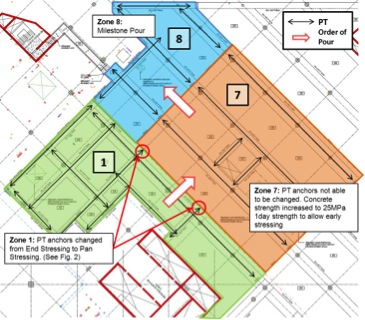
Fig 1: Zones 1/7/8 Detail
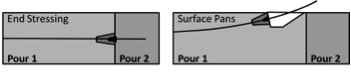
Fig 2: PT End Conditions
Acceleration is a necessary element of construction and is often required to regain control of a programme or to meet a client’s demand. After a formal request to accelerate from either the client or the contractor and an acceptance from the other party it becomes contractually binding and payment may be granted if the reason for acceleration is not as a result of the contractor. The action of accelerating causes several issues for a contractor, not least in WA is the requirement to find additional skilled tradesmen, and the client should take this into account prior to issuing any order. The transfer of risk during acceleration can be re-proportioned but tends after formalisation to replicate that of the original contract. The setup of contracts should look to intelligently allocate risk on a basis of where it can be minimised instead of passing it all on to the one particular party, potentially to the detriment of all. Preferably acceleration can be achieved without the use of contractual obligations, by use of engineering to redesign or re-sequence works to maximise efficiency, reduce costs and minimise delays.
Embracing Egan
If you can cast your minds back to your original degree courses (PET students amongst us) they probably mentioned something about the Latham and Egan reports. Greg mentioned them during his lectures during Phase 1 from a mainly contractual perspective. But what other areas of this business we are playing at did they touch? If I find myself with enough time I may expand on this blog and look at other areas in the future but here I will focus on the part of the Egan report that talks of standardisation and pre-assembly, if this morphs into an AER or TMR perhaps I may spend time on the stuff that went before but here I’ll look at a few bits on my site that seem to have embraced the message.
My project is a relatively simple group of 3 RC buildings for student accommodation, given our high levels of liquidated damages and the tight timeline speed of construction is more important than quality. If I was building a high end hotel or apartment block I might be looking out the window at a very different scene but here is a snapshot of the stuff that is streaming construction out here:
Structural Insulated Panels (SIPs) – These are being provided by another trading arm of the Osborne Group, Innovare. The function that they are fulfilling here aren’t their primary purpose and the project manager that visits talks of their strength in house building, they have been approved for construction up to 5 stories (which no other structural framework) but in theory will go up to 8 stories. On site they are being used as an infill panel that will form the internal skin of the building. The construction can be seen in the photo below; a high density polystyrene laminated to a timber external skin, plywood on the long edge and timber on short edges. Acting as a composite it is remarkably strong although this strength isn’t utilised in this construction. The SIPs panels are the first things that get installed after the falsework has been struck. They are all pre-designed and manufactured and arrive in loads corresponding to whole floors (each individual panel has a specific home on a floor and is usually identical to the panel directly above and below is) they are then lifted directly from the wagon to the floor where they will be used. Installation required ‘carpenters’ to attach a timber baton to the floor slab to locate the SIPs and then a bracket to secure them to the soffit of the slab above.
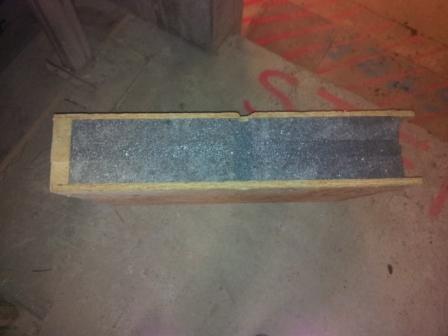
Section of a SIPs panel
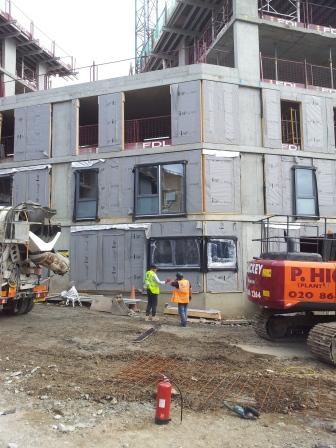
SIPs panels used as infils (the things wrapped in grey plastic)
Windows – Less ground breaking but each window is designed to go directly into the space left in the SIPs panel, the glazing is then installed and that completes the internal skin of the building.
Bathroom pods – Because each room is en-suite you can imagine the amount of time fitting 1104 showers and toilets would take. Each of the rooms will be equipped with a pre-manufactured bathroom pods, it is made of fibreglass and inside is a fully fitted an functional system, all that is required is for it to be lifted onto the correct floor and then positioned next to the riser, the pod is then wired up, plumbed in and fitted with the duct for the extractor fan and it is ready to go, finally they are surrounded by the dry liners to build them into the room.
Twin Wall – I expected to see the usual pre-cast stuff on site (stairs, drain rings etc) but had not heard of this before, whilst it doesn’t necessarily make the job go faster it certainly helps. The main thing this achieves is a saving of hook time on the tower cranes. If you imagine constructing the walls around a stair core using traditional methods you get something like this:
- Lift large bundles of steel to a place where the reinforcing cage can be pre-fabricated (2 lifts)
- Lift pre-fabricated cage into position on the starter bars in the slab (3 lifts)
- Lift formwork panels into position in sections on the inside of the core (perhaps 4 lifts in total)
- Lift formwork panels into position in sections to the outside of the core (another 4 lifts)
- Use crane-liftable concrete skip to place concrete (say 0.675m^3 per metre run say 10 lifts)
- Wait to go off
- Strike formwork using the reverse of the 8 lifts at steps 3 and 4 (8 lifts)
- Total crane lifts approx 31 lifts
Contrast with twinwall
- Lift twin wall sections directly to point of use (4 lifts)
- Place twin wall starters in wall sections (1 lifts of 12mm bars)
- Use crane-liftable concrete skip to deliver concrete to half depth of the twin wall (say 0.125m^3 per metre run say 3 lifts)
- Allow to go off
- Fill remainder of twin wall during slab pour
- Total crane lifts approx 8
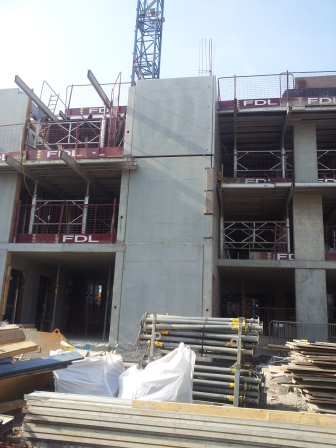
Twinwall used to construct stair core.
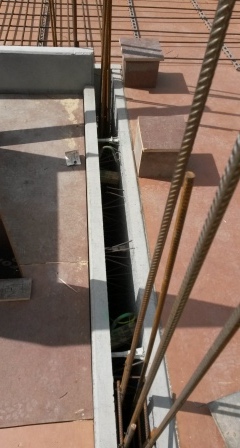
Twinwall in place with decking (note skinny starter bars, internal structure and that only approximately a third of the wall will be cast in situ concrete hence the reduction in crane lifts in concrete placing)
A huge efficiency saving on crane time which means the columns can be put up at the same time as the walls and reduce the floor to floor turnaround time. The efficiency saving is such that it is obviously economical to get twinwall pre-cast in Ireland (presumably by the proportion of the population who lack the intellect to work on a building site in the UK or OZ) and ship it to Southampton although the carbon emissions are probably questionable. The other benefit is the finish, the walls are all spec’d as Plain Finish which allows for a +/- 3mm local deviation because these are big panels there are fewer joins to finish making for a smoother finish.
The Pressure
It has been some time since my last post, so I thought I had better clear a space and get some info into you all.
I had a good trip off shore.

My conclusion is that working off-shore is very similar to working in a patrol base devoted entirely to engineering although with far better facilities and food. Not convinced about the helicopters they use to get there though…
Bruce P60 Bridge
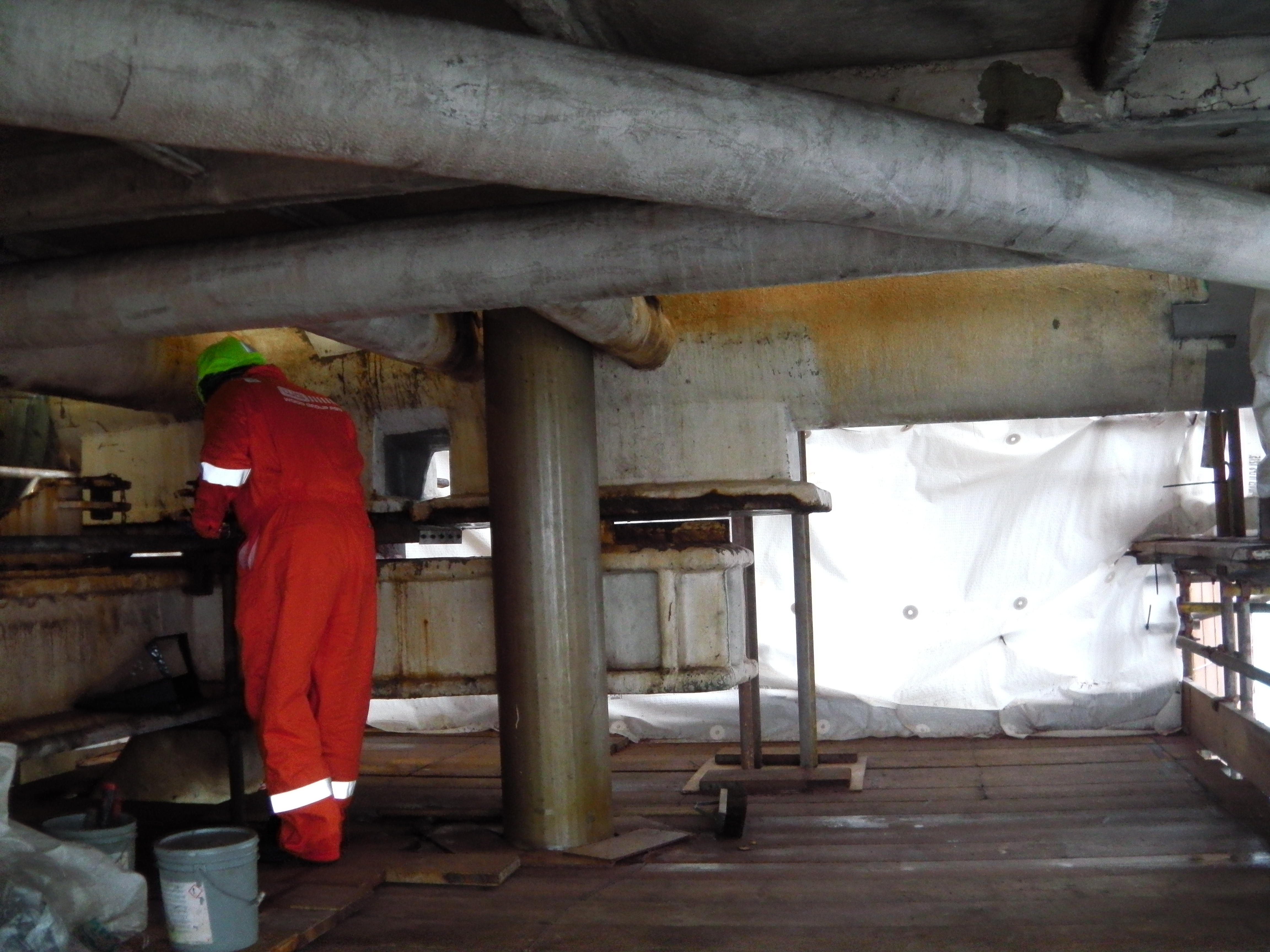
The reason for the visit to Bruce was to mainly have a nose around on the pretext of assisting with a design survey on the landing points of the P60 bridge. I took the opportunity to see the Bruce sea water lift caissons, both from a distance, but also at the point at which they come on board at the cellar deck of the PUQ platform. I am currently awaiting the delivery of the workscopes for this project so that I can write up the DSP for end of Define. I am aware that the project is likely to be killed following the DSP, but there are so many people who believe that this project should be carried into execute I will try and get some buy in. I have hopes that a phased execution will be more palatable to the powers that be, affording schedule flexibility to work around larger, more important projects.
Bruce C13 Caisson Reinstatement
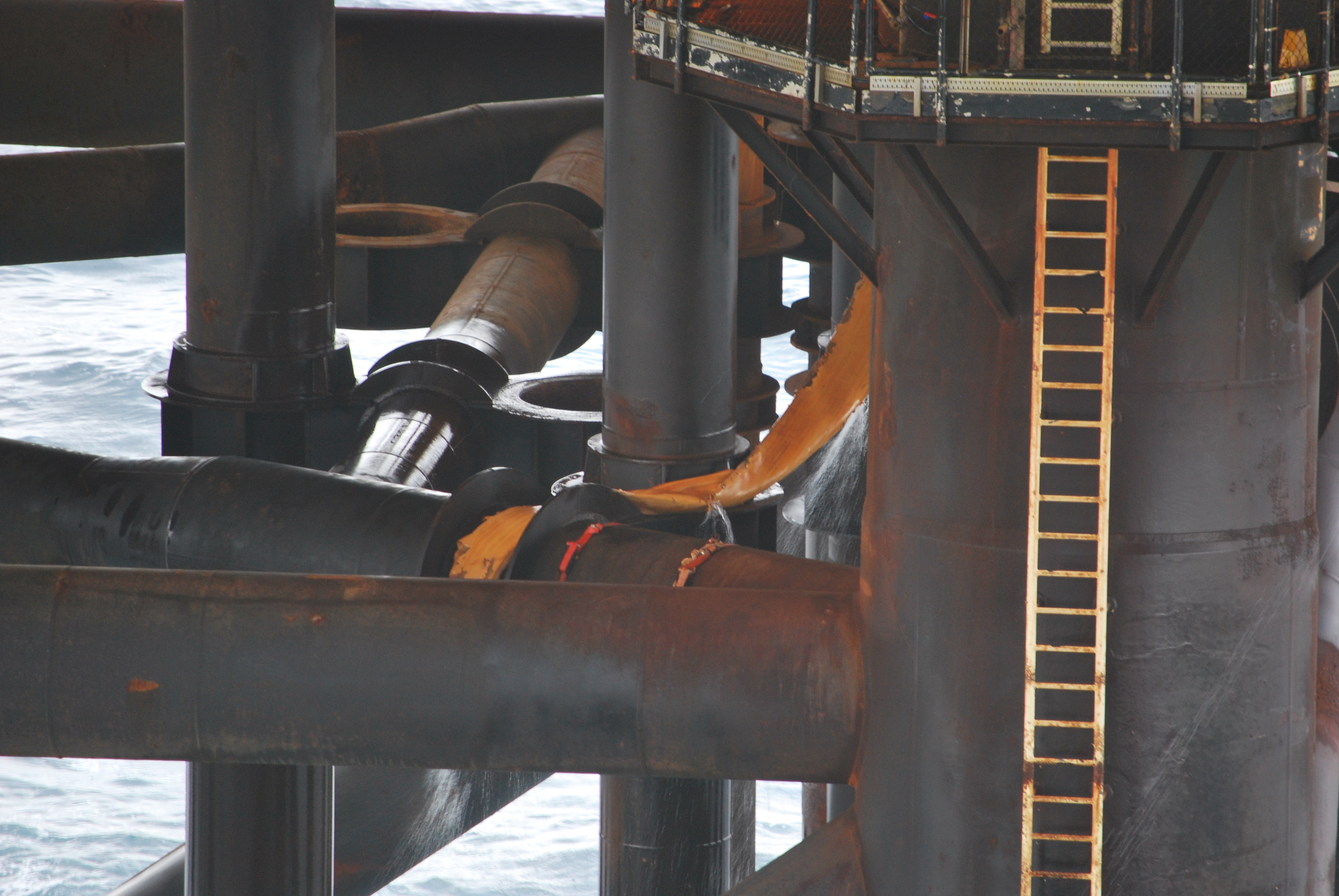
I have been involved in this project for a while now having originally secured the deferment of the scope by 12 months and by providing input to the re-development of the Caisson renewal programme. With the deferment now taking place, I have been asked to take on the C13 scope through to completion of on-shore execute i.e. delivery of Rev C workpacks. Other than that I will have to ensure that certain equipment is ordered next year, but little else. I have put forward the idea to the Programme lead that this project remain with the RE secondment so that I will be able to hand it over to my replacement who would take it all the way through on-shore trials (Sept 14) and into off-shore execute (Apr 2015). The following replacement would then be in a position to close out the project, but also possibly be involved in the next part of the programme. My idea is that this programme has suffered mainly because it has no continuity as people move in and out of the organisation. We may be able to offer some continuity and this idea already has some traction with Kerry Scott and if we have a candidate to replace me, I will keep pushing it.
Magnus Firewater Main Overpressure Protection DSP
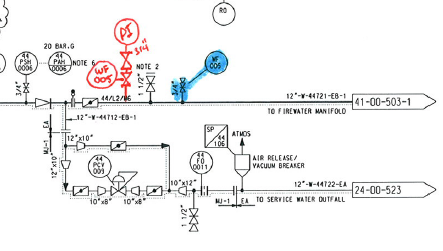
I am currently at the end of drafting the DSP for this ~£3m project. The project itself is already deep in on-shore execute with the original off-shore execute planned for Oct 2013. at present we have little chance of making the 12W gate criteria, not in the least because the project has no official BP sanction to be in execute. The problem is that the project SPA recently got a new job and left leaving myself and the new SPA to pick up the pieces. There are overdue milestones, unforeseen deviations and a critical scheduling issue confronting the project at present and I am in the process of trouble shooting them. My key concern is that the asset is only permitted 1600hrs downtime in every 365 day period for each of the firewater pumps. This project modifies the overflow route to the outfall and requires each pump to be taken offline sequentially for a period of up to 29 days. At present there is no buy in from maintenance as to the effect of this scope on their schedule. Ultimately an ORA (Operational Risk Assessment) could cover any breach of the Fire water performance standard, but only in extremis.
Clair Coolers Replacement
The SPA for this scope has also gotten himself a new job and so I have been tasked with bringing this project home. The back of it is well and truly broken and the TAR focus has moved on to the Clair Ridge tie back, but there is still plenty to do with a number of issue left to resolve to ensure that the project finishes as per the ‘s’ curve. Thankfully the issues with SeaFab have been concluded, with all of their scope complete. The 7 closing spools have been contracted out to a diferent piping firm (Isleburn) and they are coming along nicely. This will tie in nicely with my thesis as I will now be involved in the commissioning process of the whole scope including a trip to Germany to close out the aspects with the cooler supplier. Further to the current off shore execute I have been assigned the execute of the HP cooler installation which is scheduled for the 2015 TAR, another workscope that I will be able to hand over to my successor if things go well.
Clair Manifold Piping Supports
Having identified that this workscope required a production shutdown, I am trying to find a slot in the plan with a planned shutdown in which to fit this job. I have a couple of meetings next week that should move this one forward.
Competencies
Having had a good look at my competencies earlier in the month I can see that I fall short in section B, much as Chris did before me. I have brought this up with my mentor as pretty much of the work I am involved with is great for A and C, I need to get myself in the ‘2’s for B. With that in mind, I will be looking at getting involved in some work on the new ETAP flowlines, which may offer me the opportunity to exert design influence rather than where I am at the moment which seems to be more design mitigation. I am pretty much at the limit of my capability in terms of projects and so I have started to turn down opportunities. If I get some work on the ETAP then I will be busy right up to Christmas.
In Other News
Went on a sea safari out of Banff a couple of weeks ago where we saw a Basking Shark. I had no idea you could see these in Scottish waters and the 10m long monster actuall swam under out little Rib. I haven’t gotten around to formatting the pictures, but when I do I will post one up here. Other than that things have been pretty busy with visitors almost every weekend for the last two months. I finally caved this weekend and bought myself a Raspberry Pi, so I will be spending the long Scotish winter learning how to programme in Linux, the main reason for this is to anlyse the suitability of my garage for a home brew set up and then as a temperature monitor once I am ready to brew. Thinly veiled excuse to tie together to of my passions, beer and technology. Beats a home made 2d milling machine. Speaking of Mr Hill, here’s a photo to get your motor running…

 Holdfast Training Services Trial Blog