New Childresn’s Hospital Project Information
PROJECT INFORMATION
SCOPE: The construction of a New Children’s Hospital to deliver a replacement for the ageing Princess Margaret Hospital facility which is over 100 years old. The new hospital will consist of 274 beds with gross floor area of approximately 78,775m2. This includes 75 precent single bed rooms and enhance floor area to cope with family services of the patients.
Of note the hospital will be the sole paediatric hospital for Western Australia. This means it has a catchment 22 times larger than the UK.
PROJECT ORGANISATION
1. Client: Government of Western Australia, Department of Treasury and Finance – Strategic projects.
2. Managing Contractor: John Holland Group Pty Ltd
3. Consultants:
a. Architects – BCJH Alliance (made up of Jones Coulter Young, Cox Howlett and Woodland Bailey, HKS, Billard Leece Partnership.)
b. Civil and Structural Engineers – Aurecon
c. Services – Norman, Disney and Young.
STAKEHOLDERS (details to follow):
- Client
- State’s representatives
- Hospital Employees
- Telethon Institute of Child Health Research and universities
- Government Authorities
- Suppliers/Subcontractors
JOHN HOLLAND GROUP NCH STRUCTURE
The wiring diagram for the JHG NCH project is attached. In short my manger is Steven Chaseling, the construction director, who has worked with both Tony Cheales and Andy Wilson before. When I move to site I will work to Risteard Carroll. Though the details of my work have yet to be confirmed they see me in a supervisory role as a Project Engineer which will develop as the project moves forward.
PROJECT CONTRACT
Head Contract: Managing Contractor
I have spent an hour with the commercial team and the senior contract administrator to understand this better.
Though there is a non legally binding “one team approach to collaboration” legally JHG are the managing contractor for the project. This has the advantage that John Holland is embedded with the designers and architects and the client and enabling work on site has commenced as detailed design is completed and procurement for later elements is completed.
However, a unique aspect of working to the Government of Western Australia is that Stage 1 (80% of the project) must be procured by fixed lump sums (ie no schedule of works etc) by 22 Oct 12. When this is put in the context that the design is not complete, internal approval is required from project, JHG Region and Leighton Holding (JHG parent company) the deadline to design and complete tenders for work is June. This is putting the whole team under a great deal of pressure as tenders are being produced from designs that have not been signed off by the State yet.
TIMELINE
Managing Contractor Commencement date 5th July 2011
Concept Design Completed Sep 2011
Schematic Design Completed Jan 2012
Commence on Site Jan 2012
Detailed Design to be completed by Jun 2012
Project Complete Jun 2015
PROGRAMME
Detailed Programme to follow on. There are numerous short, medium and long term programmes all in different formats and I have not decided which is the clearest. JHG are producing a number of schematic construction sequence slides which are brilliant at painting a picture and understanding the sequence. What I do know is for the next 3 months I will be concerned with Piling and Excavating as the basement is dug and the piles are constructed – very similar to the Oxford site visit!
ENGINEERING ISSUES
This is hard to assess as I am receiving the induction propaganda view at the moment and I am not on site. However I have observed the following:
- The detailed design not being completed but procurement process started for work packages in order to meet Guarenteed Construction Sum 1 deadline will cause inevitable errors.
- A really restricted site. Numerous issues with loading and unloading stores, movement of the site office and welfare facilities, how to remove the excavated material and piling rig from the bottome of the excavation as the excavation is being filled with piles.
- Like all good design exercises the designers have started with the easy bit first. As a result the construction is sequenced from North to South (Office blocks and general wards to complicated theatres, hydro pools etc). This has been highlighted as an area of risk as the majority of the complicated work is scheduled for the end of the project. Work is being done to expedite the design and to surge on the central and southern zones to flatten out this surge.
- It has been explained to me (I need to confirm with research) that there is no Australian version of CDM. There is a policy of “Safety in Design” but this is poorly understood by the design team and is causing buildability and H&S concerns.
FUTURE WORK
- Enhance information above
- Complete site induction and get on site -take lots of pictures
- Bed in with the site team and understand the project and its problems – be more technical in my approach
- Find out if there is a propping system for the “big hole” no one has mentioned this yet!!
- Write essay plan for AER 1 for PEW comment
- Consider Engineering problems – select topic for TMR 1
Inductions and Intros
Period Covered: 12 -15 Mar 12
Summary: Initial Induction, training and project awareness.
This week has been focused on introduction and inductions as I establish myself within John Holland and the project team. I have been overwhelmed by the professionalism and drive of the company and the enthusiasm of the people who work here.
I have yet to get to site, as I have had to complete the safety training and site induction, and am currently situated in the project office. With the view that I will complete my site induction on Monday and then begin work on site as a supervising engineer from then on.
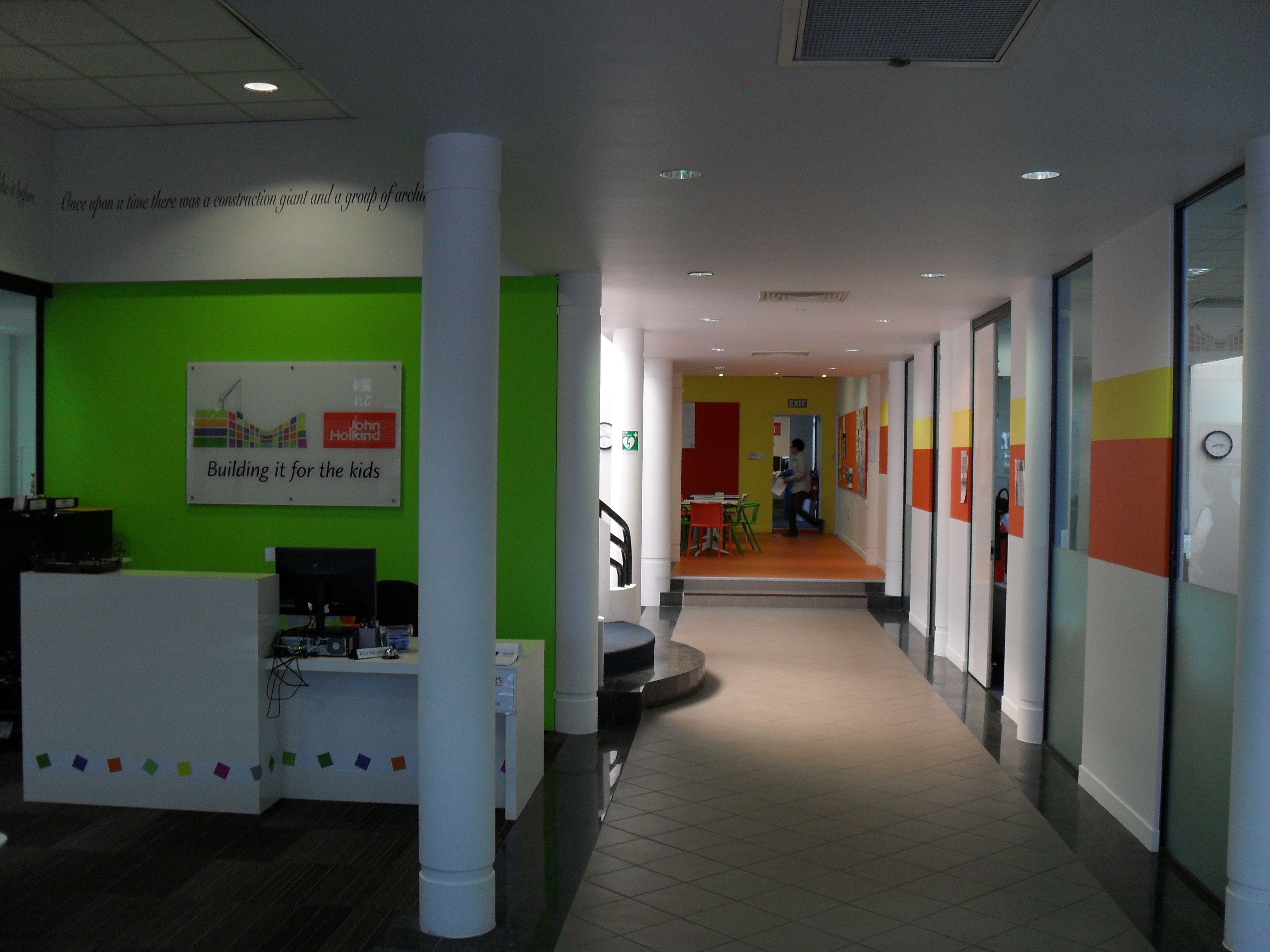
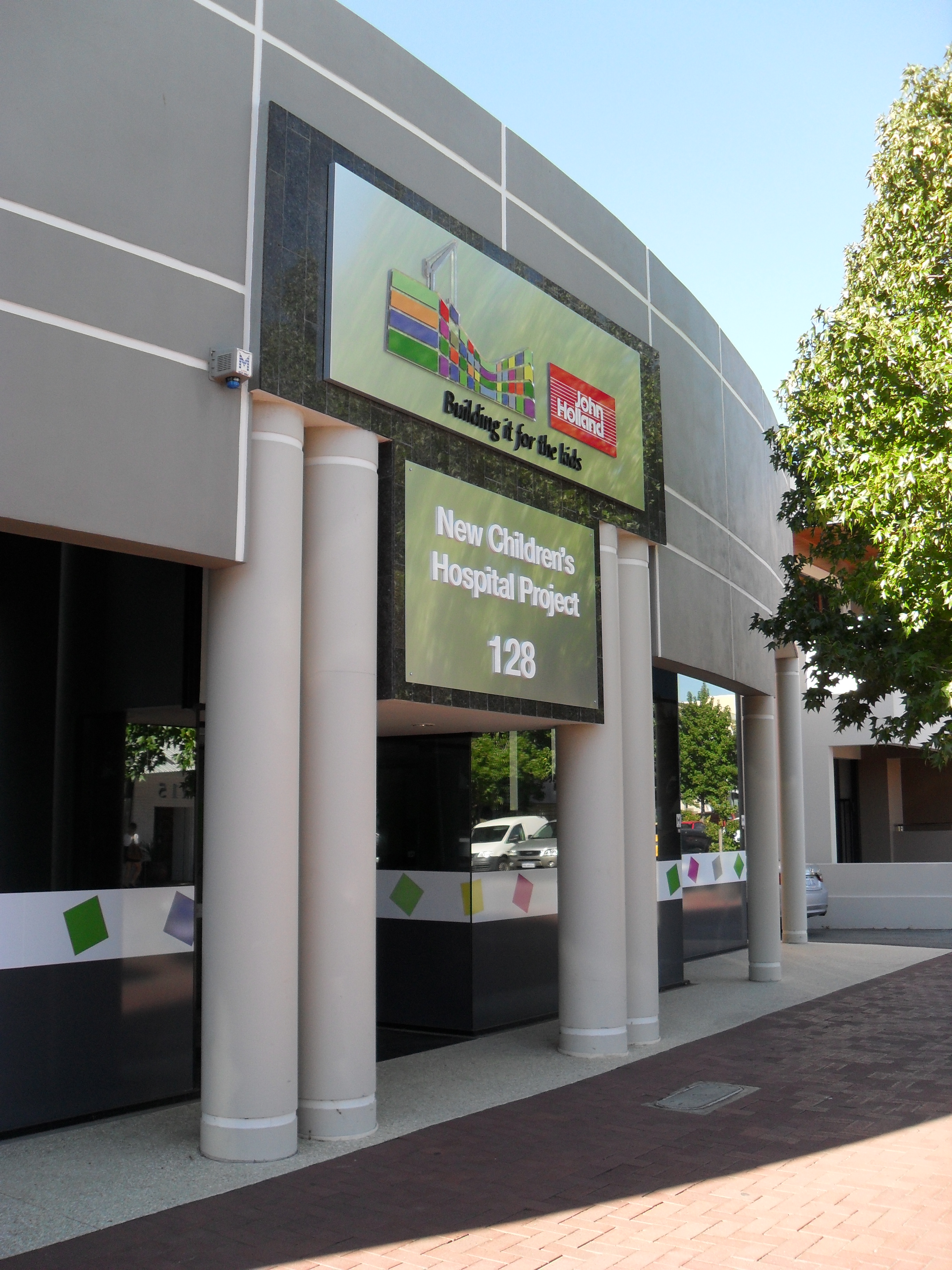
128 Hay Street – The Project Office or as we would know it Battlegroup Main, with Architects, Designers and JH under one roof. Many of the Engineer Planners will move to site once construction is at full pace as Works Package Managers. (The site is 10mins away).
This week I have achieved the following:
- Completed 1 day John Holland Induction day.
- Completed Project Office Induction and Administration
- Completed online Safety in Construction White Card training, similar to CSCS.
- Initial meeting with construction manager, development objective plan set.
- BIM Training
Observations
Project scope/structure and details to follow in a separate blog but I have made some initial thoughts and observations from my first 4 days working as a civilian:
- Safety. This is the top priority for the company and the “No Harm” message is enforced by everything and everyone in the company. The JGH see it as the life blood of its business and the key to future commercial success. They believe is that if they can drive safety rates to lower than there competitors they will win more tenders than they can could cope with and as a result safety is well resourced and managed.
- Sustainability. From a project perspective sustainability and environmental management has significant importance but from a corporate strategy perspective the company is aligning itself with the Australian perspective and is expanding its fossil fuel infrastructure arm. This attitude is directly opposed to the UK perspective of sustainable energy and development.
- Doctrine. John Holland has more manuals and procedure than the Army!! These are rigorously used and standards and quality are maintained by company policy, procedures, manuals and plans. I have spent a couple of days reviewing a number of these and it will be a continuous job to familiarise myself with as many as possible. These give the company structure and I believe have been vital in allowing the company to expand rapidly over the last 5 years. There was 16 people at the weekly John Holland Induction and most people working on the project are new to JH. Oh Note the management plans etc map across well with the APMP philosophy which has been reassuring.
- IT Systems. Use of IT systems is overwhelming. Lotus Notes is the predominant system to communicate and share information within the project and Aconex is used to communicate with all external stakeholders. Along with all the doctrine I have been impressed by the value the company puts into document control. The project is all making full use of BIM and believe the project is the flagship for its use in Australia.
The work has begun – there may even be a TMR in it?
I have now started working for John Holland (following mandatory inductions) and have been given my first areas of responsibility. The marine Jetty project that I’m part of the project team for is basically constructed on 1200mm diameter Steel hollow piles that are all vertical. They are reinforced internally to transfer/resist all vertical loads as it is deemed better than installing raking piles due to the sensitivity of the area.
I have been put in charge of the test piles! This will delight John, knowing how much I enjoyed the foundations exercise, but it has potential for a TMR. This is because John Holland are using a new testing procedure (for JHG that is) with Osterberg Cells (O-Cells) to ensure that the piles will meet the axial (compression and tension) loads and pass lateral load tests. I will be researching this to death over the next few weeks with the test piles due for installation in May in order that we (the team) understand the methodology and meet the necessary specifications laid down in the Australian standards and Bechtel’s own scope.
I am thinking that seeing as I am already completing research into the O-Cells, why not compare it to the traditional static load testing and do a cost, safety, time analysis to see if on this particular project the selected method provides the best all round value. I can compare to the MOF project that is ongoing as they used traditional test methods using big weights and jacks. Thoughts and guidance welcomed on developing this concept further!
In addition I will also be responsible for the contract negotiation with subbies, sourcing the piles, manufacturing them as necessary (delivered in segments requiring on site welding), transporting them and installing them from a barge in the ocean. Then, obviously, the testing!
I am also going to be working on the temporary office facilities for the project and foundation design for the traveller. (This will become clearer in AER 1 where I will detail what this is – basically a moving platform that cantilevers out over the ocean to install the pile pairs. John may even have a drawing of one in his office?!?!)
So it’s now all go for me. Motivation is tough at 0415 when my alarm goes off but tends to pick up at about 0450 when I jump on the red rocket to whizz through the empty streets of Gladstone. The team are all friendly (I just don’t mention the ashes, RWC 2003 final, etc) and I’m steadily integrating with them and learning the lingo. There is a family BBQ on Sunday that we’re invited to, to celebrate a year on the GLNG contract, so a good opportunity to meet people socially and Lisa can meet the WAGs. There are quite a few ex-pats and Irish so she’ll be able to pick their brains if nothing else. The boys have settled into their kindergarten and nursery and even made some new friends (The family all had a play date today with one of Austyn’s Kindy mates). All-in-all, very happy, work is looking good and a free lunch thrown in on Sunday!
Roy
A basic introduction
The last supper…
So up until now we have mostly been relaxed in preparation for the inevitable start of work, which is now in about 10 hours time and the most outrageous of hours, 0500, to catch a ferry to the office. What does this mean…I’ll be going to bed shortly after the kids in order to get my straight eight in so that I’m on fire tomorrow. Knowing full well it’s all about the first impression I have neatly pressed my uniform (photo to follow of it’s beauty), polished my steel toe capped boots and lost the arguement as to which transport option to take in the morning. I wanted to take this:

3 litre Ford Territory, air con, nice to drive, etc…BUT Lisa said I have to take this instead:

This is my new toy for commuting, the red rocket, being ably demonstrated by Austyn. It has a 50cc engine and I’ve had 50 Kph out of her downhill with a tail wind. What’s most important is the 75mpg that I get from the monster…with a stat like that it wins hands down every time (plus it was dirt cheap to buy!)
The main reason for the alternate mode of transport is that we have successfully beaten the Gladstone odds and got Austyn into a Kindergrten (Kindy – pre school) as there’s a 9-12 month waiting list for most places and he also starts tomorrow. Elliot is also enrolled into a nursery (once again a shocking waiting list for his age) and will be attending 1 day a week so that he can integrate with the locals (and probably adopt that lovely Aussie twang!) The boys have also been enrolled into swimming lessons and we managed to get round most of the kids groups last week in the town. What does this all mean? Apart from the fact that I’ve lost control of the Territory it means that I’m able to start work reasonably content that the family unit is squared away.
WRT our housing, we have been allocated a property which we viewed last week and are very happy with it. Whilst it does not have a pool (number 1 priority on Austyn’s wish list) it is brand new, will be fully furnished and ours from next Monday, 19th March (touch wood). Tied to this is our freight which is in Gladstone!!! Hurrah!!! We are going to get it delivered to the new house as it saves double handling at my own time and expense and I can assure you that the contents have been sorely missed, particularly our Summer clothes and the kids toys.
So all in all we are now fairly swept up. Lisa is now 33 weeks along in the pregnancy and has midwife appointments booked for later in the month so that has come together nicely. Just a visit to the hospital needed for planning purposes.
As for Gladstone itself, we are more than happy. It has everything you could possibly want (apart from a dive centre within 3 hours drive) and has a clean, fresh feel about it. There is plenty going on and I might even join the running club so as to keep my eye in for the PFT when we return. I think that anyone would be just fine here (there will be work for many years to come) and it’s cosy for families. This is possibly the most contented that we’ve been as a family unit for some time although that may change from tomorrow!!!
As a final note I have completed some research and have the following pieces of useful information:
McDonalds is known as Macca’s
Pizza Hut takeaway is better here than Domino’s (very strange)
Charcoal BBQ’s take hours to get ready (I’m buying a gas one for the new house)
Sausages are generally made of Beef instead of Pork down under
The chocolate does taste different BUT it’s not inedible, we haven’t told the kids this fact though!
Supermarkets don’t sell alcohol – you have to go to bottle shops
The water does not spin the wrong way round the plug hole as it drains.
And on those bombshells I’m off to make my lunch for tomorrow and get my straight eight.
(Richard, below is a picture just for you as I’ve semi sorted my pictures out now)

Australia Zoo in the rain!
Well Done!
Great to read your blogs and well done to each of you for coming up with different ways of putting across your updates. As you get fully up and running on site feel free to adapt what you are doing, steal other peoples ideas and generally make it work for you. The real test and adjust will come as you begin using these posts to inform your AERs and DOs. Jim’s last post has some really good pointers for making this work. Key from my perspective is to avoid duplicating effort so shape your posts so they are readily transferable.
We’ve also seen already how effective the posts can be in supporting your day to day activities; I can’t imagine many of the other engineers on site have access to their own ‘phone-a-friend’ consultant so make the most of them (they love getting involved and it will improve your kudos on site). It’ll also be interesting to see how much learning from each others’ experiences will assist each of you with CPR.
Looking forward to receiving your Visit/Location Reports and AER 1 (VLE is all set up to receive them as soon as they are complete).
Perth in Autumn!
We have now been in Perth for 5 days and though the Engineering has not started yet I thought it was worth an update. The flight from the UK, though long, went without a hitch and the hire car and serviced apartment were waiting for us when we arrived. Though we are unable to stay in the apartment for the whole month due to an admin error by the apartments a plan has been made and we will be moving between this apartment and another set 10mins a way on and off for the next month or until we have found a permanent apartment to rent.
On top of exploring the city (and the beaches) we have collected our Bank Cards from Commonwealth Bank (very easy and I would recommend that future attached officers use them), had our initial meeting with our relocation agent and viewed 4 apartments. We have also visited John Holland head office at Osborne Park to meet my HR advisor and collect the company laptop and phone (Aus Mobile is +61 407103067)

Recceing Perth and the local amenities at Brighton Beach – 38oC – Not bad for Autumn
Also this week I had a flying visit to Canberra, 16hours on the ground, for my arrival brief (Separate email sent to Maj Blow with feedback).
I have been in contact with my boss, Stephen Chaseling. They cannot wait to “work me to the bone” when I arrive and I was instructed to stay away from the site and enjoy my leave until I start on Monday!! More details to follow next week but I will initially begin in the design office before moving to site.
Finally, I have shown most people this already, but to file it away and to give some background to the Children’s Hospital I will be part of below is a link to a 3D overview video and flythrough of the building!
Ros’s page
G’day all – enjoyed reading your thing Rachel. My page is www.roselliott.wordpress.com and is where I dump all my material, so if reinforcement'[s your thing have a look!
Hope you’re all well,
Ros
Being a Civil(ian) Engineer….
THE PROJECT
Who?
Client: Crossrail
Designer: Arup & Atkins
Contractor: VINCI Construction UK – Taylor Woodrow (VINCI have recently allowed Taylor Woodrow to re-adopt their name following take over, after realising reputation wins tenders, not merely conglomeration).
Subcontractors: Menard (Piling), Gallagers (Central Tunnel Section), Lordon (Concrete Invert Slab), WJ (Dewatering and Piezometer Monitoring), Bachy (Grouting), VVB (Services), Sol Data (Monitoring, Survey), Cappel (Labour Supply).
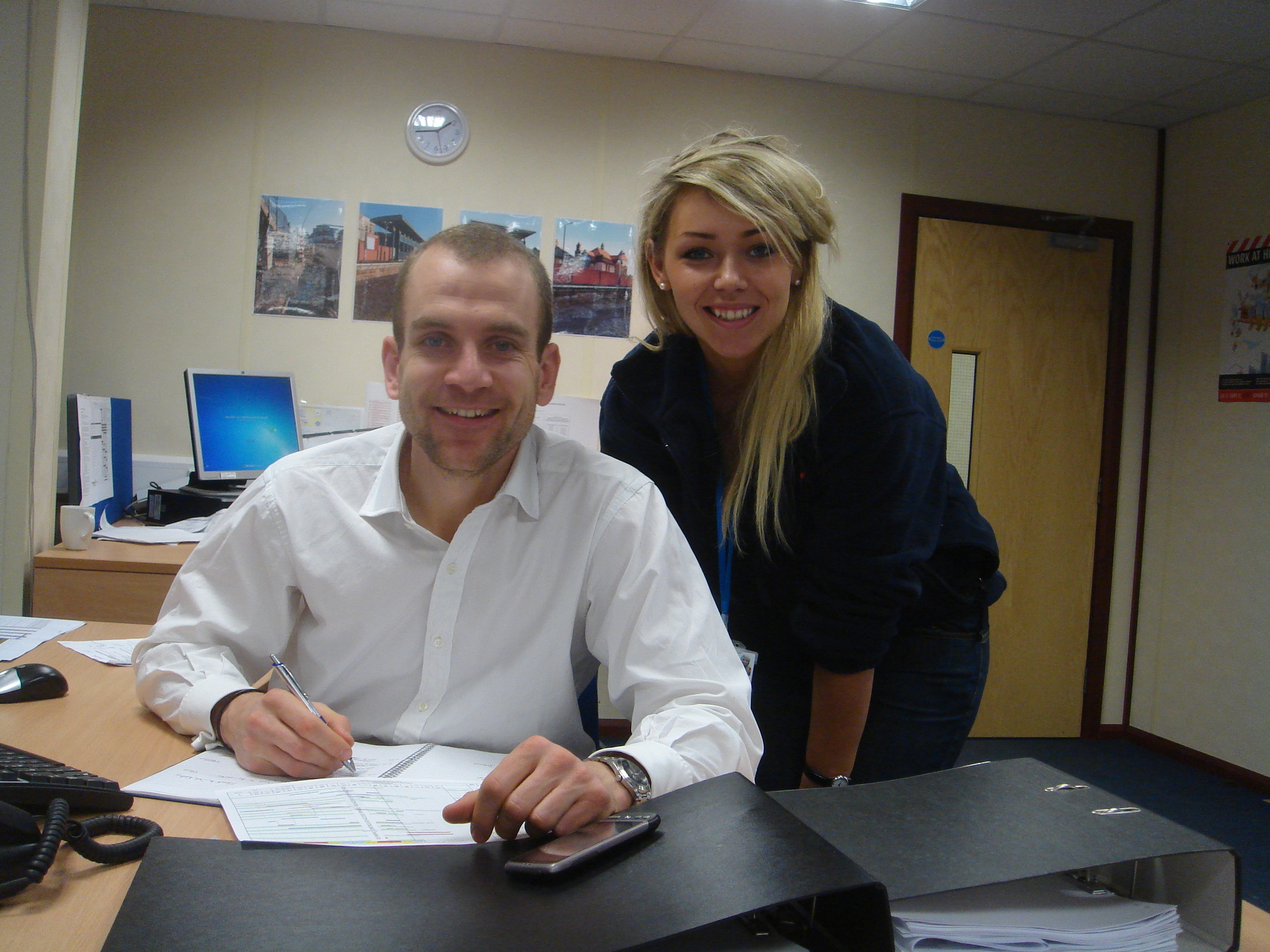
Team: Tunnel & Central Compound Team – See picture below of my line manager: Production Manager, Nick Sammons and my glamorous Assistant Site Engineer, Alex Mitchell.
Role: Approach Ramps & Tunnel – Section Engineer.
What?
Connaught Tunnel is part of the Crossrail branch to Abbey Wood, part of the Crossrail route due to be opened in 2018.

The history of the tunnel dates back to 1878. It allowed the railway to be diverted under the Connaught Passage, a water link which connected the Victoria and Albert Docks.
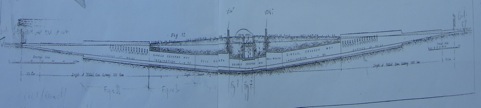
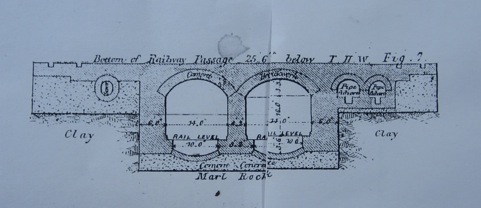
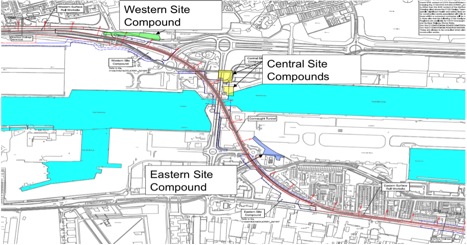
The Connaught Tunnel is 600m long and runs between the Royal Victoria Dock and Royal Albert Dock close to London City Airport. The project will see a series of repair, replacement, restoration, enlargement and new works, over the 1 km site, both on the surface and throughout the single and twin tunnels which pass under the Docks. The project has been termed both an Engineer’s nightmare and an Engineer’s paradise, due to the challenges it presents. The project is subdivided into ‘Groundworks’ (i.e. everything carried out East and West of the tunnel entrance including piling and reinforced concrete delivery), ‘Approach Ramps and Single Tunnels’ (which run from the Groundworks to the Twin Tunnel Section at the centre of the tunnel (from East and West side) and the ‘Central Section’ which includes the Groundworks, Dewatering and planning for the enlargement of the Twin Tunnels by use of a cofferdam in the docks.
Where?
I am based out of the Site Office in the East Compound, and am responsible for works on the West and East Approach Ramps and throughout the tunnel.
When?
The Connaught Tunnel is due to be completed in 2015. I will be with VINCI – Taylor Woodrow until December 2012 and expect to see the completion of all groundworks and piling, grouting, invert slab replacement, dewatering and the installation of a cofferdam in preparation for twin tunnel works.
Tasks
My team (i.e. Alex and I) are directly responsible for Tunnel & Ramp Earthworks, Invert Slab Reprofiling, Tunnel Services, Tunnel Grouting, Refurbishment & Bomb Damage Repair. I have attended the Tunnelling Course at the Tunnelling an Underground Construction Academy (TUCA) in order to gain access into the tunnel, and am booked on my Confined Spaces Course in order to supervise works in the shafts and tunnels.
THOUGHTS SO FAR…..
How?
The Team: The project teams were re-organised immediately prior to my arrival, I replaced an Engineer now responsible for the reinforced concrete slab (tunnel base) delivery (obviously disappointed not to be involved as you can imagine Richard! Although interestingly I did give some advice on Concrete Eurocodes to one of the BS-ified Designers last week!). My Programme Manager, Nick, arrived only a week before I did and was brought in to co-ordinate the Temporary Works, Approach Ramps & Tunnels and Central Section (currently dewatering). My Assistant Site Engineer Alex joined the company straight from University in Nov 11. Nick has 5 years rail and tunnel contracting experience, and Alex has a good insight into the Connaught project.
The Office: The biggest culture shock was initially entering the Office – I can now see how Ricky Gervais relates to so many people! The office is spread over 2 floors with the Designers, the Client, the Groundworks Team, the Reinforced Concrete Team, Works Management and Environment downstairs, and our team, the Project Director (an ex-US Army female helicopter pilot), the Project and Construction Managers, Quality Assurance, Planning, Commercial and H&S on the first floor. The first floor is considered to be the grown up floor, although I think our team may be the exception to the rule! It is interesting to be intimately involved in the construction process, sat across from Project Managers, Planners and Quantity Surveyors who are fixated on profit margin, planning time and estimating cost. I am responsible for submitting a weekly 4-week forecast to the Project Controls Manager, which has progressively moved to the right each week. I realise there is a bigger picture, and currently I am only exposed at relatively low level. Having experienced first hand the implications of commercial restraint on site, I am interested to gain direct commercial exposure later in my placement to see how the construction forecasts are processed in terms of managing time and cost.
Site : Site is definitely where I am currently most at home and fortunately, I spend the majority of my time on site, not least because the site is over a kilometer long! I can relate to ‘getting the job done’ and an array of personalities: Foreman East: Matty ‘the Rage’ Mayer (who speaks like the Irish Gypsy in Snatch played by Brad Pitt) vs Foreman West: Danny ‘I am always right, I always have to have the last word and I don’t understand why my workers don’t like me’ Lathia, to name but 2! I can also see how friction between the site and office rapidly builds if engineers, planners and managers direct operations without sufficient understanding of the realities of construction.
Why?
The Client: I have quickly established that Crossrail are a fairly unique Client, and their involvement in contractor affairs is unusually high. The Target-Cost contract gives Crossrail significant scope to achieve wider agendas, and upon initial impression, it appears to me that whilst the contract meets the high profile nature of their affairs, it is not necessarily fit for respective project purpose. For example, all trucks delivering to site must be Crossrail compliant (i.e. cyclist sensors, additional blind spot attachments etc.) and all material must be Crossrail apporved. Whilst for Crossrail, this is high on their ‘Ground Zero’ safety and sustainability agenda, it leaves little flexibility for the contractor to procure resources at short notice, or at a reduced cost.
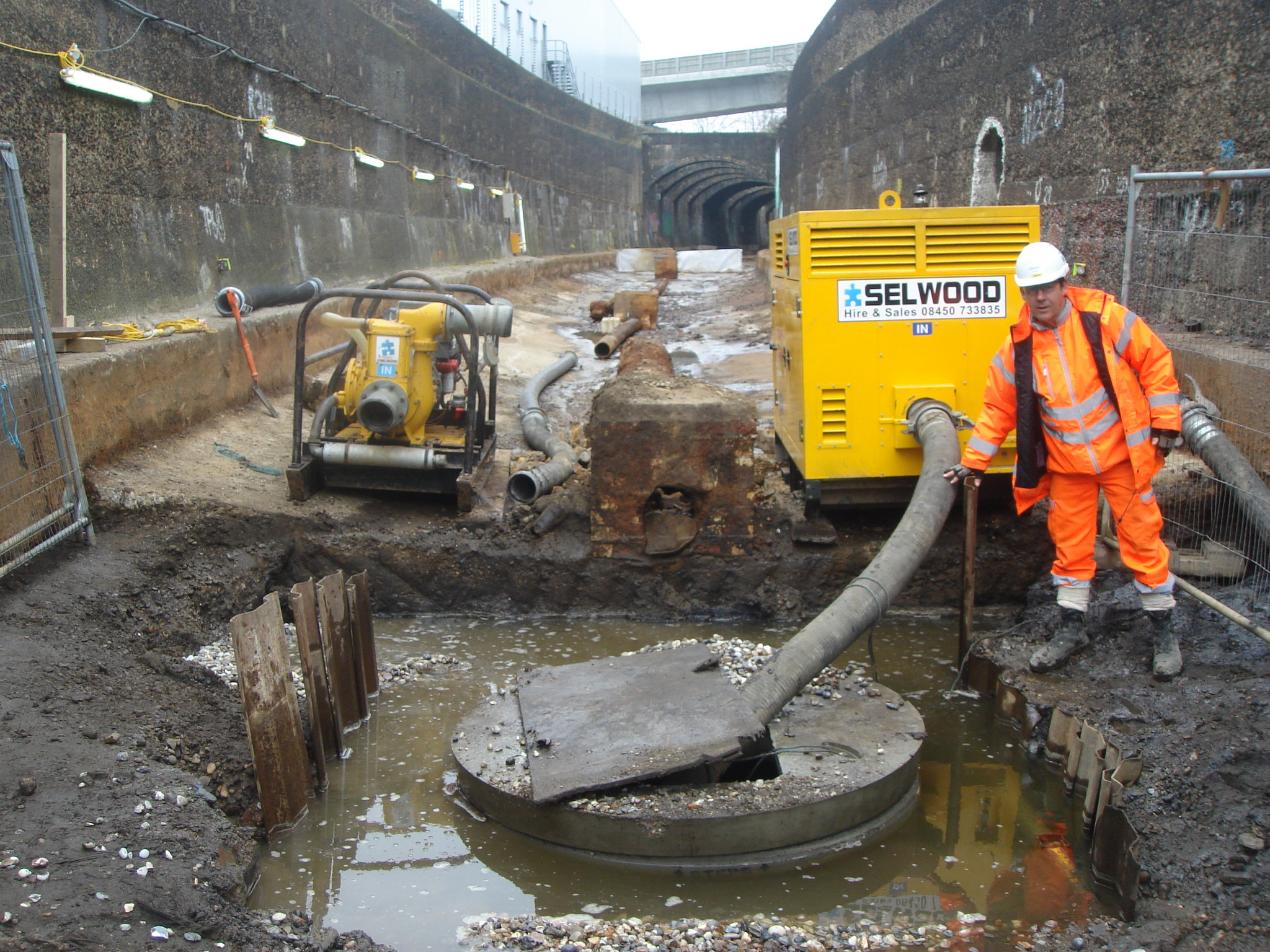
The Commercial World: I recognise however, that I have a lot to learn in terms of the commercial world. Apparently, ‘Civvies’ don’t all work collaboratively to achieve a common goal, out of love and respect for Her Majesty, and a chance of an early knock off! Everything that takes place is commercially driven, and with that comes a bureaucratic process of establishing where that commercial pain or gain will occur. With that also comes stringent monitoring to ensure that that pain or gain is correctly attributed. After an extremely late night trying to solve a temporary drainage construction problem (see picture below), I found that nothing could be resolved until the contractor had been instructed. After initial frustration (also fuelled by the foreman and site workers who are not privy to the intricacies of the contract, and more akin to the military, simply wanting to get the job done), I was soon educated that “it is all about money!” Which, after my limited time in the commercial world I am now coming to understand, and can also see why there is a place for bureaucracy when defining and monitoring tasks and costs. I do feel however, that this process is sometimes enforced at the detriment of the final profit margin (i.e. use of time and resources attributing pain and gain at every stage, rather than focusing on minimising time and cost of the whole project).
“…I know it’s hard when you’re up to your armpits in alligators to remember you came here to drain the swamp” – Ronald Reagan, 1982
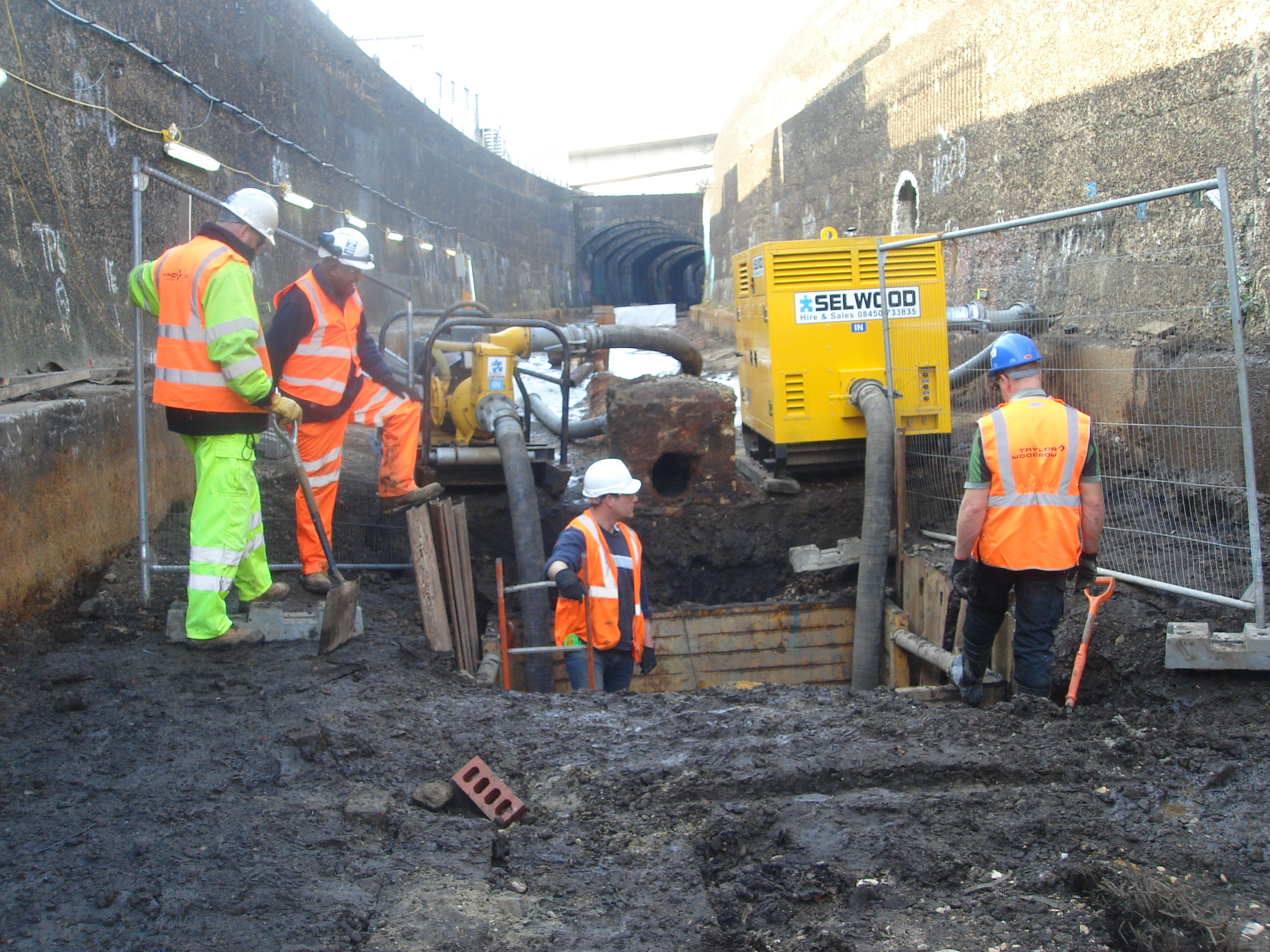
In the case of the temporary drainage installation, an unforeseen high influx of water (approx 20 l/s), and the requisite pumping caused settlement, migration of fines, piping and encroachment into the passive wedge of the existing retaining walls (see picture below). Additionally, the water tested positive for ammonia, which added a leaking sewer pipe to the equation! The high influx of water, as well as the saturated wall adjacent to the sump suggested that the problem, at least at that ground level may be limited to that section of ramp. Previous trial pits showed unpredictable and varied ground water levels throughout the site and along the ramp, due to its geographic location (on a soil strata interface), historical construction and existing structures and underground services. A limited degree of further investigation by the contractor, (i.e. digging investigative slits along the ramps to establish soil profile and ground water regime) could have given sufficient information to propose a solution, or at least confirm the extent of the problem. What actually happened was that the Client was informed by an Early Warning Notice and the works are now on hold whilst the contractor waits for an instruction to carry out an investigation. Whilst the time and resources for the contractor to carry out the investigative slits would have been above the initial scope of works, it would have negated the requirement for the imposed delay, and thus contributed to reducing the overall project time and cost. Admittedly, in this case, there may be wider implications for the final design which need to be fully explored, however, this case study has clearly highlighted to me the reality, and additional complexities of operating within a commercial environment.
SO WHAT & WHAT NEXT….
…Aside from backfilling the temporary drainage sump, stabilising the ground, removing the manhole box, diverting the contaminated water pipeline, obtaining a permit to dig, discharge, locating the sewerage leak, appeasing the environmental agency and coming up with a new temporary and permanent works plan…..! During my first 2 weeks as a ‘Civvie’ Civil Engineer, after 8 years in the comfort of the green institution, I have certainly learnt a great deal. Both in terms of how my strengths translate into an office and site environment, and what I have to learn about the reality of a commercially driven project.
Most Useful Attributes:
- Ability to effectively communicate
- Diplomacy – Whilst the project organization is not rigidly hierarchical, understanding the official and unofficial protocol is key.
- Authority on Site – Foremen are very similar to Sergeant Majors, only more complicated – plus I have 2!
- Co-ordination and planning
- Patience
To highlight the importance of mutually understood communication, whilst conversing with the PET Geotechnical Helpline, my advisor suggested that I could put one component of the ground water regime analysis ‘in the dock’. Given the highly sensitive nature of the existing contaminated water issue, I was extremely alarmed at this inference! Fortunately, upon further explanation, I realised it was simply another John Moran list of phrases not to take literally!
“…You can put that one in the Dock” – John Moran, 2012
Conversely, the infamous Army Officer assets which do not have quite the same affect on a commercially driven project are:
- Initiative in Isolation (i.e. on site or as the contractor) – Nothing will get done without Client approval.
- “A Sense of Urgency” – Speed is tempered by quality, cost, control and stakeholders (sometimes beneficially, sometimes in my view, with insufficient regard for long term project implications).
We have arrived!!
So after a couple of weeks of travel, hotels and apartments, team Serevena is at last in Gladstone, QLD. We are being accommodated in a temporary house in the town until Bechtel allocate our permanent residence. However, the house we are in is very nice and I am in no rush for us to move from here although the garden is a bit small for the boys trampoline!
We flew up from Brisbane yesterday (Wed) and on the same flight was the project HR rep (she was in Brisbane on compassionate) who had arranged for the house keys to be waiting for us at the airport when we arrived. A hire car (standard saloon) had been arranged but once she had seen how much swag we were travelling with (and the kids) and following my request for a Ford Territory (we had one in Brisbane and it was mega – 7 seater mock 4×4) she made it happen. I did offer to pay the difference but she said not to worry! This car appears to be my provided vehicle as the rental agreement is currently until August 2012. No complaints from team Serevena over this!
The project personnel are currently on their 5 day stand down period (after 4 weeks of the project cycle everyone gets 5 days of rest) which means we won’t find out anything new until Tue/Wed next week. Hopefully in that time Bechtel will have sorted a house but apparently they are at 100% capacity…wait out. There is no huge rush though as we can settle for now and our freight still hasn’t cleared customs. (Steve D note that your freight won’t be sent until you have arrived in Australia due to customs legislation so by sending my kit 5 weeks early I achieved next to nothing). Hopefully we’ll have access to it by Tuesday as it’s Austyn’s 4th birthday and guess where all of his presents are!!!
We’ve all registered with the local doctor, medicare, etc and I’ve purchased a pre-pay broadband dongle so that I can remain in contact with the UK. Note that it expires in 60 days so if you don’t hear from me after that i means that Lisa is living the dream and emptied our account buying Ugg boots!
Apart from the above there is nothing else to report. Until Tuesday we are going to do the tourist thing and hopefully I might slip in some diving if I can manage to convince Lisa to give me a leave pass! With only 10 days left until I start on site (at some ungodly hour as well) I’m going to make use of the free time that I have!
Roy
(Richard – my admin is still flailing behind me somewhere in Brisbane but I aim to post some photos on the next blog once I’ve downloaded and sorted them from our cameras)

