Archive
Grasscrete – Paving the way to a sustainable future?
Recently, whilst working on a small access road I was introduced to what I thought was a novel, sustainable and simple paving solution – Grasscrete. After a cursory Google search, it transpires that it has been in existence since the 1970s- and indeed some of these uses are still standing. So what is it? And has anyone come across this before?
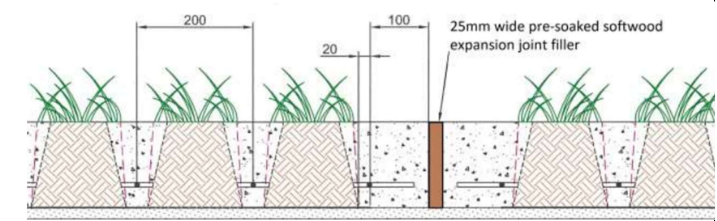
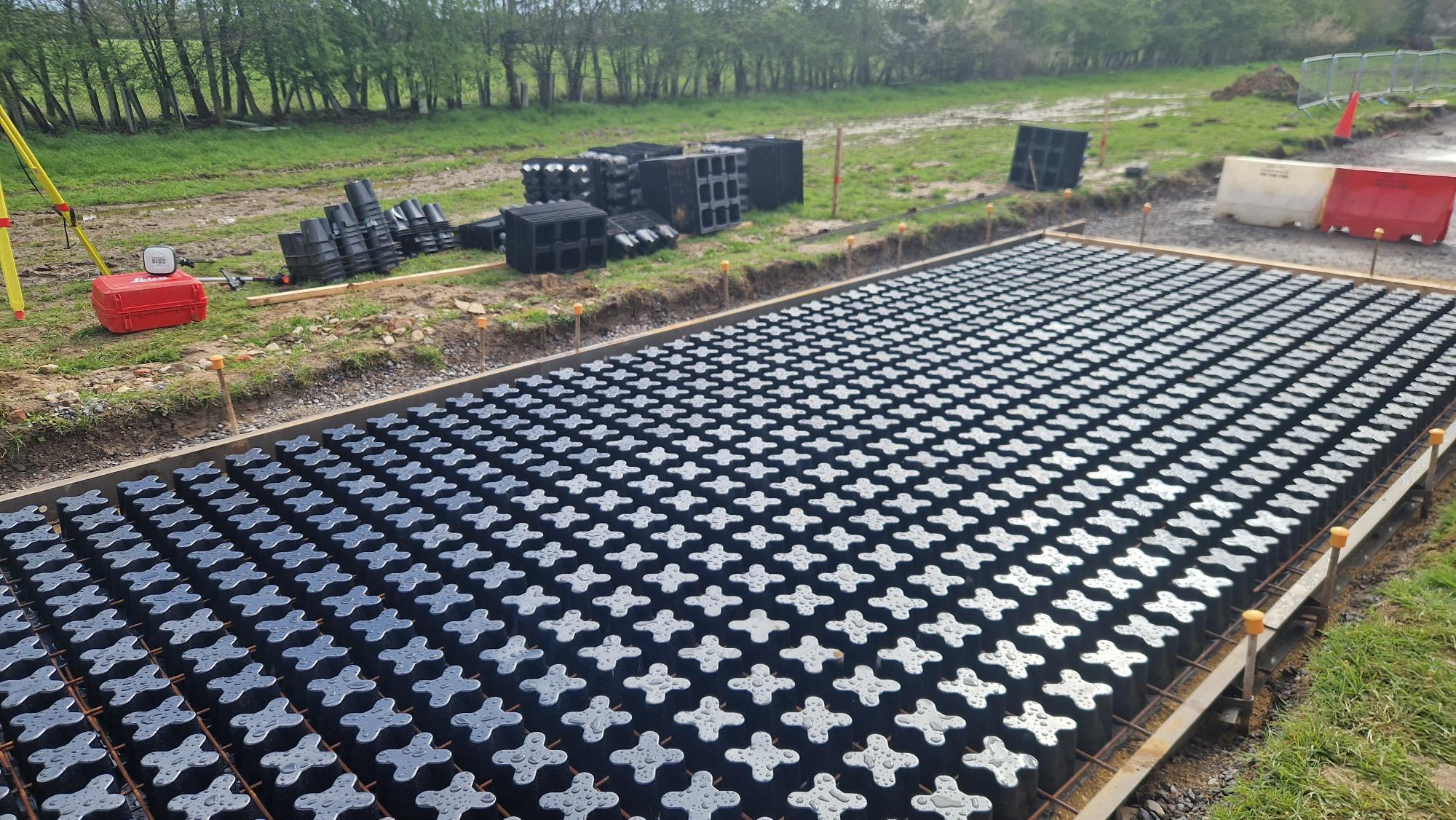
Simply put, it is a permeable pavement made up of recycled plastic formers and some steel mesh. Once installed some configurations claim to be able to carry weights of ~40T and use approximately 50% less concrete, with no need for active drainage. Relatively simple to assemble one can see why it would be attractive to a customer such as the MoD:
Less concrete means less water, less cement and ultimately less logistics – usually a major consideration when operating in austere environments.
Resistant to differential settlement – Acting as a monolithic slab, loads are uniformly distributed.
With much less run-off, grasscrete is more resistant to storms and stormwater run-off, not requiring active drainage.
Much more durable for expedient roadways and even HLSs for expeditionary theatre entry.
So what are the downsides?
More expensive than standard RC slabs
Plastic formers can be fragile – especially if left in hot temperatures or direct sun.
Lateral forces, especially from heavier vehicles braking/accelerating, may crush the narrower sections of the voids.
Rebar is at more risk from corrosion, minimum cover – especially if voids are filled with soil rather than quick draining gravel.
Whilst it may seem that I’m taking a commission from Grasscrete (c), perhaps Grasscrete/permeable pavements are something the Corps could look at? Whilst not structural and worth a TMR or two on its feasibility, I thought I’d sow the seed on this one…
I’d be keen to see if anyone else out there has seen this before and perhaps why its not been rolled out more often, especially for less trafficked areas/access roads etc. Without getting too far into the weeds…
Sustainability – Always an excuse
In preparation for my professional review I have been reflecting on how sustainability shapes the designs my colleagues and I have delivered over the last 6 months whilst working for a temporary works design consultancy (WHP).
There are a few ‘sustainability’ quick wins we have under our belt which anyone who has worked with temporary works would be able to reel out:
- We use proprietary equipment such a PERI pans and RMD Super Slims to reduce material usage because it can be reused.
- Rather than paying too much attention to the solution the Client’s TWC/TWS thinks they need, we focus on reviewing the Client’s problem to ensure the design we provide is the most economical solution. We often find that whatever the TWC has designed is over-kill and a more economical design can be provided.
- We are often able to use/re-use material that is already available on site (e.g. old ply wood used for hoarding, concrete legato blocks, scaffolding tubes etc).
However, if I’m to reflect truthfully (and cynically) I would say that the drivers for points 1 and 3 is often a matter of convenience for the Client with a sustainable side-effect. I also observed that the key driver for point 2 was more about offering value for money for the Client as a primary objective with a sustainable solution being a convenient side effect.
So why didn’t I sense that sustainability was a priority of temporary works design? I think it’s for the same reason that it isn’t whilst on military operations – the way we (or the Client) prioritises the Time/Cost/Quality triumvirate. The nature of temporary works means that it’s rarely considered sufficiently in advance for time not to be a constraint, and because cost is always a constraint then it’s quality (and consequently the solution’s sustainability) that suffers. If I reflect back to my time on HS2, the permanent works had a huge design team that had been developing our design for years and were under significant pressure to achieve sustainable goals. On the other hand our temporary works were often required yesterday in order that works weren’t delayed on site.
I’d be interested to know if any one else has identified the difference in emphasis on sustainability between permanent and temporary works?

The United Nations Sustainable Development Goals – Essential for CPR
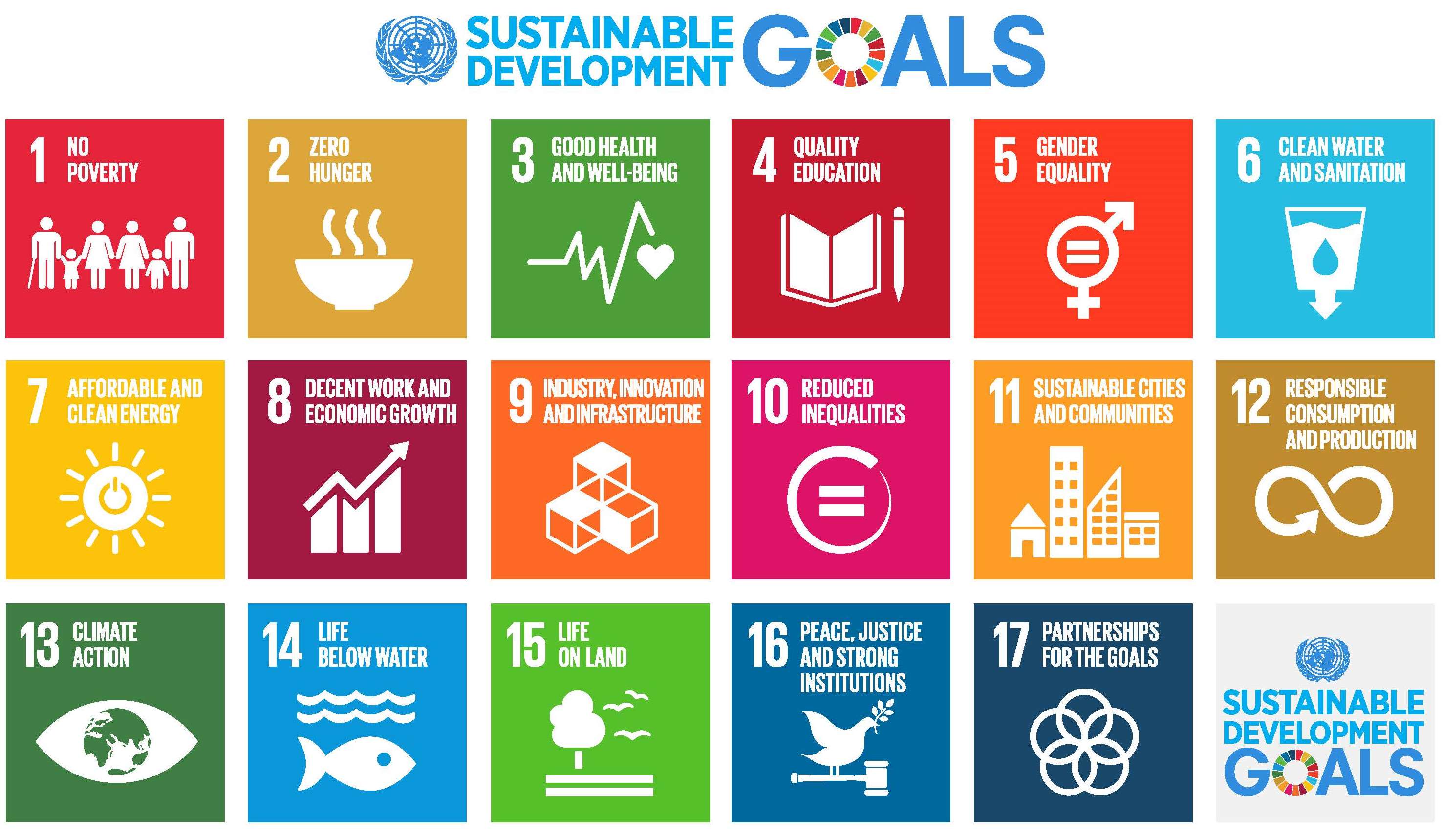
Yesterday I attended a briefing delivered by colleagues of mine at WHP who have very recently sat and passed their Chartered Professional Review (CPR) with the ICE. Lots of advice was given but I thought one piece that stood out as a quick win was with regards to attribute 7 (sustainable development). Several of my colleagues explained that they were asked about sustainable elements of their projects with direct reference to how they aligned with the 17 UN sustainable development goals.
I have included an infographic below which lists the goals and I’ve also attached the UN 2030 Agenda for Sustainable Development which adds a bit more meat to the list in the image. Richard has mentioned these to me a couple of times too so in preparation for the ICE CPR it’s probably worth learning them (if anyone can think of a 17 character CDRILS equivalent to remember them please let me know!).
The link to the UN 2030 Agenda for Sustainable Development report is below:
 Holdfast Training Services Trial Blog