Archive
Trials & Tribulations
Tunnel Invert Replacement Trial
Background
The removal and replacement of the invert slab will be the first complete removal of part of the existing tunnel structure, and can only take place following the successful soil stabilization by dewatering and groundwater depressurisation (surface wells, in-tunnel wells and drilling and grouting). Based on an analytical structural model, the Client specified that excavation bays must not exceed 1.8m, and the adjacent structure must be supported by a temporary works scheme. In order to determine the actual loads which will be exerted on temporary works, real time data is required. This is provided by monitoring the load exerted in the props during a trial construction of 2 bays. The trial aims to establish the actual propping requirements, as well as determining the most effective methodology.
Trial Temporary Works

Installation of Walers and Hydraulic Props
Trial Monitoring
Groundforce MP250 props provide 24/7 load monitoring of prop loads using an electronic load pin with integrated pre-calibrated strain gauges and a separate wireless transmitter housed within the prop. Data is continuously transferred via cable to mobile reception, then wirelessly transferred to the Soldata Geoscope system. Data reviewed as part of Daily Shift Review Monitoring Meetings. Initially loaded to 10%, up to a final 250T proof load.
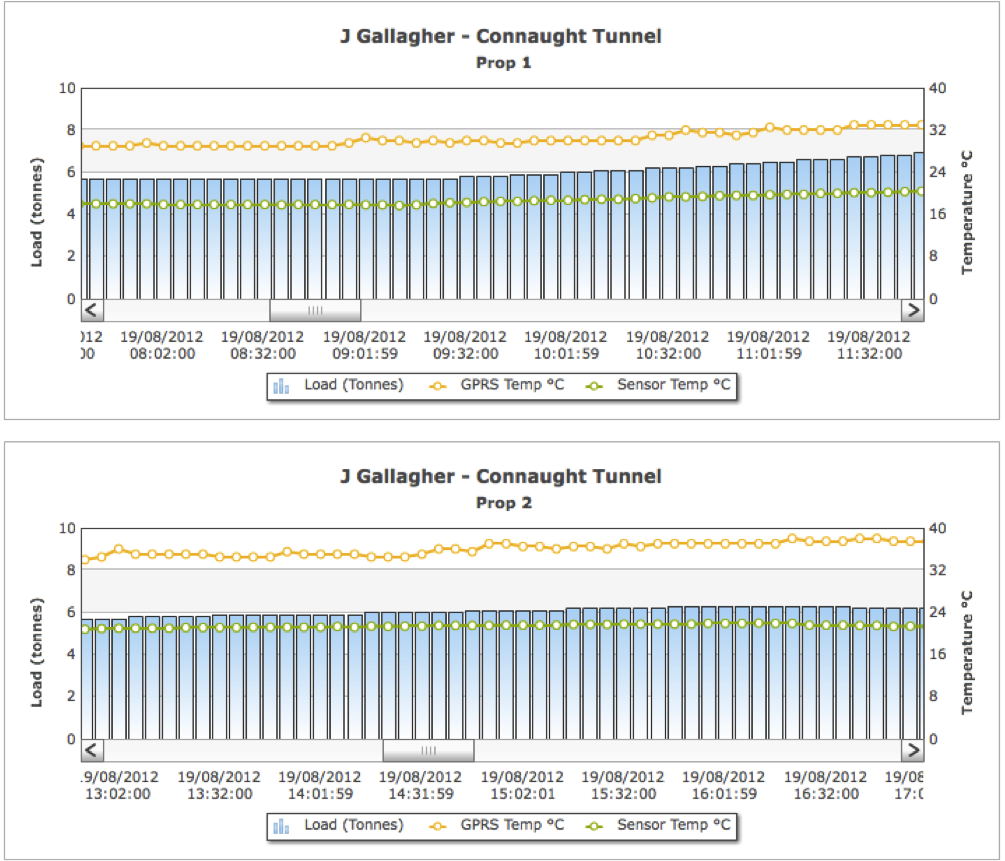
Real-time monitoring of the props against time and temperature.
Trial Methodology
The construction of the invert consists of break out / excavation of existing brick/concrete invert, in 1.8m bays to a new lower formation, level ground with blinding then the installation of reinforcement with couplers (to connect the reinforcement to the adjacent bay without splice bars), concrete slab with wall kickers, shuttering and concreting the new lower section of walls then grouting/dry packing the connection between the new wall with the existing brick work.
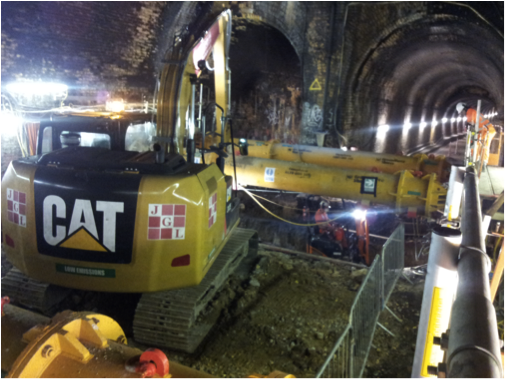
Excavation of Trial Bays by use of 2 x 1.5t excavators and a central 13t excavator
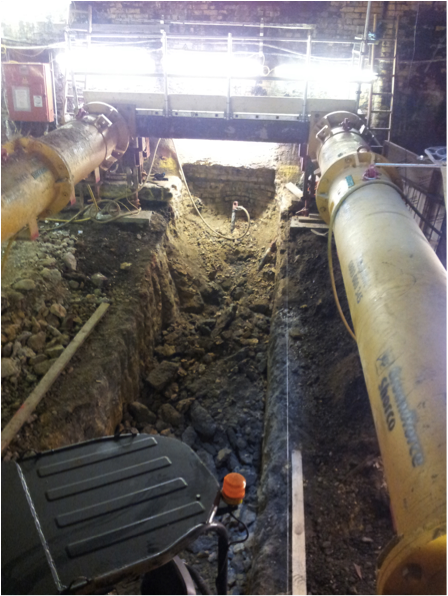
Excavation of Trial Bay 1
Trial Bay 1: Shear reinforcement will be provided by shear links, and the section between the new concrete wall and the existing brickwork will be grouted by dry packing.
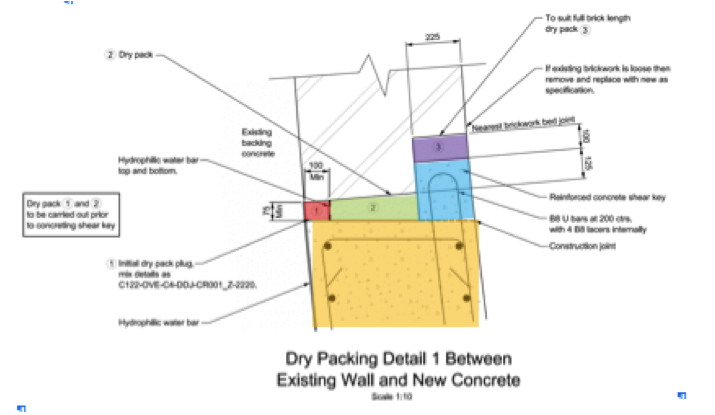
Trial Bay 2: Shear reinforcement will be provided by shear rails, and the section between the new concrete wall and the existing brickwork will be pressure grouted.
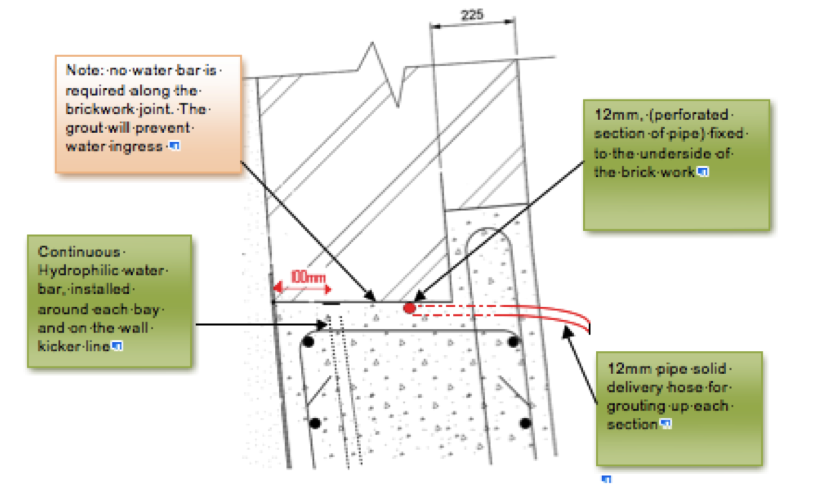
NB: Hydrophilic water bars will be used between adjacent bays and along the wall horizontal construction joints, but will not be required during the trial.
Tribulations
In reality, the trial was not originally planned, however, Client authorization for temporary works designs and methodology have been withheld until scientific and physical proof is provided that the proposed scheme is entirely appropriate. For example, the prop size has had to increase 3 times before the Contractor and Sub-contractor (JG Gallagers) ‘trial’ temporary works scheme was approved, and cannot be downsized until the prop monitoring loads have been fully reviewed during and upon completion of the trial. The Contractor proposed use of shear rails and pressure grouting, as opposed to manually intensive and impractical shear links and dry packing, again was not given authorization without a trial to prove the efficacy of the methodology.
The trail was scheduled to take a total of 3 weeks, but has already been delayed 2 weeks by temporary design approval issues, and a further week by the extremely hard brick work and even harder mortar! There are currently ongoing discussions regarding which concrete and concrete logistics plan will now be accepted, since the Contractors preference S5 was not stipulated in the original specification, and anything less would require vehicle delivery (logistically very complicated) or double pumping….. discussions continue as the window of opportunity for the installation (and removal) of the cofferdam fast approaches!
 Holdfast Training Services Trial Blog