It’s all got a little punchy… 7 May – 20 May 12
Period Covered 7 May – 20 May 12
Summary: It’s all got a little punchy…
I’ve had a great few weeks on site which has mainly been due to my growing role and responsibilities which has opened me up to a number of experiences, meetings and decisions which has widened my understanding about how the project is run, the relationship with the client and commercial awareness.
This has meant I have felt pretty busy with my site work, CI’s Visit and TMR but I am sure no different to anyone else at the moment!! Finally there are now some real issues growing on site and some big decisions that need be made very soon.
During this period I have completed the following:
• Participation in Post Tensioning 90% Design Review
• Contractor Database search and encouraged companies to bid for Northern Superstructure Post Tensioning work. (Cold calling and ppt brief) • Written the Post Tensioning Tender Plan which has been submitted to the client for approval. This included Schedule G – Scope of Works and a review of Schedule H – Standard Sub Contractor requirements.
• Organised and chaired “industry discussions” with Post Tension Subcontractor for Value Engineering work shop. • Senior Engineer for Dewatering Tender Review meeting with Client
• Written Work Risk Assessment for Dewatering Work • Completed Safety Paperwork Preparation for Dewatering Subcontractor arrival on Site (expect 29 May 12)
• CI Visit
• Pre Pour inspections and pour supervision
• Pre Start Briefs
Work on site. So with a lot of hard work, Sunday work and careful micromanagement of the subcontractors the service tunnel is on track to be handed over on time (28 May). The progress has been rapid and I have been impressed with how quickly the blockwork walls and the reinforced concrete roof have been constructed. Syphon A has also now been completed so there should not be a requirement for anymore emergency pumping out!! However, in contrast to this progress has slowed/stopped in many other areas.
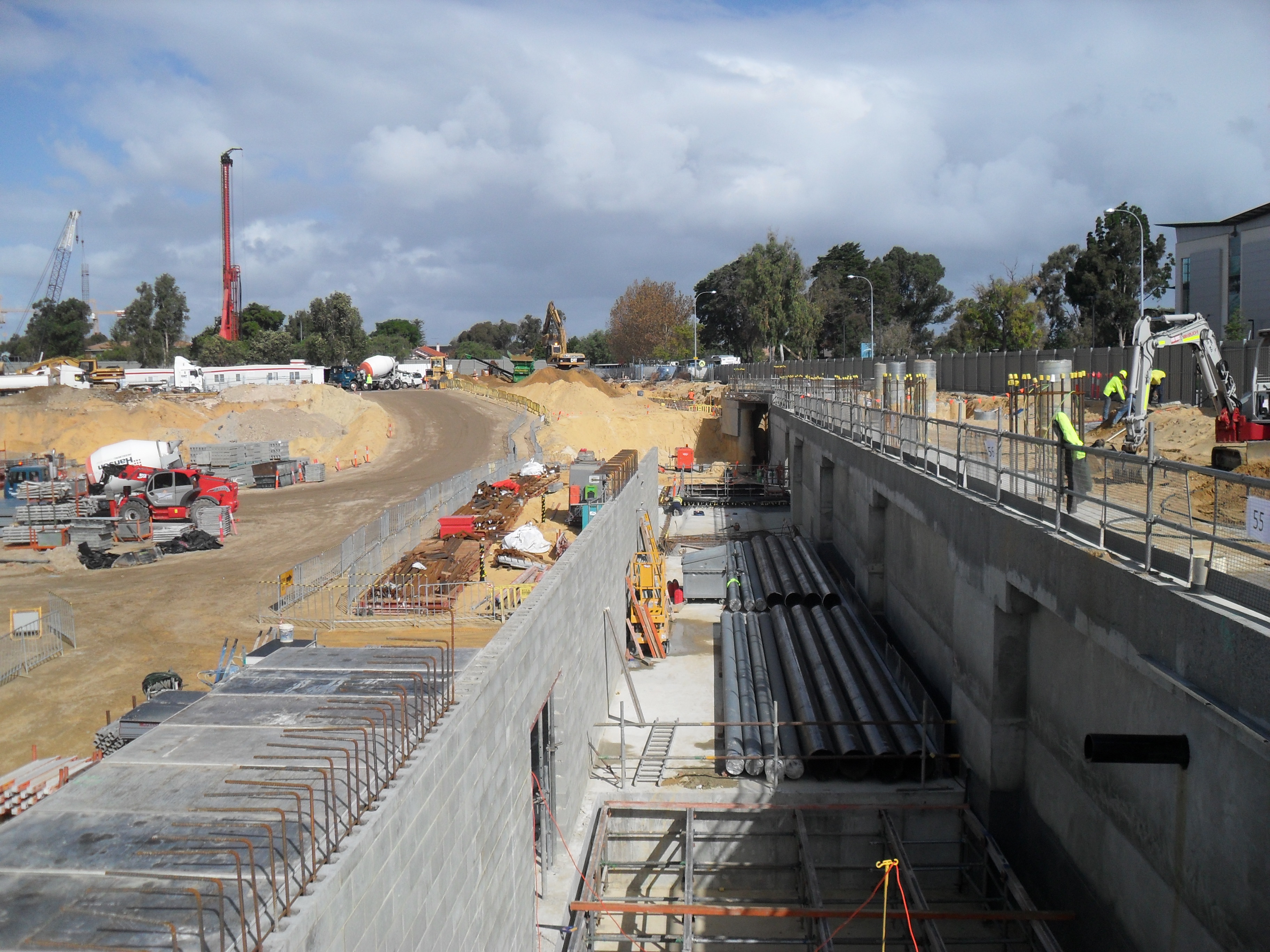
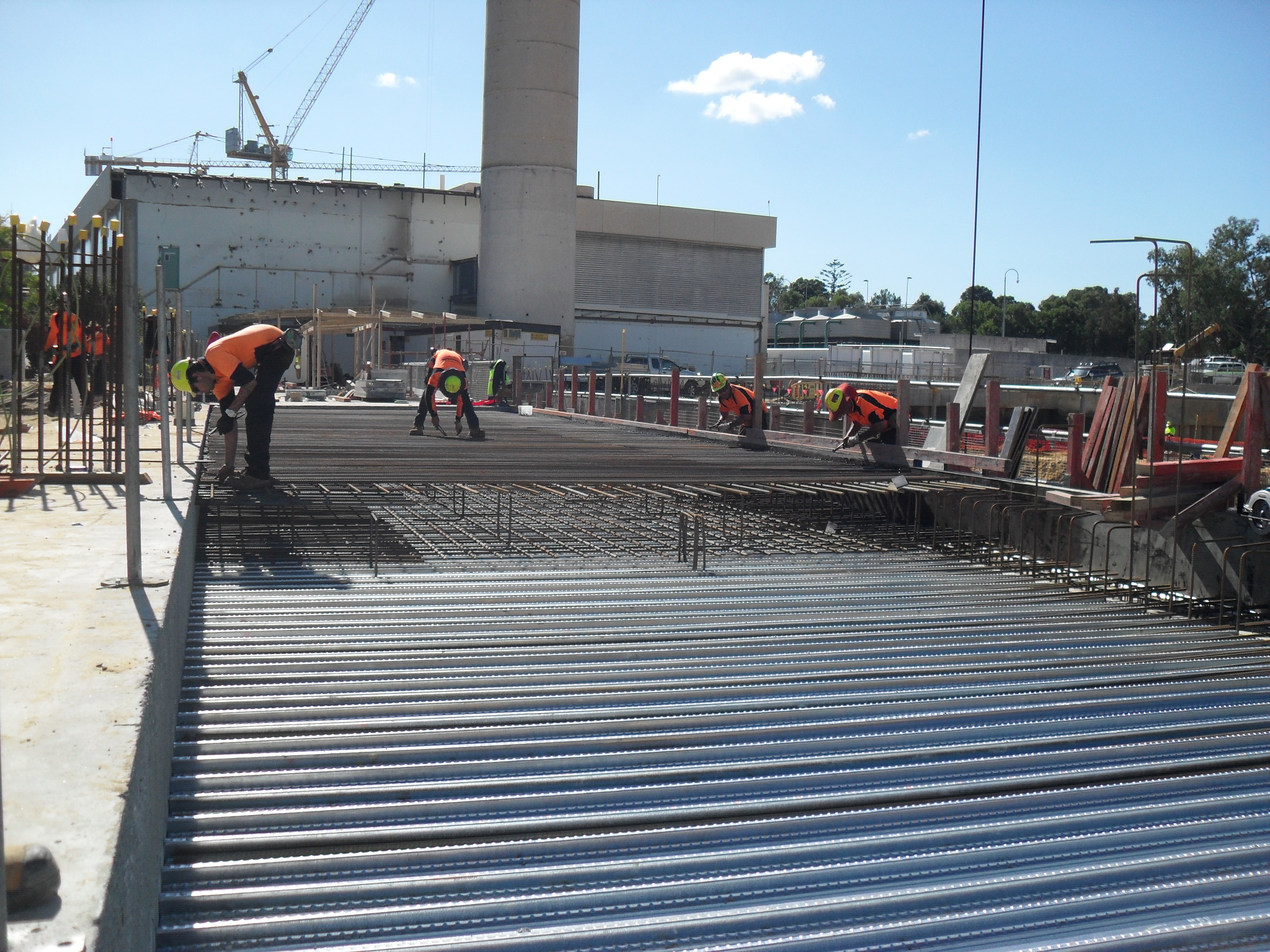
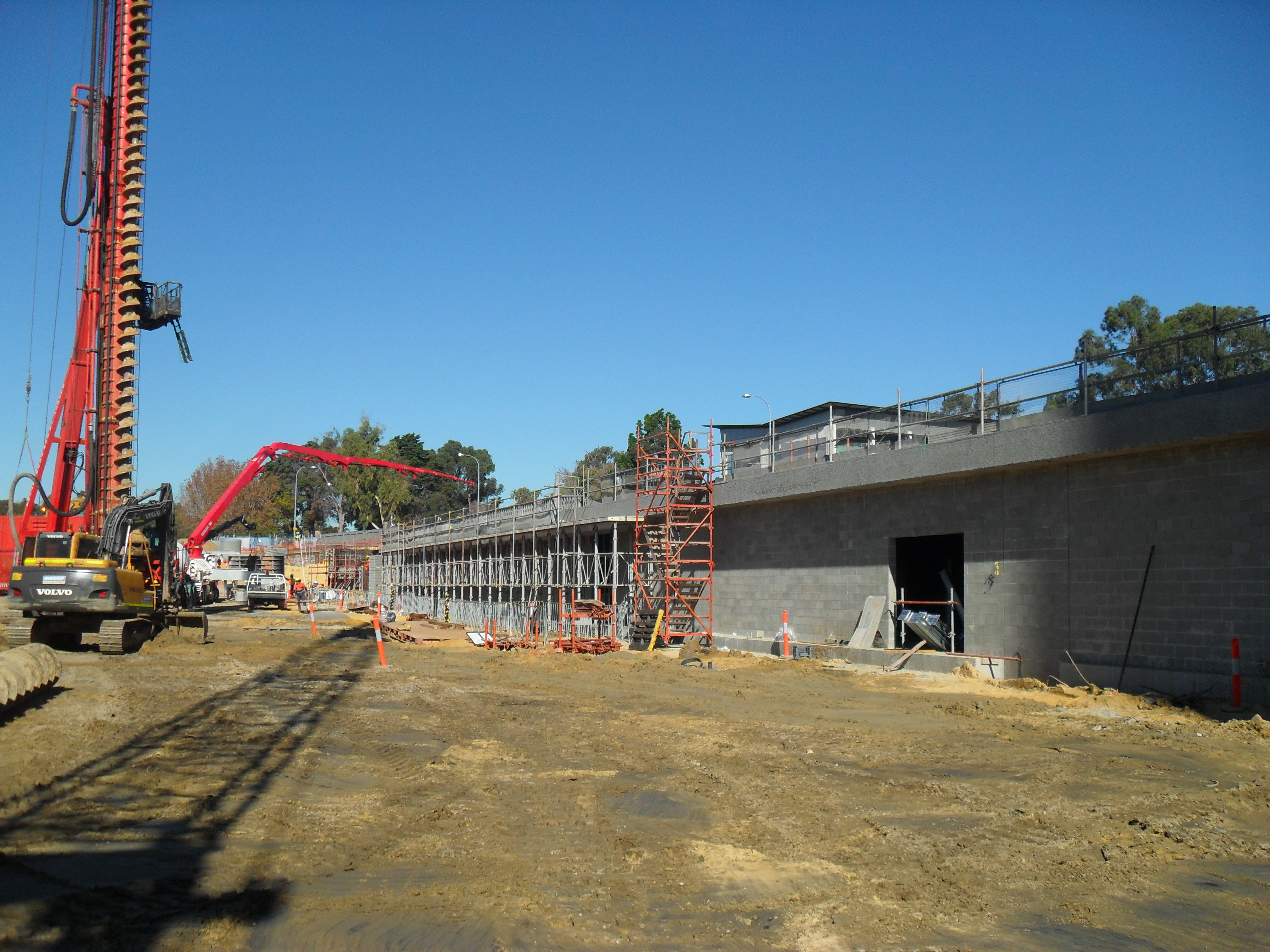
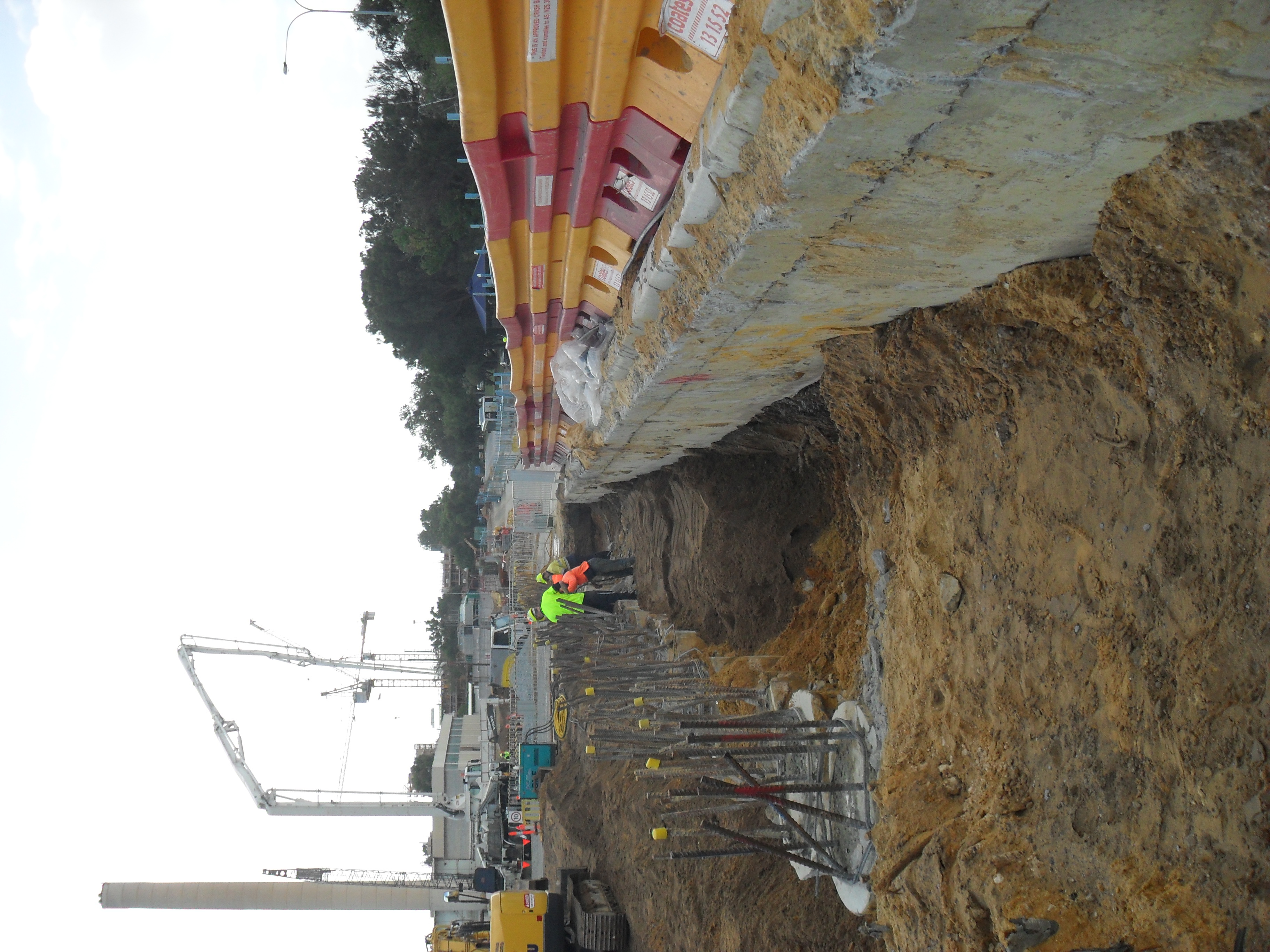
A summary of where this is and the reasons is below:
All excavation in the basement. The capping beams and chimney are monitored for excessive movement and today the surveyors raised the issue that they had recorded excessive movement and the top of the 60m chimney. We are now investigating the cause of this (there is debate about how much the excavation is causing and how much is temperature differential). In the meantime no more excavation is allowed in the basement. I am getting involved with this problem as I think it has the potential to be fascinating issue…however if I can not solve it with freebody diagrams I may need some outside assistance!!
Piling of Zone 7. This area is right next to the service slip lane, with the final 10 piles approx. 2m lower than the slip road. Whilst excavating the sub contractor noticed the road base falling into the excavation and so work was stopped. A combination of shuttering and grout injection aims to fix this, but this has caused a 7 day delay.
Piling of Zone 8. This area is right next to the site fence which backs onto a pedestrian footpath and a bus stop. John Holland understood that when we got ownership of this area (5 April 2012) that we would have access right up to the road. The client argues this was never the case. The up shot is that piling in this area has been delayed whilst John Holland has put together 4 COAs. The client is taking its timing deciding which is its preferred option. This has meant a 10 day delay (and counting) on this area.
Staircore 3. A rapid redesign of the piles for Stair Core 3 occurred last week as the torsional loadings were revised. This resulted in 9 new piles being required, and extra 7 days of work. This has now been completed.
The real result of all these delays is not just the effect on the Piling Contractor but on the Pile Cropping/Trimming teams and the Capping Beams team. Both of these sub contractors had just inducted serious numbers of people in preparation for the increased work load. However with these delays there has been a lack of work and these labourers have found employment elsewhere and are unlikely to return to the project. This is real problem, as Subcontractors are unhappy and there could be a lack of inducted personnel available when there is work! Fingers Crossed these issues are resolved quickly so work can continue at the pace we are used to.
MORE PHOTOS:
Areas of Site where work has been delayed
My Experience.
So my work as a supervisor has officially ended, this was an excellent way of introducing me to the project, sub contractors and the John Holland Systems whilst in a position to pick up decent engineering work when it arose. I am now fulfilling my Engineer role and since then I have not stopped. Being the lead for the post tensioning work has been excellent, as I will see the $3 million worth of work go from my initial thoughts on what should go in the scope of works right through to delivery on site.
This has given me exposure to the contract administrator team who I am working with approximately 1 day a week and hands on experience of the tender process. I am sure I will have a lot more to write about once comments come back from the client (the state) on my tender plan, but so far so good!!
As part of the post tensioning work I attended a 90% design review with the structural designers and the client to discuss the Post Tensioning work for the Northern Superstructure. The technical side to this was interesting but not as interesting as the commercial aspect. In what I think is a very weird decision John Holland is being allowed to bid as the “builder” for the Northern Superstructure works package and thus to ensure probity there are some very funny restrictions in place about who can talk to who about what…the result being to ensure John Holland doesn’t have an unfair advantage compared to the other sub contractors who are bidding to build the work. Hmmmm, if you were a company would you bother to bid if you know the company managing the build is putting in a tender….anyway I played the values and standards of a British Army Officer down to a tee which was well received by the retired Australian Defence Force Officer, now probity officer!!
The other project taking up my time is being the lead engineer for the dewatering work on site. In the last week this has involved a couple of pretty hostile meetings with the client, where they seemed to forget all the meetings and dialogue we had up until that point and I had explain why, where, what and how once again. The upshot of these meeting was that I was ordered to do another option study of an option which was discounted a month ago – this option (using an inaccessible sewer) being the least environmentally friendly and most expensive option again..48hours later, we have agreed my original plan is the one they should sign up to!!!!! We still need to get the contract across the line but it looks like we are there now and my focus is ensuring the site is ready for their arrival.
(As an aside, I have been spending a lot of my time liaising with local councils, water companies and other drainage providers to arrange permission and licences for the dewatering, Dan K tells me that this is covered on the E&M course, it might be worth bolting this lesson onto the Civil dewatering lessons?)
Further Work
• Tender Plan Review meeting with the Client to discuss Post Tensioning
• Meeting with dewatering subcontractor to ensure all preparations are ready for start on site
• Safe, Quality and Enviro Safe Systems of work co-ordinator for Dewatering
• Involvement in new pedestrian footpath
 Holdfast Training Services Trial Blog
Two comments:
On your ‘fluctuating tower’ The classic work in this soert of thing is John Burland’s work on Big Ben as they dug the underground car park next to it.
On the legislation surrounding de-watering: May not have been much but here’s the summary of the legislation that is in your dewatering notes:
10.1 Environmental measures
Under U.K. law it is necessary to gain consent to interfere with the natural ground water regime and for the discharge of any water back to the surface water system
10.2 Issues in Environmental management
The abstraction or recharge of water are governed in the UK by the Water Resources Act 1991
Normally abstraction does not have to be licensed if the abstraction is to limit damage to construction works
But the outflow will have to be discharged and this is covered under the same Act and this requires a discharge consent.
It is necessary to notify the Environment Agency when water is removed from the ground – even for construction
The information required is as follows
• Grid reference
• Strata being dewatered
• Pumping volumes
• Estimate of the extent of drawdown
If discharge is to the local drainage system it is necessary to agree with the Local Drainage authority and the Environmental Agency
Consent is not required if the water is returned directly to the ground but this is covered by the Environmental Protection Act of 1990 and the Environment Act of 1995
When the Environment Agency are notified they may serve a mitigation notice which will require the contractor to avoid or minimize the environment problems associated with the operation
The principal issues will be:
• Avoidance of suspended solids: This informally controlled by filtration and settlement tanks.
• Avoidance of oil discharge: This is normally handled by using oil interceptors
• Discharge into watercourses causing erosion: this is normally handled by limiting outflows and outflow velocity or providing anti scour measures. Typical are geotextile wrapped gravel or gabion basket outfall beds.
Tut…tut..tut..I think in your Coffer exercise you were expected to indicate an awareness of this and to tell me how you inteded to move the extration thorugh a settleing tank before either using it for re-charge ( to limit settlement) or discharging ( under licence) to a drain.
I would appreciate an update on this form your experience and Australian practice