Archive
Back in!
A 3 week delay enforced because I have not been in the office much means I have lots to tell! 3 weeks ago was the annual British Army Staff Conference (BASCON) held every year for all UK Army personnel to receive an update on the current Army issues. This was briefed by a number of generals looking at the current challenges and giving us the latest news which we are not able to get over the US intranet. For those coming out this is a great time to make contacts. I have now got a POC at Quantico where the USMC is pioneering research in my thesis field, deployable energy production and integration. I have been invited to come and see how the USMC is tackling the situation which will prove invaluable I am sure. Time of visit is still TBC but hopefully in the next week before the Thanksgiving/Christmas shut down. There is also the Association of US Army Annual (AUSA) meeting where defence manufacturers descend on DC to show off their wares. Attendence is by invitation according to the Embassy so I missed it, but I know others organised their own tickets and got in. Luckily a colleague of mine grabbed a load of literature for my thesis so I was ablt to get some benefit even if I did not get in.
In Aberdeen work is ramping as people leave the Office Engineer realises I only have 3 weeks left in office. Current issues include:
Equipment Maintenance: The customer, contactor and I have been working to ensure that the everyone understands what is expected. Recently we have had design firm representatives on site to brief up the boiloer operators on how to use the kit more efficiently, a tricky problem especially as the boilers have no real load to supply. After my visit to see the automated boiler water quality monitoring system and seeing how the manual method of water quality management is not very effective I have asked the designer and Customer to consider an early upgrade prior to or as part of the service contract. This has met with an encouraging response as everyone is aware of the potential problems and expense of a boiler breaking.
Pump 17: Having asked the design team to review the design for the whole system for the condenser cooler they have agreed that the pump is oversized (to allow for scaling!) and should face remedial action. An impeller reduction is their prefered solution because they are hoping to pin this back on the contractor. The electrical issue with the pump is still not resolved but Pump 19 is now tripping the same way that Pump 17 is. It was agreed that a VFD would be the best solution but the purse is pretty empty and long term cost saving is rarley considered an investment. The motor manufacturer has yet to reply to any questions.
Surge Tank: The blow down seperator to the boiler, which removes debris from the boiler tank currently empties in to a 4inch drain which floods because it is to small. It was thought that a surge tank would alleviate this issue so I was sent to investigate. Initially it seemed the best option although at $30,000 an expensive one. There were a number of issues. Location was a problem because of existing pipe work but more importantly how could the tank actually get in to the building with the only access a standard door. When I reviewed the as builts it did not match the “current plans” we were issued. In fact there was a 6 inch drain 6 feet from the blow down point. So instead I proposed a new floor drain be installed at a cost of $5,000 instead which went down well on all sides. It proved the importance of updating team documents too!
Sound Attenuator: As previously mentioned our exhaust sound attenuators from the NEAT labs (where the nasty experiments go down) were to be replaced with welded ones as the screwed and glued type were not sarin proof. This has had a Request for Equitable Adjustment for $2.3 million and 236 days from the contractor. It is now my job to work out if the work has been done, by how many workers, with what kit and how long it took. Initially I thought there were only 178 to review. However this was on old plans. After review there are actually 573 to review. That will keep me busy until I leave and reinforces the importance of updating documents!
Generator Commissioning: Our 12.5 kW generators have been going through their precommissioning tests involving running them at various levels for long periods on mobile load banks (truck mounted resistors with fans to cool them down). These have been going well once the subcontractor got the load banks working (3 days lost) with all criteria being met which is a relief because most other commissioning tests have been problematic due to failures in the systems.
Lab Vacuum Pumps: This started as a previous RFI on the size of filters for a lab vac system. As this has been going round the houses a while I have decided to investigate to close the loop. Having looked at the spec the information is confusing. Apart from the fact vacuum is measured using Standard Cubic Feet per Minute (SCFM) in standard conditions and Actual Cubic Feet Per Minute (ACFM) based on atmosheric pressure, temp and humidity. Installed are 3x vacuum pumps rated at 330 ACFM at 28″ of Hg (more imperial units!) but the spec calls for 2 pumps to provide 104 ACFM, with one in reserve, so it appears the pumps are 6x oversized! I have asked the designer to show me the calcs to confirm that the pumps are sized right and apparently under vacuum the pumps produce 25ACFM. They are however being very cagey about how this was worked out. Even if this is correct the single charcoal filter rated at 25ACFM would be irrelevant if 50ACFM is going through it. THis was my first authorised change for the 2 filters in parallel in July. Now I not sure that even this configuration will work especially asa in the other building wing 2 filters identified for this system but in a different location are actually 350ACFM rated. I have very little data to work this out my self other than the number of outlets and the diversity factor so I will wait until I receive the information before I go further.
Payment Assessments: the monthly investigation into the works of fiction the contractor submits as pay requests. These never match up.
In Harrisburg one of the QA guys has been sacked and escorted off the premesis by security. After being told his contractor was not being renewed the guy went to the contractor and off loaded a whole loaded of information they did not need to know thus putting USACE in an awkward position. Once this was found out he was off the site but there could be issues in the future. The roof is still going well with 35% covered but the Contractor still has no plans to get equipment on to the roof. A submission to cut the 45 ft roof beams in to 3 to make the more managable on the roof is being considered. In 3 weeks they have removed on 15ft Air Handler off the roof in pieces. There is still no plan on how a replacement unit will be installed.
And in Other News:
Halloween was a mental experience. The whole neighbourhood was decked out ghoulishly with most parents sat out giving out candy while the kids and teenagers topped up on sugar and food colouring. It was 20 degrees so great for the kids and finished at 2000hrs on the dot because the heavens opened, but a merry time was had by all. We handed out 6lbs of candy and the kids brought just as much back! A trip to New York with my parents was very enjoyable, with trips to the empire state building (reduced entry for military personnel – not free!) Central Park, Times Square, The Statue of Liberty and Ground Zero. The Ravens are still struggling and temperatures are now freezing which means roof work is stopping soon. Shortly it is Thanksgiving then silly season starts just as I arrive at the district design office. Fun times!
Offline for 3 weeks
I was planning on writing my final phase 2 blog but I have run out of time as I race to try and leave the site in good order for 3 weeks and also submit AER3 before I fly out to NZ early Sun morning.
I will leave you with a teaser which I will wrap up when I get back. Needless to say slipforming is not as easy as it looks to get right!
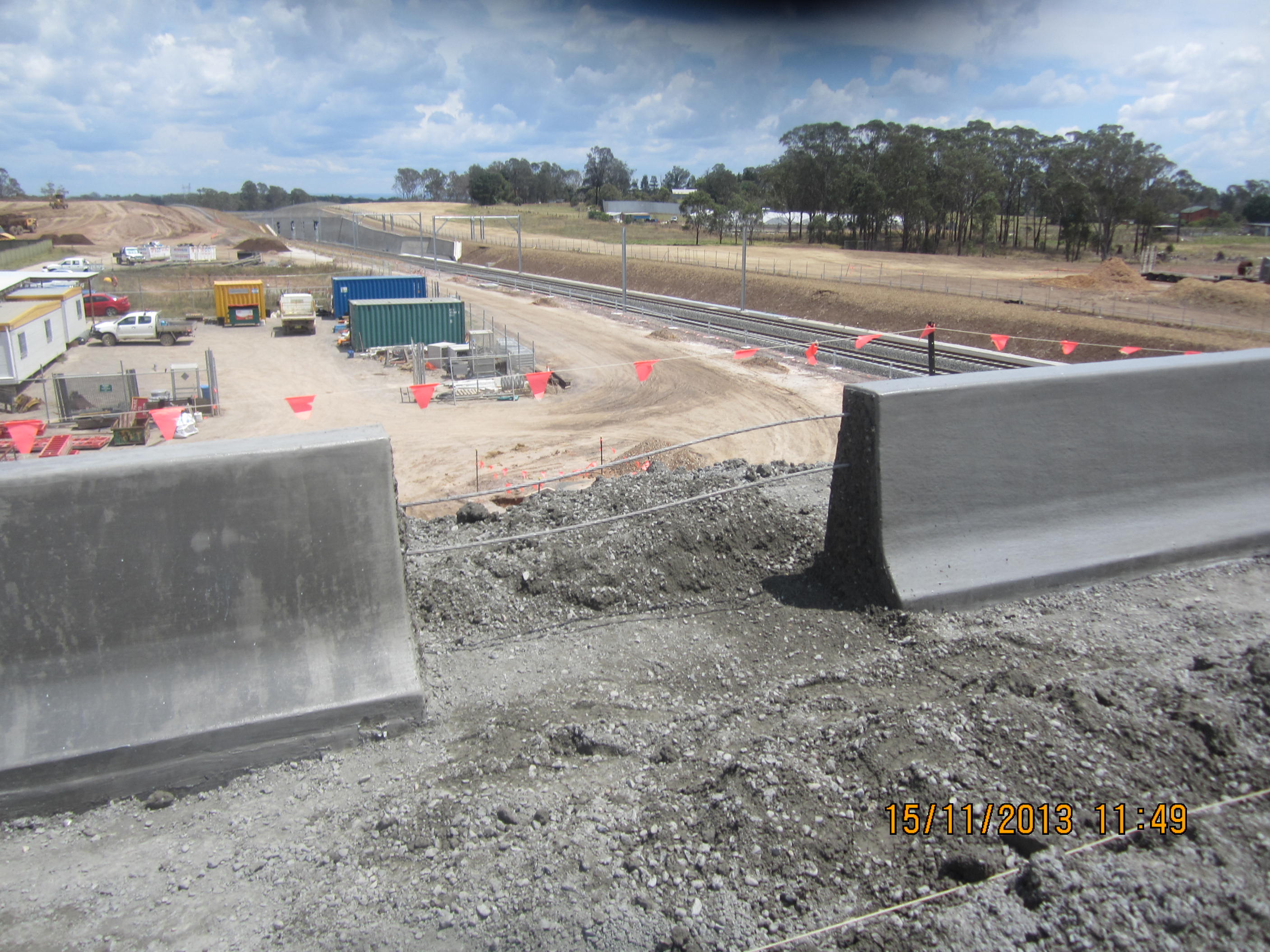
The rain may defeat me!
This last week has seen slower progress than I wanted, however we have managed to complete the walkway along the eastern side of the bridge and installed the water main and the six conduit runs. We also managed to pour a total of 18m of traffic barrier out of the 108m along both sides of the bridge, although I was hoping to get 27m complete I had further issues with the reinforcement supply. The steel scheduler rarely seems to get the schedule right which has forced me to check every schedule he sends me to try and spot the error ASAP so I can get a timely resupply. In this instance he forgot the end transition barrier steel completely and some for the barriers on the wingwall but after stressing to him the urgency it still took a week for delivery and what was delivered was about 2T more than I was expecting – at $1123.50 a T I’m inclined to send it back and not pay the invoice or cash it in with the steel bin so we can have a final BBQ!
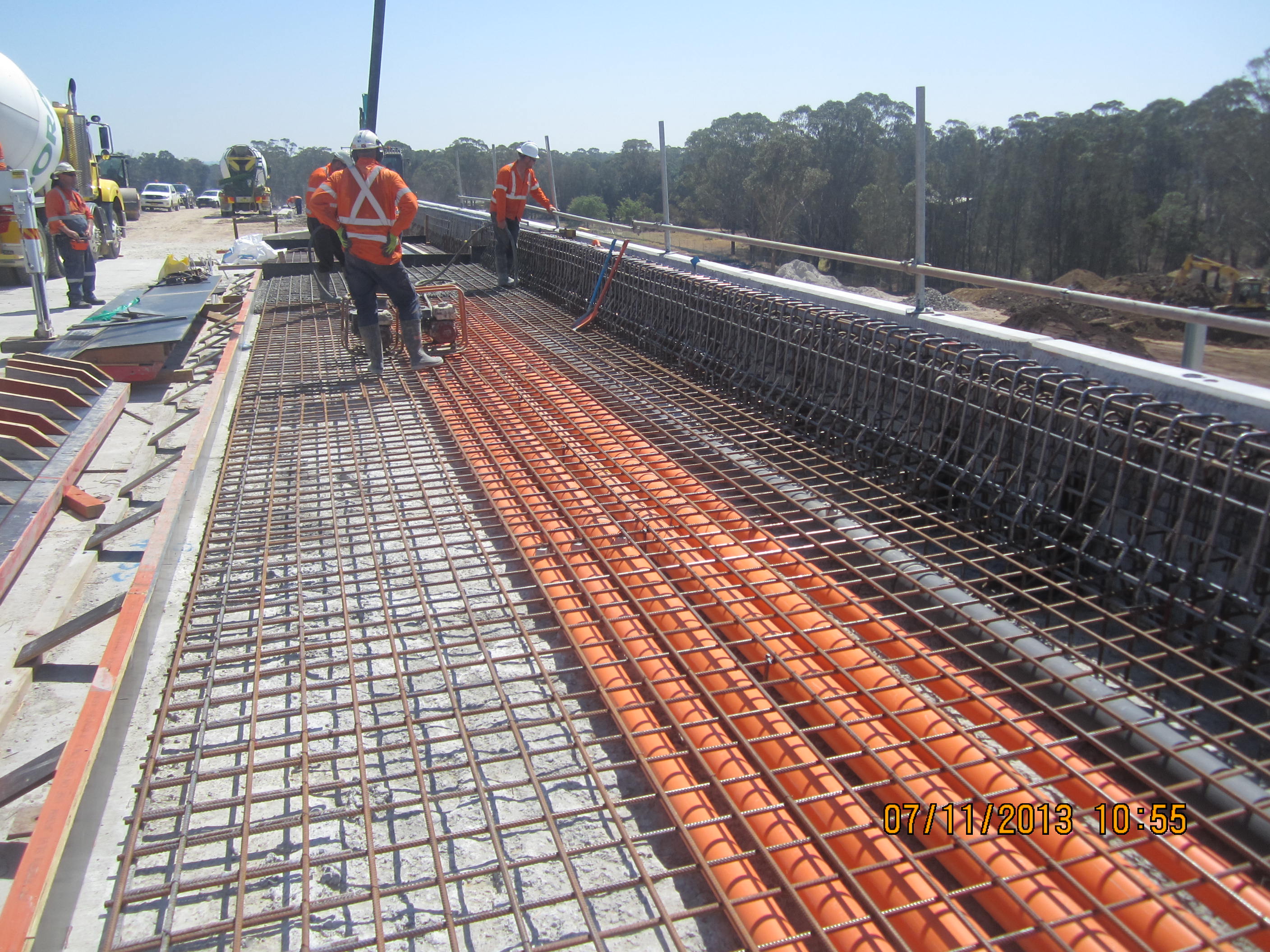
I have had to move the slipforming to the right by two days due to rain forecast for early next week. Usually the weather forecast is pretty useless and the weather can be very different out in the west than it is on the coast but as we haven’t had rain for a long time the met gurus have put up a convincing argument that Mon will be a washout. I am almost looking forward to some rain as it means I will have a chance to catch up with a large portion of my QA paperwork and load it on to the worklot register to pend to the quality coordinator. The main hassle with trying to close lots is waiting for the concrete test results which almost never get issued at 28 days and often take 40 days+ before they reach you. I am currently badgering the concrete supplier the day the cylinders are tested so they can send me the results so that I can pend as many lots before I go on holiday this sunday.
Another issue that stops worklots being closed is outstanding NCR’s. The RMS spec only allows surface concrete cracks of less than 0.1mm after 28 days which basically means any cracks you can see have to reported as an NCR and an RFI also needs to be raised even though the repair method is always the same. This does generate a lot of paperwork and takes time from the engineer.
I was trying to think back to the issues I have raised through the blogs so far (I could look back over the blogs I suppose but hopefully I can remember the pertinent ones) and it has occurred to me that most are still an issue and have not been resolved as they are either sitting with the designer or we have no resources available to currently do anything about them.
Pile concrete mix. The initial issue was that the concrete did not meet the required strength at 28 days but after applying age correction factors to 56 day results (the concrete supplier argued that it was a 56 day product therefore it may not reach 50MPa after 28 days) and an assessment of – there near enough – the designer accepted the strength results we had. A later issue was that when we looked through the batch records they had actually supplied the wrong concrete mix for two of the ten piles which was a mix that was not even a project authorised mix. This mix had a high cement content, higher than the max allowable limit according to the Durability Assessment Report (DAR) so an RFI was submitted to accept as is. The designer and Project Verifier (PV) had concerns about Early Age Thermal Cracking and that is still where we are. The advice from the designer who produced the DAR was that we conduct a PIT which in theory we could do if we exposed some of the pile and notched into the face of it but that is a lot of effort for potentially unreliable results so our response was no, please review again considering our solution to ‘leave as is’ which does seem to be the default setting for RFI’s at JHG.
Conduit expansion allowance. Scalabrini Creek underbridge had the Combined Services Route cast into the walkways without allowing for expansion of the HV conduits at either expansion joint of the bridge between the deck and approach slabs. After going back and forth numerous times with the RFI procedure I finally managed to get the services designer to agree that simply cutting the conduits flush to either face to create a 50mm gap would be the most practical and cost effective approach. Concerns about damage to an exposed cable at the joint were dismissed once it was highlighted that a steel cover plate is installed at the top of the walkway and along the deck which will protect the cable. Other concerns regarding pulling the cables through along cut and potentially sharp edged conduits were also toned down once reassurance was given that strict operational procedures would be followed to ensure firstly that the conduits would be cut cleanly and the edges smoothed off and secondly the installation would be conducted with care and spotters at each joint to monitor the cable pull. The actual process of cutting the cables was not an easy process and took me about 3weeks to achieve. In the end I had to get in another concrete cutting subcontractor as the two we had been using were useless. The only thing we could do to reach the lower conduits was to stitch core them using concrete core bits – it didn’t look very neat at first but its amazing what a motivated labourer with a file can achieve. The cables are now installed and the client has accepted the work so issue closed.
Settlement issues. I think I have mentioned a few issues with initial settlement at some of the retaining walls and practically all the bridge approaches. I was asked by the Construction manager to compose an RFI to ask for the settlement tolerances expected and request that any movement below this value be ‘left as is’ and I suppose we are just hoping that there is no movement greater than the figure the designer gives us. The initial response came back quoting something out of an initial design report by the JHG design manager but I have spoken to Senior designer at SMEC who had designed the retaining walls and he said he expected vertical movement of up to 100m on some of the RW’s and certainly on two of the walls we have had 80mm movement which has resulted in the corner of the wall resting and crushing against the corner of a bridge pile cap. I haven’t really had time to pursue this any further as I was instructed to focus on completing Dickson Rd and that all defect work will be addressed in the new year. If I have time I may revisit this with the Construction manager to at least close the RFI. Eastwood Rd overbridge settled 5mm over a 3 week period but it seems to have stopped and the cause has be blamed on poor material being used for the backfill against the abutment. It was probably due to poor compaction methods as well having watched the civil team at work at Dickson Rd doing layers much deeper than the specified 150mm, using a pad footed bulldozer to compact and employing a rather dubious subcontractor to conduct the compaction testing at supposedly every 300mm.
There may be more issues I need to close but I think this is enough for now. Richard, I think you are probably one of the few who are still reading my blogs so if you think of any issues I haven’t covered I am sure you will let me know. The monsoon has just started outside as expected.
WOW!!! has it been that long
I can’t believe it has been that long since my last blog. Things have been quite busy here for me, however the site has progressed slowly. The original completion date for the shaft was the 9 Sept it then moved to 31 Oct, 7 Nov, 17, Nov and now it currently rests at 27 Nov. My hope is that I will see the final shaft construction complete before I leave for the 3rd phase placement.
As you can see from the overview below, we have only completed a very small part of the Fisher Street works. Once the Shaft has been completed the Crossover section will begin, taking approx 1 year to complete.
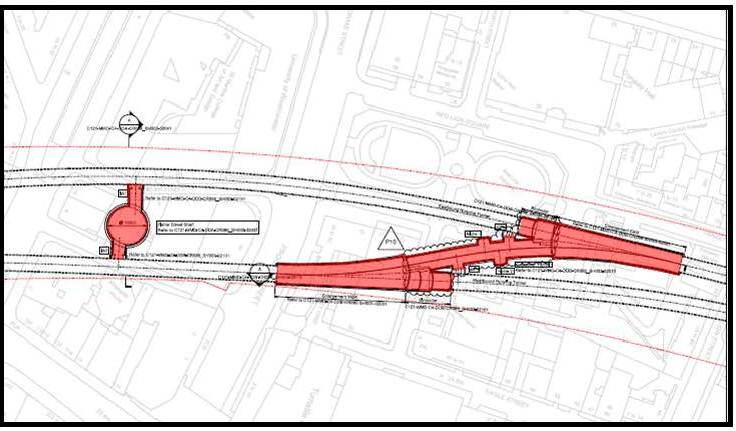
The process that we have used for the vertical excavation of the Shaft will be repeated for the horizontal sections of both the Adit eyes (the connection between the running tunnel and shaft) and the Crossover.
Looking in detail at the shaft there have been a number of phases that have been completed to ensure the overall success of the project. We are finally placing the Secondary/Insitu lining that will see the shaft completed
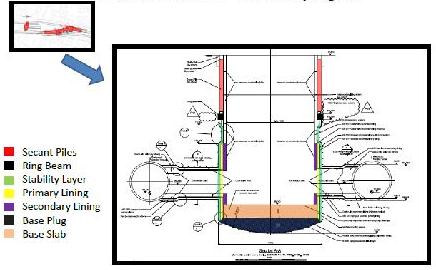
However, as all ways, it has not gone that smoothly. The idea was that a meter high ring would be poured each lift. Once the ring had reached a specific strength the shuttering would be lifted and another pour completed.
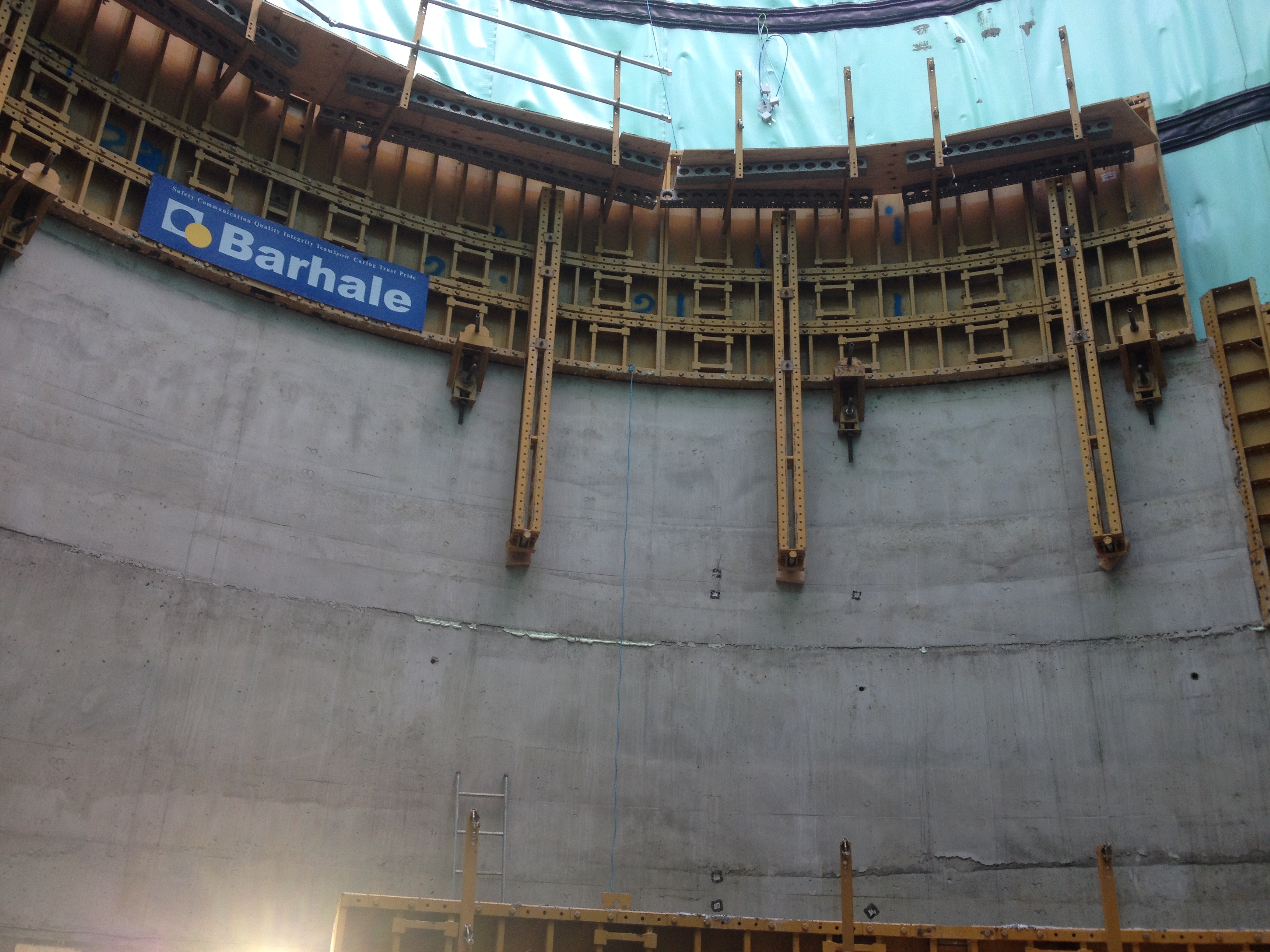
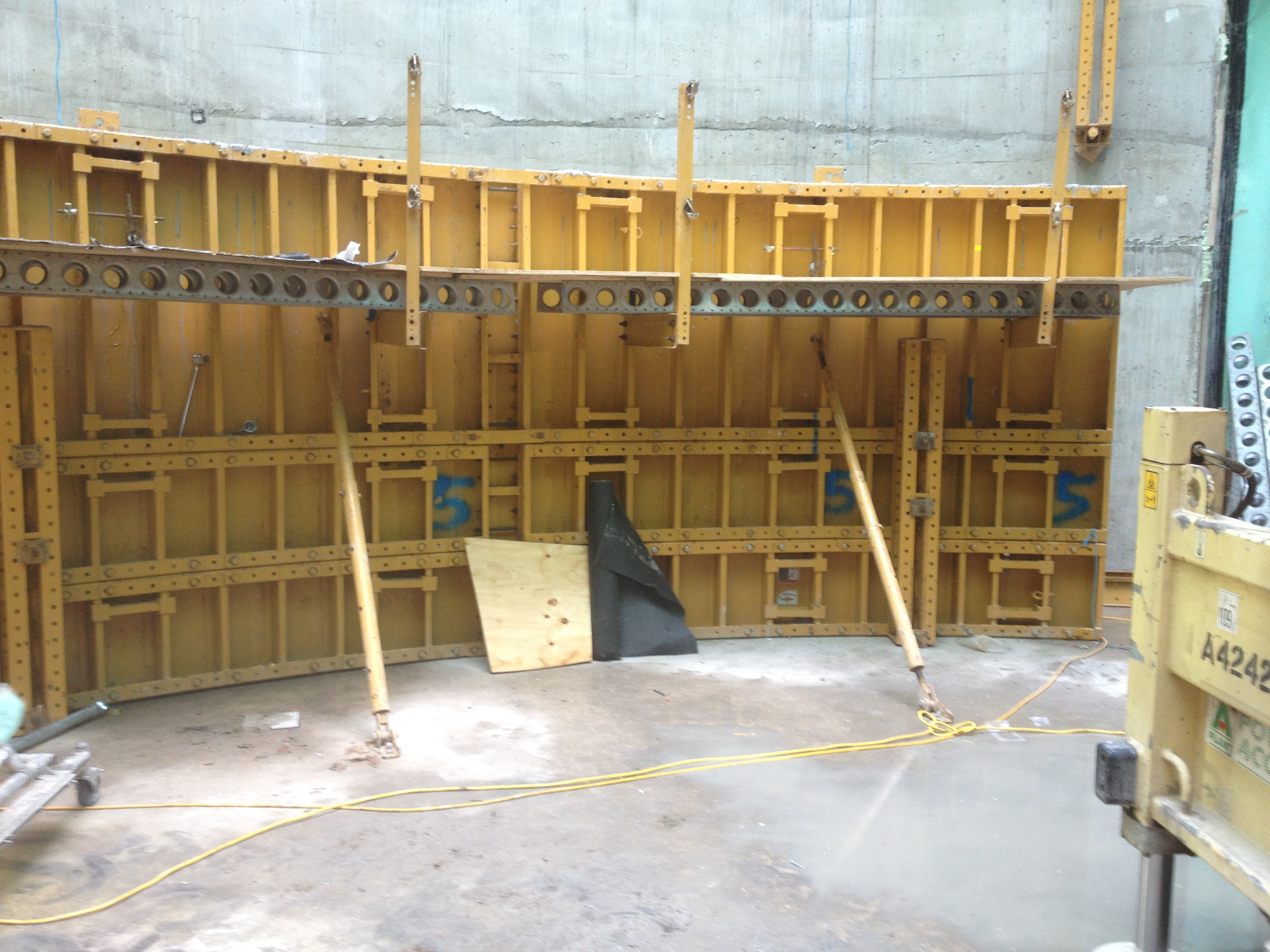
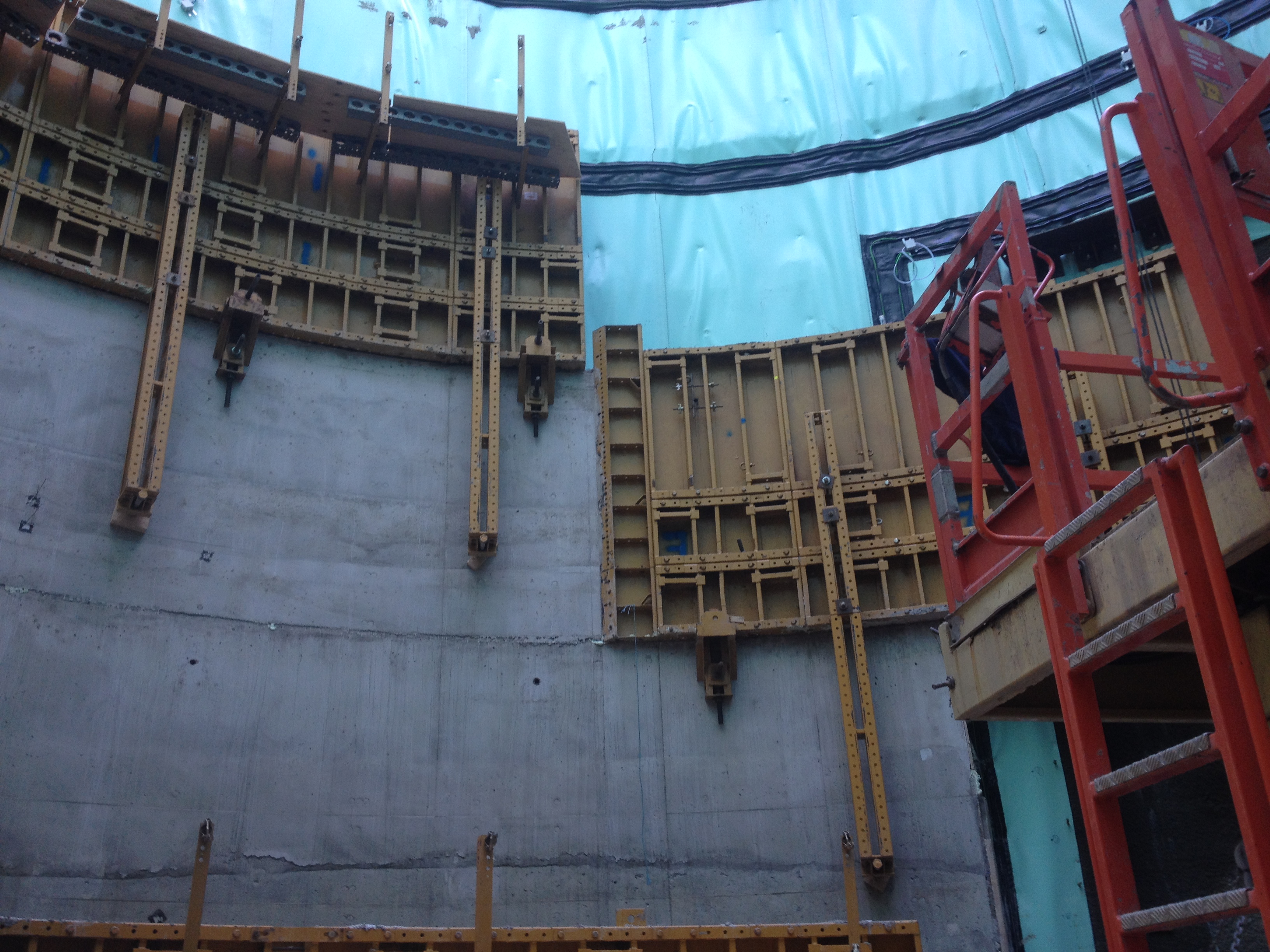
The plan was to complete three lifts per week. We have only achieved 1 per week. This has been due to a number of issues: cold joints being formed due to poor concrete delivery planning, cracks in the surface as Barhale forgot to spray the curing agent and the time it takes to deconstruct the shuttering and raise to the next level.
Whilst this has been going on I have been planning for the next phase. This has involved liaison with Camden Council again in order to secure a Section 61 for the Crossover works. Ordering new equipment, as Barhale leave on the 27th Nov along with all their equipment. Ensuring the new equipment is calibrated and conforms with the appropriate BS and CRL specs.
The planning of the next phase has raised other issues. The most significant has been the delivery process of concrete and ventilation to the Crossover Section. As a result we have had to enter Kings Tramway Tunnel (KTT) that runs perpendicular to the running tunnels. We are in the process of drilling holes from the KTT into the running tunnels, allowing ventilation and concrete delivery. The paperwork required to undertake works in a listed tunnel, such as KTT, has been vast. Not only are we producing Method Statements and Inspection Test Plans (ITPs) for Adit Eye breakout, Frame installation , Enlargement of the running tunnels etc, we are also producing documents for London Heritage. Nightmare!!!!!!
Although on the positive side of things TMR 3 finally got handed in and I have started work on AER3. Additionally I was collecting money yesterday for the London Poppy Appeal. Started at Fenchurch station at 0600hrs untill 1700hrs, raised a lot of money. As a reward went drinking with the Chelsea Pensioners, WOW they can drink!!!
Parapet Installation
The installation of the parapets got off to a slow start last week which I expected as every bridge seems to have had its issues. There have been over 2000 parapet sections installed across the project so I initially tried hard to bargain with the superintendent to get the seasoned parapet crew to install the Dickson Rd parapets. It became apparent by Fri that I couldn’t rely on their availability if I were to keep to my own tight programme so we made sure we had prepared well and installed them ourselves using a hired in 20T Franna crane and a trusty Kiwi labourer. We only managed to start at lunchtime on the Mon due to the initial anchor bolts being slightly out of position and had only 2 in place by the end of the day. When I went to inspect the work it looked a little off to my keen eye and after getting the surveying out to re-check the positions it became apparent he had marked the entire western side out of position by 90mm at its worst. Equipment failure was blamed but little harm was done as we managed to catch it early. The next day we only managed another 2 and I had planned for all 24 by Fri. At this point I decided to hire another 20T Franna and got the two most competent guys I knew from the FRP subcontractor on Dayworks to start installing parapets from the opposite abutment and side. This paid off as we managed 9 parapets on Wed and had them all installed just after lunch on Fri.
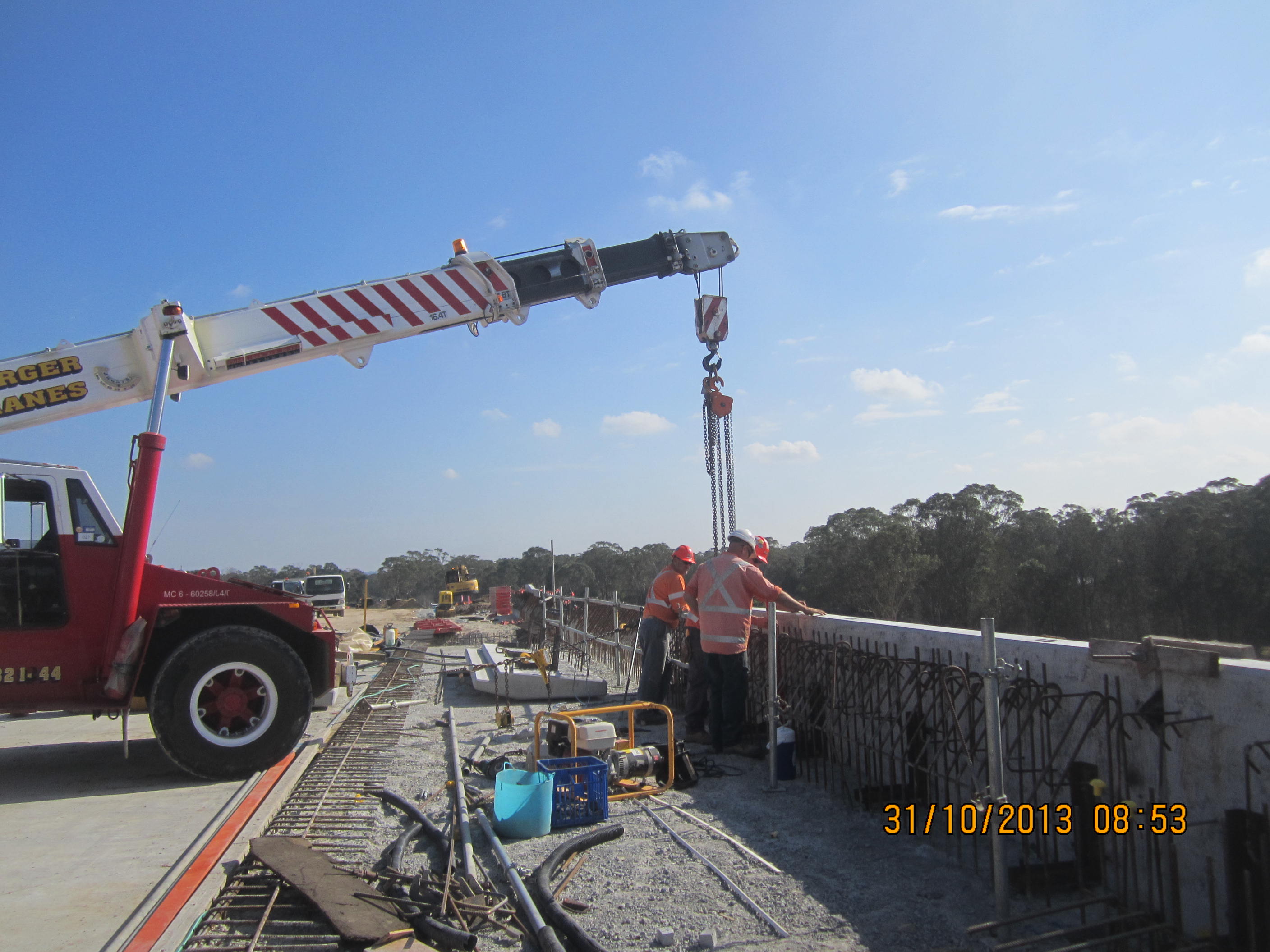
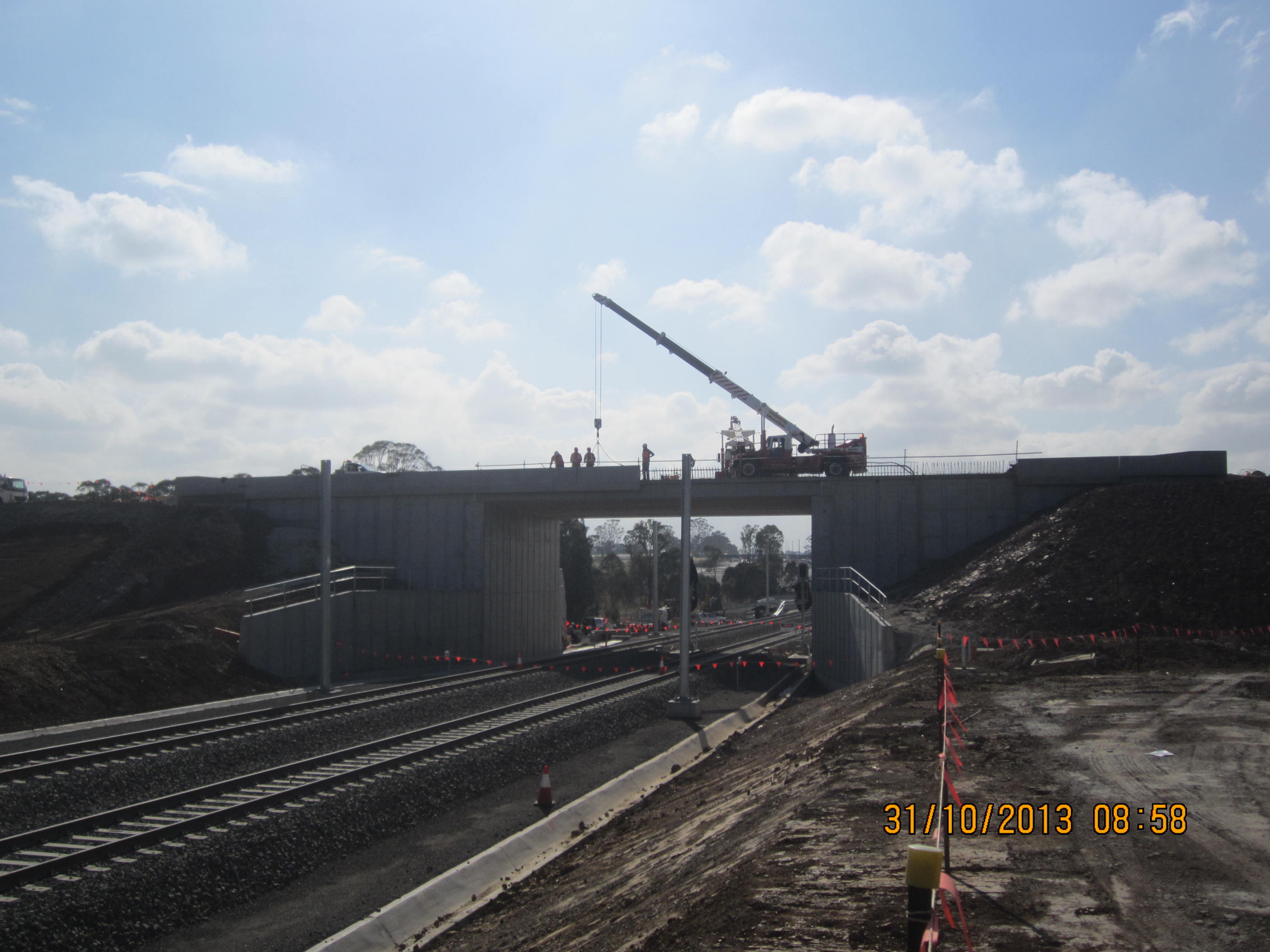
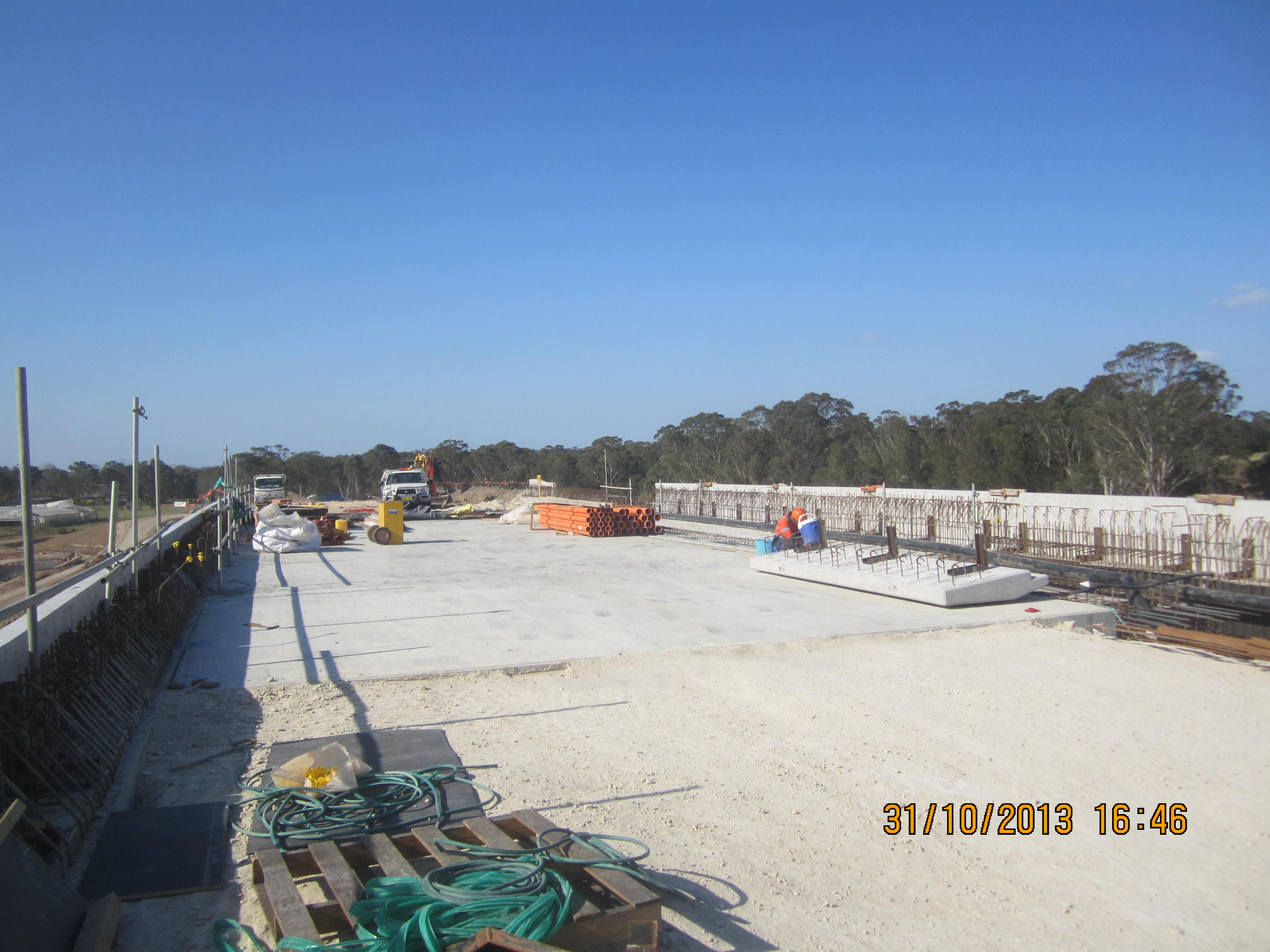
Concurrently to this we worked in with another subcontractor to install the water pipe through the walkway and fixed the top matt of steel on the walkway as well as some of the traffic barrier steel. I timed the barrier steel to be delivered at the start of the week as we have very little storage space with the road works racing ahead but not for the first time the steel scheduler did a poor job and so I am still waiting for some of the barrier steel which was forgotten. Unfortunately this is the steel for the end transition barriers which we need to fix and pour first so that the type F barriers which are being slipformed can butt up against these.

I managed to get the slipforming subcontractor back on site again mid week and he agreed to carry out the barrier extension work next week, the week before I leave for holiday so I will at least see the paving machine in action and as it stands at the moment I should complete all the concrete works by the end of next week. The only outstanding work will probably be the metal work installation consisting of the traffic railings and throw screens.
Just a short blog but I will post again at the end of the week and again next week to tidy up a few issues as everything starts to wrap up.
 Holdfast Training Services Trial Blog