Great (Unrealistic) Expectations
Tomorrow is the deadline for our 90% design submission for the Marine Terminal to end all Marine Terminals. In the past 3 weeks there has been a major design change every few days each of which invariably affects the team progress. Firstly the electrician needed another 6 inches per floor for his cable trays. Then the architect and structural guys decided that the maintenance area and warehouse needed to be storm proof which meant upping the walls from steel skin with 6 inches of insulation to steel skin with 32 inches of concrete up to 11.5 feet high then steel and insulation. Forgot flood proof this is now a bunker ready for the zombie apocalypse, apparently essential for a small boat workshop with a bit of welding and a battery store! Finally we had to request an extra 2 feet per floor when we finally calculated the loads and realised we only had 3 feet of ceiling space to put in the HVAC system when the standard over here is 5 feet. Hence this week the section has been working under conditions I have not experienced since Phase 1 design exercises.
It has not been all bad. I have managed to crack Revit, design software, with only minimal instruction proving it is user friendly and intuitive. No problems drawing pipe connections between floors with this one and it is also a BIM program so I can avoid all the other services and structural components. However we are only actually going to provide a 50% solution. We will complete the duct work design but there are still the gas connections, condensate drains, electrical connections, technical specifications, controls details etc which need to go in the full design. Fortunately we are not the only ones in this position as the intention to design a building form 35% to 90% was a tad unrealistic in 10 weeks with all the changes. My Section chief bought us another 2 months to get this done.
My next project is also about to kick off. We have had the preliminary meeting and met all the stakeholders to discuss some early concept ideas. The building is a simple guard house with a standard design that needs to be updated for the delightful Maryland weather. The biggest challenge is actually for the civil guys who have to squeeze a car park in to what is currently a flower bed who are already considering a drive thru option so as not to cause traffic build up on the 3 lane highway beside it. The building is looking to cost around $4 million but that will be based on what design we come up with. The building owner would love to have Geothermal heating, solar heated water and PV cells galore however this is a little excessive for a guard hut with one sink and a cctv screen stuck in a flower bed. Sadly. The requirement has come about because of the number of retirement parties on site to which the public get invited and we have been warned up to 100 people can be in this guard hut! The customer is the Defense Logistic Agency, whose security on this site is second only to the NSA. This was a “No Photos or you will get shot” zone but hopefully this google earth image helps put some flesh on the bones.
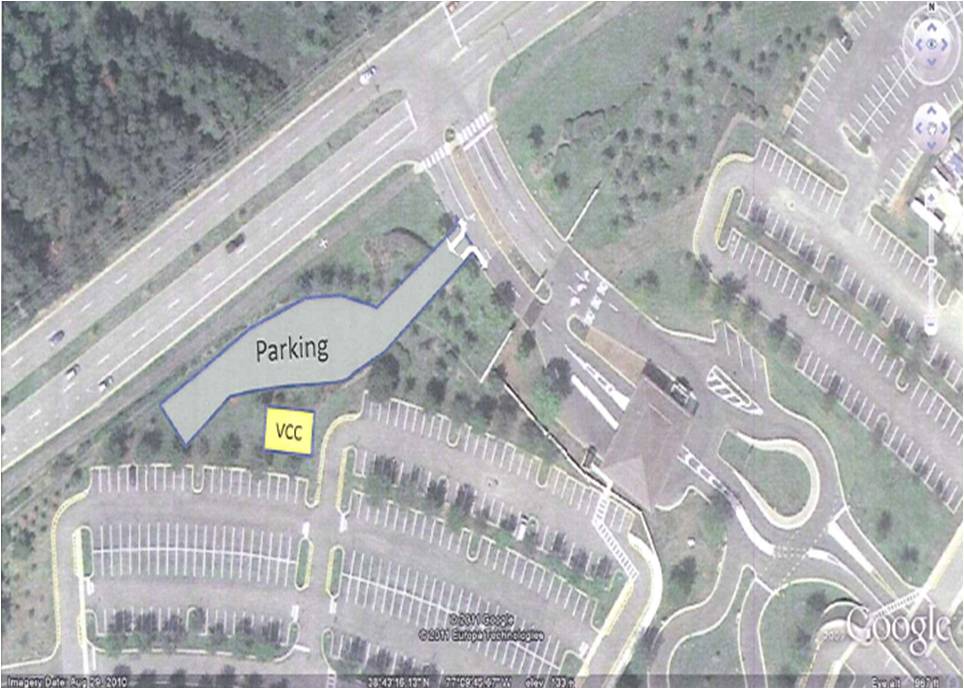
The VCC flower bed guard house (40ft by 60ft)
Having read about the experience of all my colleagues it occured to me that I have not fully explained how life as a US Government engineer actually is. Starting at the bottom, all interns start a two year program where they get between 2 weeks and 6 months in all the departments in the District. The longest time is spent in the design section of their college major and in a field office, both 6 month attachments. In this time they are assessed on where there skills best lie so that after the 2 years they will go to the department that they will work best in. They are given plenty of opportunity to get involved at an early stage and are considered ready to go after the 2 years. Typically on a site they are project engineers where the responsibility is to ensure that the contractor does as he is meant to, that the budget is not exceeded (too much) and sort out the inevitable contractual “disagreements”. They have the authority to write changes and approve RFIs and sumittals which can require technical analysis. They will also have a few Contractor Representatives (Conreps) under them (depending on the size and complexity of the project) who are responsible responsible for QA and report the on site issues and who the engineer manages. The project engineers are also the USACE representatives at all meetings with the client and contractor and on the smaller projects are responsible for all engineering issues regardless of degree. This load is shared on the bigger projects with several engineers types to cover all eventualities but with a good level of communication across the office. Promotions are slow taking 10 years for the good ones to become the senior engineer / Contracting Officer’s Representative (think sqn 2 i/c) and another 10 to become the resident engineer (OC) heading up an area office. Careers can span 40 years easily. The pressure to ensure that budgets are met are not as great as the Contractor’s need to make profit, on time, to an acceptable quality, because money can always be found from Congress, but the professional pride in not letting the Contractor rob you blind whilst still being diplomatic and ensuring that the quality is met and the time frame not exceeded has its own pressures. The Resident Engineer and Contracting Officer’s Representative are kept in the frame at all times and do the career reviews, budget management and higher level planning. Most become Professional Engineers (CEng) and there is at least one CPD course a year paid for.
The Design Section seems very similar to other design teams. Lots of very technical people doing number crunching to produce the designs and the only person with a managerial role is the section chief for each discipline. They are actively encouraged to explore new design concepts particularly if this will lead to savings in energy and efficiency in which case the love is shared and everyone learns about the new kit. Yes it is a bit quieter than the cut and thrust of the area office but these are not social inadequates, but professional, motivated individuals who don’t much of an excuse for an after work shandy or two. Career progression is in line with the guys on site with the section chief taking 15 years or so. The Section Chief does the managerial side of the business but is also involved in the technical side. Although not directly producing the designs they will be familiar with the intricacies of all the projects on the books. They also manage the design budgets, plan the project schedule and attend the pre project meetings.
With USACE the clients are always other Government agencies. This can be anybody from the NSA (who account for about two thirds of the District’s Portfolio) the medical services, DLA and federally managed civilian infrastructure, mainly levies and dams. USACE are normally the ginger step children in the construction process, being the subject of frustration rants from the client, designer and the contractor when things are not going according to (the often optimistic) plan. As the clients representative they have built their reputation on producing high quality government projects, but they expect to get sued after every project for liquidated damages (and lose) even if the contractor is solely to blame. However after all that the guys and gals are all very happy particularly as retirement seems to be the only way people leave the organisation. There Navy also have their own civilian construction engineers (NavFac – Naval Facilities) as do the Air Force (no funky acronym weirdly). All civilians are able to volunteer for operational tours as well, with the average tour lasting six months and worth 2.5x their regular pay check.
With impending cuts due the future is uncertain. The Army is to reduce from 550,000 to 450,000 and the process is only just starting. A number of planning exercises are likely to be run where less needed jobs are removed and the person involved is notionally demoted to a lower grade but still employed, some times in another district, and given a warning that their job is not likely to be around so that they can look at the options. With 33,000 in USACE it is certain that cuts will be made but being a busy organisation who supports overseas operations it is hoped they will not be severe.
And in other news
We had spring for a whole weekend then after 50 mph winds winter is back for a bit longer with more snow due Monday. The baseball season has started again and the Orioles are currently second in the Grapefruit League. Not sure what that means but it sounds impressive. Warrick is signed up for the local team which starts softball in April with 2 games a week. My engineering skills are being tested to the full with his home work, having had to devise a Leprechaun trap as well as producing a set of experiments for his STEM fair. Sadly my thesis proved too technical so I have had to come up with a whole new idea. Ahhhh the pressure! I have finally got the invitation to Quantico. Although not the FOB demonstration exercise which is California in May, i should still prove to be an interesting experience.
 Holdfast Training Services Trial Blog