A cry for help….
I’ve received a bit of a random cry for help that I could use the advice of the collective group for….
I have a mate who is now working out in Africa for the Halo Trust doing de-mining in Angola. The camp that he is running is basically built on sand. No problem for the buildings but the vehicles they use to get to the de-mining areas are struggling. He’s asked me what he can do to improve it (his first mistake could be asking for my help!).
I’ve attached the some photos he sent me below. He has a limited budget to improve the area (it being a charity that he works for) and is looking for the best “sticks and string” answer. The camp needs to last at least 5 years and the rainy season is November to end of March.
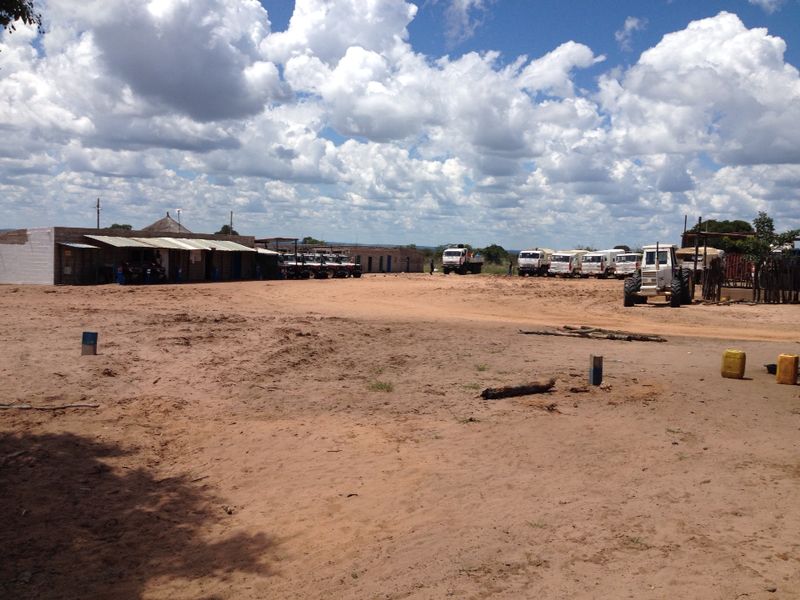
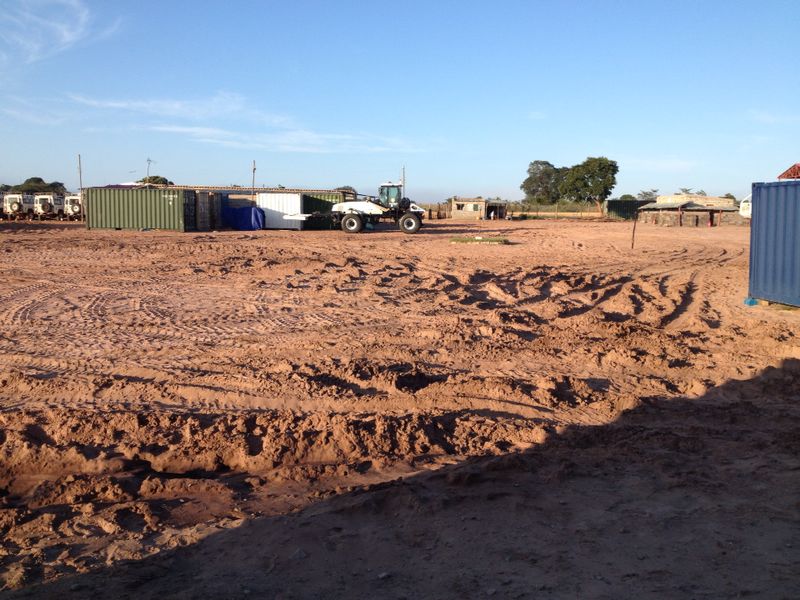
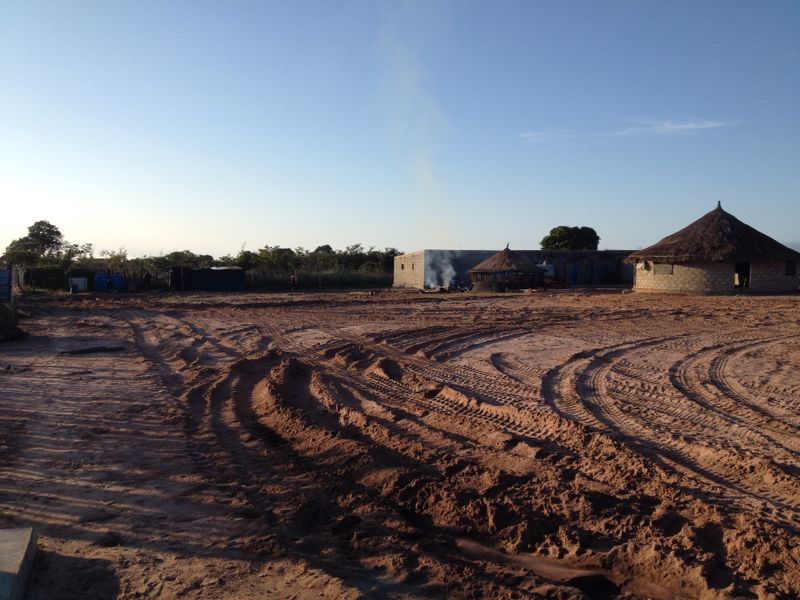
The town he is in is called Cuito Cuanavale in Kuando Kubango province Angola. You can google it and you’ll find a small airport, his compound is about 2.5Km NW of the airport. He’s up at 1250m above sea level and where he’s seen some exposed strata by the river it is all sandy soil with no rocks.

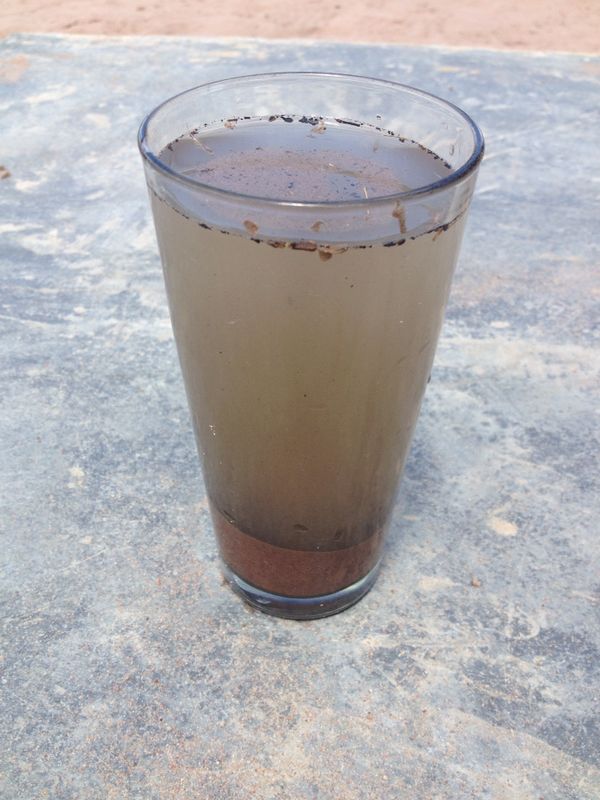
To find out a bit about the soil I got him to drop some of the material into a glass of water and see what happened – the photo below is after 3 mins. There is a sketch above that he sent me of the layout. The key areas are the vehicle park and the areas that the tractor towing the water tank on needs to get to – so a bit of a one way circuit around the edge would cover that. He should be able to get his hands on a roller from another de-mining camp without too much bother and maybe a local JCB for a short period.
Any and all (sensible) suggestions welcome!
 Holdfast Training Services Trial Blog
Pete, I am loath to give a straight answer to anything that you could and should think about first and then proffer something for comment, however, given my liking for HALO and having been AI Mines in the past:
1) A Road is a structure intended to distributed the forces arising from the applied actions over the subgrade without suffering damage to the surface, structure or subgrade (obvious perhaps but everything stems from that).
2) As for any structure think in terms of Actions, Geometry and Materials:
Actions are traffic loading which includes lateral acceleration/deceleration and scrubbing, and water which is a peculiar one to deal with.
Geometry is alignment and junctions globally and layer thickness and depth of influence locally and the ;load path is from point wheel load to somewhere down below…
Materials are sand and water? Sand generally has a CBR of 10 or better so it’s good for building roads on, just a bit problematic in the cohesion stakes.
3) Your task is to minimise the actions and transfer them into the structure which means dealing with the conundrum of: using a wide expanse much as the photographs suggest so that you don’t load the exact same spot more than absolutley necessary vs the option of canalising traffic on defined roads leading to high intensity loadng along the wheel tracks. The do nothing option is OK until you have parking areas and desire lines and too much traffic so that rutting occurs. The latter opiton implies that you are going to have to build a road. I think your friend is at the latter point and therefore has to deal with transfering wheel loads into his as yet undefined structure.
To build a road (do I need to go though the analysis and design sequence?) sort out the alignment, minimise the changes of direction and junctions on plan sort out horizontal and vertical alignemnts, provide drainage (water is the principle problem for most roads) this means ditches to keep the water table down as well as provide a means of conveying stormwater. Shape the subgrade and build the road above – this could be done in sand layers if the material is correctly graded and compacted but as you near the upper layers ther is a need for increased stiffness. Pneumatic tyres kneed and suck a well as load and have always played havoc with sand which is also vulnerable to any form of tension (think unconfined shear…) This means he needs a running surface and I would suggest the obvious one if he can source it is a clay sand mixture, where the caly acts as a binder for the sand. Ideally the sand is dust free and well graded. Other binders can be used, including dung but if it is not well drained or rain is sustained with high humidity it can fail in amost unpleasant way!
References might be sand clay roads of south carolina at https://www.fhwa.dot.gov/infrastructure/sandclay.cfm and/or some of the very good DFID guides or even ME Vol2 Pam 8 & ME Vol5.
If your friend has a tractor or anything that can tow a drag box he can create an improvised grader capable of dealing with profiles and maintenance.
I’m sure JM will add to the materials questioning in due course… and if there are free flights and accomodation I’m game for a field trip 😉
If we take the beaker as about 15 cms high, the water temperature about 17oC , and guess at a quartzitic parent rock, then using Stokes Law you get and equivaent particle diameter of 0.03mm
OK if the sand gravel boundary is 2mm …what does this say of this material?
…tricky stuff
Peter
Have they considered moving the vehicle parking area nearer to the exit and banning vehicle movement in the compound? Sounds simplistic but then they only have to concentrate on a single hard standing. One way circuits are all well and good as long as you have the resources to maintain them however resources in Africa are never easy to come by and so the old principle of “building to the vernacular” goes a long way over there – definitely something I can confirm.
A similar thought for the water tanker – don’t let it “do the rounds” assuming they are sending it round to fill up storage tanks then they could consider a manifold and simple pipe network at the entrance, pump the water from the tanker into the distribution pipe and on to storage.
You did say “sticks and strings”…….