Things are getting contractual
Background
The piling subcontractor has been achieving a very impressive level of productivity now that the hammers are finally fixed. In the initial planning stages of the project it was estimated that they would complete 4 normal piles per day, per rig or 3 spliced piles. Recently we have been seeing the rigs regularly reach 7 or 8 piles in one day. The piles that are being used on site are produced in a local factory. This factory has limited capacity, however started weeks in advance of the piling rigs arriving on site. The precast piles that can be produced per day in the factory is limited to 5 of the longer single length piles or 10 of the sliced piles. The plan had been that with the factory starting ahead of the piling rigs they would have enough stock to keep the site supplied and there would be no shortage of supply. The graph below shows the state of pile supply currently. The piles must cure for 7 days before a hold point can be released and they can be used on site. We are now at the stage that there are 7 day old piles arriving on site.
The contract states that John Holland are required to supply 4 standard pile a day per rig, however this would mean that the crews are stood around waiting for most of the day incurring extra costs to the piling sub contractor. To reduce the costs, an informal agreement was made to stand down one of the rigs and go with just one on site. This would allow 3 cranes to be off hired by the piling subbie and dramatically reduce his costs. The crew from the second rig could then move to another job. The one crew that remains would then work much more efficiently.
Issue.
Last week I was called and asked for an instruction to demobilise the second rig. I was going to do no such thing. It ended up being a bit of a stand-off between the Senior project engineer and the piling subbie, with costs of around $16000 per day starting to mount at the end of the week. In the office we were rechecking everything we had signed and all the documents that we had to prove we had met our side of the contract, while collecting the evidence of where Caporn had failed to meet their end.
The outcome
Thankfully there was a dispute resolution process in the contract, with named senior executives from both companies (the regional manager from John Holland and the company director from Caporn) to undertake negotiations. If this hadn’t resolved the issue then it would have progressed to expert determination and finally arbitration or litigation. But it seems that all is well for now. Rig 1 never stopped working and a resolution has been reached that seems to be keeping everyone happy. We have agreed to supply 36 piles per week to the pilers and they have demobilised one rig and the associated cranes. The whole issue is making me look even more closely on the daily reports that I sign and check on the site diary kept by myself and the undergrad that is looking after the piling.
With a variation from the client this has also provided the opportunity to get some piles from another source. As such the piles for the extra spans that have been added will arrive earlier than if the winner of the original pile supply contract had won the variation. They still submitted a price, but it was much higher than previously, which made it a no brainer to go to a different factory.
Other stuff
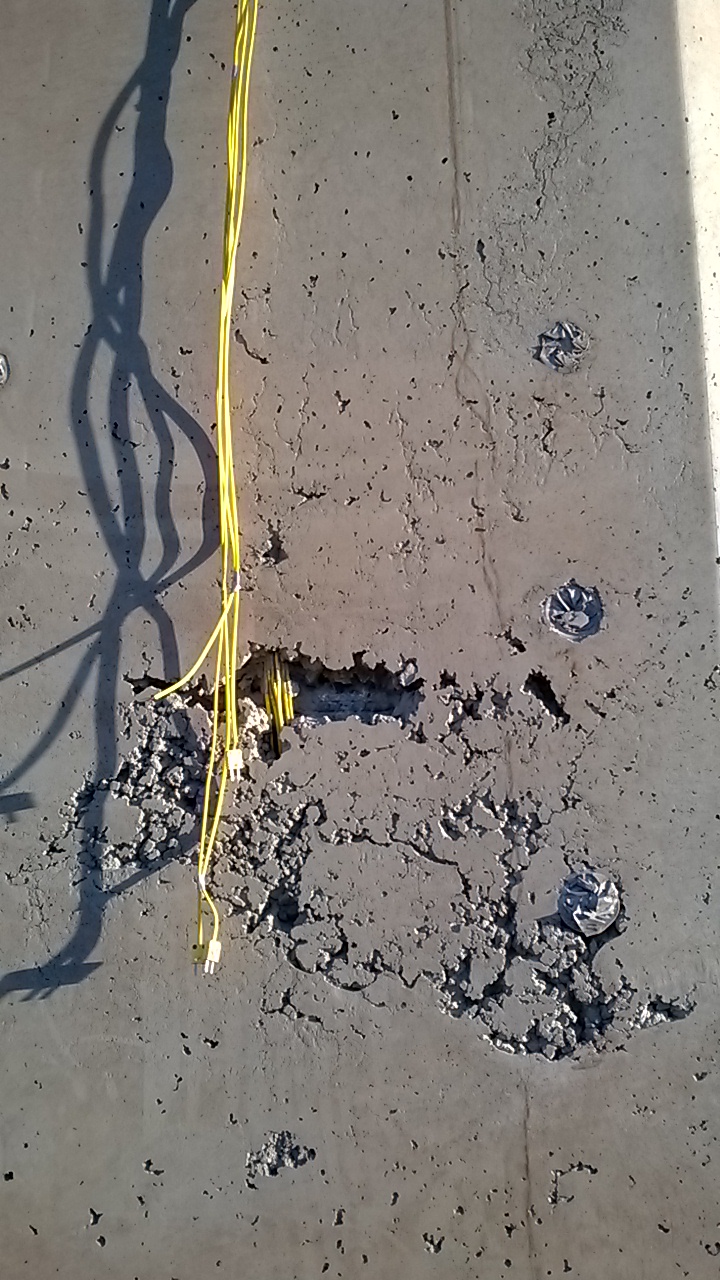
Pier 12 column
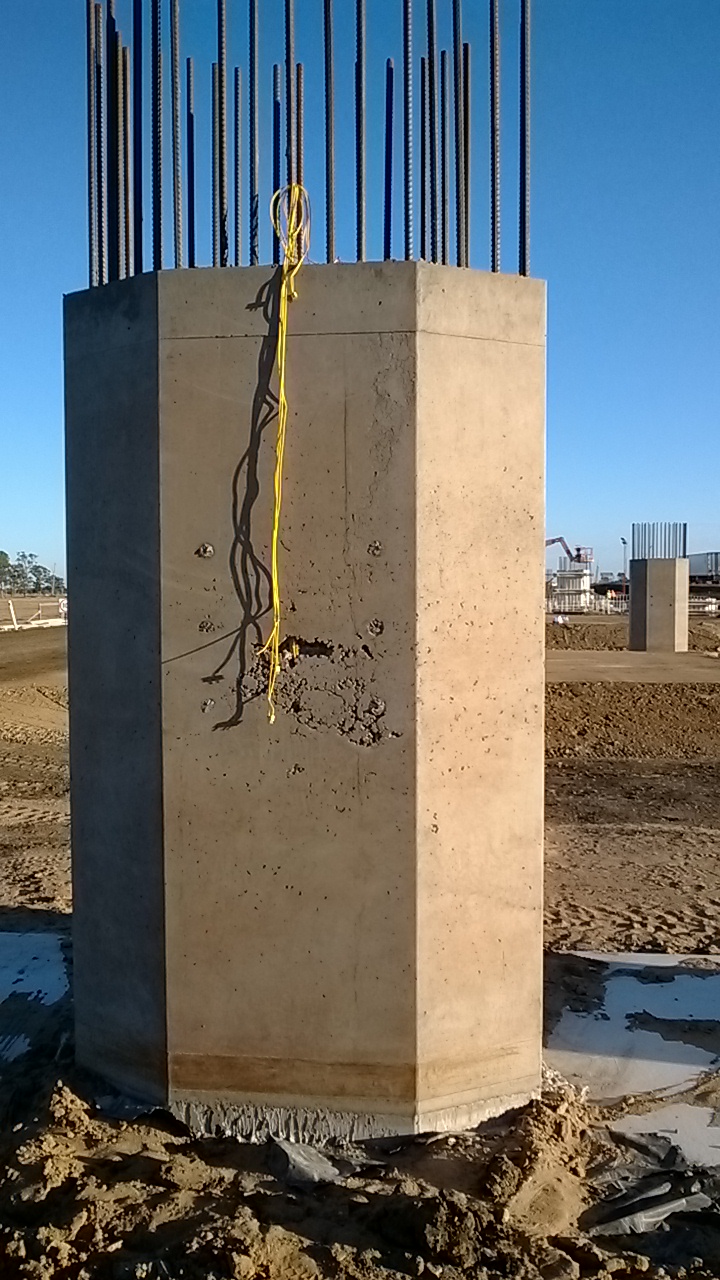
Pier 12 column2
The speed that we are cycling through our forms has picked up now, which is good as this is on the critical path and we are now meeting our own targets. The downside has been a drop in quality with some of the elements being produced. In particular the columns seem to be problematic when it comes to consistency of the finish. The worst one so far was on pier 12 (shown above) where you can see the reinforcement exposed and the yellow thermocouple cables (luckily the columns have the least number of monitoring points). I’ve still to write the procedure for how we are going to fix this, and the sections at the top of columns where (after pouring too much) the excess had to be jackhammered out and some of the workers got a bit too enthusiastic. With the root cause being the over pour on the columns there is a lot of effort being put into monitoring that area.
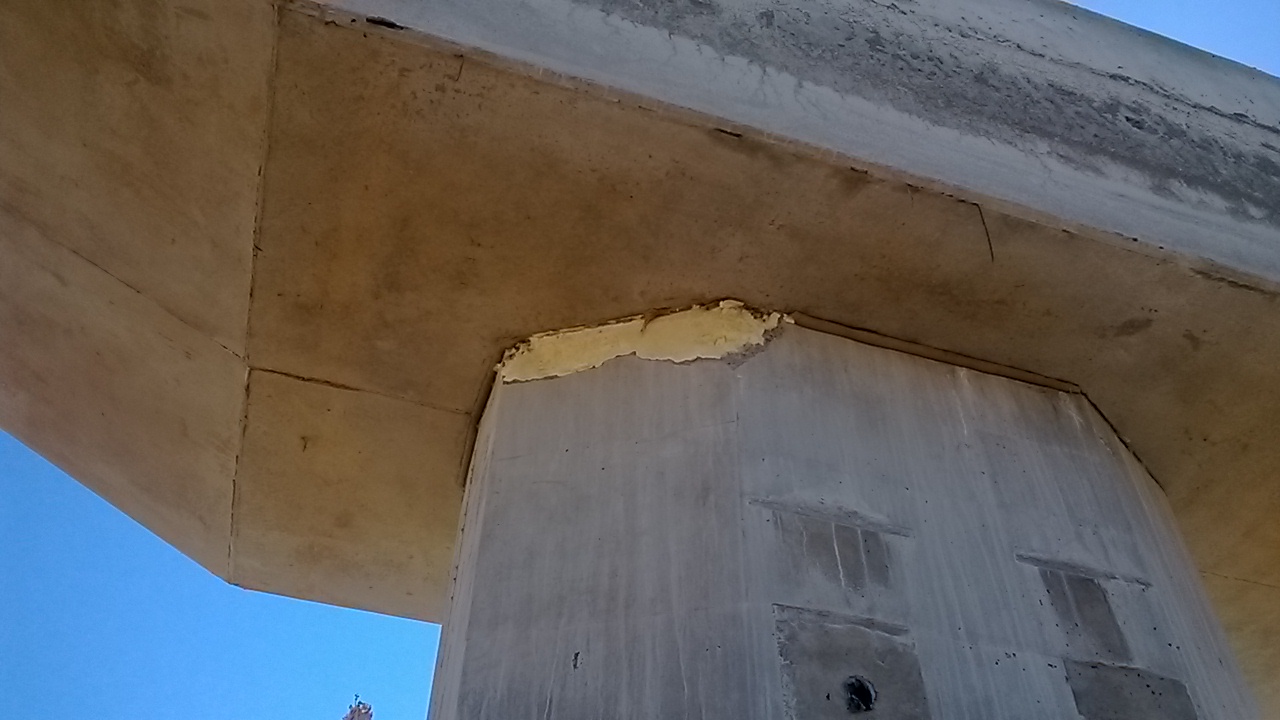
Pier 3 headstock
There were a few temp works issues that have come up too. The method for cutting and breaking down the piles has had to be checked and some extra controls put in place. This was brought on due to the piles only just reaching into the underdrive, meaning up to 7.5m needing to be cut off. I’ll maybe include that in a follow on post early next week. I’ve signed of reinforcement schedules to the end of bridge 1 and I’m starting to plan ahead to the abutments and pier 1 and 2 (though it turns out there is no money in the budget for sheet piling…might be speaking to John about possible alternatives very soon)
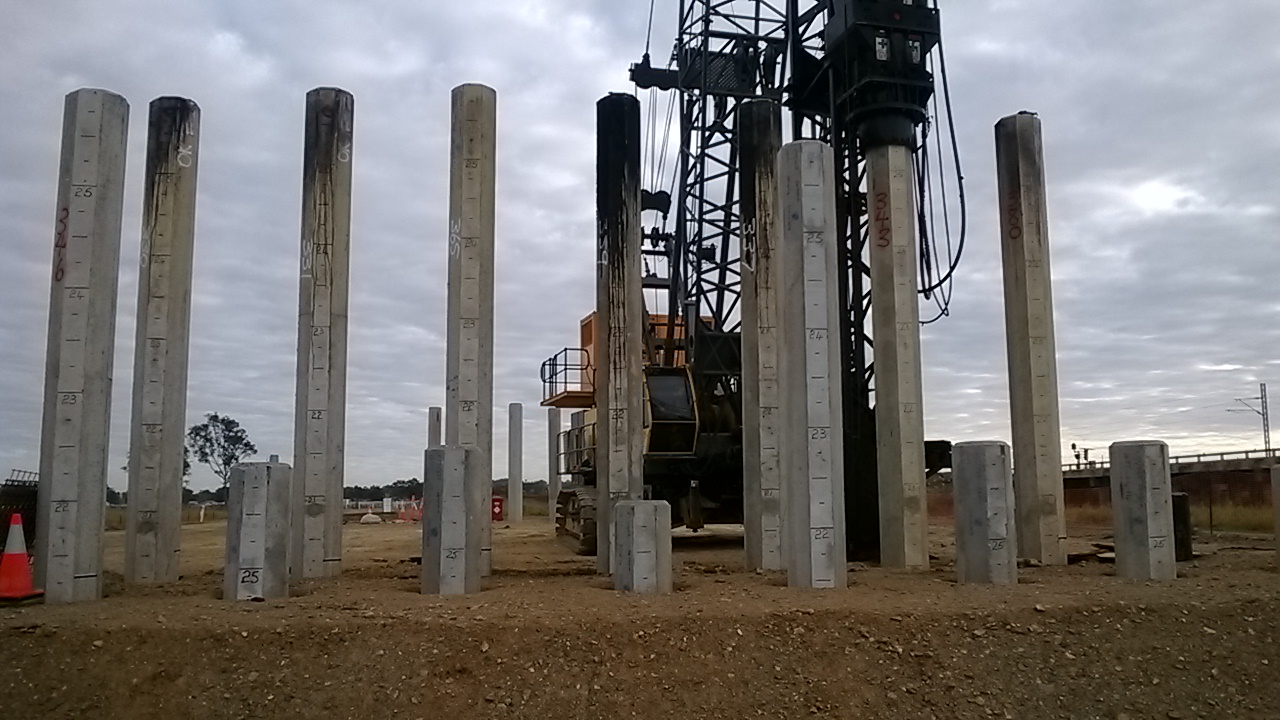
Pier 17 piles
I also dragged myself round the Brisbane marathon last week and managed a half decent time considering I had done no training. Tim also stopped by mid week while travelling down the coast and we went to grab a steak. By chance we caught some amateur bull riding in the ring at the back of the pub – just your average Wednesday night in Rockhampton.
 Holdfast Training Services Trial Blog
Hey Pete; hope you’re well. Your photos prompt me to ask you to briefly outline how the QC system works within JH…do you have an external QC tester perm on site? Who undertakes QA, and what power do they have?
And congratulations to you and Emily!
Hey Hoops,
The clients representative is on site and does a lot of checking up on us (I would guess that you are in a similar role to this?), however its the engineers responsibility to look after quality of the works in their area. There is a senior project engineer that is looking after quality in the office, but he mainly whips the site engineers to raise and close out their NCRs and deals with the clients rep.
If the quality is not up to scratch then the clients rep can refuse to sign off on certain hold points. One example could be the reinforcement in one of the pilecaps. The pour cannot proceed unless all the holdpoints in the preceding works are signed off – this is included in the John Holland documentation, and the hold points are specified in the Main roads technical standards (which the contract is based on). If we went ahead and poured without signoff then we would not get paid for that element and would possibly have to demolish and start again (in the extreme) or find some way to prove that everything is fine with what we have produced.
For finished works, as the clients rep has a team of inspectors that are always on site they will prompt the site engineer to raise NCRs for anything they think is not up to standard. If that doesn’t happen they can then escalate and issue a corrective action request. This has to be replied to within 2 days and must outline the action that will be taken to solve the outstanding issues. So far nothing has gone further than a CAR being issued. Again the incentive is related to cashflow, as worklots cannot be closed out if there is an NCR outstanding.
Hope that helps, let me know if I’ve just confused you even more and I’ll try to explain it a bit better!