The Joys of Office work
So I’ve now settled into the Jacobs design office. I’m starting off in the civil infrastructure team. The main things they deal with are bulk earthworks, roads and stormwater (drainage). So far I’m straining my brain in trying to remember all the stuff we did with Richard before disappearing off on Phase 2!
There are a few existing projects on the go, but most of what I have been doing recently is new proposals. These are either in the tender process or pre-tender.
Jacobs structure has marketing and sales sitting separately to the rest of the company. They seem to focus on relationship building with a number of clients – all in the hope of winning work before it goes to tender. For private clients I can understand this, but for government or defence clients that have to go to tender I’m not sure how beneficial this is? The hope is that they will be asked to complete the prelim designs for a client, then when the invitations to tender are sent out they are already one step ahead of the competition. Despite my scepticism it seems to work well for them. This year the infrastructure group in Brisbane have won $50 million of work from one client (the department for transport and main roads). This is 49% of the total revenue for the Brisbane office.
The company separates the early stages of winning work into three parts: the opening, middle and end game. To put this in context of a project timeline, the tender decision is the last part of the end game. There are some flowcharts to guide people through this process (see below – handy for new people like me). The middle game decides the go/no go in pursuing the work from the client. Prior to this a SWOT analysis will have been completed on the Jacobs bid, but also one that looks at the competition.
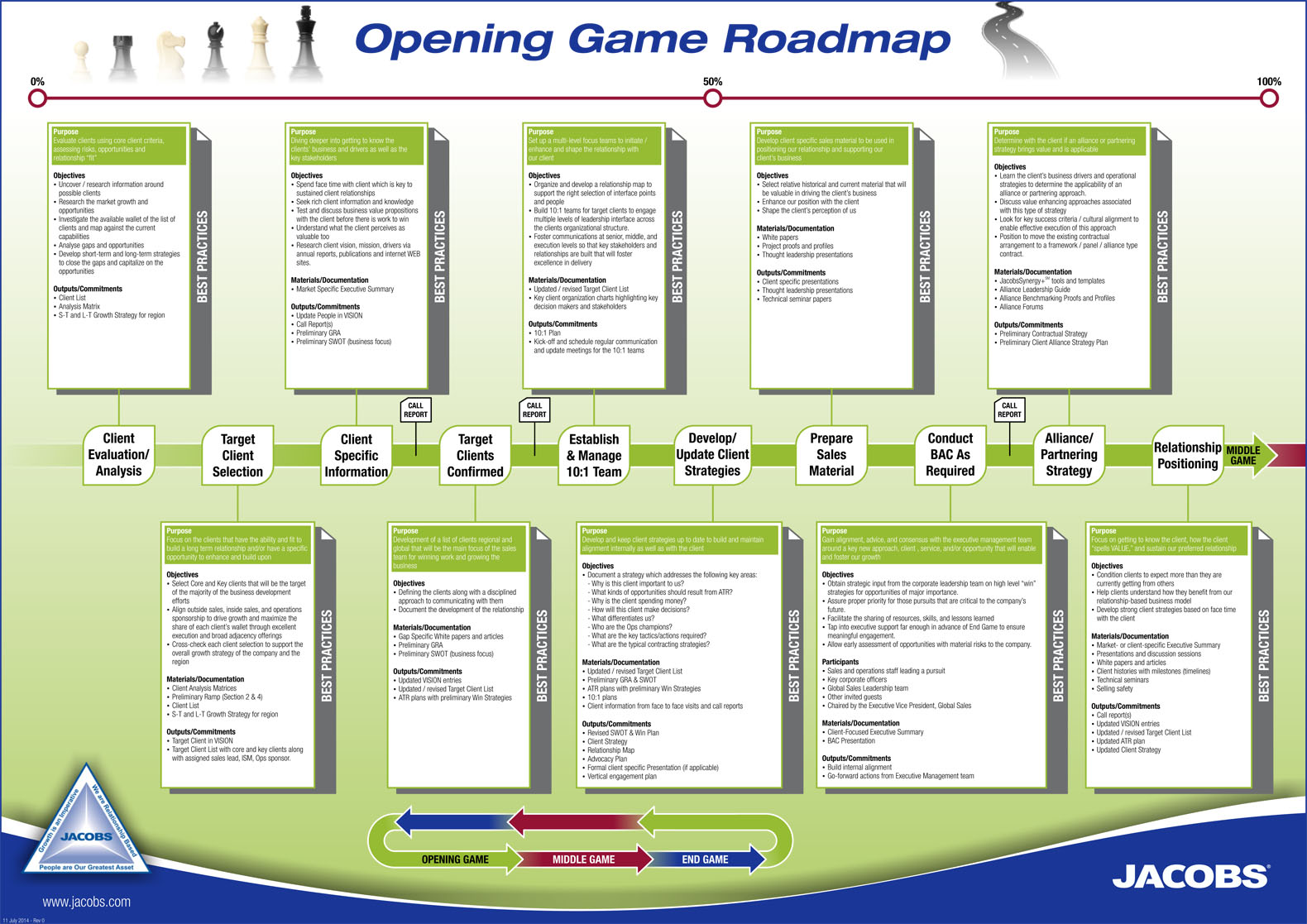
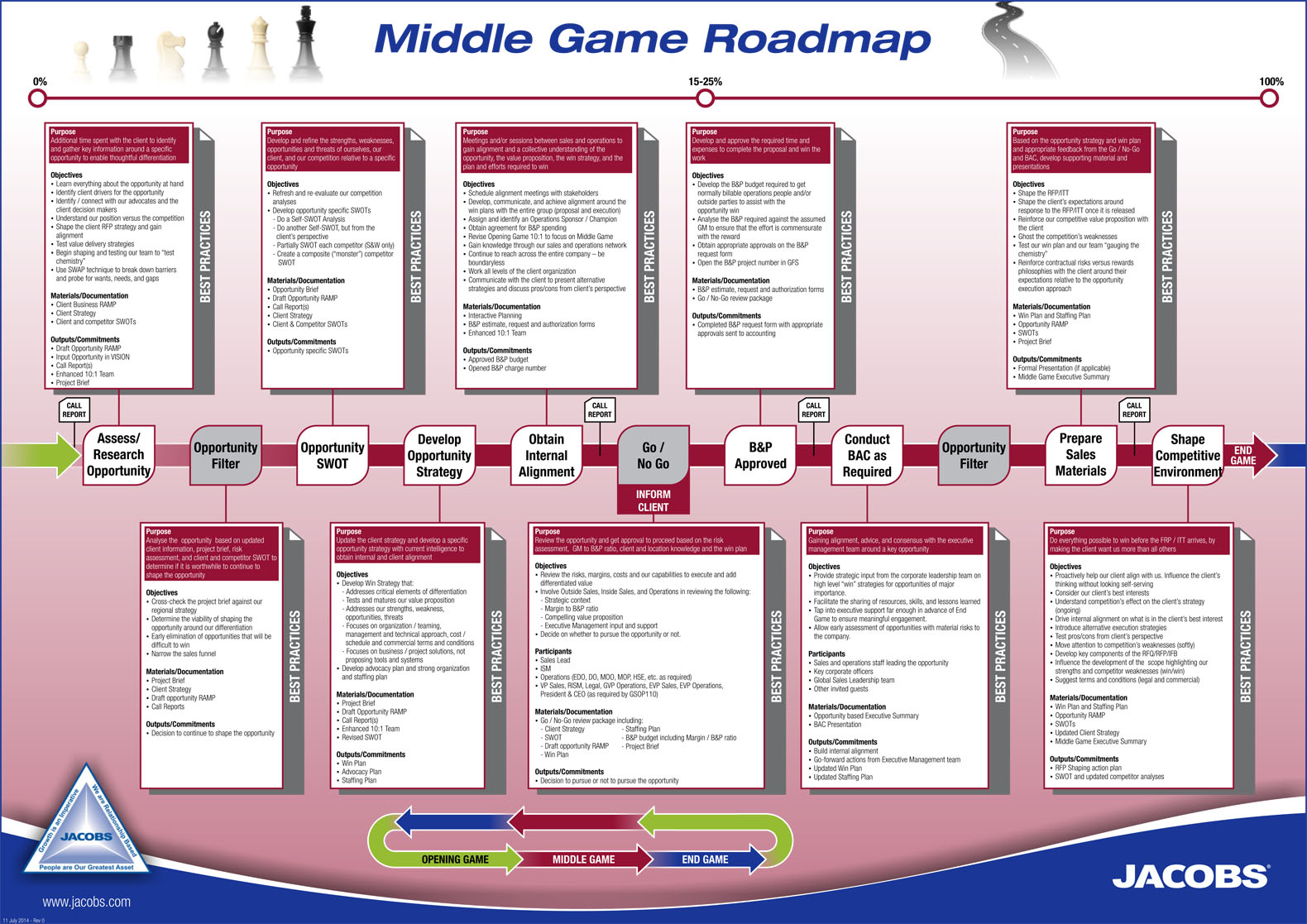

There is a surprising burden of paperwork that has to be produced during this evaluation process. I can’t help thinking this is a lot simpler in a smaller consultancy – is anyone able to comment? Is it equally paperwork heavy in the likes of Arup?
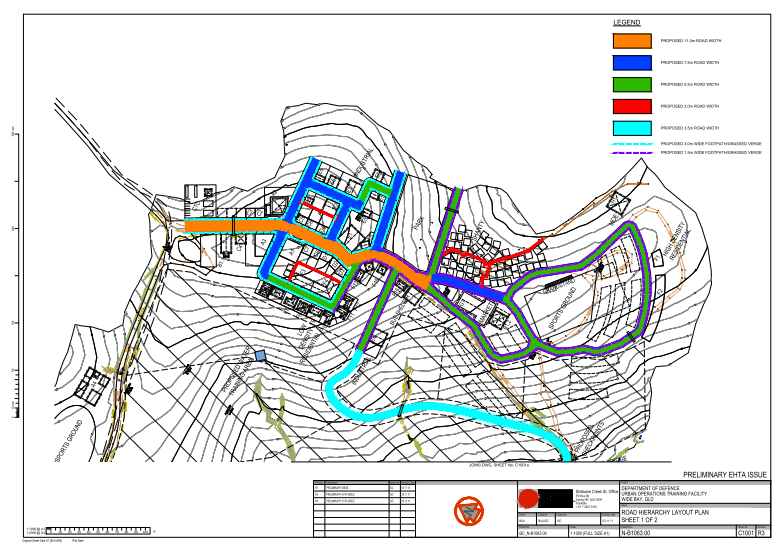
Most of what I’ve been doing so far is related to the early stages of bids and tenders, or so I thought (but these are in the middle and end game of the Jacobs initial process). There are 2 defence related bids of one and one health centre. The defence work if for the construction of an Urban Operations Training Facility (UOTF) and another Explosive Hazards Training Area (EHTA). Both are small in value and they are both located down near Sydney. This week the decision was made to “no go” the Holesworthy training area on the grounds that it wouldn’t have been profitable without winning the larger bid for Wide Bay. Too much risk I guess. The concept for the Wide Bay training area is shown below. The different colours denominate road types and widths.
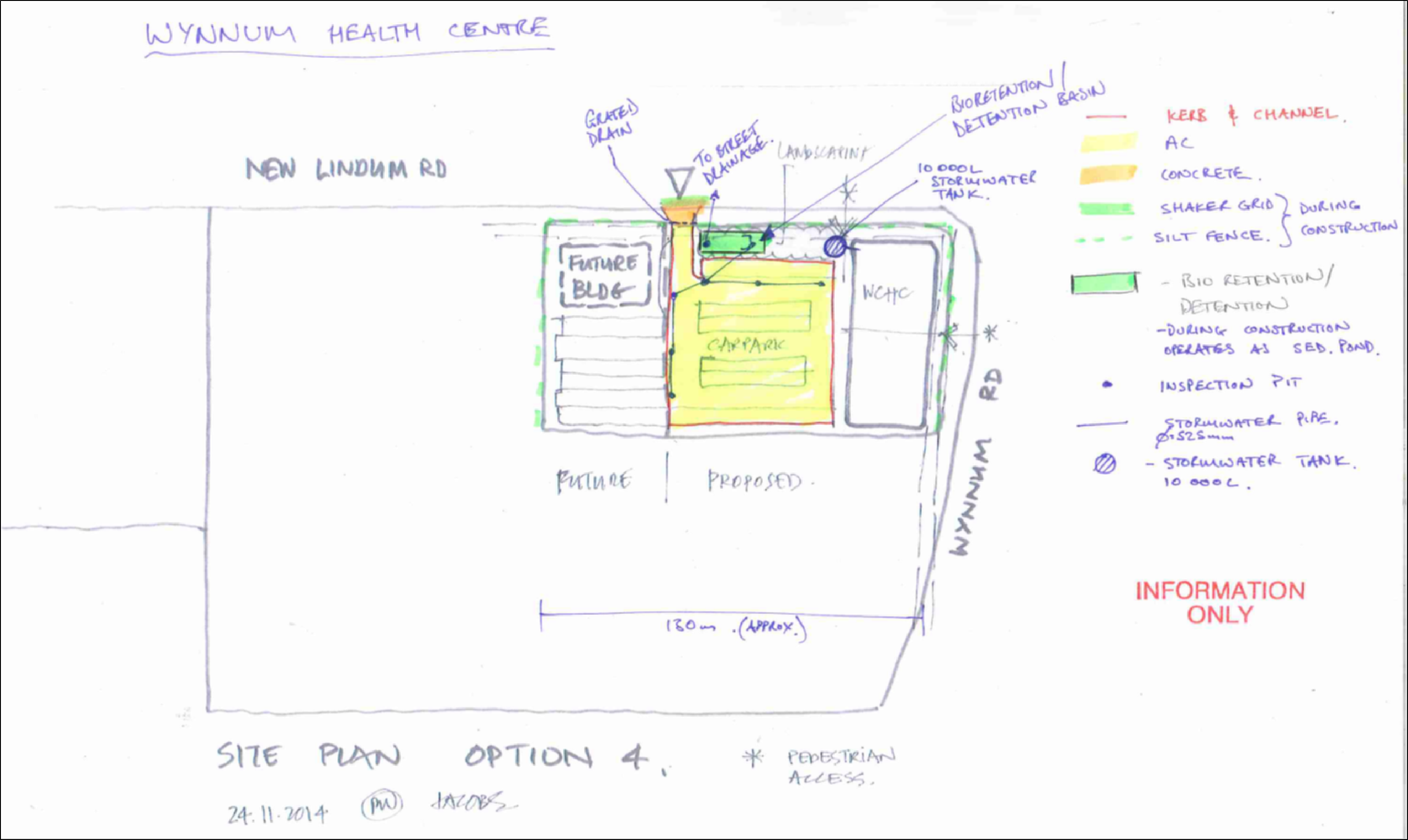
I’ve been focussing on the Health centre this week and getting together information to allow the contractor to complete the pricing for his bid. I’m probably starting to go a little further than I should at this stage, but I have the time to do this before the other projects kick off. I’m also compiling the cost and margin tracker for the civils team that will work on it. This will allow me to put forward the fee for the civil works. There is also a list of assumptions, inclusions and exclusions to submit (even though it is very early in the design process). See below for my first iteration marked up on the architects concept. This has progressed a little, but should give an idea of what I’m doing.
Its safe to say I’m getting some good experience logged towards B1 and C5 in the spec. Depending on the outcome of the bids there should be a number of workshops with the client and the other teams to work on value engineering. I’m also sticking my beak into the contract arrangements and I’ll be pestering the legal team in the new year. I’ll look to expand on what happens after the “end game” in my next blog.
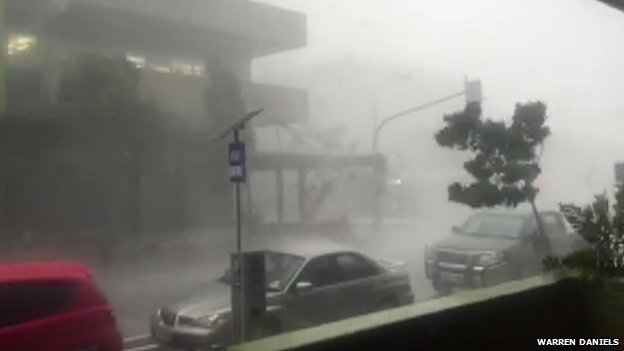
It was a bit stormy over here last week. It made the cycle home a bit interesting.
 Holdfast Training Services Trial Blog
Pete,
Looks like fun all round. Could I have the bidding game and wide bay plans emailed as .pdf so I can read some of the detail please.
Regard,
RIchard.
This is good stuff Peter especially as you will be responsible for tender evaluations at some point as a PQE (you will have a Works Contracts Officer to manage the process, a Garrison Engineer or WO but you will be responsible). On ops the process is relatively simple; two evaluations conducted in parallel and isolation: one technical, the other commercial. Once all tenders are evaluated the teams come together to determine which tick all the boxes and then to discuss the surrounding issues: which has capacity, can build to the quality etc before tender award. We can’t invite contractors to tender until we have financial approval for the project so the need to accurately estimate how much something is likely to cost is critical i.e. the work you are now doing but conducted sitting on the other side of the desk as the client. We also ask contractors for the full gambit of additional info (as your company will be): H&S plans, details of those to be working on the project etc. and seek clarification should tenders be vague.
Pete, Couldn’t help but notice the bioretention and detention basins as well as stormwater tanks for roof run-off. My interest is raised as this is drawn into part of my thesis. I’d be interested to know what Aus regulations (in brief) are for Sustainable drainage on a construction site – what rules are shaping your design (BREEAM/LEED equiv?). I note there is no porous paving or swales and that your overflow for the basin goes to streetdrainage – at what design storm level? (latest MOD sites are for 1:100 + 30% for climate change). Thanks
Richard, e-mail sent.
Hoops, apologies for the length of this….
The client hasn’t asked for any BREEAM rating on the building and the contractor (who we are working for) is not after a top range design. They are after the best bang for their buck – and tend not to have a long term view in place. There may be scope to change this after the contract has been awarded – but I wouldn’t expect it to be anything dramatic.
In terms of legislation, the best thing to say is it’s a bit complicated. I’ve still not fully got my head round it. But the piece below from the Introduction to Urban Stormwater Management in Australia goes a little to describing it:
In Australia the responsibility for managing urban stormwater rests mainly with local government. However, State and Territory governments have overall responsibility for land and water use planning and management. A range of government agencies and statutory authorities are involved in waterway and catchment management. In some states, catchment management trusts or catchment management boards have been established to prepare plans, undertake works and encourage community participation.
Local government is increasingly obliged to consider issues relating to resource management incorporating national and state level policies.37 Through the Intergovernmental Agreement on the Environment, State and Territory governments have undertaken to include national considerations such as Ecological Sustainable Development (ESD) and international undertakings relating to protecting wetlands and endangered species in their planning activities
In practical terms for what I’m doing I need to deal with Brisbane City Council (BCC) planning guidance and the Water Sensitive Urban Design (WSUD): Technical guidelines.
There is a swale – I just hadn’t included it on that sketch. The Gross pollutant trap has also been omitted.
Design storm is Q2 with a 5 min interval. Were this more critical infrastructure then it would need to be designed for Q100 (as hospitals are one example of critical infrastructure). At present there is no requirement to build in any requirement for climate change.
Pete, from what i remember you were busy picking berries during Richards raods and drainage phase!!
Ive not done anything on drainiage basin and as far the project in Riyadh is looking the intention is to waterproof everyting and lock the water out. The ground investigation from Riyadh suggest a significatn amount of sub surface ground water flow, but the greatest threat is from the contimination that it carries, sulphates, chlorides and hydrocarbon that will degrade the concrete. The other rason for not wanting to jhave any drainnage is that any water that is disposed off from site would need to be treated…so best not to let it in, in the first place.
In terms of paper work, at Arup ive not seen vast amounts of paperwork other than drwaings, however i have arrived as the 30% concept design had been submitted and that is a fairly sizable document. Im just about to start looking at the waterproofing strategy and that at first glance looks like its going to be a large document with many organisations involved.On aite i had fun and games with the Corssrail commercial team who were obsessed with cost but not always the right cost. They tended to look at the upfront cost and could not get their heads around long term maintenance and remedial works as a rsult of poor intial work.
Ahh sloe berrries…..
Don’t recall ever getting to see any sloe gin either…
Steve, I just commented on your other blog before seeing this, so ignore the parts you’ve already answered.
Have you seen any of the documentation that was produced prior to winning the Riyadh job? I’m guessing a lot of hours and effort went in to winning the tender. Who is tracking the expenditure on your job against the bid price? Is it lump sum based or are you on a schedule of rates? Is it the team leader from each discipline that checks that people don’t bill hours to it by “mistake”?
The sloe gin was very nice, sadly there is none left. And (to my knowledge) you can’t find any in Queensland.