Runway Blast Protection
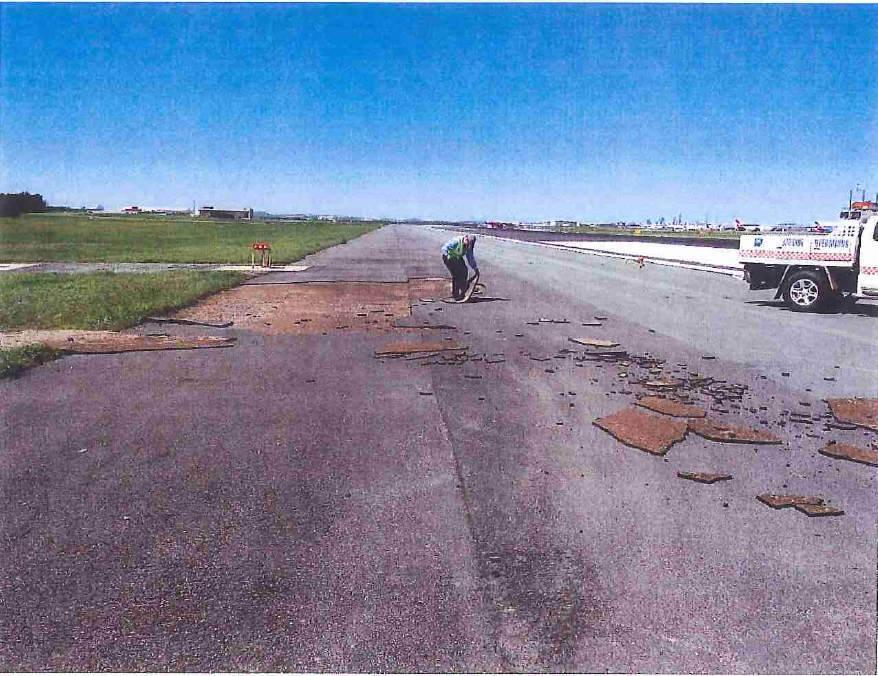
This is less of a blog post and more of a plea for information. Does anyone have any knowledge or experience of blast protection on runways? There is a job coming up at Brisbane International Airport for rehabilitating the protection on the main runway, and I’ve somehow found myself helping on the tender. There are severely restricted working hours that have been arranged out to 2016. The work window is only 4 to 5 hrs long. My initial understanding is that the blast protection is just a pavement with a reduced thickness, as planes will not traffic it. As I take it, the added complexity comes with the reduced working time impacting on what materials will be useable. They would have to achieve sufficient strength before the runway opens and planes start to land again. Any of the surface tearing up wouldn’t be good if it ended up in a jet engine. The picture below shows damage that happened previously and led to the shutdown of the runway – this resulted in massive disruption to flights and I’m sure some hefty costs to the airport operator.
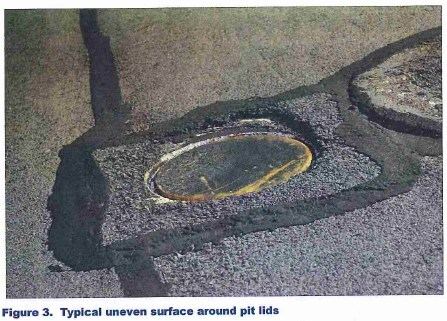
The next couple of photos are from a recent inspection of the runway and show electrical inspection pits that are in poor/dangerous condition.

Any first hand experience, or knowledge from previous projects would be greatly appreciated!
 Holdfast Training Services Trial Blog
Hi Pete,
We do run a course on air operating surfaces under the banner of pavement quality concrete. The reference you might want to read through is DMG 27, which I’ll email you as a .pdf. All stopways and shoulders should be designed to carry the weight of any aircraft for which the runway is designed and lisenced as well as fire tenders (which have high point loads and nasty braking effects! It’s not witch craft but there is a whole language around the ICAO PCN-ACN system you would be wise to be casually conversant with if you wish to look like you know what you’re talking about. Blast areas are not traficked areas i.e. not runway, taxiway, stopway, shoulder or apron but additional surfacing beyond these intended to prevent debris being generated. For aircraft with high velocity turbo-jet enginees (e.g. fighters) concrete is recommended but a minimum 75mm asphalt is acceptable.
Peter
I tried to send a reply via phone but was let down at by technology! What you describe looks like, in old fashioned Airfield Damage Repair terms, scab repair. We used to use febset as the repair product, sets very quickly (minutes) and cures rapidly to allow light traffic on the AOS (hours). Its ideal for reapirs around AGL and inspection pits and for emergency repairs on and off the main runway. I suppose it depends on the civ requirements ultimately but, as RIchard highlights DMG 27 or even vol 19 may give you a few ideas.
IME whatever route you plump for 4-5 hours airside is a fair amount of time as long as you optimise it, the key is to think about reinstatement of the AOS, go on site with everything, no turning back for things that have been forgotten and make sure you know exactly where the sweeper is!!! If you can keep the sweeper on site even better.
Thanks for the tips. The client has still not issued the tender documents so this has been put on the shelf for the moment. I’m now working a stormwater layout for a new facility on RAAF Amberley. I might come back with some more airfield questions in the near future…