Pile Breaking
Site Two Fifty One
It has been the subject of many a previous blog but perhaps the reality of breaking C37 concrete away from pile reinforcement is only just becoming obvious now I see it first hand.
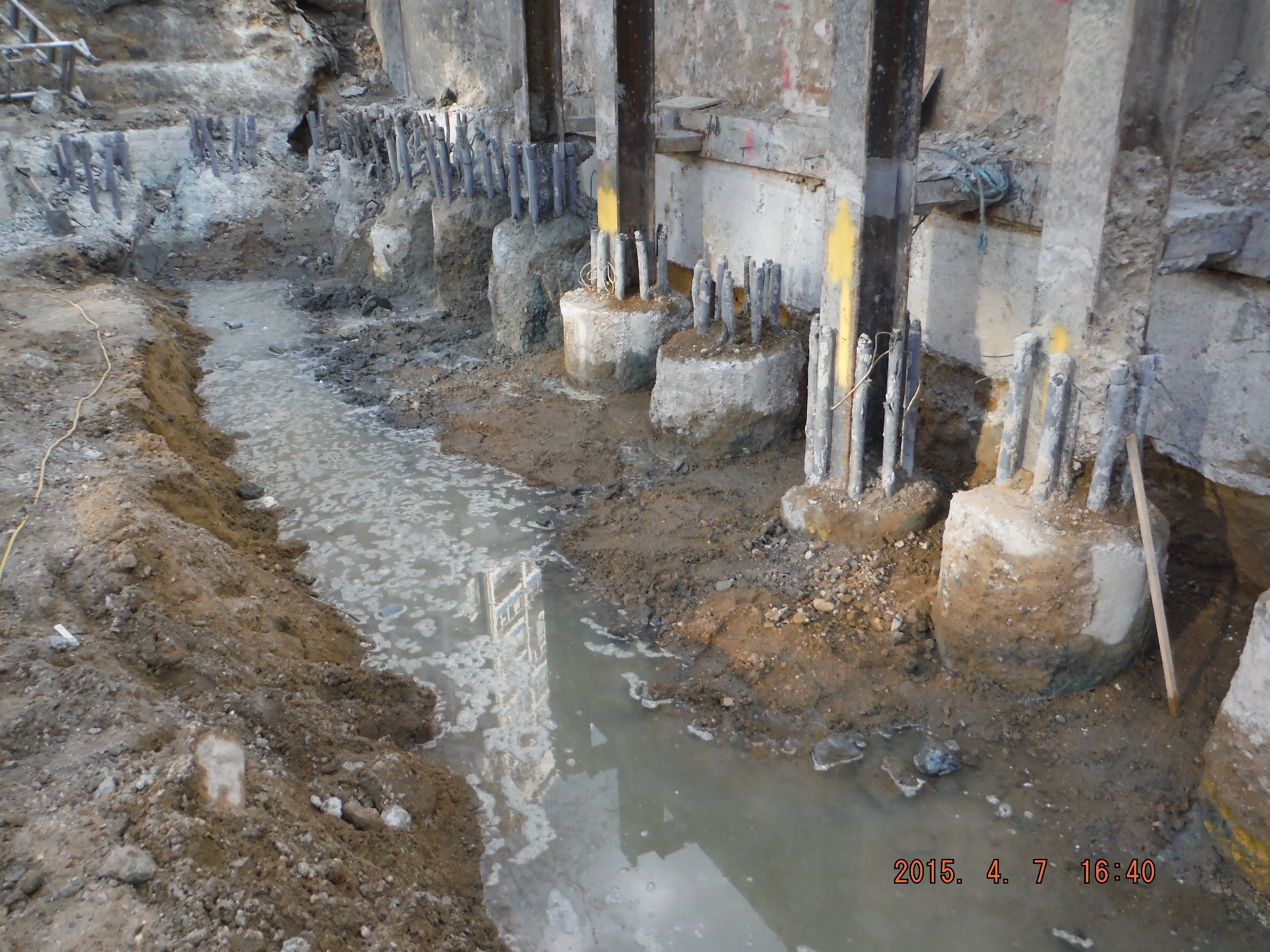
Male piles protruding well above cut-off level (see yellow spray bottom right).
Rotary bored piles which are cased allow piles to be cast to a cut-off level pretty closely. The secant pile wall must embed 75mm into the capping. This is a cut-off level of -1.105m AOD. The pile method was changed from rotary bored to CFA because CFA would enable deeper piles to be constructed. The deeper piles are tower and office bearing piles, not secant wall piles, however due to the constrained site size not all of the perimeter wall could be exposed to do the secant wall with the rotary method.
So what? The secant wall is being done with CFA. The problem? The pile platform level is at +0.150m AOD. This means piles are being cast 1.255m higher than is required because CFA piles can only finish at ground level. The consequence of this is that over a metre of concrete is having to be broken out.
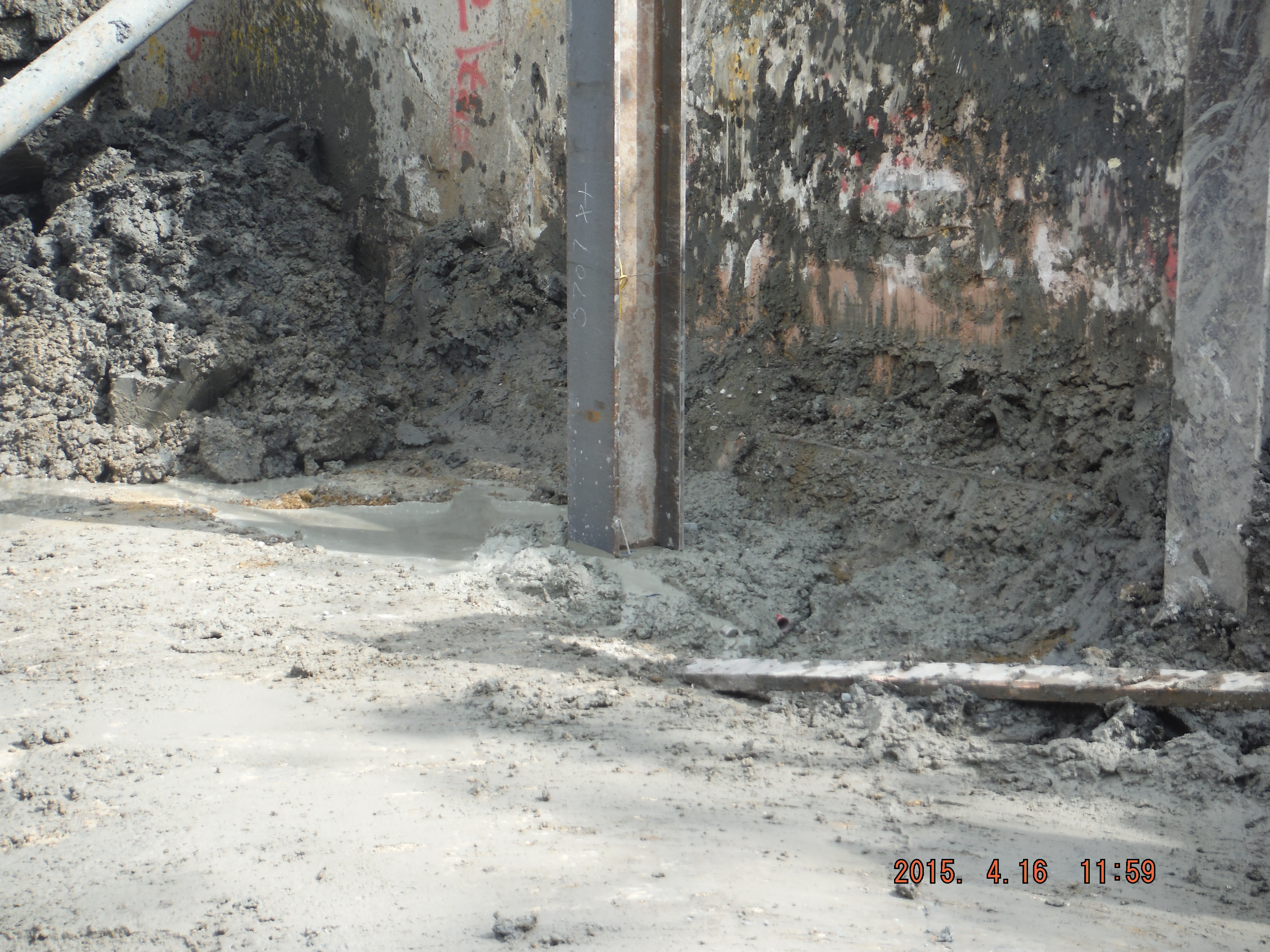
CFA pile with king post (embedded 3.5m into pile), cast at the pile platform level (1.255m above cut-off level).
I started the capping beam on 7 April with a foreman, mini excavator, 2 labourers and a carpenter.
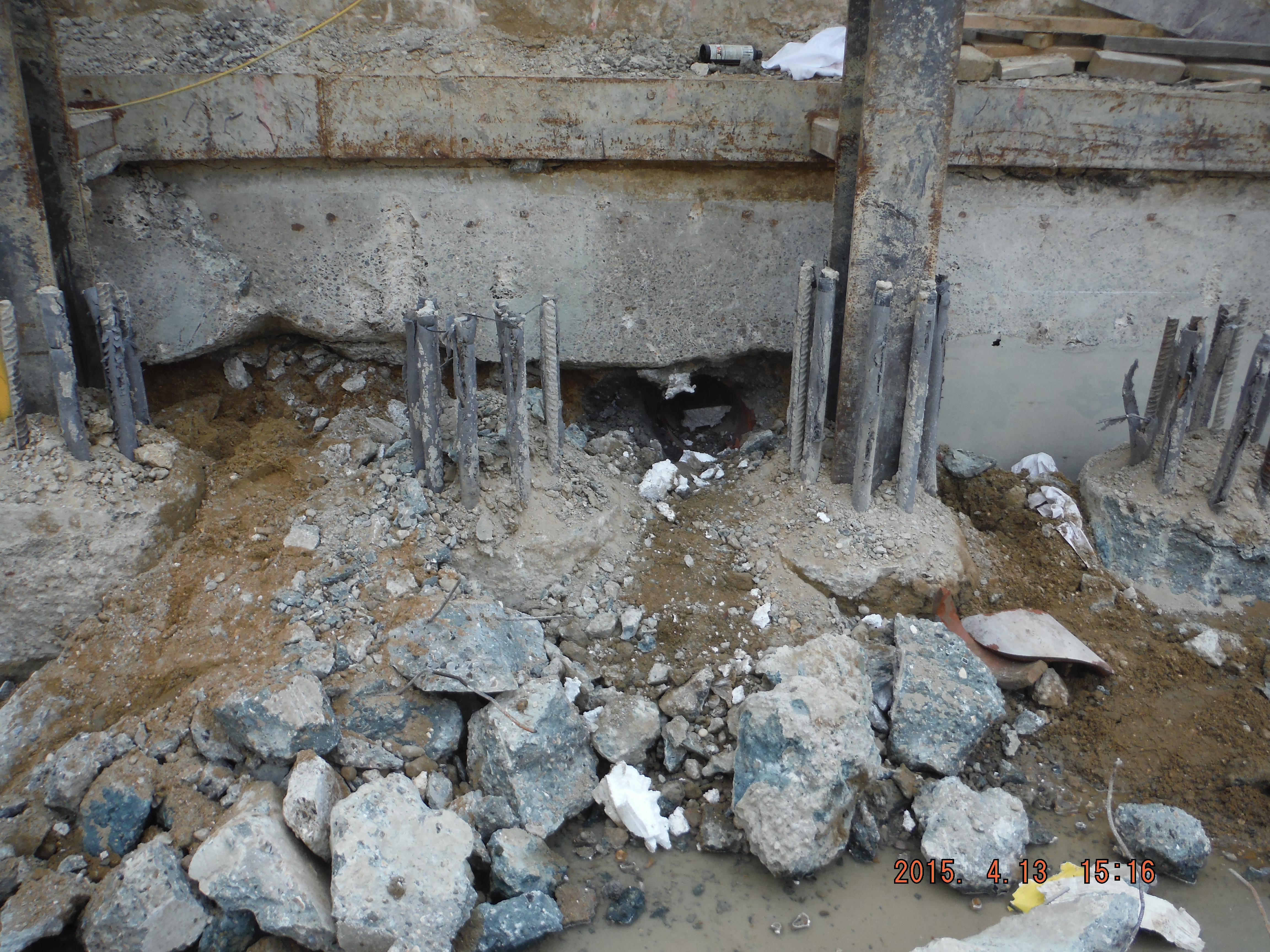
Task 1: removal secant pile guide wall, Task 2: underpin existing retaining wall, Task 3: break piles to cut-off level. Excavator used to remove bulk of concrete.
2 weeks on we have prepared a section about 30m in length, and have not started steel fixing, formwork or concreting. The capping beam length is 180m long, therefore this could take some time (12 weeks, programmed for 7 weeks, albeit not on the critical path). The options are plentiful but what is becoming more apparent is the consequence of what seemed to be a sensible decision (change from rotary to CFA piling method) is now only fully realised and understood.
Further complications: Temporary Works versus permanent works.
The Designers (Waterman) have designed the capping beam for the permanent case (mostly bending vertically). Clearly they know we are going to excavate down another storey, but the reinforcement for the temporary props is not down to them to design.
The Temporary Works Department have added significant extra side bars to account for the props. In some cases this amounts to 8 x H32 compared to 6 x H16.
The temporary works situation (king posts propping old retaining wall) sees the vertical column sections (king posts) embedded into the piles within the pile reinforcement. This is to prop against the wall behind to act as a cantilever retaining wall.
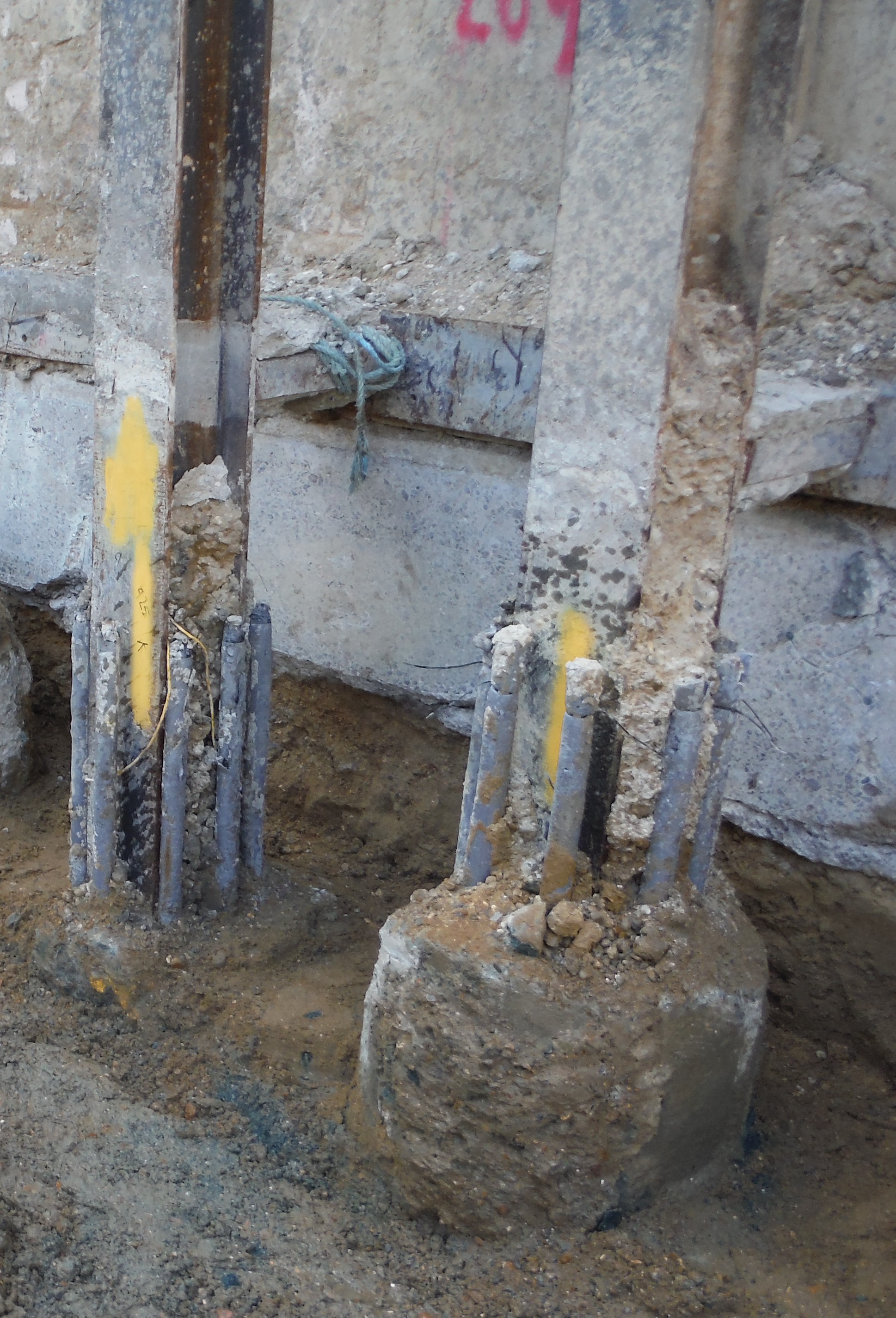
King post embedded into male pile adds to the difficulty of removing concrete.
Now break concrete from the piles with column sections and pile cage reinforcement in the way! This is all doable and I have been careful in selecting a tool which does not give you white finger after 5 minutes use (such as air compressor type breakers). This has included finding Hand Arm vibration limits for the Hilti TE1000 breaker and use of the HSE website. Turns out that the action limit is 4-hours 44 minutes trigger time. So what – a minimum of 2 people have to do the breaking. Add in some rest periods and only account for actual “trigger time” and that specific piece of equipment is fine to be used each day.
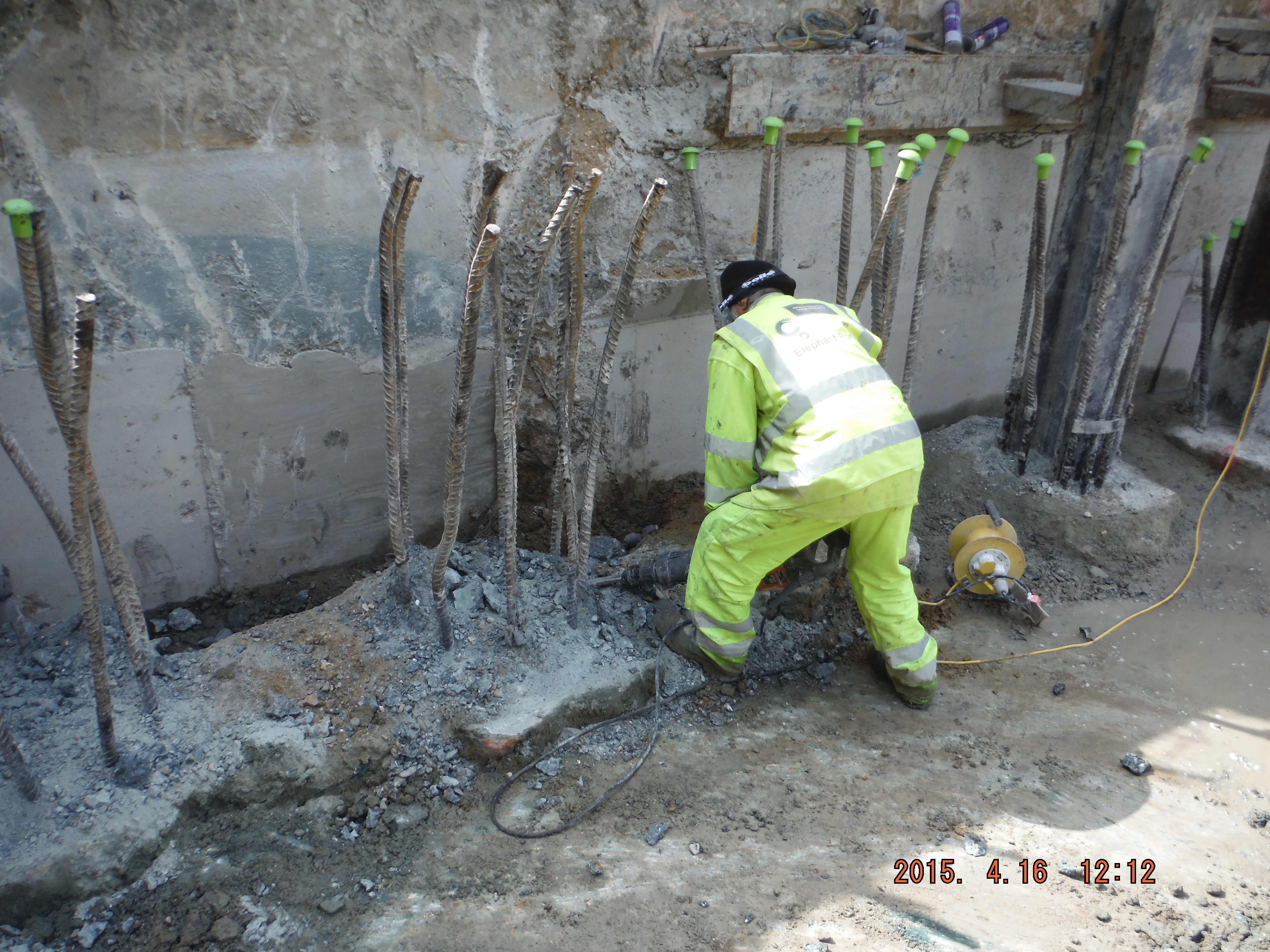
Breaking down the piles with a Hilti TE 1000.
Luckily the problem has become apparent before all of the secant pile wall has been completed. Therefore we will try and do something to reduce the utter nause of pile breaking.
Options:
1. Dig/ladle away wet concrete before it cures – sensible but that means putting 2 labourers close to the pile rig auger as it moves onto the next pile and as I have commented before the whole area is flooded in a slurry of wet concrete and clay.
2. Attach void former to web of king post to stop concrete even forming in the web.
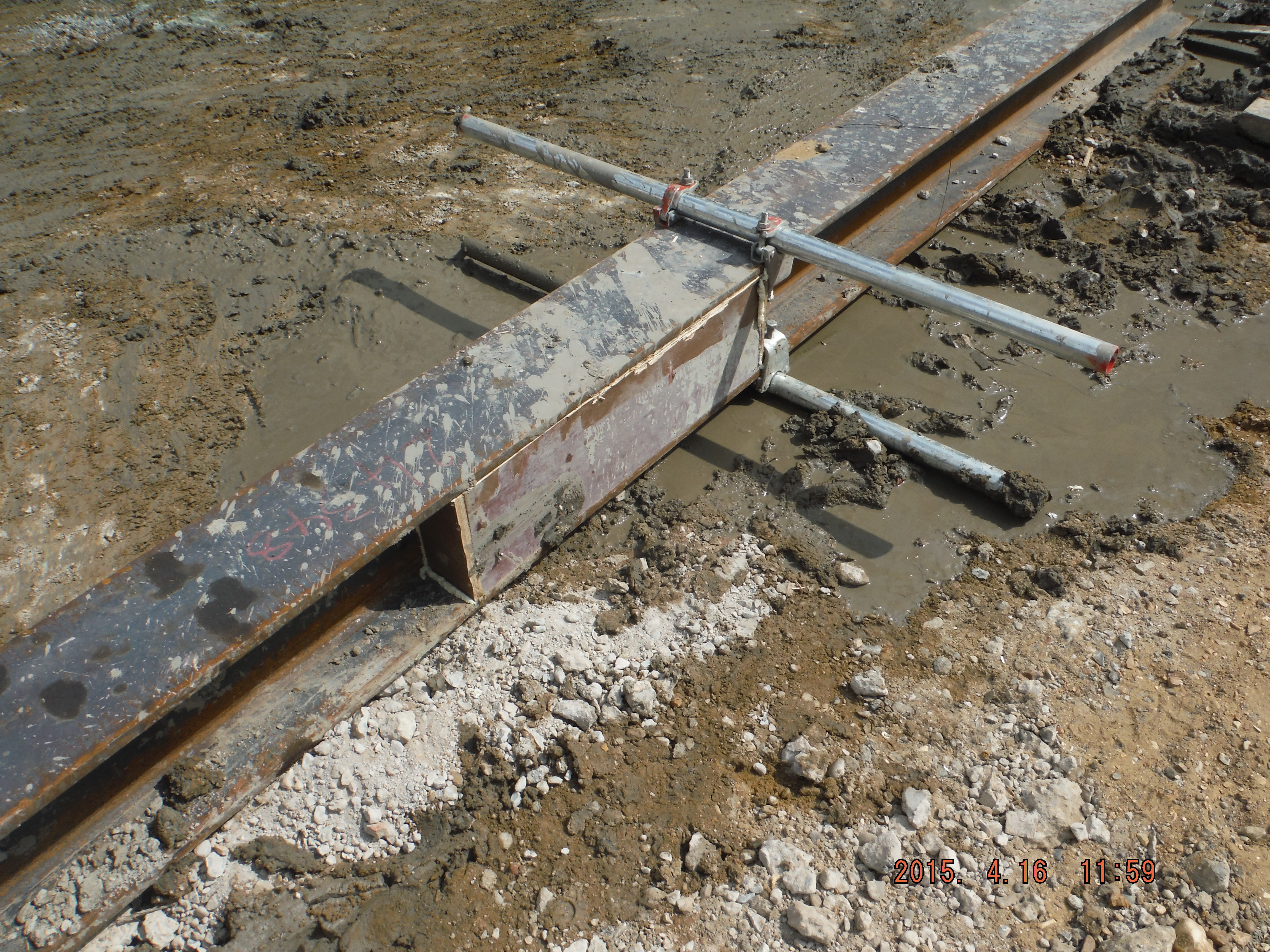
Void former to reduce amount of concrete to be broken.
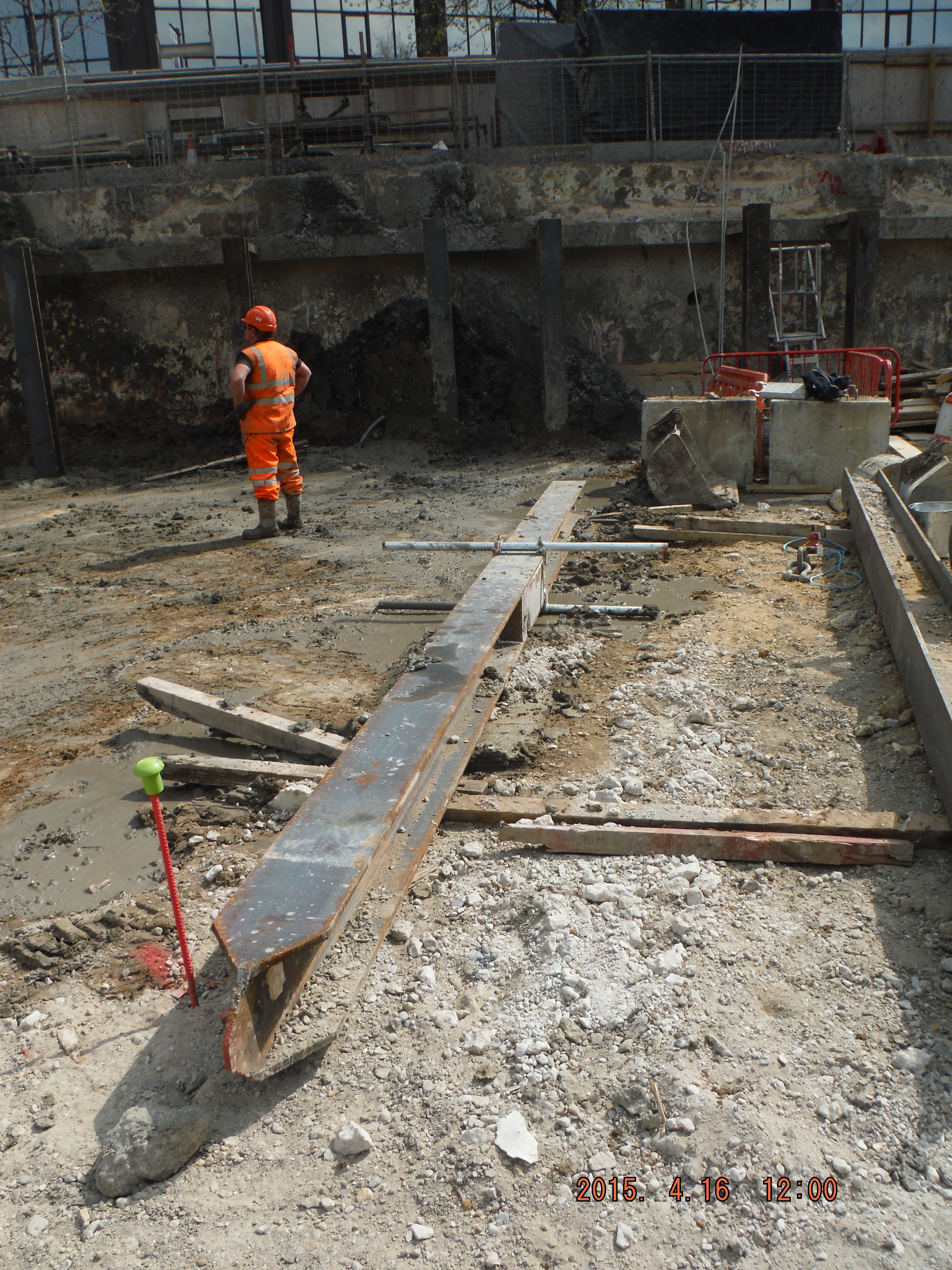
King Post with void former.
3. Suck out the concrete from the piles with a special concrete Hoover (apparently they exist).
4. Do nothing and head for the HAVS assessment.
Clearly the post pour options that exist are a bit trial and error and will involve an element of faffing about, however 20 minutes ladling some concrete out of the top of a pile compared to 2 weeks of chiselling it out is much preferred.
What I will take away from this is firstly to explain the importance of designing pile cut off levels and the consequence of not being able to execute the design. This might be to communicate the hazard through drawings and possibly the specification so that the contractor may mitigate the hazard before it is too late and the piles are cast.
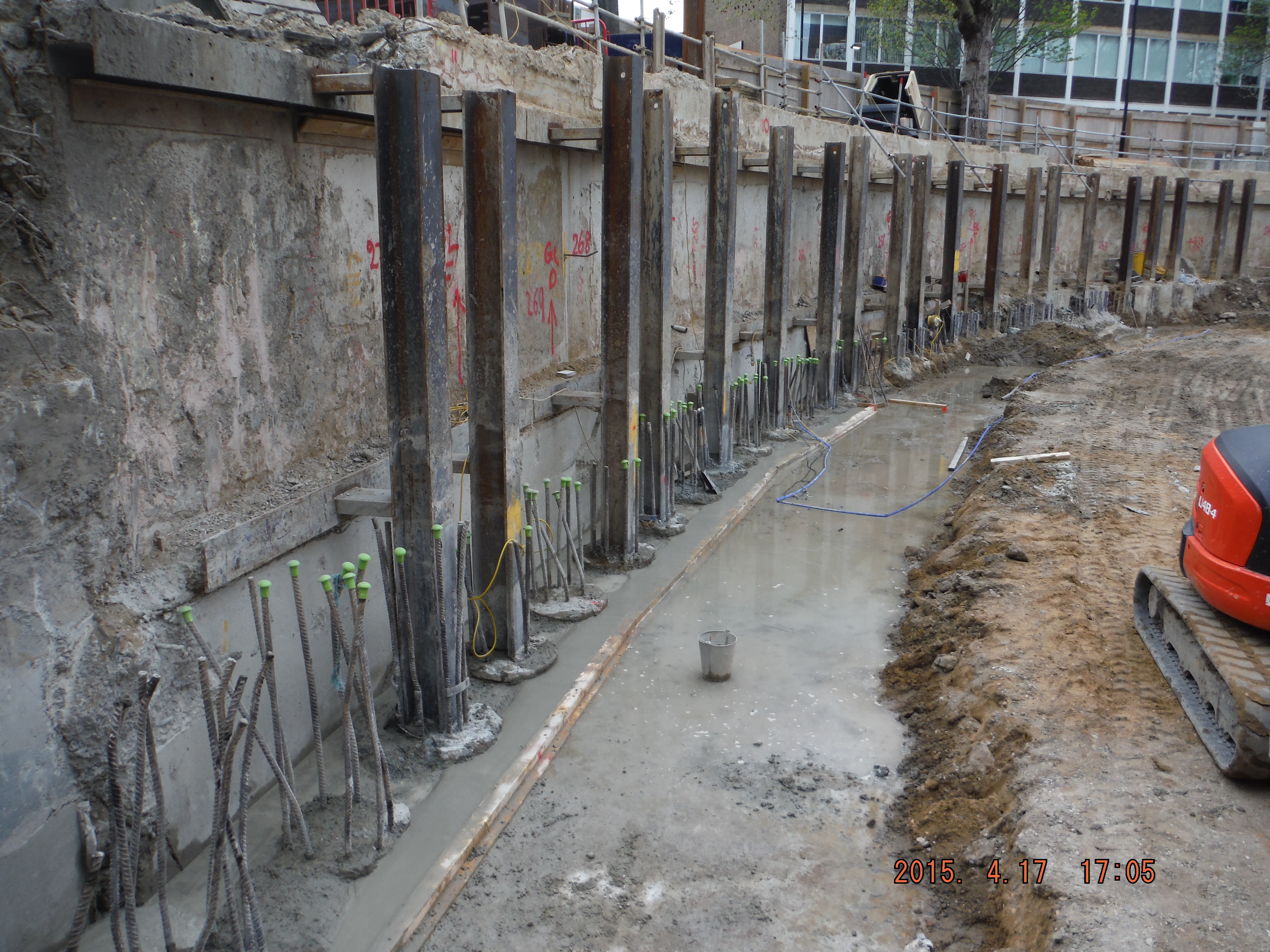
Slow progress – Piles broken to cut-off and blinding concrete complete 10 days after starting.
This blog subject will re-emerge in about July 15 when the excavation of the basement is complete and the ground bearing piles need to be broken down (hence submerging pile cage reinforcement).
Now for steel fixing and remembering what Richard taught use about steel reinforcement schedules!
 Holdfast Training Services Trial Blog
Morning,
You said the reason for changing from RB to CFA would enable deeper piles but we’ve previously talked about CFA being limited to circa 20m (rig dependant) and RB working with ease to depths >50m. Is their some other issue at play here?
Damian,
An additional nause reducer is to tape pipe insulation around the pile cage at the appropriate level to prevent concrete bonding to bars.
Richard, That is exactly what the insulation was on site here, I checked after.
Damo, I’ll send you a pic.
Richard, Olly, thanks for the pointers on the foam at the end of the piles. We do that but it’s not really enough to make much of a difference! In a pile with just pile reinforcement there is a central core of a 600mm diameter cyclinder still left to remove.
We will keep working on it and I am sure it will work out.
Olly regarding the depth issue, the issue is the ground. Boring through London Clay into the Lambeth group would pearce into a higher head aquifer. This would mean dewatering the sea to be able to install the pile. CFA under pressure prevents the issue from occurring.
That’s the explanation based on ground conditions, rather than rig capabilities. Can’t remember where we spoke a about CFA max depths, other than for the particular rig we have onsite we are limited to 28m.
Damian
An excellent blog well done. 180 m – wow
Kind regards