Pile Collapse
The west abutment piles (8No, 900mm dia, 40m deep) are now complete and passed the working load test with ease. We are now in the process of blinding the area to create a working platform prior to integrity testing the piles tomorrow.
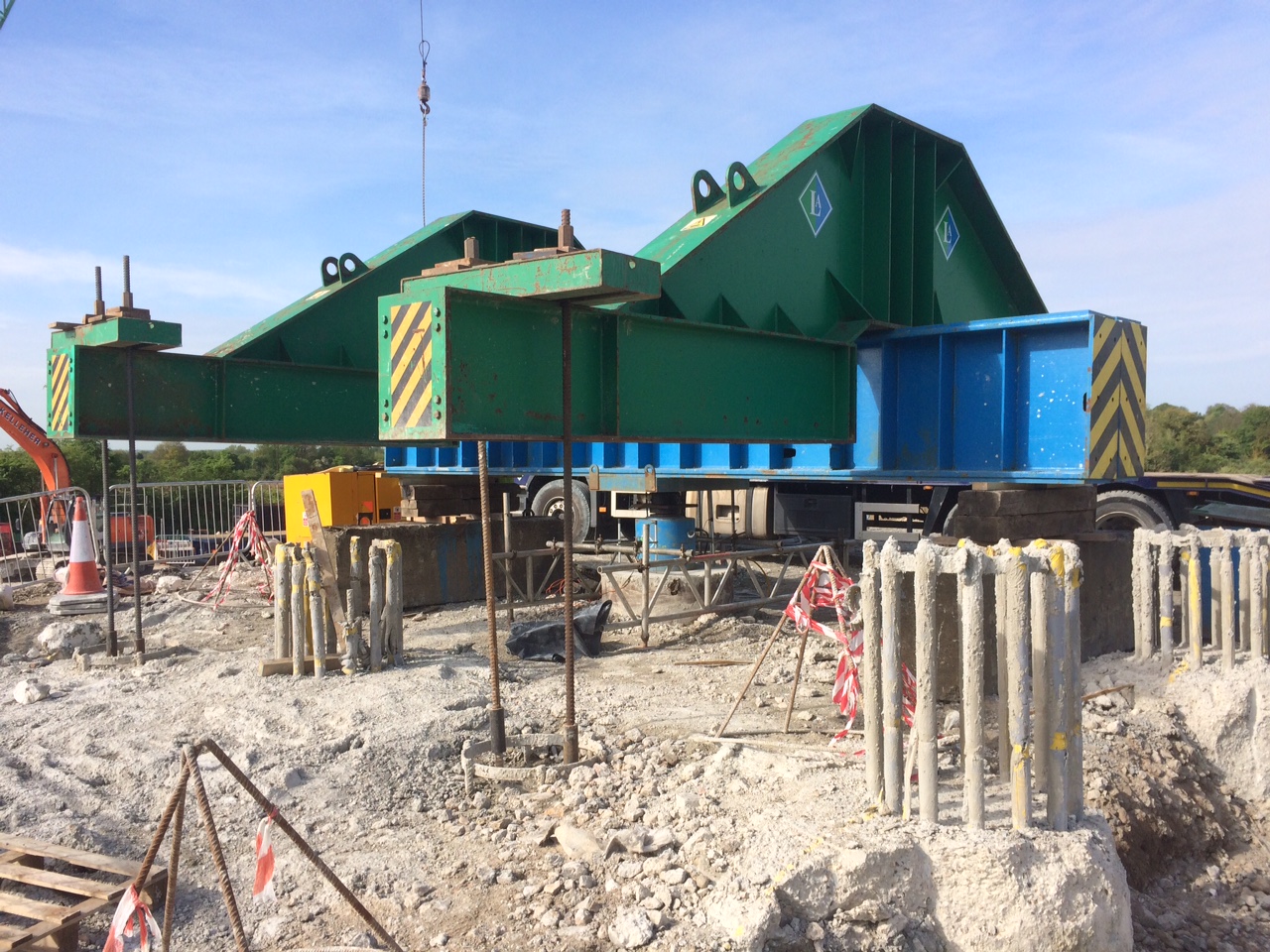
West Abutment Pile Test
The west cofferdam is complete. The excavation turned out to be more complex than we anticipated and caused numerous problems. Eventually we managed to dig to depth and blind without having to fit the intended lower waling. The top of the sheet pile walls have been capped and a UB panel roof has been fitted. The 80tn piling rig now sits on top of this and bores through the open cofferdam and into the ground below. A piling case gate has been fabricated to stabilise the case above ground level and help locate it whilst being lowered.
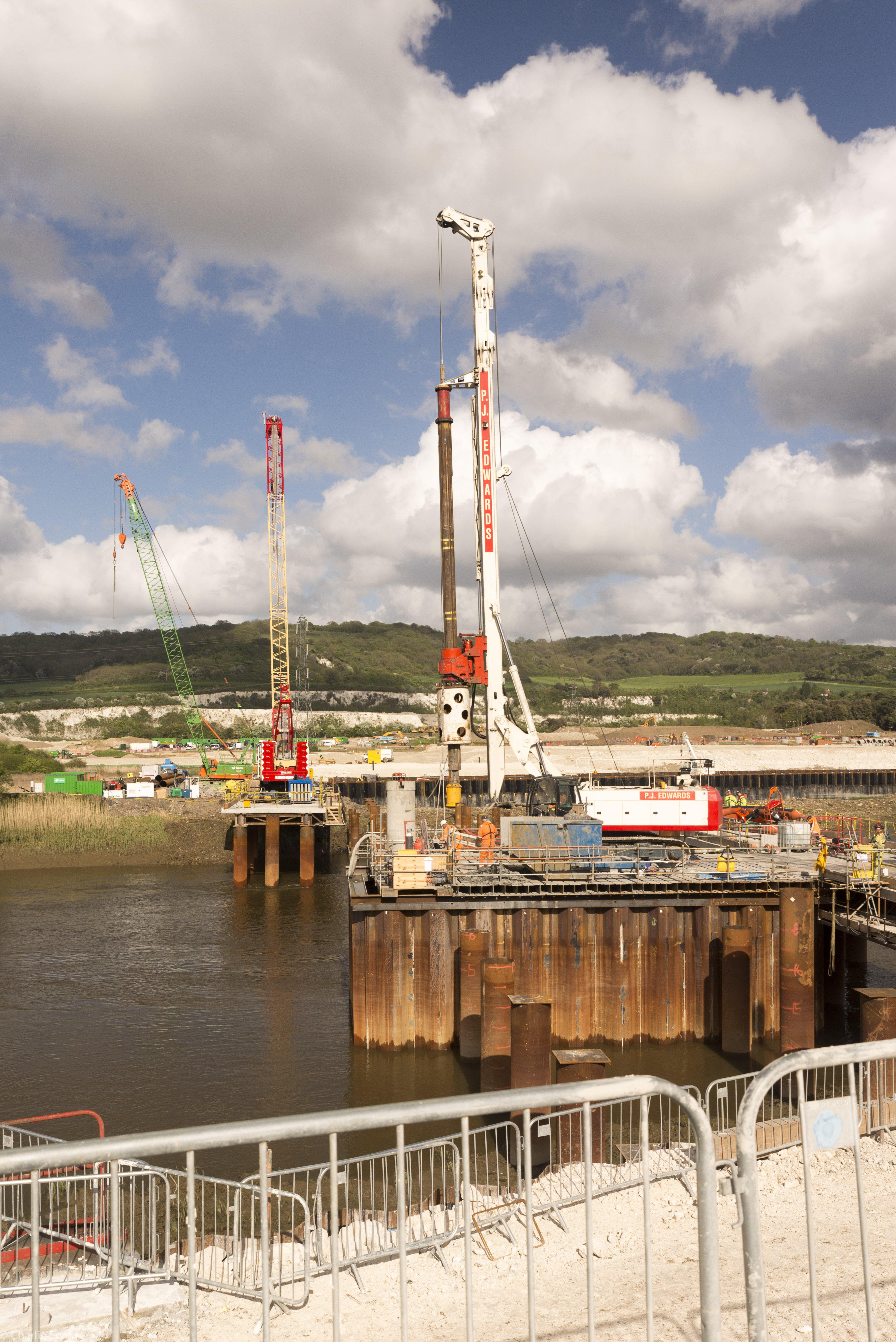
80tn Rig on Cofferdam. This is the most unusual place the Piling Foreman has piled in 30 years
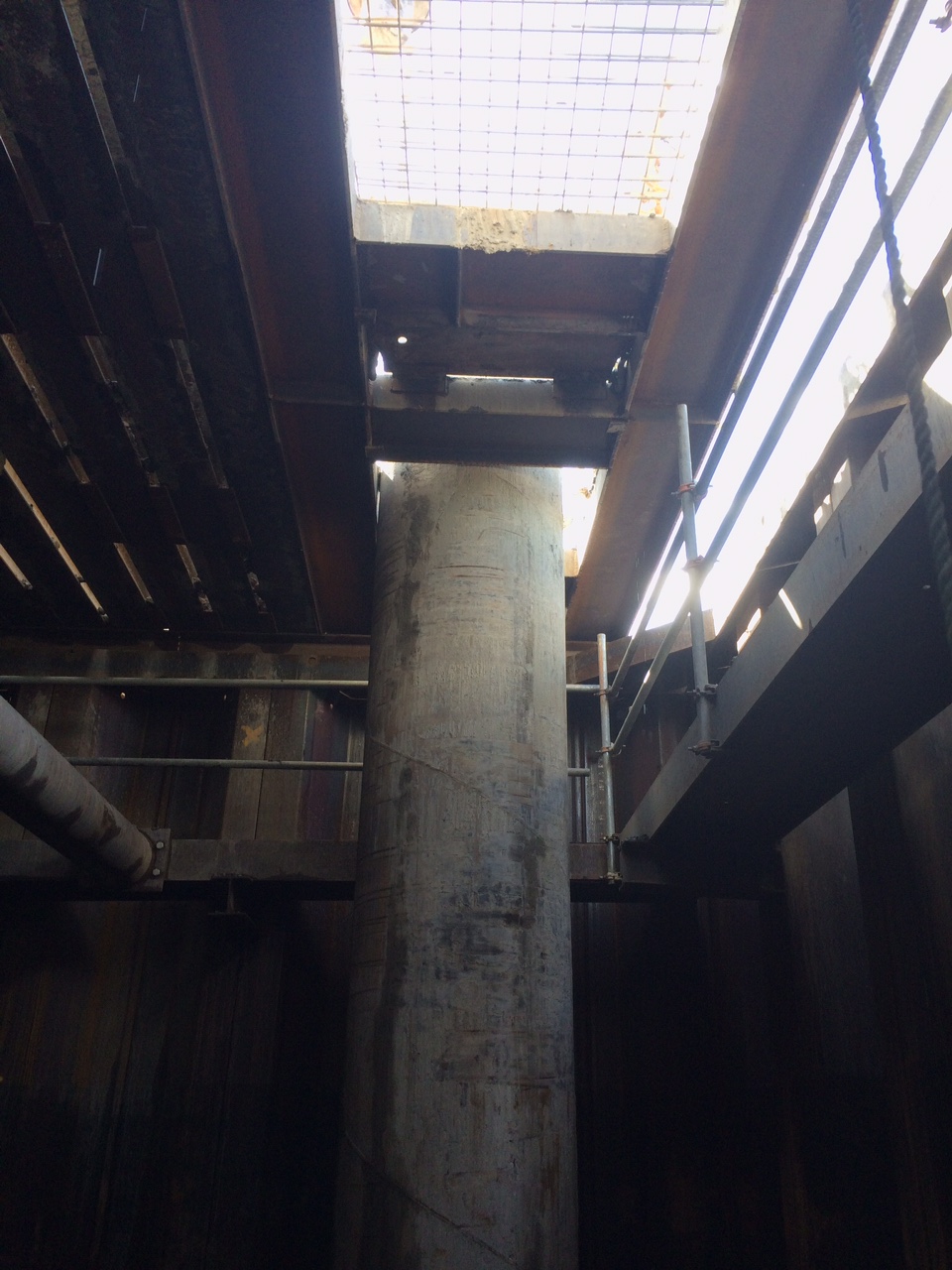
Piling gate and pile casing.
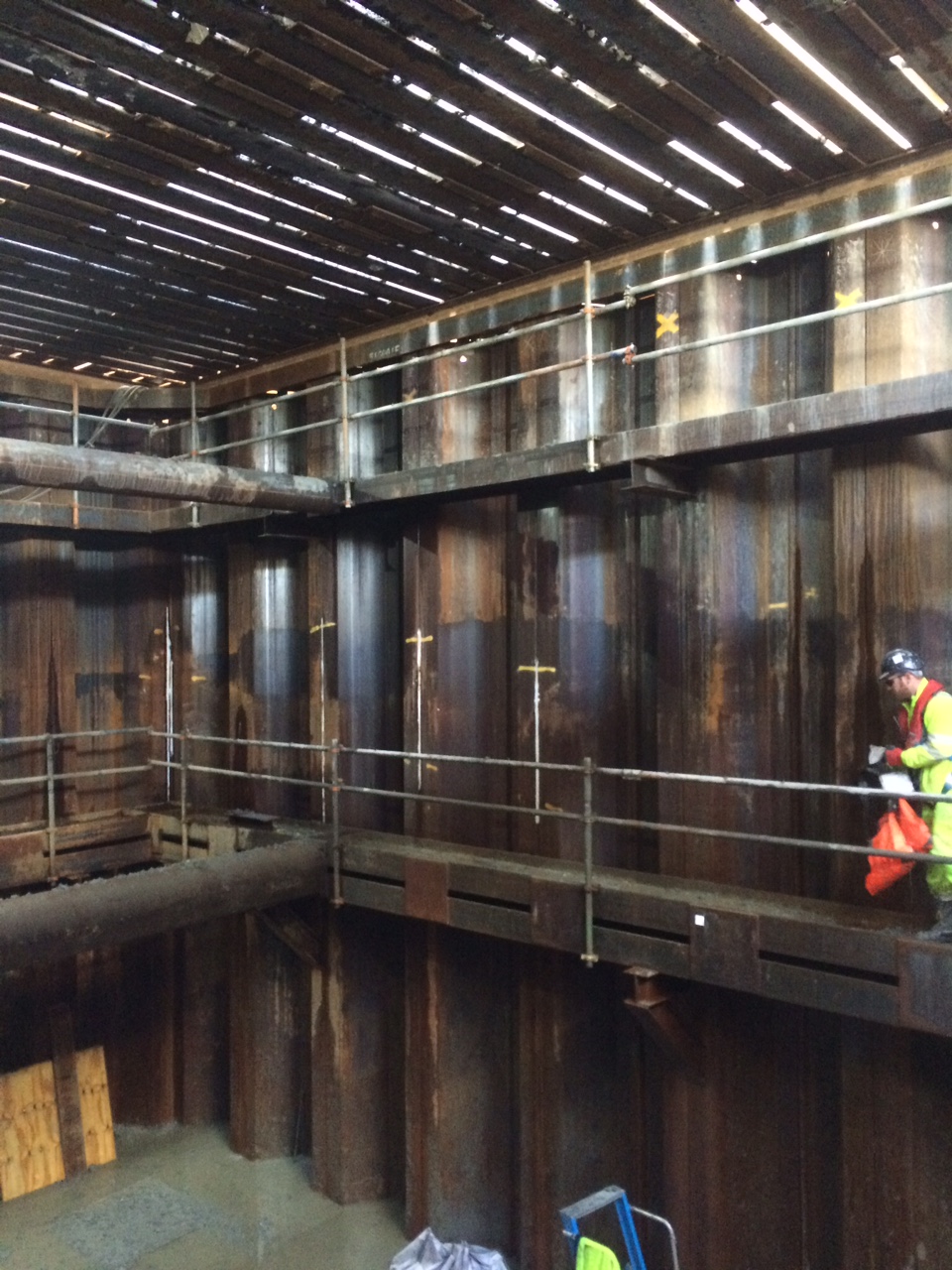
Inside the west dam with the rig above.
The casing starts 1m above the deck and drops 8m through open space and a further 5m into the ground of which 3m is toed into dense clay. The first problem this throws up is that the pilers can’t see the ground level down the shaft, to resolve this issue they have cut a window in the casing above ground level that they can look through from the base of the cofferdam. This window also acts as a water escape when the concrete is being poured allowing us to capture the spill in the dam. It also allows us to monitor the concrete to ensure we are not over filling and creating a large mess (7m3) when the case is pulled.
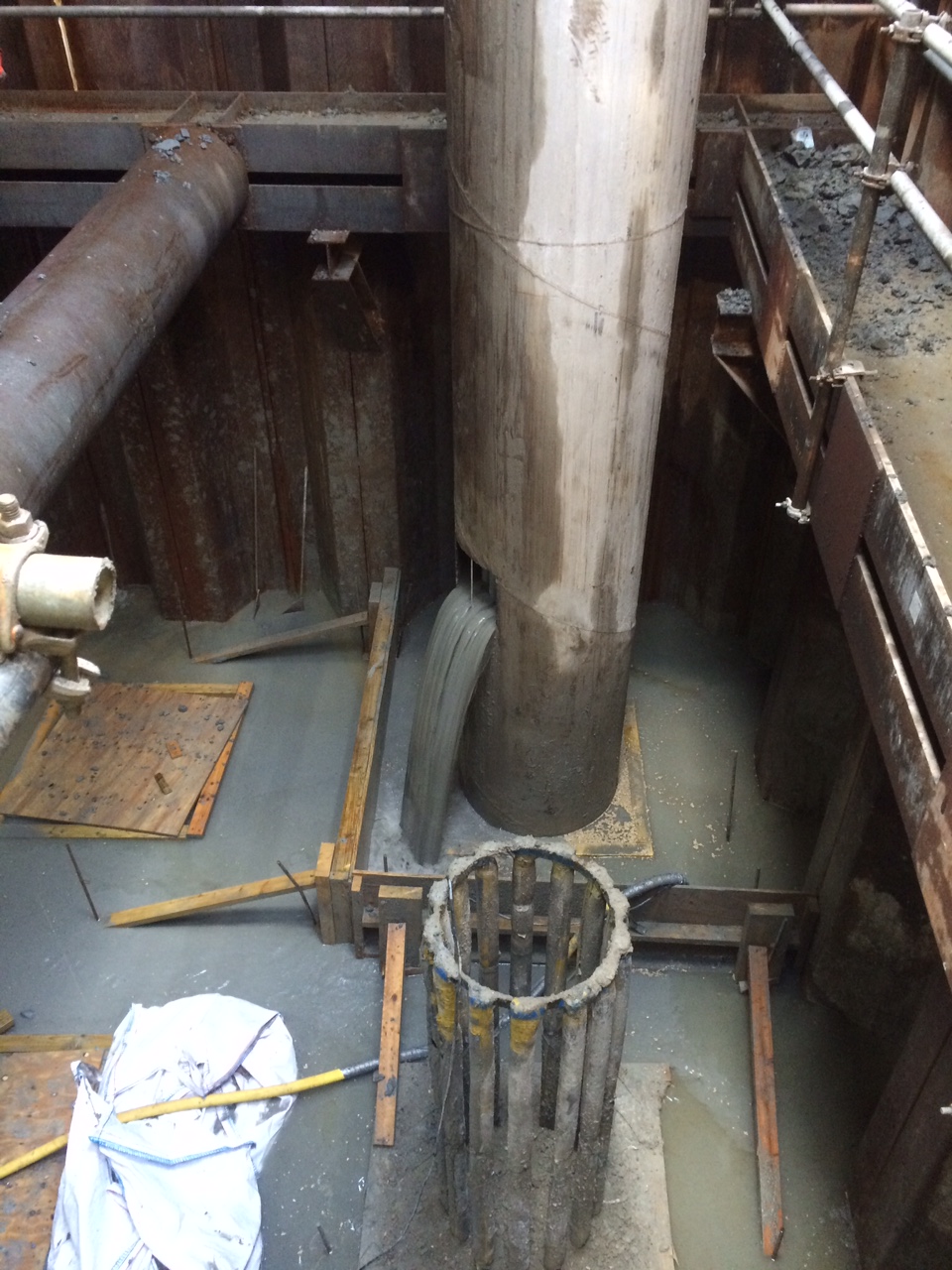
Pile casing with window during a pour. Excess concrete is kept within the simple shutter and cleared up by hand 12 hours after a pour.
Working on top of the cofferdam has caused a few logistical problems, there is no space to store any equipment and the spoil has to be spun off in to a skip and then craned on to the land which slows the whole operation.
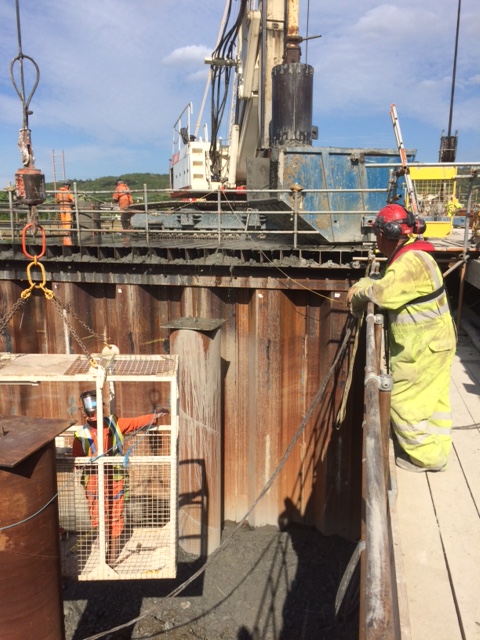
Bore spoil is spun in to a tipper skip. Note this is not an accurate process and we lose some over the edge which has to be recovered.
All has been going well and we are completing them at a rate of one a day, until…TODAY!
The piling gang are on a fixed price contract and are clearly keen to get the job done and move on. They asked last week whether they could auger out at the end of a day and then concrete the following morning. This is outside of the 12 hours that is permitted to leave a bore open. On Tuesday approval was granted that this could be done under strict rules:
- 12-24 hrs open – increase the depth and cage length 1m
- 24-36 hrs open – increase the depth and cage length 2m
- 36-48 hrs open – increase the depth and cage length 6m
These rules were issued by the piling designer and based on 10% reduction in shaft resistance per 12 hours. When question on the 10% reduction they simply responded with ‘it’s over designed to negate any risk’. This makes perfect sense, as any decision to leave a bore open would be with the piling contractor and as such any increased cost in materials, time and risk would all sit with him, not us or the designer.
That same day (Tuesday) the rig broke down just after they have reached full depth. By the time the rig was fixed (Wednesday) and it had got back on task, cleaned out the shaft and augured out the extra 1m (rule 1) they had missed the concrete window and had to leave the shaft open again overnight.
When they came in this morning (Thursday) they found that the 43m shaft was now only c.20m. Due to the casing they are unable to see what has collapsed. We are currently pumping 10kN concrete in to a hole with no real idea where it is going or how much of it we will need to cap it off.
So what…
We must now treat that area as unstable and move the piling operation to the other side of the cofferdam and work back towards it. The pile designer has been briefed and will now carry out a redesign of the failed pile. We expect them to either design a number of smaller piles to be placed around the failed one or to insist we re-auger in the same location though the low strength concrete. We are unsure how wide the collapse area is and whether it has affected the existing piles or fresh ground that we are due to pile through in the coming days. Either way the replacement pile/piles will require full casing to depth which will increase the duration of the job.
In other news…
we bent a waling!!!
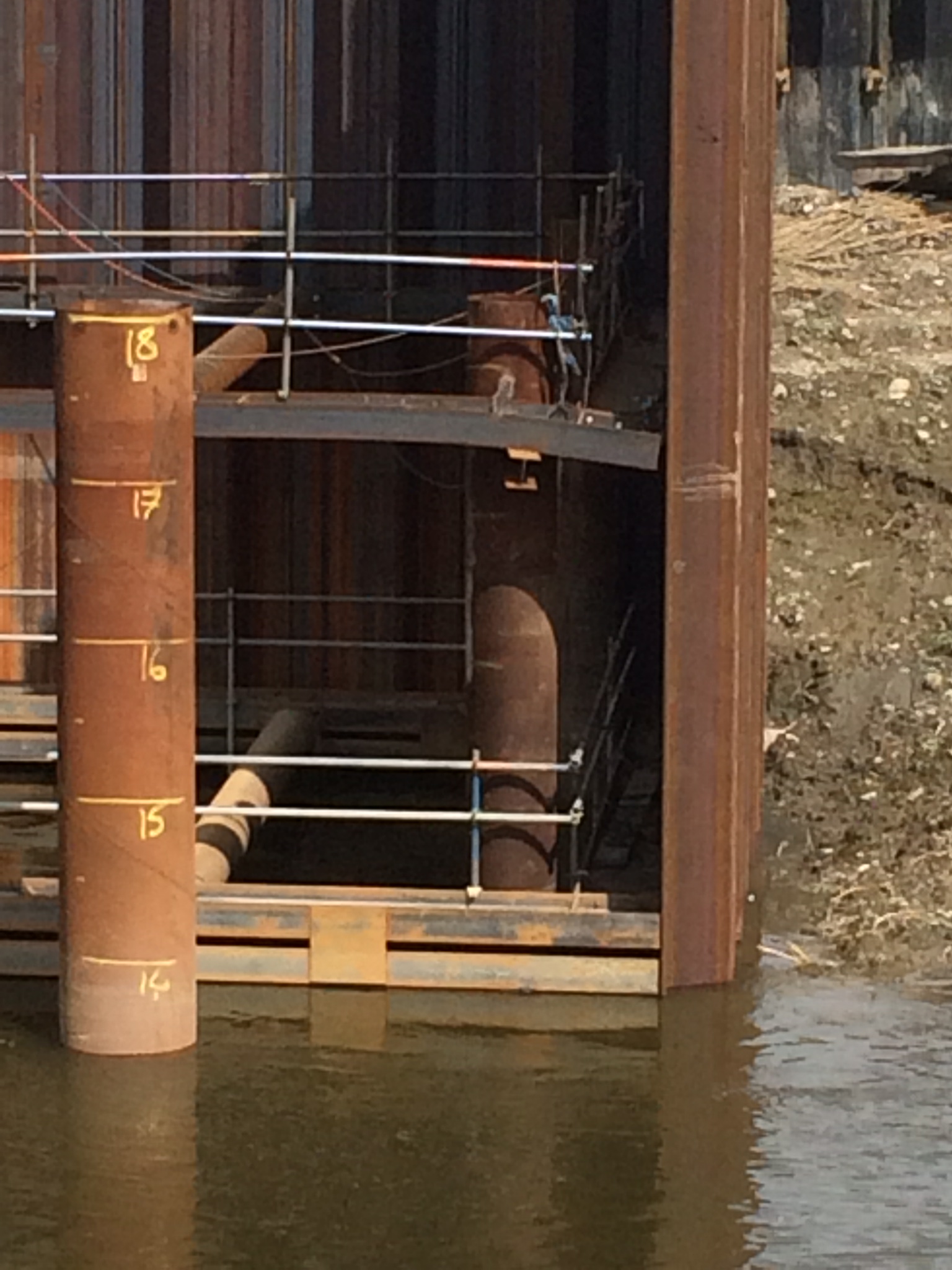
Sheet pile was stood unslung in 3m of alluvium which has a Cu of about -15!!! When the vibro was lowered on it pushed the pile which sank immediately and dragged the waling with it!
 Holdfast Training Services Trial Blog
Olly,
All very interesting. If the main part of the pile is in dense clay I am surprised it collapse overnight. Are there other fissures/soil horizons within the bore length? What sort of soil have you seen coming out of the bored pile? Is it surprising the clay has very “short” long term properties?
Your caption: Pile casing with window during a pour. Excess concrete is kept within the simple shutter and cleared up by hand 12 hours after a pour.
Does this mean the concrete is being broken out or is it still fresh enough to be easily removed?
How are you treating the water and concrete waste mix and where does it go?
Morning Damo,
Pile Collapse
Join the queue on being surprised! It collapsed on the second night of being open although we had a test bore in the same material that stood open for 24hours dry and flooded for a further five days with no signs of collapse.
The material is a stiff over consolidated clay with periodic gravely horizons. It has lots of hairline fissures. It can be broken by hand when extracted however it is not mouldable.
We managed to pump 30cube of concrete in to the collapsed shaft which is roughly the amount of material we pulled out which indicates we are not dealing with a significant ground void.
The piling contractor is very good at suggesting ideas but will not (for obvious reason) stake any money on the reason for the collapse. I believe that the 48hrs the shaft was flooded was enough time for the shaft wall to soften through water ingress into the gravel horizons and fissures and cause the collapse. As to why it collapsed here and not in the trial bore we will never know.
Breaking out & Waste material
The concrete is curing slowly and although hard it is coming out easily with a hand breaker and shovel. We had intended to use a 3tn excavator and a pecker to break it out but it’s simply not needed.
We are really lucky and have a natural reed bed along the side of the site. We have been granted permission by the EA to filter and discharge back into the river. We pump out of the cofferdam and in to a natural pool area to allow the fines to settle and then we simply allow the water to run off into the reed bed and nature does it’s thing. The fines are then excavated out of the pool and dumped with the alluvium we still have stock piled from the cofferdam base, as to what we are going to do with that is another story!
Olly
When things start to go wrong they do go wrong quickly. Good CPR stuff!
Kind Regards