Archive
Site Two Fifty One – Environmental Awareness
As site Two Fifty One continues to get established part of the works have included moving the hoarding outwards. This gives more space inside and sets the correct position for the entrance gates. However, outside of the original hoarding line were 6 mature trees (trunk greater than 100mm/greater than 10 years old). They now sit within the site.
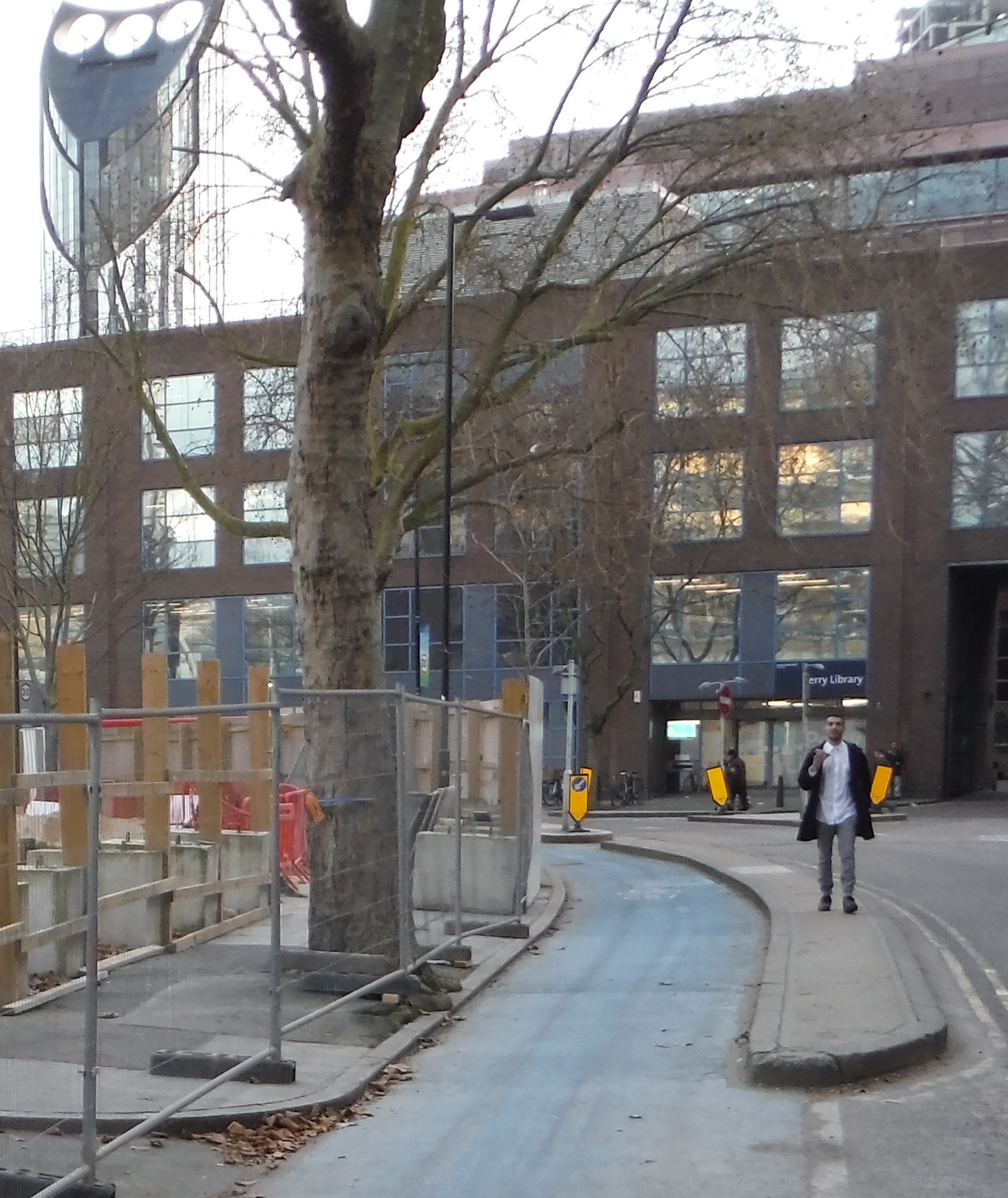
Left – See concrete blocks with posts on – this is the original hoarding line. Right of tree – see blocks moved to edge of pavement, tree will now sit “inside” the site.

Tree within hoarding creates ecological value, therefore making it harder to gain credits for improving the site’s ecological value in the future.
So What?
The original site survey in 2007 determined that no trees sat within the site, therefore it was classed as having a ‘low ecological value’. This presents two advantages: 1. No effort required in protecting trees or other species and 2. Using the Building Research Establishment Environmental Assessment Method (BREEAM – See areas below) and Code for Sustainable Homes it is easy to gain credits by planting trees in the future to turn the site into a development with ecological value.
- LE 02 – Ecological value of site and protection of ecological features – Two Fifty One is starting at a low baseline (i.e. no trees within the site).
- LE 04 – Enhancing Site Ecology (easier if LE 02 is met because low start point)
- LE 05 – Long Term impact upon Biodiversity (add more trees!)
This reminds me of John’s brief of Rich Phillips’ TMR discussing BREEAM based credits gained for little extra effort (points for being near a bus stop – quite likely in a high population urban development!). The aim is to avoid the loss of credits, which in all tally to give a ‘very good’ rating, would mean the project would slip down a notch and therefore not comply with planning consent. Seeing as the client is still to approve Laing O’Rourke’s tender for the superstructure, now failing to meet the planning requirements would be pretty embarrassing.
So how is this problem going to be resolved. Along one side of site it is simple; sections of hoarding will be moved to inside of the 5 trees. Unfortunately, one tree in a different part of site cannot be easily excluded from the site. BS 5837:2012 (Trees in relation to design, demolition and construction – Recommendations) states: “It might be feasible on some sites to use temporary site office buildings as components of the tree protection barriers, provided these can be installed and removed without damaging the retained trees or their rooting environment”. This is particularly handy because the site store is going to be positioned next to this tree and will actually act as a useful barrier to prevent damage to the tree. This means the tree is protected
Is it right that credits are given for a tree to be outside or inside a hoarding line? The advantage is, if it is outside, the trunk will not be knocked and bashed by construction traffic or have materials stacked against it. It also means that the development is likely to have a focus on green areas and planting vegetation – which is a good thing.
So in all, is BREEAM and the Code for Sustainable Homes actually going to help the ecology of the local area? Somewhat. By signing up to the “Very Good” BREEAM rating the project is accountable for carrying out its actions as it said it would to the local council. Therefore simply removing trees cannot happen and even small things like protecting trees will be taken seriously.
 Holdfast Training Services Trial Blog