Archive
Site Two Fifty One – Commercial Aspects
Site Two Fifty One – Commercial Aspects
I will turn attentions to some commercial aspects this week.
Firstly, warranty and building insurance. There were two inspections of the capping beam recently. One from Assent Building Control and one from AECOM. The purpose of each was slightly different.
Assent Building Control inspections are to confirm that the building is being built in compliance with Building Regulations, i.e. planning requirements. The inspection was of reinforcement for the capping beam. The inspection included a general look over the area and to make sure the cover to steel was correct. There did not seem to be much reference to the Building Regulations – Approved Document A (Structure), Parts A 1&2: Loading and Ground Movement, or Part 3: Disproportionate Collapse. Now clearly the project is at an early phase, and the inspection was of a ground beam, but I would have expected slightly more inquisitive questioning. It felt like it was as much a waste of the inspector’s time as it was mine!
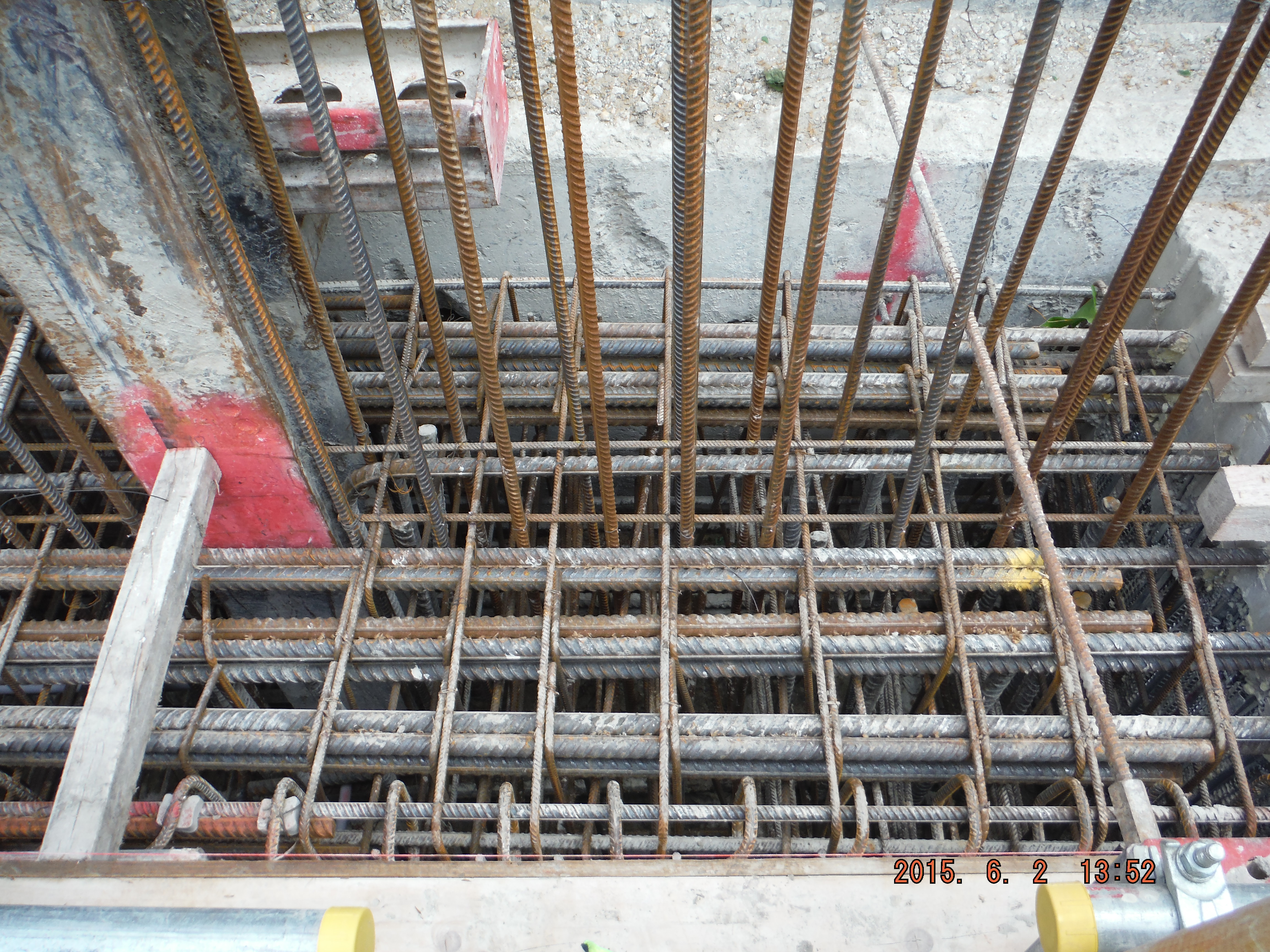
The client has also engaged Allianz Insurance to provide a 10 warranty on the building. Allianz have then engaged AECOM to provide external, independent quality assurance that the structure is being built in accordance with the design. The inspector had extracted relevant drawings from ASite (file sharing website) and was keen to see the section of capping beam that the 40 storey building is going to sit on. The 9 x H32 top and bottom bars, acting in bending, were checked and he was happy. The mass of other steel (for temporary props) was not his concern because he will provide the insurance for 10 years after completion of the structure, not if it falls down in construction.
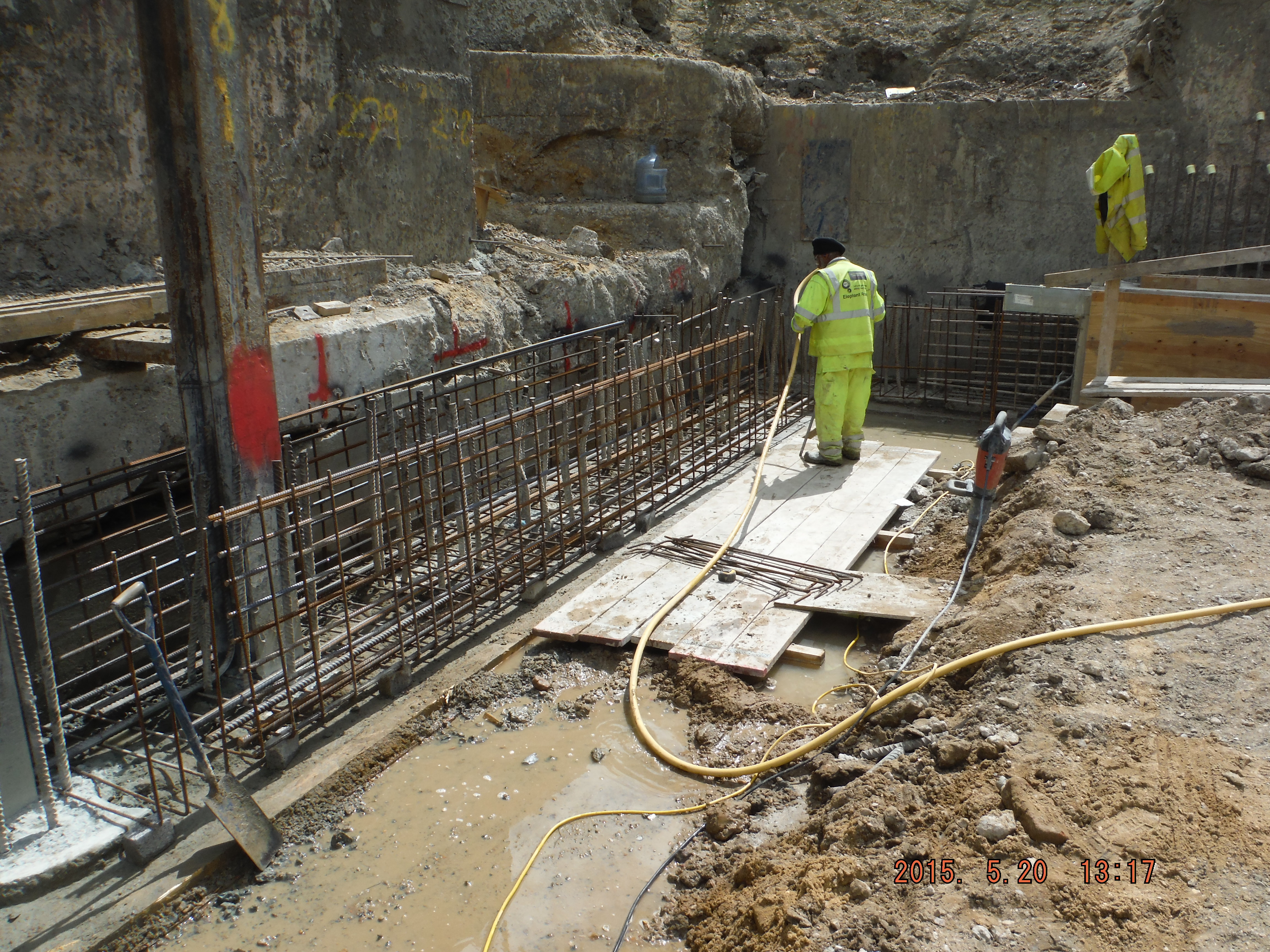
Capping beam reinforcement cage construction
So what?
It is good that AECOM chose to visit an important part of the structure and that the key part of the steel was checked (and that the inspector had printed drawings and knew what he was coming to look at). I think this shows more of an appreciation of risks involved than just a generic check as per the Building Control one.
Second part – Contract or not to be…
The project I am working on started with an enabling works 26-week contract which covered a secant pile wall, tower and office bearing piles and the pile capping beam. We are now in about week 30 and there is still no full contract. Laing O’Rourke had previously quoted a price in January 2014 which was 10 million lower than the contract price submitted a few weeks ago.
This has prompted an intensive period of value engineering to see where savings can be found. The in-situ basement box and precast frame were re-costed reaching a similar total but the mechanical and electrical and fit costs out have increased.
So what?
The building price has increased by about 10%. The value engineering meetings have found savings but also additional costs.
The client is also pushing hard for sequential/early occupation. Great to get people into their flats early, but at the same time this creates havoc with commissioning – I understand it is difficult to only commission half of a fire alarm system and equally expensive to commission a lift shaft more than once. Therefore the benefit of improved cash flow gained through early occupation is lost in additional commissioning costs.
So so what?
Not having a full contract and running on a rolling monthly extension to the enabling works contract makes organising the project difficult:
Precast – Laing O’Rourke are the pioneers of precast: columns, walls, beams and slabs (Design for Manufacture and Assembly). Great idea, but if the lead time is 22 weeks for production, a rolling contract is not the way to get things done.
Designs – Without a contract, the detailed design is being completed ‘at risk’ and each component part (sub-contractor) of the project is a little wary of committing time without the assurance of a contract as to whether the building is going to go ahead.
Today we had an unannounced visit from Des O’Rourke – co-owner of Laing O’Rourke. Not a common occurrence, so with a visit yesterday of another senior director, I suspect it is coming to crunch point on whether the project gets the green light beyond the enabling works! It is an interesting time in construction in London – there is no shortage of work for contractors and so I think if a client wants something, they are going to have to pay for it. Gone are the days of simply agreeing on projects to retain cash flow (at least at the moment).
I’ve been a bit light on photos, so here are a couple of other ones:
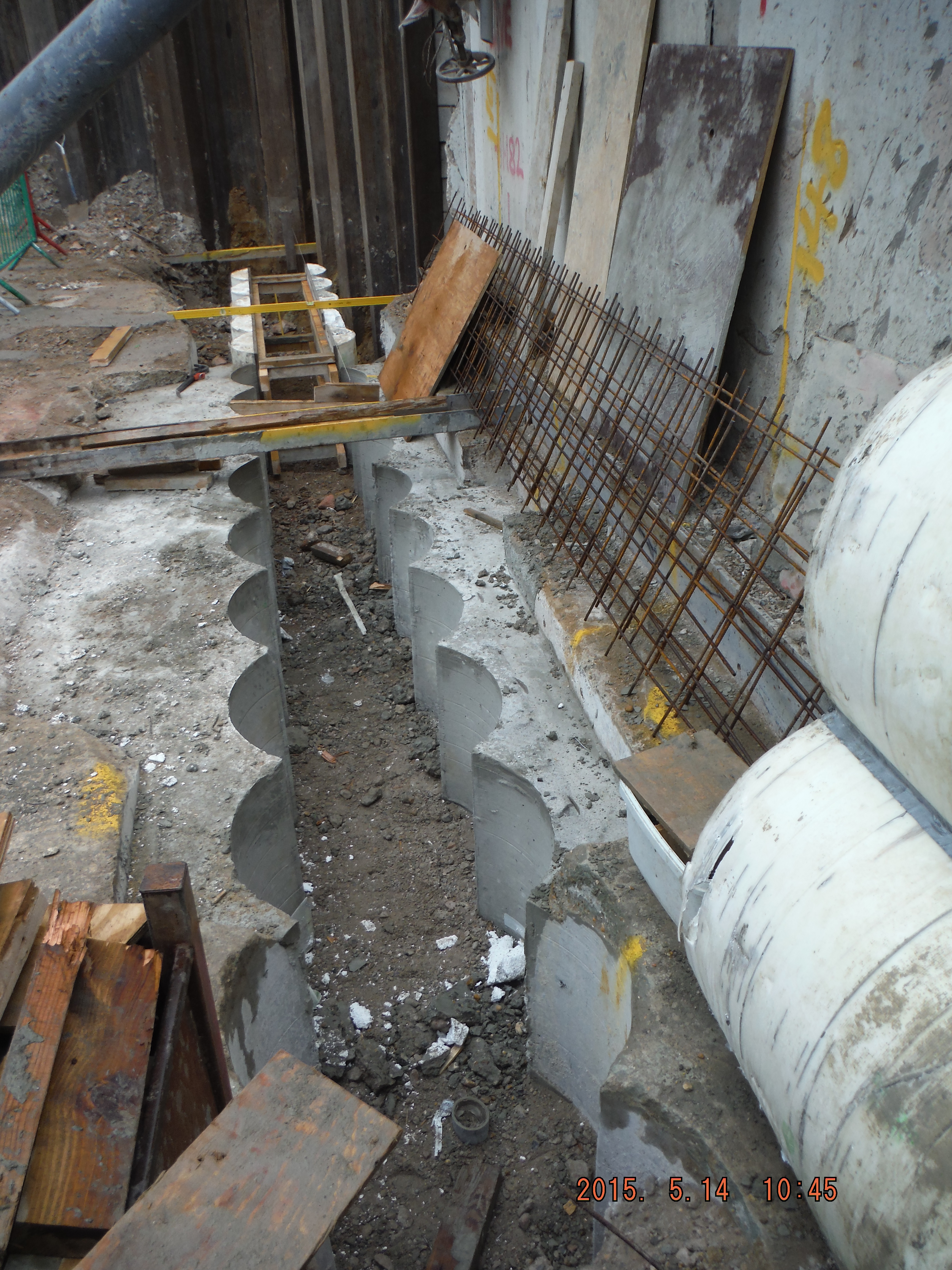
Guide wall construction using polystyrene formers:

Post pour “half-moon” interlocking secant wall
UKMCC Bahrain update
Hi all,
I’ve bunged a few more photos from Bahrain onto my blog. Namely posts about staircases and floors and one about E and M experiences.
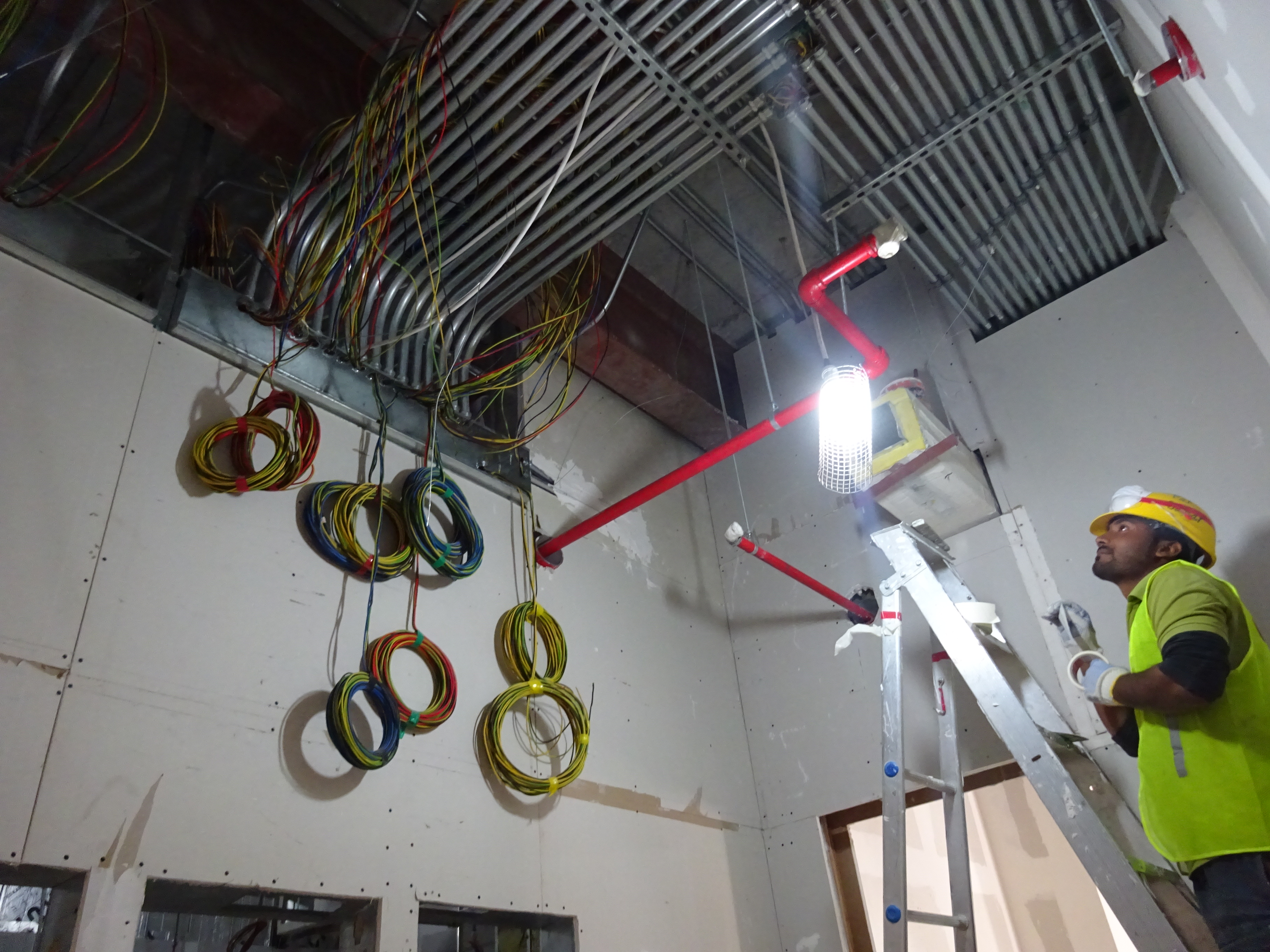
I’ve got 2 more posts to put on: Civil Works and Finishing Details and then that’s me! Project finished.
As this is voluntary for me I have not put too much writing on there, just photos. Please let me know if you need any information. I’ve learnt heaps, particularly about E and M as you can see.
As I always wished for other people to have access to my blog I am not using your area, but instead am on
https://roselliott.wordpress.com/
Enjoy!
RE
General observations
It has been a while since I last blogged and has primarily been down to the relatively sedate pace of life up in Aberdeen. In an attempt to prove I haven’t gone native, I thought I would pen a few points and observations I have made over the last month or so.
Continual Uncertainty
The oil & gas industry is still in a bad place and not likely to recover for a while. Woodgroup (whom provide a lot of engineering services to the BP Projects & Mods team) announced a couple of weeks ago that further job losses will be required and uncertainty exists as to what that exactly means. Last week they also announced that their engineering teams based in Aberdeen will be moving to Glasgow in order to reduce costs and increase productivity; so what? For me, it will almost certainly mean frequent commutes to Glasgow in order to better coordinate projects.
BP itself is continuing its drive to improve efficiency throughout the entire organisation and a ‘town hall’ with Trevor Garlick, the Regional President put it in perspective. When looking at North Sea producers, BP currently sits in the bottom third in terms of cost per barrel to extract at around $37 per barrel, even if that was reduced to say mid-twenties, BP would only rank in the middle third. This is primarily due to the huge overheads BP has because of the size of the organisation; BP cannot compete with the smaller independent oil producers in the North Sea. In order to save money, budgets have been cut and are expected to be reduced further next year including the P&M budget.
Procedures
After initially being impressed with the documented processes and procedures that exist, it now seems that BP staff understands them in the same way we understand AFM, SOHB et al. We know they are there and roughly what they are about but they are not always fully understood, at times don’t support each other and may not be up to date.
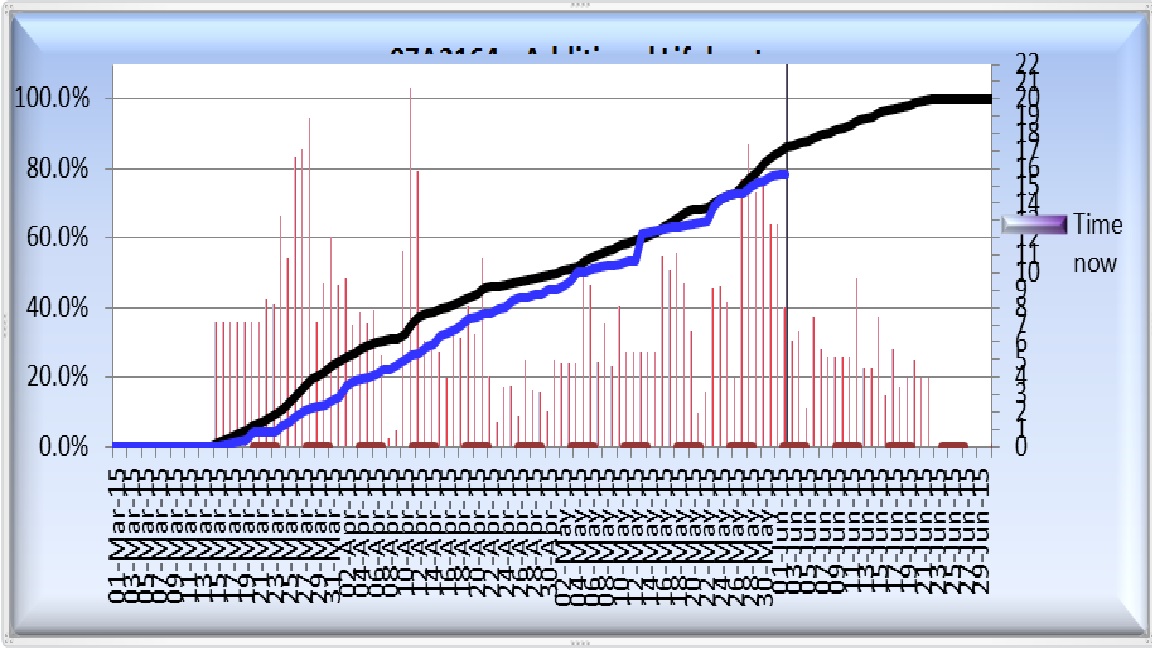
When you are both behind schedule and will finish early
There is currently a project being executed offshore to deliver an additional lifeboat so that there can be an increased number of pax working on the platform at any one time. The project started in early Mar and was scheduled to complete in 4 weeks. As you can see from the S-curve below the project is about 7% behind schedule but we have been told that it should be complete in a week; so in a 13 week project the last 23% will be completed in the last week. This is really down to poor forecasting at the beginning of the project by vendors who are completing the installation and final commissioning of the life boat. Arguably it’s not that big a deal as long as it is completed within schedule, but it does raise some eyebrows further up the chain and brings some unwanted questions. So it is not just the army that tries to mould figures to appease higher HQs!!
Timings, Timings, Timings
I know that a few of you have mentioned this in blogs previously, but think it is appropriate to quote Barbossa from Pirates of the Caribbean: Curse of the black pearl when describing contractor deadlines;
“the code [deadlines] is more what you’d call guidelines than actual rules”
In other news
Pregnancy: Still, but I’m the one putting on weight and having food cravings (olives at the moment).
House: moved in, more to follow.
CPD
Brendan and Myself attended a CMI coordinated breakfast, titled ‘Leading in Difficult Times’ which included 3 guest speakers. Lt Col Paul Binnie, Commanding Officer of AUOTC discussed the role of the leader in terms of subordinate development, mission command, clear communication and inspiring your team. Ella Minty, a strategy and change consultant, discussed the concepts of knowing your limits, knowing your boundaries between work and social, seeking results, ambition and real value and fostering challenge, trust and learning, and finished with the line “if you are the smartest person in the room, you are in the wrong room”. The final speaker was Bob Keiller, the CEO of Wood Group who played 7 songs and discussed each one in tern;
Black Sabbath – Paranoid
The Temptations – Get Ready
Animals – Don’t let me be understood
The Matches – Needs and Wants
Paper Lace – Don’t be a hero
Elvis – A little less conversation
Crowded house – don’t think it’s over
I’ll let you decide what he meant by each one.
 Holdfast Training Services Trial Blog