Site Two Fifty One – Commercial Aspects
Site Two Fifty One – Commercial Aspects
I will turn attentions to some commercial aspects this week.
Firstly, warranty and building insurance. There were two inspections of the capping beam recently. One from Assent Building Control and one from AECOM. The purpose of each was slightly different.
Assent Building Control inspections are to confirm that the building is being built in compliance with Building Regulations, i.e. planning requirements. The inspection was of reinforcement for the capping beam. The inspection included a general look over the area and to make sure the cover to steel was correct. There did not seem to be much reference to the Building Regulations – Approved Document A (Structure), Parts A 1&2: Loading and Ground Movement, or Part 3: Disproportionate Collapse. Now clearly the project is at an early phase, and the inspection was of a ground beam, but I would have expected slightly more inquisitive questioning. It felt like it was as much a waste of the inspector’s time as it was mine!
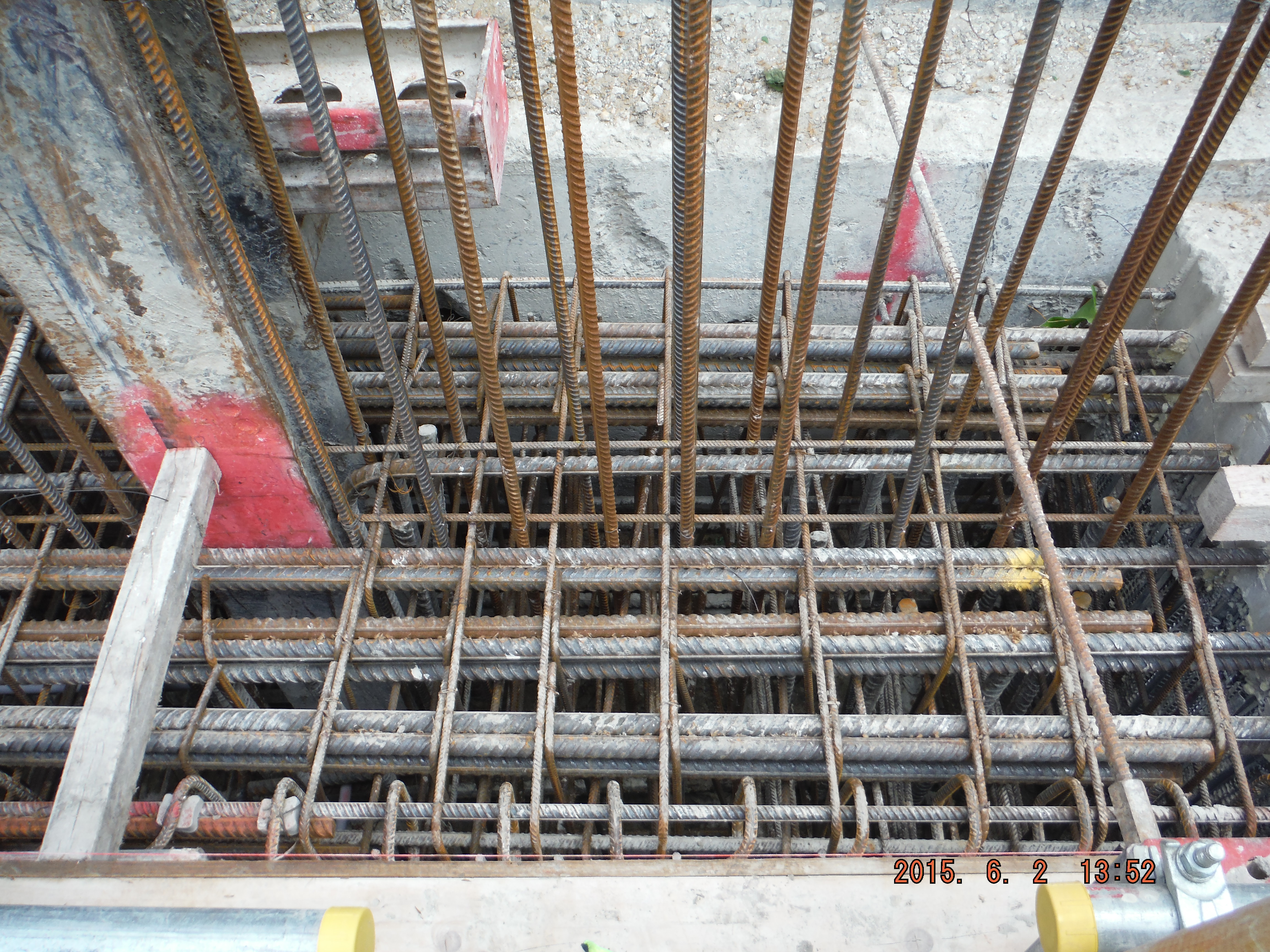
The client has also engaged Allianz Insurance to provide a 10 warranty on the building. Allianz have then engaged AECOM to provide external, independent quality assurance that the structure is being built in accordance with the design. The inspector had extracted relevant drawings from ASite (file sharing website) and was keen to see the section of capping beam that the 40 storey building is going to sit on. The 9 x H32 top and bottom bars, acting in bending, were checked and he was happy. The mass of other steel (for temporary props) was not his concern because he will provide the insurance for 10 years after completion of the structure, not if it falls down in construction.
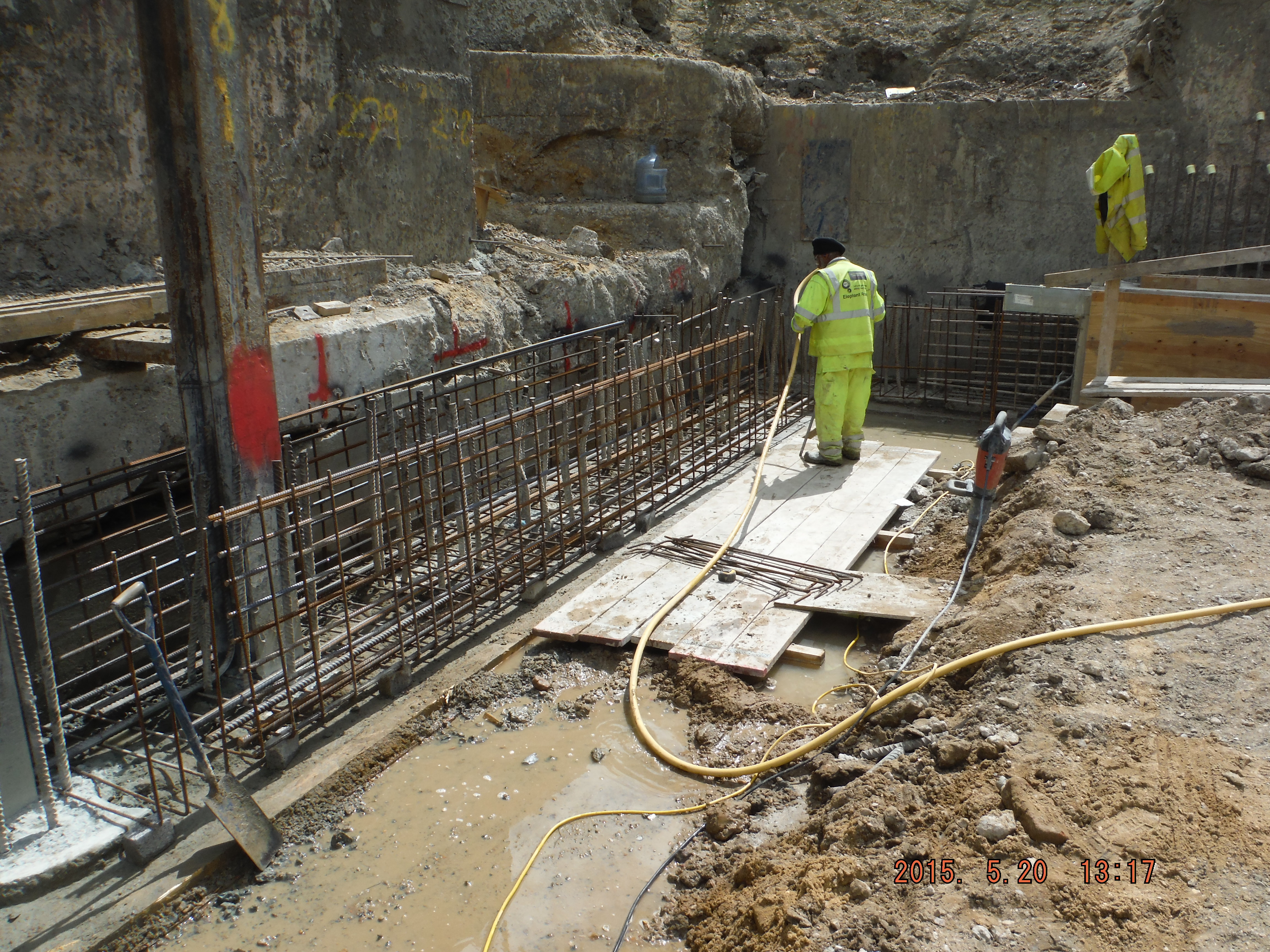
Capping beam reinforcement cage construction
So what?
It is good that AECOM chose to visit an important part of the structure and that the key part of the steel was checked (and that the inspector had printed drawings and knew what he was coming to look at). I think this shows more of an appreciation of risks involved than just a generic check as per the Building Control one.
Second part – Contract or not to be…
The project I am working on started with an enabling works 26-week contract which covered a secant pile wall, tower and office bearing piles and the pile capping beam. We are now in about week 30 and there is still no full contract. Laing O’Rourke had previously quoted a price in January 2014 which was 10 million lower than the contract price submitted a few weeks ago.
This has prompted an intensive period of value engineering to see where savings can be found. The in-situ basement box and precast frame were re-costed reaching a similar total but the mechanical and electrical and fit costs out have increased.
So what?
The building price has increased by about 10%. The value engineering meetings have found savings but also additional costs.
The client is also pushing hard for sequential/early occupation. Great to get people into their flats early, but at the same time this creates havoc with commissioning – I understand it is difficult to only commission half of a fire alarm system and equally expensive to commission a lift shaft more than once. Therefore the benefit of improved cash flow gained through early occupation is lost in additional commissioning costs.
So so what?
Not having a full contract and running on a rolling monthly extension to the enabling works contract makes organising the project difficult:
Precast – Laing O’Rourke are the pioneers of precast: columns, walls, beams and slabs (Design for Manufacture and Assembly). Great idea, but if the lead time is 22 weeks for production, a rolling contract is not the way to get things done.
Designs – Without a contract, the detailed design is being completed ‘at risk’ and each component part (sub-contractor) of the project is a little wary of committing time without the assurance of a contract as to whether the building is going to go ahead.
Today we had an unannounced visit from Des O’Rourke – co-owner of Laing O’Rourke. Not a common occurrence, so with a visit yesterday of another senior director, I suspect it is coming to crunch point on whether the project gets the green light beyond the enabling works! It is an interesting time in construction in London – there is no shortage of work for contractors and so I think if a client wants something, they are going to have to pay for it. Gone are the days of simply agreeing on projects to retain cash flow (at least at the moment).
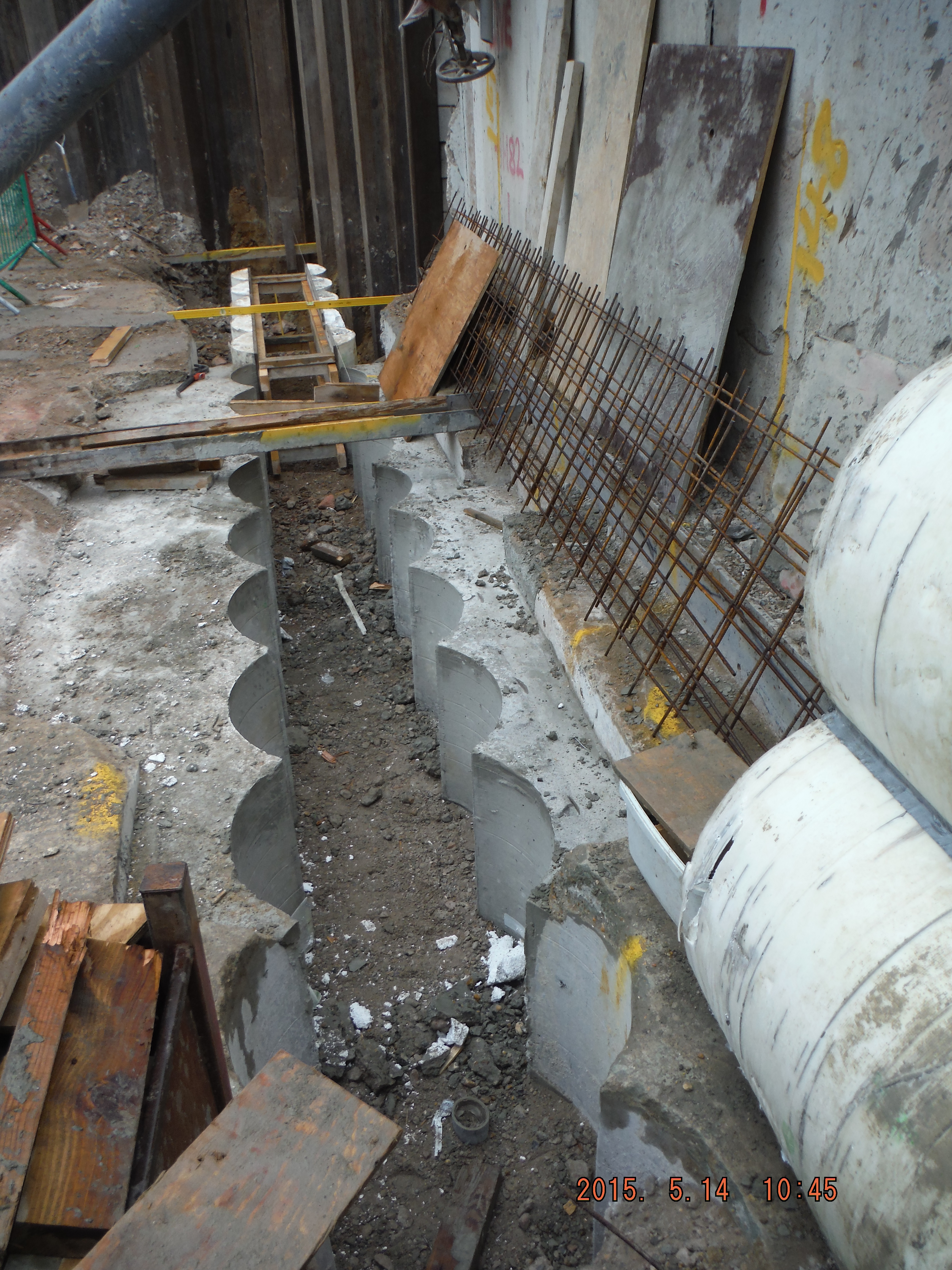
I’ve been a bit light on photos, so here are a couple of other ones:
Guide wall construction using polystyrene formers:

Post pour “half-moon” interlocking secant wall
 Holdfast Training Services Trial Blog
Damo – I’m assuming Asset Building Control have been appointed by the local authority. If so were they also the same organisation that approved the design from plan?
We have a slightly odd set up here due to the fact the river is the local authority boundary, East is Kent and West is Medway. It has been agreed that Kent will adopt the whole of the bridge. Kent have placed a CEng on site to check all design changes and monitor construction. On the one hand this is useful as we get answers really quickly when required however it means he is into everything and changes goal post regularly. A couple of days ago we poured the first abutment pile cap (160m3) and all went well, but as soon as we struct it he asked if we were conducting a cover survey. This is not required in the spec nor the ITP yet we now need to complete it to keep him happy. Last week he insisted on air testing the drainage, the spec calls for water pressure testing. The drains passed the water test but failed the air test and now we find ourselves doing remedial works to a higher standard that the spec…Hopefully this doesn’t get out of hand when we start the actual bridge construction next week!
Medway are pretty relaxed about the whole project, frankly I think they’re happy they are getting free roads and a bridge. We only ever see them when we’re moving large plant to site and upsetting the locals!!!
Out of interest, who supplied the polystyrene formers as I’m looking in to some at the moment? When you extracted them did they lift out with ease or did you have to smash them out?
Olly, guide wall polystyrene formers are excellent. Basically come in 2 sorts. 1 specials (disposable, one use only) and 2 standard sections. These are backed with thick plastic and can be used over and over. But only for straight sections of piling.
Contact Jeff Gallagher: j.gallagher@cordek.com.
they will produce what is required from a cad drawing so can be as designed or if you have wavered from the design, as built!
If you have similar commercial procedures to us I expect the process will be: quote, purchase order , then order. Note about 3 week lead time.
Hope that works.
My comment got a bit epic so I’ve added it as a stand alone blog…