Archive
AMAROO MAIN SEWER PROJECT – 260,000 turds per day!
I have been in Melbourne for almost 4 weeks now and have spent 3 of them finding my feet in the JHG head office and 1 of them trying to work out how to post on the blog. The project I find myself on has not yet hit site and will not do so for another few weeks. Not great considering time on site will be shortened, but it has given me the opportunity to interrogate my captive audience in the office for project information to put AER1 together.
The best way to describe my initial few weeks would be akin to being the new dog in a well established pack. We are most definitely still at the backside sniffing stage. Picture Daz in the middle of the room being circled by dingoes all having a whiff.
Week one was great; I dented my work vehicle reversing into a concrete column – first impressions and all that. Today I got a double combo traffic fine for following Mr Satnav onto a toll road, not paying and trying to play the tourist card (epic fail). The first incident report for the project belongs to yours truly. Explaining that to my project manager was interesting (he is a mountain of a man from Glasgow with hands like baseball mitts – not one you want to annoy).
Anyway, no-one died and the project must go on, or start at least.
I have done this a bit back-to-front in order to submit AER1 in time. So instead of a blog feeding an AER, my AER will write this blog…
My role is as Project Engineer for the Amaroo Main Sewer Project, located roughly 30km north of the Melbourne CBD (central business district). Yarra Valley Water (YVW) is the largest of Melbourne’s three water corporations and services the Northern growth corridor which includes the Amaroo Main Sewer Project. The Victoria State government’s Metropolitan Planning Authority predicts that this corridor will grow to accommodate a population of 260,000 people. There are currently no existing major sewers (or wag bags) in the regions where this growth is expected to occur and the delivery of the Amaroo Main Sewer will ensure sustainability for the development.
YVW intends to construct a new 7.8km long main sewer from North of Donnybrook Road to the existing Kalkallo Recycled Water Treatment Plant in Craigieburn. The main sewer is proposed to have an internal diameter of 1,575mm and be founded at depths ranging between 6m and 14m. YVW has requested that the John Holland Group Pty Ltd (JHG) tender for the Amaroo Main Sewer Project. In turn, JHG has requested that GHD Pty Ltd (GHD) provide a proposal for the temporary works design services for the project.
The Project comprises a trunk sewer, provision for 12 future sewers and 1 connection to an existing YVW branch sewer. This is to accommodate development of the land between Craigieburn and Donnybrook in the future. All sewers are required to have a 100 year life, a smooth internal surface and be installed as per the drawings to ensure gravity fed hydraulic performance requirements are met. The proximity of entry chambers will vary between 284m and 695m, with an average of 502m. They will have internal diameters ranging between 3.2m and 6.0m, with depths from 5.1m to 19.2m. All manholes are required to allow sufficient space to meet operational and maintenance access requirements for the sewer. The delivered article will have no staged access. To reduce the risk of incidents caused by human fatigue, maintenance personnel wearing sewer gear will be lowered into and lifted out of the manholes by means of a Davit Arm. Checking the sewers (up to 695m in length) will continue to be done conventionally.
The head contract is an AS4000-1997 Construction Contract (Modified) between The Client (Yarra Valley Water Corporation) and the Contractor (John Holland Pty Ltd). It is a traditional lump sum contract of $84,179,360.58 AUD – construct only. The lump sum was derived by JHG using a combination of first principles and experience. They benchmarked this project against their previous recent tunnelling project in Woolloongabba. With similar ground conditions and TBMs (tunnel boring machines); JHG used 8m per day tunnelling per TBM as their benchmark when creating their lump sum amount. In order to be able to provide a lump sum, JHG had to know what their pipe suppliers would price at. JHG conducted early negotiations with two prominent competitors – I-Plex and Hobas. After establishing the scope of works with zero (or as close to as possible) unknowns, JHG asked both suppliers for their BAFO (best and final offer). This single contract with I-Plex accounts for $60m of the head contract $85m. From this BAFO, JHG submitted their lump sum to YVW. Schedule of rates contracts under variations would include extra tunnelling e.g. if the client was to request JHG to tunnel further, this would be priced per meter tunnelled.
The client has employed a designer (JACOBS) and a Clients Representative (Aurecon). The client is utilising a third party representative to provide technical and commercial expertise i.e. the client is passing the risk to Aurecon. Jacobs have compiled a Geotechnical Data Report (GDR) which has been analysed to produce a Geotechnical Baseline Report (GBR). The purpose of the GBR is to clearly and succinctly communicate the risks associated with the ground (relevant to the project) to the client (a GDR as we know it).
The method of shaft excavation varies along the project corridor. The three southernmost shafts will be constructed conventionally by excavator and hydraulic hammer (without the use of explosives). The remainder will be either drill and blast or open trenching (depth dependant). Varying thicknesses of steel fibre-reinforced shotcrete (with a compressive strength of 40MPa) will be sprayed onto the shaft walls to mitigate the threat of block slip planes and fretting. JHG will employ a geotechnical engineer to map the rock shaft walls to identify possible slip planes. There is an option to use anchor bolts in resin anchors and steel mesh if the shaft walls are assessed to be unstable.
JHG is not following the usual sub-contracting route. Instead, they will use direct works which is unusual for a Main Contractor these days. JHG will carry out WUC using its specialist tunnelling sector. This demonstrates an appetite for risk; showing a willingness to accept the risk for financial gain. When considering their vast experience in tunnelling, it would appear they are suitably placed to make educated decisions on identifying opportunities in the risks.
A selection of sub-contractors are in the process of tendering for work on the project. In evaluating payment, JHG will receive claims for work done by engaged sub-contractors. These claims will be evaluated by comparing the actual work done against the specified task, and then payment made if JHG is satisfied that the sub-contractor has met its contractual obligations. We are not contractually due to start on site until August 2015, however the client is hoping to grant us access to site on 18 June 2015.
So what have I done? The first few days were spent reading the contract, the specification, the GDR and the GBR. Once my insomnia was cured I was responsible for the DBYD (Dial Before You Dig). This organisation operates 24/7 and acts as a single point of contact between us and service providers. I give a location and proposal of works to be carried out in the area, and receive information from all companies with water, electrical, gas or communications assets in the vicinity. It is streamlined process with a rapid turnaround (all companies provided their information within 2 hours). From this data, I have been compiling a risk assessment on the likelihood of damaging any of the abovementioned assets, putting all data on a one-pager for easy access.
Following on from that, I have been putting together tender packages to be sent out to potential sub-contractors. These include the scope of works, the sub-contract or purchase order, the specification and the drawings relevant to their package. I am specifying by outcome, not method, so as to pass the risk to the suppliers. We have accepted enough risk in the tunnelling.
Notably, I have been tasked with securing a package for the drugs and alcohol testing. It goes without saying that I am eyeing out a ‘buckshee’ breathaliser to see what reading (beer-not-drugs) I can score over one of my loose BBQs.
This week will see us wrapping up the tender packages and hopefully get the surveyors on site to start marking up.
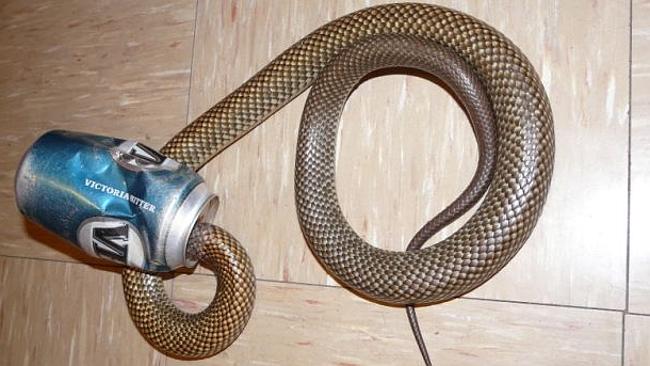
Tomorrow morning I will be attending a CHMP meeting, affectionately referred to as a ‘chimp’. Led by the environmental officer, it is a meeting with the local Aboriginal tribe to discuss the proposed works and identify any artefacts of cultural importance. Identified items will be removed and then restored in place once the execution phase is complete. A huge amount of attention is given to environmental issues, and I am preparing myself for some gobsmacking stuff. On the plus side, Merri Creek (which we will be tunnelling through) is a renowned hotspot for Brown Snakes and Tiger Snakes – both of which are pretty much one way tickets to the crematorium. As John said – God picked up everything that could kill you by looking at you, and threw it in Australia. I am currently on the lookout for a fishtank off gumtree to start my collection of these non-friendly drunken beasts.
BBC News Hyperlink
An interesting approach,
http://www.bbc.co.uk/news/resources/idt-3cca82c0-af80-4c3a-8a79-84fda5015115
 Holdfast Training Services Trial Blog