When it rains…
About three weeks ago on a Friday it rained a lot and our site flooded. I’m not exaggerating when I say that most of the basement was under two inches of water. The tower crane bases all flooded and so the power was cut off to avoid electrocuting anyone just before the water reached the junction box.
About a week before we’d seen this coming and so devised a plan to use submersible pumps to cross pump water from the sumps into nearby gullies to get all the water to one place and pump it off site from there. All it needed was five 2″ pumps and one 3.5″ pump.
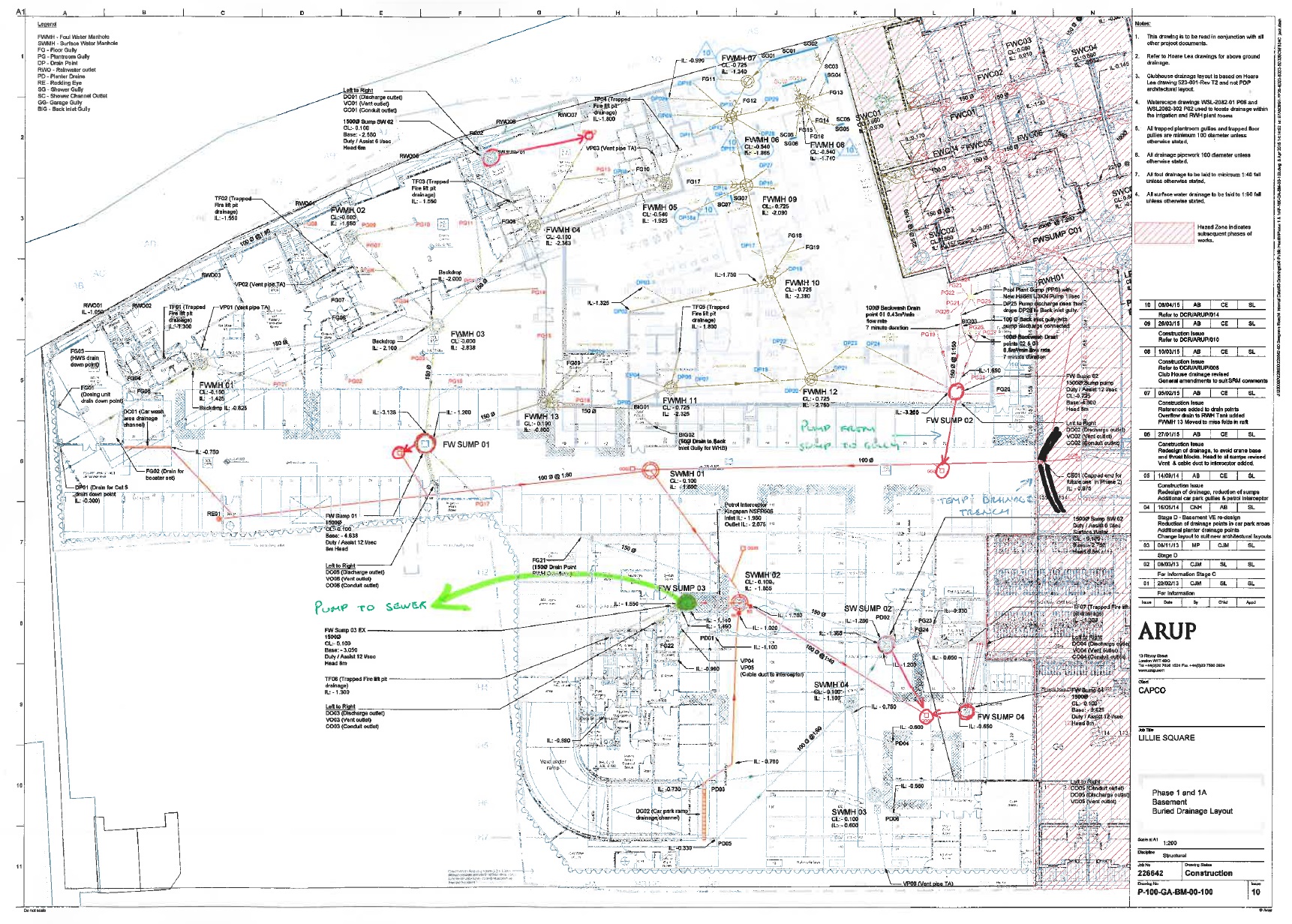
Despite me personally briefing this plan to the logistics sub-contractor and giving him a copy of the drawing he only had on site four 2″ pumps. It didn’t help that in my original plan I’d not considered two fairly important points:
- Podium slab penetrations. Incredibly I’d actually thought about this and still messed it up. I got out a drawing of the podium (ground floor) slab and ensured all the podium level service penetrations had been waterproofed. I even considered all the light wells and ensured that where up-stands in the basement were incomplete they were sandbagged to keep the water on the correct side. But I’d done it from a drawing. A drawing that didn’t show the massive holes in the slab that the tower crane pokes through! And stupidly I didn’t get off my ass, wander out onto site and have a look there. Thus the issue with the tower cranes!
- The ramp. Logistically, and unusually for London, our site is a gift! We’re currently developing about 20% of the old Earls Court exhibition centre car park. Leaving the other 80% for logistical space and offices and the like. We’ve then got a large ramp that leads from the log area to the basement level. What I’d failed to consider is that every drop of rain that landed on that car park made it’s way down the ramp. It was like Niagara Falls (see Brad’s blog for images)! We were simply unprepared for that amount of water flowing onto the slab in that location.
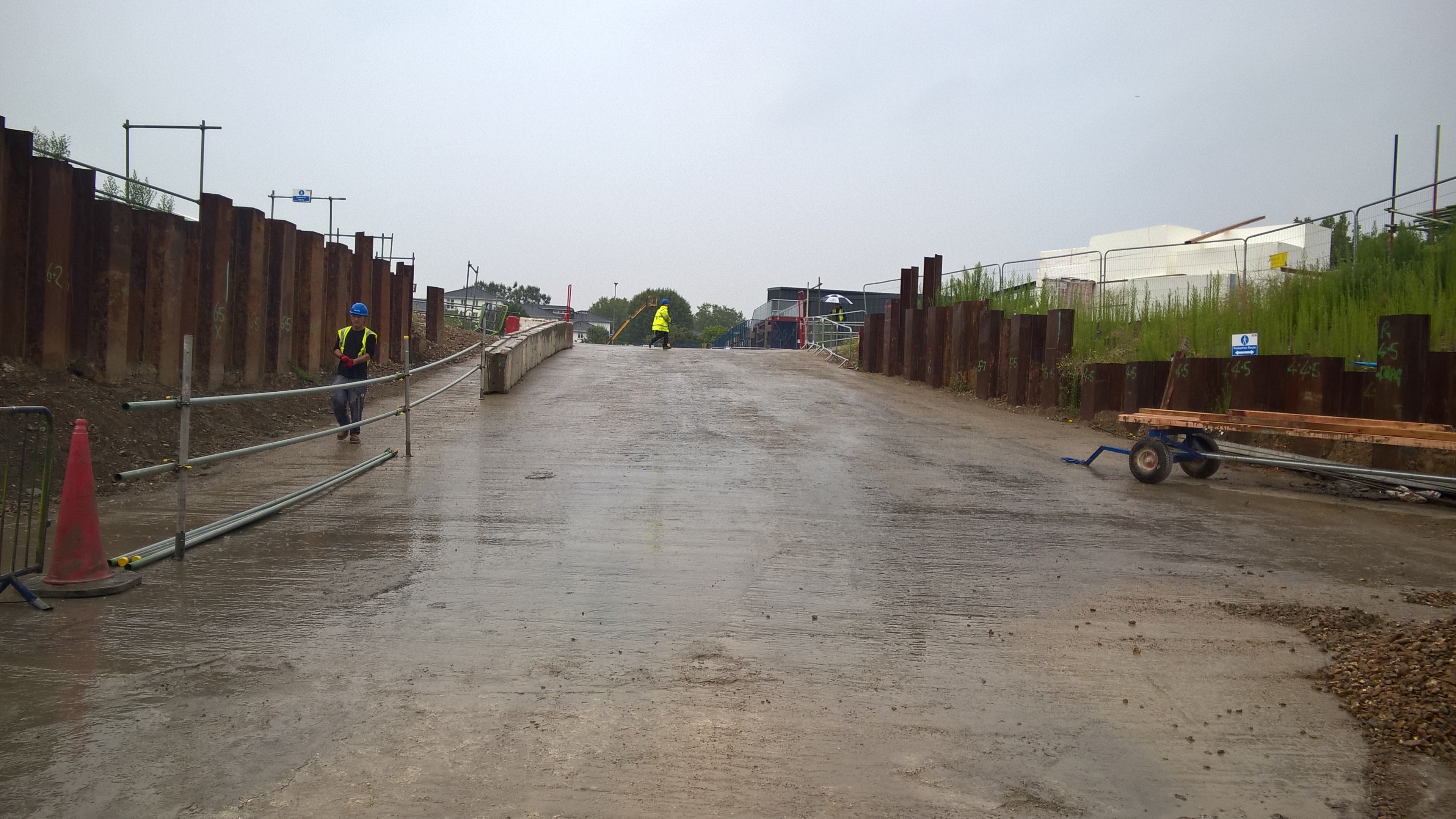
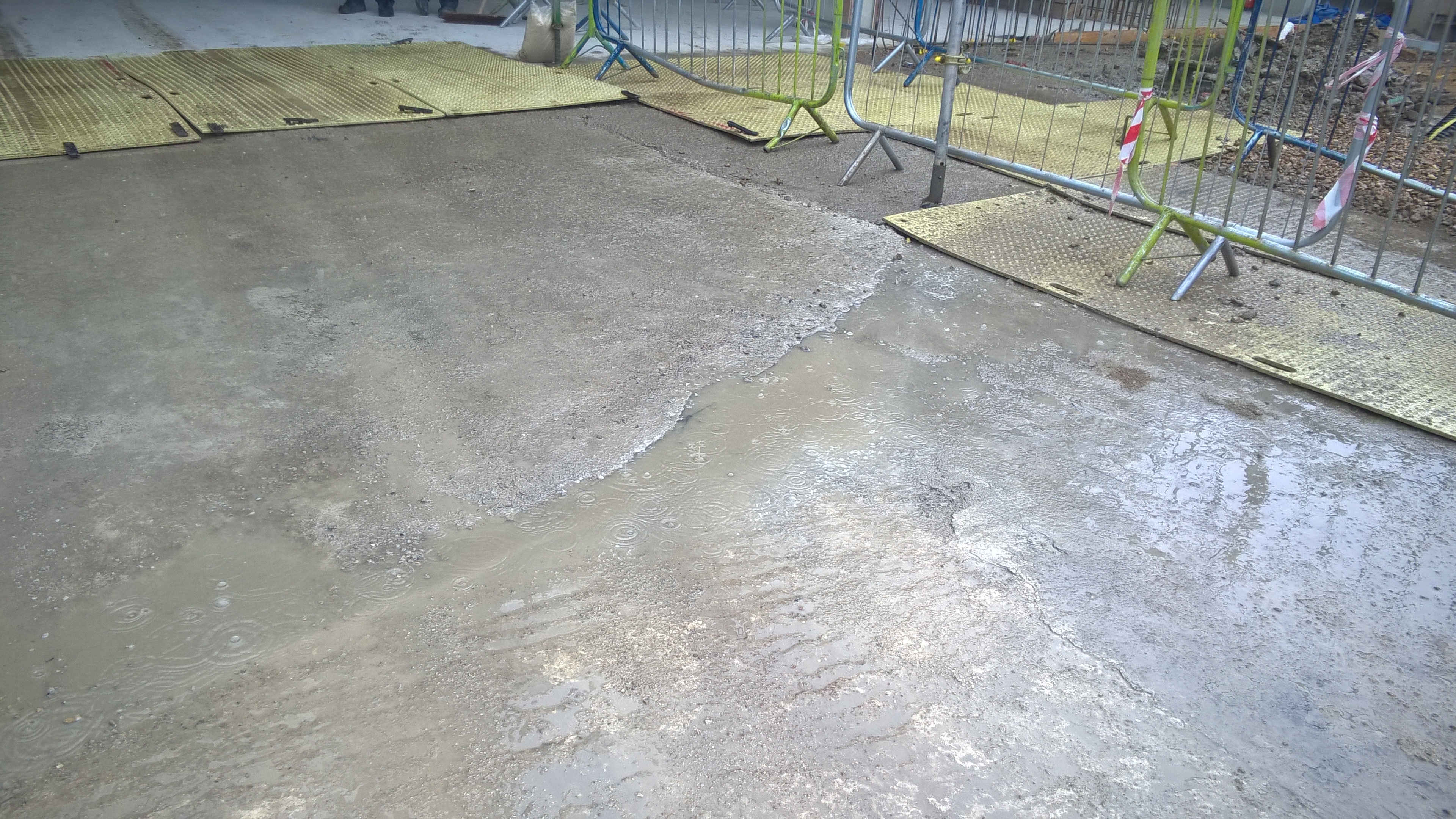
The Monday after “The Wettest day” the construction manager sent out an email detailing what addition measures were to be taken and by who. My job was to ensure the podium drainage penetrations were connected to the basement drainage system with the topside waterproofing removed and that the tower crane penetrations had sandbag bunds around them. I completed my jobs that week. Our services manager was tasked to put a trench across the bottom if the ramp to divert the water somewhere other than straight into the basement. He didn’t bother. I had noticed this by kept my nose out of fear of upsetting anyone. I get enough grief from my project manager as it is – he is very angry and for some reason hates me!
Fast forward to yesterday and on my way to work I read the news on my phone. I saw the headline “month of rain expected in 48 hours”. “Wow, that us not good news!” (Or words to that effect) I said aloud, much to the surprise of the old lady next to me on the tube.
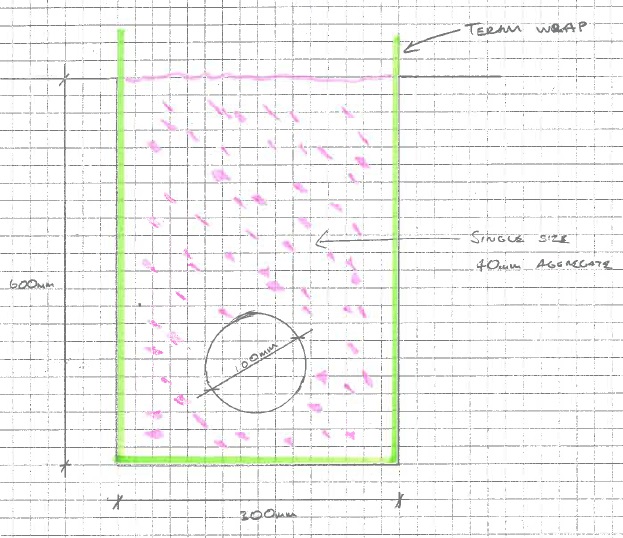
When I got to work I stopped worrying about offending anyone and just set about making it happen. I got a trench cut across the bottom of the ramp. I ordered some teram and 20/40 (aggregate sized between 20 and 40 mm – apparently getting single sized aggregate is pretty difficult these days!) to be delivered the same day. I got a plastic duct left over from installing the tower crane cables and had some holes drilled in the sides. I put the teram in the trench, stuck in the duct, back filled with the shingle and linked the end of the duct into the surface water drainage system that links phase 1 (our bit) to phase 2 (the bit the other side of where the ramp is).
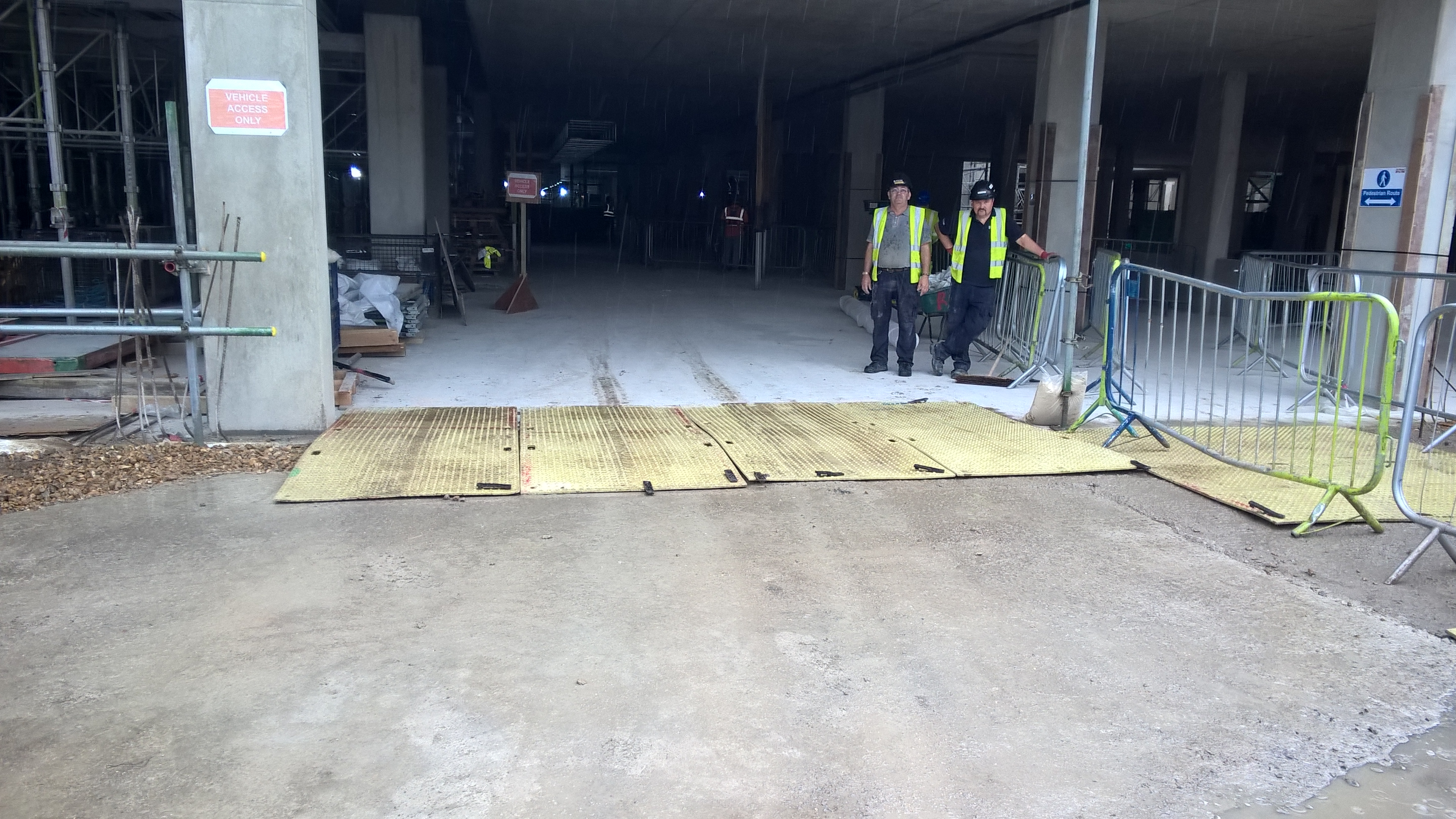
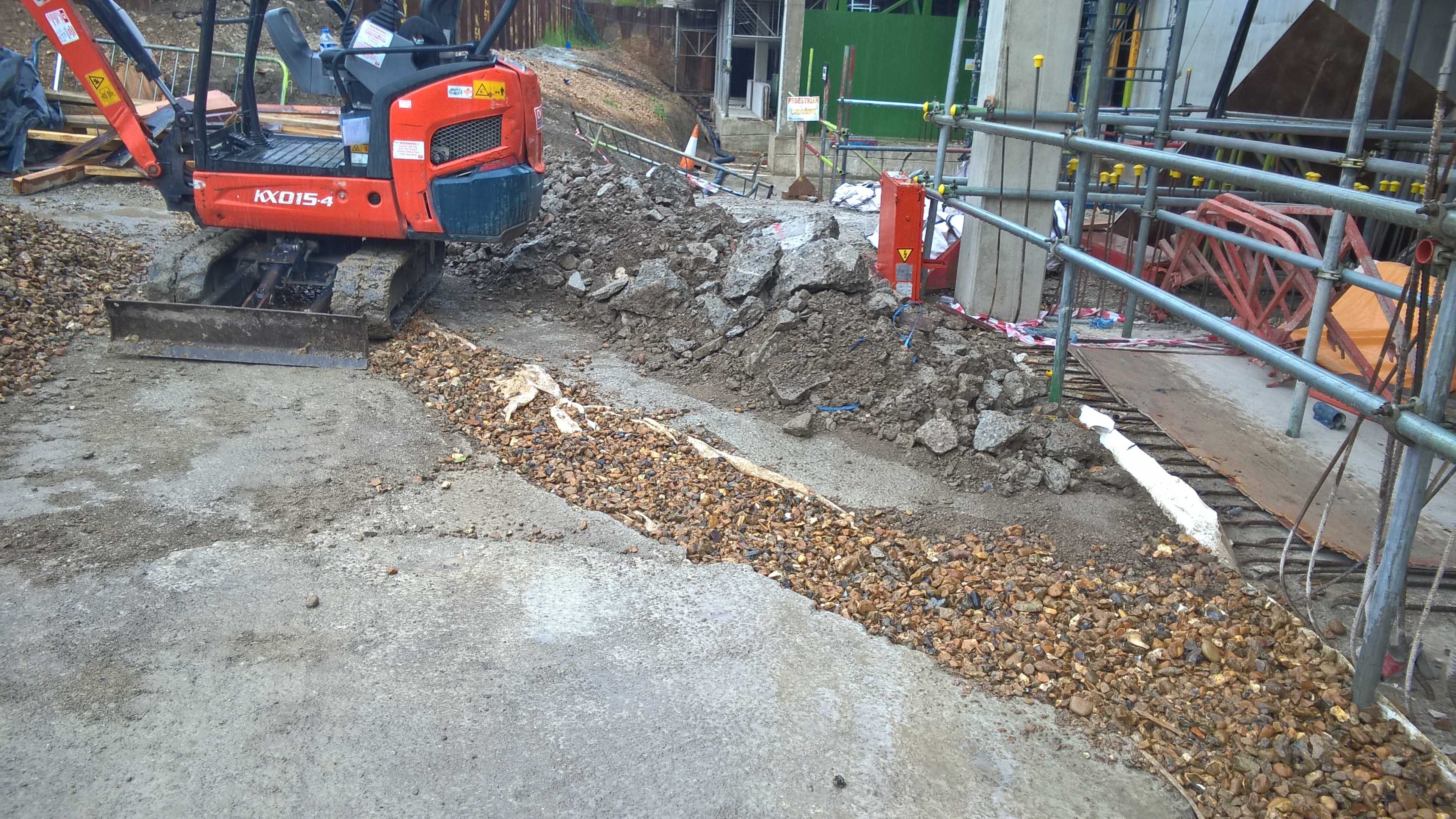
So come the day of the biblical downpour and it hasn’t come. Sure it rained a bit about lunch time but nothing requiring us to put two of every trade onto a large boat (bar the QS’s who gave me loads of abuse for spending more money doing this than it would’ve cost to actually build an arc). But the system is working, the basement is dry and definitely has much more capacity than is currently being used. So I’m taking solace in the fact that it worked. It may not be pretty, it may not be high tech engineering, it may not have required a Microsoft Project printout on A1 paper, but it worked.
Lessons:
- Don’t do anything just off a drawing, get off your ass and have a look – my bad.
- You’ll still probably miss something anyway, so just deal with it the best you can when it happens.
- French drains work.
- Never trust the Met Office.
 Holdfast Training Services Trial Blog
Guz – as ever useful forewarning for me as we will have openings in slabs around winter time which would be ideal to channel rainwater into the basement with little means to remove it. Had your permanent drainage works not been completed to be able to use them?
If you are using 5 pumps every time you have forecast heavy rain do you retain on site or hire in each time?
How has your tanked waterproof membrane held up within the basement or was it difficult to distinguish with water coming in from above?
They’re all done except the sump pumps aren’t yet installed, and since the sumps are below the main sewer run (which we haven’t connected to yet) the system gets that far then needs some help. So the problem the first time round was really one of capacity. It was coming in faster than we could get rid of it. That and the fact that it was getting into areas (the tower crane bases) that we hadn’t considered how to remove it from.
I don’t know about our pump holdings mate, the sub-contractor does that, but if I had to guess I’d say we keep a smaller number on site all the time and hire in more when a heavy rain is expected.
On a positive note if we consider the source of the majority of the water (the ramp) I think we can fairly safely say the preprufe works!
Guz,
We have similar issues at Battersea. All our penetrations through the B01 slab have been waterproofed, but water finds its way in through them and also through the movement joints (also waterproofed) and through the two access points in the slab to get stores in. I was off site this afternoon trying to sort out my phase 3 attachment, no doubt I’ll come back to a swimming pool tomorrow. We’ve got pumps permanently in the basement to get the water out as quickly as possible and utilised bunds around rooms that need to stay dry. It’s still not ideal.
Guz,
How did your defences do against yesterday’s downpour? More is on the way apparently. I’m considering using an avon redcrest to cut around the basement at BPSP1. At the momenet I’m making do with stringent wet and dry drills as I go in and out of the office.
That’s hardcore mate!
Our plan seems to be working. While I wouldn’t describe the basement as “bone dry” it’s much better than it was. We’ve reduced the amount of water coming in to a level where the pumps have the capacity to stay on top. So success from my point of view!
Avon red crest for me too. Quite literally a gloup of water, clay, gravel and concrete! When I signed the risk assessment which included adverse weather conditions it was a long holding of breath until the task was done.
Guz
Very interesting – cheap brickwork/blockwork work better than sandbags .
good blog
kind regards