Oz NDY – Transitions In More Ways Than One
Introduction
In this blog I will cover the lead up to transitioning between Phase 2 & 3. It aims to help out the Phase 1 students and hopefully give you a few pointers come your impending move – it rushes up faster than you think!
Background
You will be fully aware that Phase 2 in Australia is set-up with John Holland Group (JHG), so apart from sorting out your own admin for the move, work wise things should be plain sailing. However, you should also be aware that Phase 3 – Design Consultancy attachment is partly up to you to organise.
My Experience
The most important thing to factor in is time. Eight months flies by and you really need to give the move some thought early on, allowing sufficient lead-time to jump through a few hoops. My experience could be classed as atypical as I tried to break from what my predecessor did but for, at the time, what I thought were good reasons.
The norm is for the student to move to the office of whoever the design consultancy was for your JHG project. This has pros and cons:
Pros
- You will have had some interaction with them at some point on your project and hopefully built-up a good rapport.
- You may be able to visit their office through working on an area of the project; a great way of meeting more employees but more importantly get a feel for the vibe of the office. I did this and it really helped with my decision.
- If the previous PET student went there then they will have a very good understanding of what the programme is all about and importantly how to manage you. I think this is invaluable and sealed the deal for me in the end. Although it’s not difficult to inform a new office of all that info, they may have a different agenda for you and by the time you work that out it might be too late.
- Equally, if the student you follow is a good egg then the office will understand your experience, capabilities (especially managerial) and general ‘can-do’ attitude. This can also be tempered with them knowing your other commitments; academic studies etc.
- It also reduces the number of hoops and admin for JHG and the design office to do.
- I was told that for conflict of interest reasons that I would categorically not be working back on the JHG project. This is a positive thing as it gives you a clean break and doesn’t get you working on the same project tasks; potentially reducing your chances of gaining more breadth in usually much needed competency areas. It doesn’t however stop you from imparting your newly gained knowledge and experience to help out your design office colleagues; only being in the office for three days I managed to do this with one of my very first tasks as I have the understanding from being familiar with NDY documentation.
- Another related positive is your ability to see things from the other side of the fence and maybe understand why certain decisions were made without the JHG inflated spin.
Cons
- You may have had to deal with the design consultancy staff whilst wearing your Managing Contractor (MC) hat where you may have had to show bias to the MC in order to please your chain of command, only to then find yourself working alongside the design office staff or be a member in their team.
- There may be other design consultancies that have better projects on the go.
- A diminished office and demotivated atmosphere. They used to occupy the entire 11th floor but have reduced in size due to reduction in work and so are looking to lease out the other half of the office. [I have to say that although they have condensed into a single side of the office the atmosphere and spirit seems good].
Decision
It may seem, from the pro – con balance, that it’s a no-brainer in following-on in your predecessor’s footsteps. But, there may be very good reasons for a change. For me NDY were having a rough ride at the hands of JHG’s management on the PCH project and there were a number of design challenges, which no amount of senior management meetings on the 18th green were going to resolve; there could still be a court hearing come the end of the project. To that end and with repeated warnings (slurs) from JHG staff it seemed like a good idea to at least investigate alternative attachment opportunities.
I engaged with two other big consultancies in Perth, Wood & Grieve Engineers (WGE) and WSP Parsons Brinckerhoff. WGE had won the bid for the new Perth Stadium, which I thought looked like a great project but unfortunately they had been laying staff off and presentationally they said it wouldn’t look good taking on new blood. WSP was more of the services director at JHG trying to line me up with their office, but i just couldn’t shake the feeling that somehow it was mates doing each other a favour and so didn’t feel my best interests were at heart.
For both I did a fair amount of research, rewrote my CV, covering letters etc and even used known acquaintances on the inside to at least get an interview (hence the comment above about needing lead-time). After weeks of not really getting anywhere it was on the advice of another design consultancy, Cundall, whom I was working with on the PCH project who gave me the low-down on each prospective office and ultimately helped me make my decision to stick with the original plan and join NDY.
I suppose the important point here is to not just follow the norm because that’s what others before you did. Investigate for yourself and use as many sources at your disposal as possible to aid you in your decision. But remember this… it is you that’s going to be working at the office for the next 6 months and it’s your needs and requirements that must be met, which therefore should be your priority over everything else; remember the end-state is to become a Chartered Engineer.
I don’t know if any other Phase 3 students would like to echo my experience or add their own?
In Other News
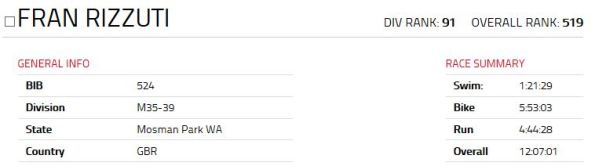
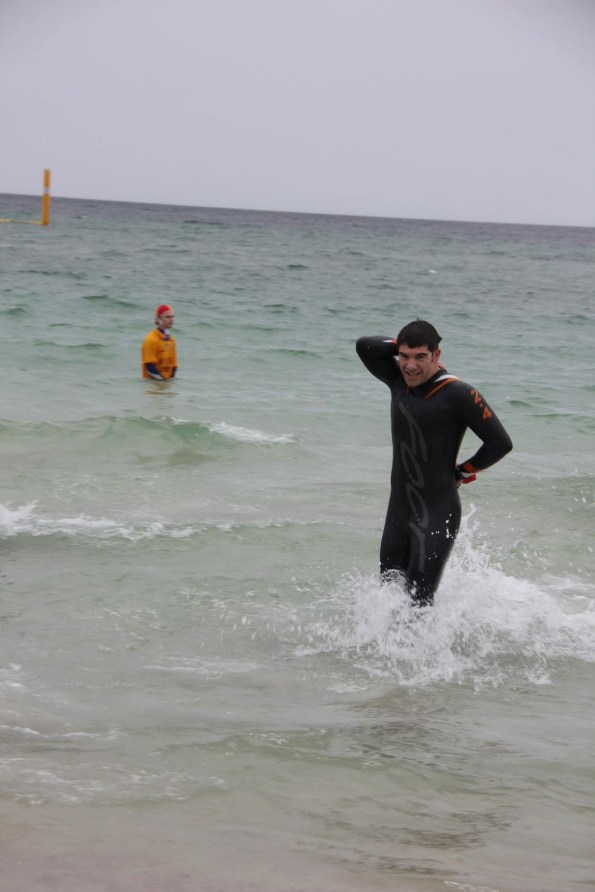
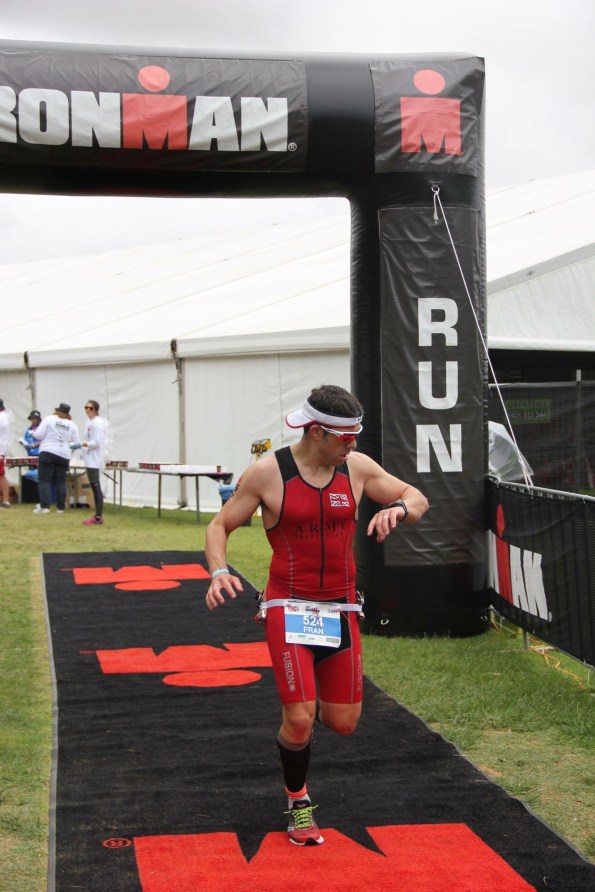
I completed Ironman Western Australia at the weekend. A tough 6 month training programme, juggling work and study, resulting in a lot of blood (when I broke my thumb) and sweat, but thankfully no tears. I managed to get a PB in a total time of 12hrs 7mins (beating my previous best by 1hr 13mins) for the 3.8km swim, 180km bike and 42.2 km run.
Enter a caption
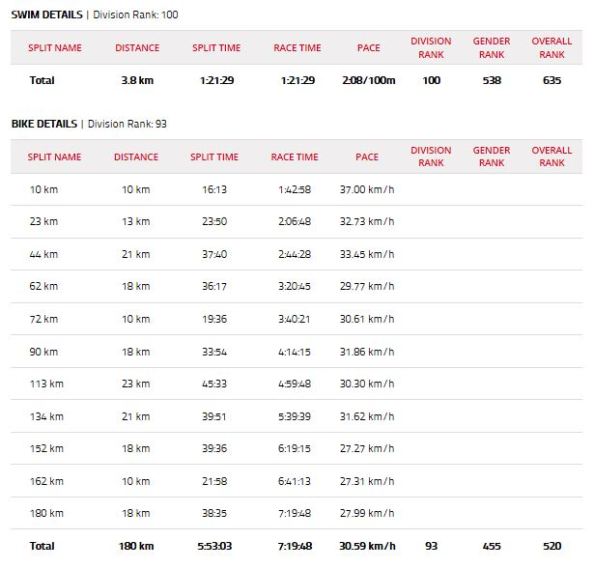
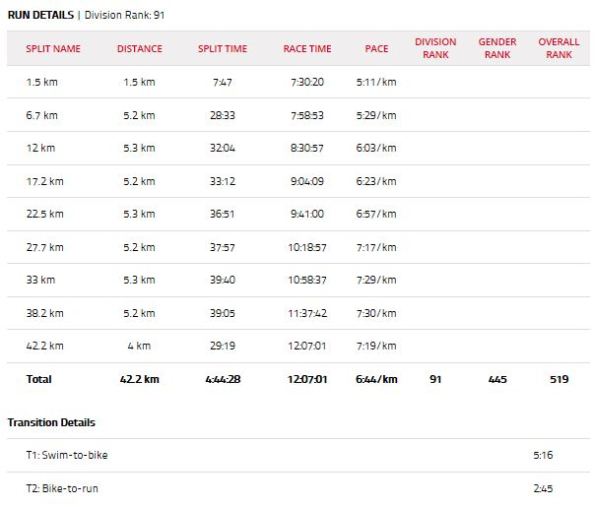
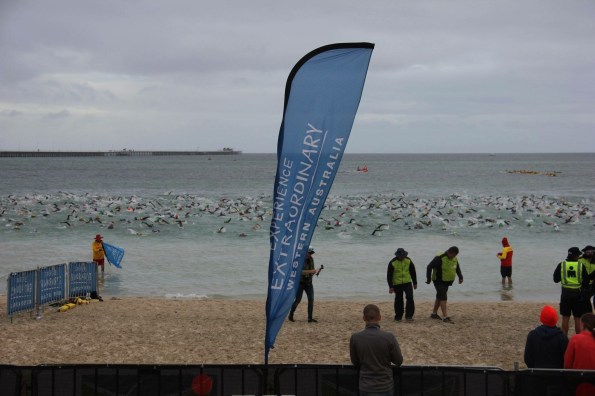
The weather caused mixed emotions with high morning wind and rain creating 1 – 2 metre swell, causing somewhere near 100 participants to jack-it-in through vomiting and general panic during the sea swim to sections on the bike course cycling into a 50km/h head wind. Thankfully though the cloud cover and low 21°C temperature meant a cool bike and run. With 1205 competitors starting, coming home in a divisional ranking of 91st (based on age category) and 519th overall, I was broadly happy. As a comparison the winner, a pro-athlete completed the course in 7hrs 55mins, an Australian course record – phenomenal!
At least now I can have my life back, lie-in at the weekends, not feel guilty about missing a training session and drink alcohol…until next time; which won’t be anytime soon, well not for the long course anyway!
Enter a caption
Sea swim around the iconic Busselton Jetty – you can just make out the turn point in the distance.
Enter a caption
Glad to be out of the washing machine.

Enter a caption
90km down – another 90km to go!
Enter a caption
Only a marathon to finish off.

Enter a caption
Done!
 Holdfast Training Services Trial Blog
Fran,
Why did you feel the directors doing each other a favour wasn’t in your best interest? My experience was that the best way forward was to exploit the contacts that people within Carillion had. Initially I was looking at a placement with either Hoare Lee (M&E contractor for Battersea) or Aecom (Carillion design manager had lots of contacts there), however, I wanted to go somewhere a bit smaller and therefore ended up here at Bryden Wood. That being said it sounds like the market in Australia is different to London. Where it sounds like your consultancies are struggling for work, there seems to be an abundance of it here. I’m very confident that if I hadn’t like the vibe of Bryden Wood when I came for a look around there would have been plenty of other avenues to explore.
Rich,
You could look at it that way and that did kind of happen for WGE, where the project director said he’d get involved once I had made some ground. That didn’t work out and I felt that with WSP they had ulterior motives as I never even mentioned I wanted to go there. I just sensed it was to ensure I didn’t go to NDY. The icing on the cake was the Cundall chap I worked with saying that WSP were too large a consultancy and that on the whole their engineers weren’t that good in terms of learning off them.
Thanks Fran. I’ve taken time to read it, twice! Very thoughtful, helpful and succinct. Your proactive and reflective approach to the phase 3 decision is to be commended as is the clarity of purpose. I hope you enjoy Christmas in the sun now you have your free time back.
Thank you Richard.
Even though it was obvious where I was going to work, I would reflect the same thing happens when you are placed on any project or aspect of a project in terms of focussing on the goal.
Good effort on the Ironman, looks like you could have shaved a few more seconds off your time if you hadn’t sat down for that sandwich in T1 😉
Cheers Henry. Although ironman transitions are always different to the norm. T1 starts as you exit the water, it’s then about a 200m run through a wash-off shower and into the change tent (a huge marque) where you have to find your numbered bag empty all your kit and do your change, including donning of a second pair of compression / padded shorts. Then run another 200m to find your bike and out the bike exit. So all in all T1 is always a long affair, especially when you happen to be changing next to someone else who starts talking to you. He happened to be in the Sappers, left a few years ago and knew some of the Army Tri Association crew.
I think a pointyer helmet and more lycra was required.
I agree also. I did my Phase 2 at a company not previously been to by a PET student and the same for phase 3. My company now have a lot of DIO, FCO and DfID contracts which is all very relevant stuff. They also have a fair few PQEs kicking about who are all really keen to help out. They company is being really flexible to and will give me time in the second half of my secondment to spend time in other departments to see more of the project management, commercial and environmental stuff.
The difference is that Fran thought about all of this and made a reasoned decision. I came here, then discovered this stuff and thought “oh that’s good”!
And well done on the Ironman. I personally just shaved 45 minutes off my PB for reading one of Fran’s blogs!
Cheers Guz, but what can I say apart from may be there’s more to talk about when it comes to E & M stuff!
I can’t believe it’s taken you so long to beat my IM PB, you’ve been talking trying long enough and let’s not joke around….I’m fat so it should have been easy! Maybe you should post your ‘Froome style’ power to weight breakdown to validate.
Olly, like construction projects, every ironman is bespoke – so it’s like comparing apples with pears; you clearly had a fast course!
To validate I could just use our lap times from the MTB endurance event we did. You remember, the one where I had to do extra laps whilst you got your head down 😄
The same boring answer all egomaniacs use to defend poor performances, I could say the same back but I’ll not dignify that argument 😉
Indeed you did do an extra lap, but I would expect that off a man who posts semi naked photos of himself online…you’re my hero!
PS, IMs are so 2014, it’s all about everesting these days! 🙂
Oh really, so when’s your trip to Nepal?
Wrong end of the stick dude
Seen. Ok so a lot of hill repeats up Dock Road; would rather do the real thing – much less boring.
For the Ph1s.
I, like Guz, started at an area office which had no previous experience of the PQE course or its students. This was out of necessity as the work down the ‘well trodden path’ was insufficient. The intial stages were quite stresful and there was a bit of testing and adjusting at the start which saw me change offices for the latter (main) part. Whilst this put pressure on certain report timelines it is manageable, and do-able. You should be prepared to enter on the backfoot if you go sommewhere new, and articulate early what it is you are there to achieve. In the UK it will be easier to explain the ‘ICE development objectives’ as there will likely be a familiarity within the company of the route to chartership. I found myself having to do a bit of research on the US system and translate into Americanese, drawing parralels between the UK Chartered Engineer and the US Professional Engineer (PE) – Cookie, this might be useful for you; not sure what the situation is in Oz though? My line manager understands the DOs more as a ‘syllabus’ which I have to cover by gaining exposure to different areas of work (commercial, health and safety, environmental…) However you may end up explaining your requirements, the underlying importance is that they are met.
It looks like Guz has struck it somewhat lucky. I was saved by the familiarity of the exchange at the higher (district) level and some top cover from the local USACE commander, which meant a transition between offices was simple.
My Ph3 attachment will follow more of a normal path. I do have an element of flexibility within phase 3 to sit in either a structures, geo or civils department. It is likely that I will sit in structures and ‘grab’ work from the other 2 departments as and when opportunity permits. Cookie, again this is something to bear in mind.
Having seen both sides of the coin I think the pro’s and con’s sort of balance IF you have the flexibility to move around should the work not suit your requirements for chartership. Ie stick with a company with a larger portfolio. If, however, you are going to be relied on to do a certain, repetetive part of the work, (didnt this happen to Angela Laycock?) then you should probably steer clear, although she was able to move and got some great experience.
In the main, from reading responses here, I get the impression that most companies will be fairly glad to have PQE students, rationalising the training buden against the value added. Plus the sub-contractors, especially the specialist ones, have a great deal of experience which they are typically willing to share if you show an interest.
PS – Fran. I just realised what you did with your title…good stuff!
Hi Fran, clearly a good discussion starter topic! My take on the phase 2 to phase 3 piece for those staying in London has similar themes.
Phase 2 with Laing O’Rourke meant working a lot with the design consultant (Waterman) but as the project was a design and build of a precast tower much of the work required specifying areas of steel for the contractor to squeeze into precast elements, so not hugely engaging. Waterman has many other projects but I felt the likelihood of getting pulled back into site related works might have been high. I think a total break clean from site/associated designers is generally a good move.
More widely the options for phase 3 need to be considered somewhat on where attribute attainment is required. However, most UK medium sized consultancies will probably have engineers going through the chartered process so they will understand the requirements and likely be able to help you meet them.
In my view the spectrum of consultant options is broad:
If you want to be part of a team working on one project then a larger consultancy will have lots of options within structures/infrastructure type departments.
If you want a range of smaller projects, with probably more responsibility a slightly smaller company such as WYG sounds sensible based from Guz’s comments.
However, to repeat what John Moran’s view is, some of the best technical experience is likely to be gained through an attachment to a temporary works designer. The work tends to be short lead time so you will probably see the work to completion which is unlikely in a bigger consultancy where lead times are sometimes years rather than weeks. I actually think there are more useful nuggets of information to be got from temporary works designing not least in the design of the item itself but also how the permanent works is to be built. I had not considered this option but I suspect it would have been enjoyable. As a quick example the Laing O’Rourke temporary works department sees over 70 design briefs arrive per week ranging from erecting formwork to tower crane design (foundations/grillages) so lots on offer.
I will add some Arup reflections in a blog shortly.
Cheers Damo, and good to hear the experiences from the civil perspective.
I was offered a place in the SRM temp design office but the location was a nightmare!
I’m doing some temporary works now actually. A haul road and a slab for quarry vehicles to cross a high pressure gas pipeline. They’ll be ripped out when a permanent road is built over the top. The lead time here can be pretty short. We received a phone call yesterday from a contractor willing to throw money at us for a cat 3 check and a drainage design if we could do them before Christmas.
I think the bottom line is that exactly like phase 2, the opportunities are out there and pretty much every design office will have plenty to get stuck into if you make yourself available and helpful. Find the CPR worthy nuggets, they are out there but they won’t find you!
Fran, very interesting about the difficulties of the transition from Ph2 to Ph3. Although at the moment getting a Ph1 placement with JHG seems to be the stumbling block – it would appear that with all the changes that have been made at the company we have fallen of their radar. Fingers crossed for a Christmas miracle.
Congrats on the swim-bike-run thing, although if you hadn’t spend so long chatting to the naked ex-sapper in the first transition then you probably could have beaten the girl that finished 5 seconds in front of you!
James,
Whilst there is nothing more annoying than getting ‘chicked’ in triathlon anything goes; the Aussies take their sport quite seriously.
As for a JHG attachment, you have to take the driving seat and keep badgering. To be honest the new JHG rep, seems to be a little illusive, I sent him a number of emails about Ph2 – 3 and didn’t hear a thing from him. Once you do finally get attached to a project it doesn’t end there. You should be give a POC in the project HR team and they will need to be spoon fed all your requirements. It’s definitely worth emailing a list of everything you expect to happen and I mean down to the smallest detail. If you have any more questions pls do fire away.