Public enemy #1
The Calder Highways Overtaking Lanes (CHOTLs) project is to construct 2 overtaking lanes on a stretch of very straight, sleep-inducing, 2 lane – 2 way road some 550kms from Melbourne in rural Victoria.
As Design Manager for the CHOTLs, I held a kick-off meeting with the Client (a local highways authority) to nail down what was in my scope of works and what was out. I then drove the 6 hours to the proposed locations to do a site walkover (lessons learned from the Amaroo project).
I am to deliver a detailed design to the Client by the end of June. Drainage and pavement structural design are not included in the scope of works. The OTLs are to tie into and match the existing pavement structure with subsurface drainage excluded from design. Essentially, I am delivering the geometric design.
So, Q1; “what is the enemy doing and why”? Remembering the triple bottom line (people, profit and planet), my enemy is the planet, and it does what mother nature says it must.
The stretch of road where the OTLs will be constructed is extremely environmentally sensitive. Buloke trees and the mallee emu wren make planning construction in this area a challenge and has already resulted in a re-visit to site to seek alternative OTL locations.


Traditionally it was accepted that if you veered off a highway at 110km/h and hit a tree within 9m, you could be fatally injured. The solution was to remove any trees within 9m of the road verge. Increasingly stringent environmental legislation has made it illegal to remove certain trees. The environmentally friendly solution is to install Wire Rope Safety Barriers (WRSBs) in the pavement verge.
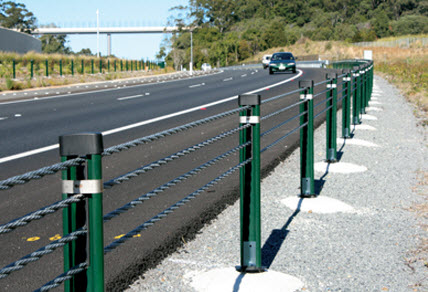
Wire Rope Safety Barrier (WRSB)
So that’s the trees, the birds and drivers looked after. The benefits of the WRSB seem flawless, unless you are a kangaroo. Kangaroos are stupid and routinely get cleaned up by trucks and cars. The issue with installing WRSB is that if a Kangaroo is to jump into the road, they are not as likely to jump out of it when WRSBs are installed. Areas with the WRSBs have seen an increase in the number of collisions between vehicles and kangaroos. You’d be forgiven for thinking that kangaroos are a dime a dozen and therefore expendable. The problem is that they grow to 6ft and hitting one with your car will write off the kangaroo, the car, the WRSB, and potentially yourself.
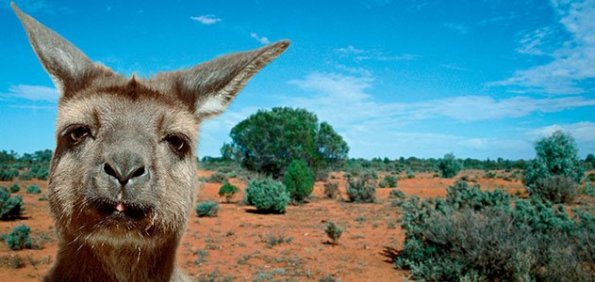
Public enemy #1
In my opinion, it would seem that the order of importance is planet, followed by people and then maybe profit. There is no 100% solution to designing out the risk of nature and man crossing paths, but ensuring the sustainability of protected trees and birds is a higher priority than looking after the kangaroos. It’s no wonder most trucks and utes have bull bars.
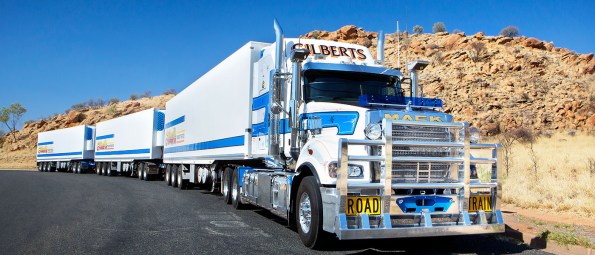
Kangaroo defence
 Holdfast Training Services Trial Blog
Daz … you got far too close to the lens when you took the selfie above- You really will have to get back in to the habit of shaving properly when you get back.
Out of interest; mile after mile of crash barrier would seem to me to be less than aesthetically pleasing; of fairly high carbon footprint and prone to both sort and term maintenance demands . Are there no less intrusive options like gravel trenches that are commonly used for truck arrest?
John, how wide would your gravel trap have to be in order to effectively slow vehicles down? If it was a lane’s width wide wouldn’t this have the effect of increasing area of works having to be completed by 50% which would require some sort of foundation etc, pushing up the carbon cost. Also given the amount of land surface area then turned over to gravel surely you are cutting down some of those trees etc you were trying to protect in the first place.
Daz, Are you mandated to put in measures to reduce the risk to motorists (chop trees, gravel, wrsb) or is the option to leave it without available? Presumably it has been determined that it is safer to risk hitting a kangaroo than a tree?
John, the barriers will go up where flora is protected. The rest can be cleared to creat a clear zone without the need for a barrier. The clear zone is a function of road speed, geometry, gradient of batter amongst others. A clear zone requires just that vegetation is removed and the ground levelled. It will vary along the alignment but is likely to be 9ish metres. The risk is that there are more collisions with the barriers but the severity is less. Increased maintenance is accepted as being a limitation of the WRSB.
Henry, the Australian Guide to Road Design (AGRD) states that where hazards can’t be removed, they must be shielded. Trees with a diameter greater than 100mm within the clear zone are hazards. I wouldn’t say hitting a kangaroo is safer, kangaroos just aren’t protected fauna – yet.
Henry, the gravel trap would be what’s called the ‘clear zone’.
Daz,
How many trees are we talking here? Would it be possible to have localised WRSBs offset from the roadside if necessary?
Chris, more trees than you could shake a stick at (sorry, couldn’t resist). The WRSBs are built into the pavement verge. The balance is that if they are too close to the shoulder then the likely reduced angle that a vehicle will collide reduces the impact (at the cost of more frequent minor incidents). Increasing the distance of the WRSB from the pavement shoulder risks vehicles colliding at a greater angle and hence more severe impact which nullifies the reason for having them in the first place. AGRD recommends between 1 and 3m from the lane edge.