R&D Build Project
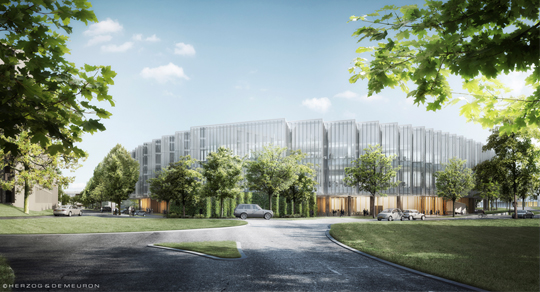
Figure 1 – The design for the R&D Building
Having now been on site for the grand total of two weeks, I thought it was time to post my first blog and explain the project to set the scene for future blogs.
PROJECT OUTLINE
The project I am working on is the construction of a 56,000m2 Research and Development (R&D) facility North of London. The build covers two sites, with a main R&D building to the North and an Energy Centre to the South with a public road dissecting the two sites. A 4m wide, 150m long, services tunnel runs under this road, connecting the R&D building to the Energy Centre to provide mechanical and electrical services and data. The road running through the site is an important ‘blue lights’ route for the emergency services and the South Site has a high speed railway running along its Western boundary – both of which create significant environmental challenges and places a number of constraints on the Project. Skanska Construction UK Ltd are the Principle Contractors for the Project.
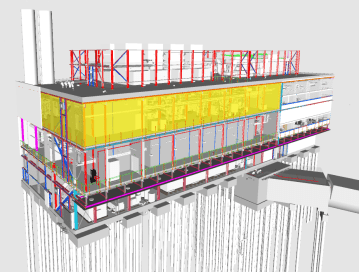
Figure 2 – The Energy Centre
PROPOSED DESIGN
The R&D Building is a 4 storey reinforced-concrete building comprising a basement level and ground level accommodation, consisting of six glass boxes, supporting a two-floor disc. The disc contains two floor plates and has a staggered vertical façade and saw-tooth roof. Upon the roof there are six small external open plant rooms. The R&D building is still in the construction phase with the majority of the basement concrete pads still to be constructed although work has started on the ground floor with some of the Eastern concrete floor pads being poured.


Figure 3 – Construction of the R&D Building
The Energy Centre is a 3 storey steel frame building traditionally built and enclosed in cladding of different types. It has a lower basement area to only one part of the building and one side of the building is allocated to Facility Management and so includes a number of offices and control rooms. The building has a flat roof which will be used to house some mechanical plant including cooling towers and AHUs. Two large flues will run from the roof to the basement to provide an exhaust for the Cooling Towers, boilers, generators and combined heat and power (CHP) unit. The steel frame for the Energy Centre is still under construction. The tunnel connecting the R&D building to the Energy centre ‘broke through’ last week and so work is underway reinforcing and completing the tunnel walls.
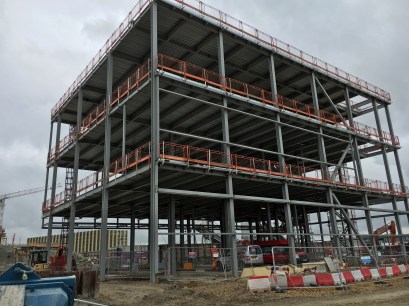
Figure 4 – Construction of the Energy Centre
CONTRACTURAL ARRANGEMENTS
Due to the well-developed relationship between the Client and the Principal Contractor (Skanska UK), the project is being conducted under a cost plus JCT contract with the client retaining the design and ground risk. I am working for Skanska Rashleigh Weatherfoil (SRW) who are the Building Services arm of Skanska Construction UK Ltd. This means that Skanska UK sub-contracts the building services installation to SRW who in turn manage the building services projects and then contract the installation work out to sub-sub-contracts. The various mechanical and electrical supply and installation packages are conducted under fixed lump sum contracts.
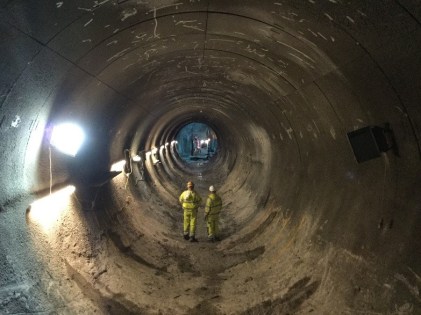
Figure 5 – The services tunnel linking the Energy Centre to the main R&D Building
SO FAR SO GOOD……
As a project manager in the MEP (Mechanical, Electrical and Plumbing) Team for the Energy Centre, I will be involved in both the electrical and mechanical fit out of the Energy Centre and services tunnel which is due to start in Aug 16. Currently I am managing a package to plan, tender and contract out the off-loading, moving and placing of the various plant (boilers, generators, transformers, chillers, large pumpsets, CHP etc) and so I am getting plenty of exposure to the tendering and procurement process. This is proving to be a valuable first role as it means studying all of the technical drawings and developing an understanding of the wider M&E packages – all of which this package will support.
This project is very innovative and is utilising several interesting design features such as a 270m deep ground source heat pumps, a new revolutionary, highly-efficient, baffled cylindrical heating shunts (first time this technology has been used in the UK) and stainless steel rebar to name but a few; and so I already have a few TMR titles in the making!
Gary Jackson
 Holdfast Training Services Trial Blog
Gary
Is there any modular engineering being written into the scheme of works?
Jim, yes a huge amount! The services tunnel will be occpuied by 22 pre-fabricated service modules coupled together. The riser in the energy centre taking all services down the tunnel will also be a modular system and the R&D building will include several pre-fabricated modular systems including a medical gases system which I will blog about soon.
Hi Gary,
Are SRW pre-fabricating the modules at their factory in Slough? If they are it’s worth a visit. I managed to get a TMR out of the use of pre-fab an implications and the guys at slough were very helpful in providing data. We had a very similar set up at Battersea in terms of distributing from the energy centre to thermal plant rooms, with the exception that our tunnel was also the car park access, so we had a bit more space to play with than it looks like you have. A couple of points where things started to go wrong at Battersea that may be worth you bearing in mind:
Pre-fab is great, but lead in times are generally longer so drawings need to be signed off well in advance. This didn’t happen at Battersea and the production schedule fell well behind. The saving grace for SRW was that Carillion were also behind schedule and couldn’t handover areas on time anyway. Either way it was an opportunity lost in terms of delays for SRW.
The pre-fab units for the service road were around 3m wide by 5m long and required a tandem lift with fork lifts and operative on separate MEWPS to install them, which was a nightmare for getting the RAMS signed off. There are other systems out there (sky lift I believe) that allow large modules to be lifted on one unit with space for the operatives.
Rich,
Thanks for the advice. The tunnel modules are out for tender at the moment and one of the options is SRW and so if they are selected I will definitely visit the factory. I can certainly see the benefit of the module approach especially on small site but I do wonder whether it is fixing the design too early meaning we may not be able to change the design of other interfacing packages that would benefit from a variation to reduce overall cost or increase ease of construction.
Each of the tunnel modules are 4mx6m and will have to be lowered into the tunnel using a vertical shaft at the tunnels mid point and then ‘slid’ into position, working from both ends and meeting in the middle.
I am responsible for the managing the lifting and movement package and have several concerns. Although my main concern is health and safety and working in confined spaces (which I will need to ensure are sufficiently mitigated in the RAMS), I am also concerned about the manufacture tolerances and whether the gap left for the final module will be too small or too large due to the accumulation of tolerances. Did you have any issues with the actually installation and coupling?
What was the quality of manufacture like?
Jim – I have just checked and if you lay the all modules included in this building end to end, it would stretch 10km……….
Gary,
Initially and whilst I was on site it all went very smoothly with respect to joining. Our joints were all flanged with some massive bellows at one end for expansion. However, when I went back to site a couple of weeks ago all the modules were up but two weren’t joined, because they weren’t aligned. Not sure what the solution was going to be; go back and start adjusting to get it to fit or do a site measure and get something else fabricated. I’m sure cost and programme will be the drivers. One of the issues that they’ll face and I’ve no doubt you are aware of is that Skanska package all their companies, so the pre-fab factory is a different company and will already be working on different projects. Getting them to make a new modules would be easier said than done.
In terms of quality it was very good as you’d expect when you’re cutting and welding in factory conditions.
Gary
Fascinating stuff and a good project to kick off. We discussed the GSHP briefly when you came down, it would be good to see some more information as the design develops – the interface between the ground loop and the plantroom sounds interesting and a wider description of the ground as a thermal energy store is something that should interest all given its advantages over ASHP and traditional cooling systems.
By the way if you lay all the modules end to end they probably wont work very well – don’t do that.
Mark,
I will describe the GSHP design in more detail once it is designed but one issue we are facing is that enercret will not design the GSHP and baffled shunt system until the contract is signed (quite rightly) and there are few contractual issues being ironed out. The main issue though is the decision to go down the enercret route is a late one (due to issues such as bankruptcy with the other identified suppliers) and this new design is likely to change 90% of the pump schedule, the CHP design and the electrical design, all of which have already been tendered.
Will these significant be dealt with under a variation to existing packages or will the changes be so dramatic that it would be cheaper and easier to re-tender? We will see!
Rich,
At the moment we are waiting to see is Skanska Fab get the contract or, like you say, they are too busy with other projects so the contract is awarded to another supplier.
Here we will be using Teekay couples to join the modules which will hopefully give them a greater tolerance in terms of alignment.
The last couple of days I have been meeting with Plant Movement contractors to brief them on the package and I have been surprised how much little prep some of them have done or how little they know about their own company!
Interestingly, here we have a very good procurement team who are concerned about the exposure of contractors to Skanska UK and the associated risk. At the moment it seems in the M&E world, Skanska seem to be using the same contractors for several projects as they have adopted their working practices they work and have produced good results. But the procurement team her are concerned that by using the same contractors across many projects, Skanska UK are exposing themselves to too much risk. Firstly because they could overload the sub-contractor but also they are putting all their eggs in one basket and if a single sub-contractor does go bankrupt, it could have a debilitating effect on the national business. Therefore to reduce this exposure, the project team are trying avoid dealing with contractors used by Skanska on several other concurrent projects. This is another reason that Skanska Fab might not be selected as the preferred supplier.
Gary
A good overview of the project.