Pumping Iron – Not as hard as pumping Concrete
It turns out concrete can be pumped – I have been surprised how far it can be pumped if you try hard enough. The Bond Street East site contains a batching plant at Hanover Square (next to Oxford Street) feeding a pair of chunky concrete pumps. These then feed vertically down a 5-story temporary pipeline to a massive thrust block tied into a group of RC piles by big steel beams. This block enables a 90o turn before the pipe travels another 1.1km along the running tunnels to the track work sites.

Batching plant surrounded by some very expensive flats. I hope they appreciate the token acoustic sheeting.
The scale of the temporary works on these sites is fairly mind-blowing. I sit opposite the guy responsible for making this pipe work; I can assure you it is blowing his mind as well.
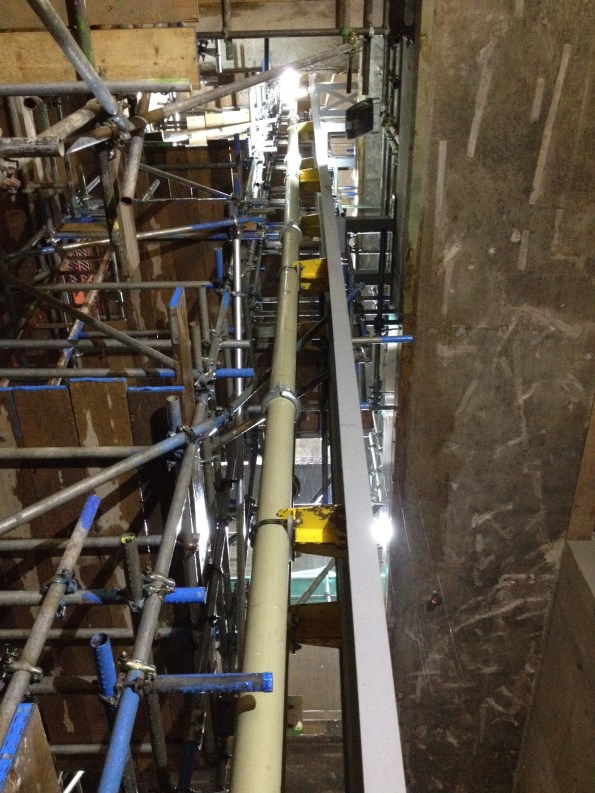
Concrete pipes descending from the surface to level -5
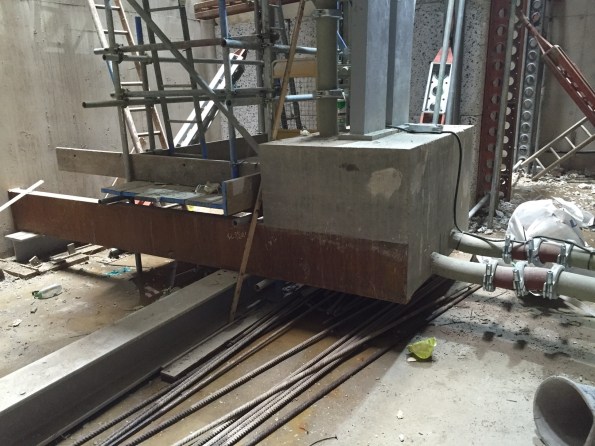
The daddy of all thrust blocks enabling a 90 deg turn.
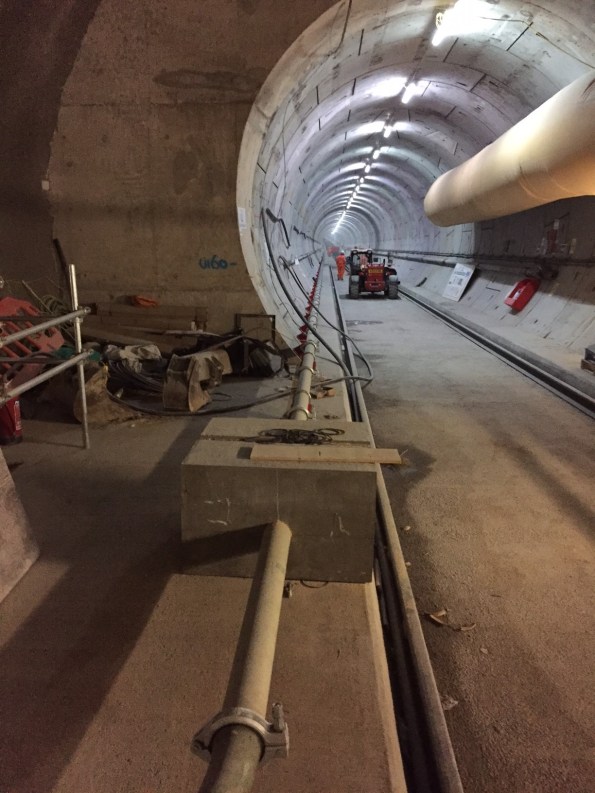
Concrete pipes disappear off into the distance to the work sites.
Unfortunately the scale of the project also creates a lot of inefficiency and interface issues. The above-mentioned pipes had to penetrate a ventilation bulkhead we had erected in a feeder tunnel. Despite being part of the same Joint Venture there was no co-ordination put in place between the teams, leading to a chest-beating discussion about who had the priority. Needless to say the concrete-pumpers won and we had to strip out our bulkhead, only to re-erect it this week. Hopefully the new-fangled BIM will put all these issues to bed. We live in hope.
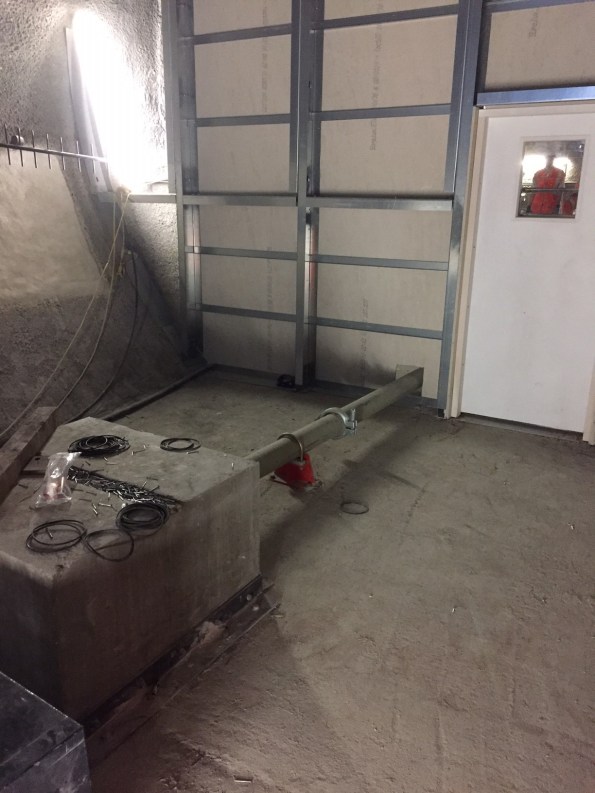
Ventilation bulkhead, version 2. Please ignore the photo-bomber in the window.
In other news I have occupied myself with a bit of ‘commercial awareness’ by firing a magazine of EWNs at Paddington station and following them through the commercial department. Not as interesting as it sounds.
We have also been lifting in some 2m x 2m x 3m silencer pods to the -2 level through the only route big enough to take them; a 5-storey vent shaft. Unsurprisingly it lost a bit of galvanisation from the corners on the way down.

Big steel box + no tag lines = swinging load. It bashed the rim of the shaft on the way in but was ok when it was inside the shaft.
 Holdfast Training Services Trial Blog
How are they clearing the concrete lines between pours?
Mark,
You can’t beat concrete!
What’s the volume of those pipes then, must be 30 cube plus?
How is the concrete being QC’d if it is being pumped directly from the batching plant?
Cheers
Chris
A question posed last year was is the concrete slump tested after its journey through the pipes, as well as before? The issue would be loss of fines down the line if not properly coated first. Is there an inspection and test plan which covers QA/QC in this detail.
In a similar vane to Richard, how is washing out the line done?
Damian, haven’t you finished the PET course and departed for a real job yet?
‘The guy opposite’ mentioned in the text is off on holiday at the moment… I will have to respond when he is back to provide concrete-cleaning answers. Apologies I cannot be of more help. I imagine you guys have some ideas… reckon they clean it with lots of water and a big rubber ball forced down the pipe? As for QC; The concrete is essentially mass-fill between track sleepers so there may be less of a quality burden than for a proper RC application.
The main concern I have had with the installation is the calculation of the forces involved in the thrust block (big), associated movement of the pipes (small), and the interfaces with the ventilation sealing bulkheads (annoying – for us).
Have a good weekend,
Mark