Safety Concern Over Temporary Works
As Project Engineer I have been overseeing the pile installation, pile breakback and enabling works prior to the FRP (form, reo, pour) contract on the two abutments and central pier for the Canal Bridge, sharing the work load with my partner from the Royal Australian Engineers (RAE).
Abutment A is situated between a high pressure gas main & sewer to its east, and 6 lane carriageway to its west, excavation has therefore been relatively complex to say the least.
After taking an academic day, I returned to site to quality assure the on going excavation. A temporary works designer had supplied details on the installation of a UC shoring system to support the gas main while excavation took place for Abutment A (the gas main is marked by white vertical conduits in the photo). Emanon (sheet driving subcontractor) had driven UC’s into the ground, ready for sleepers to be inserted between them as the excavation progressed. While away though the Site Foreman and Site Superintendent had decided the shoring needed to be extended (see photo below).
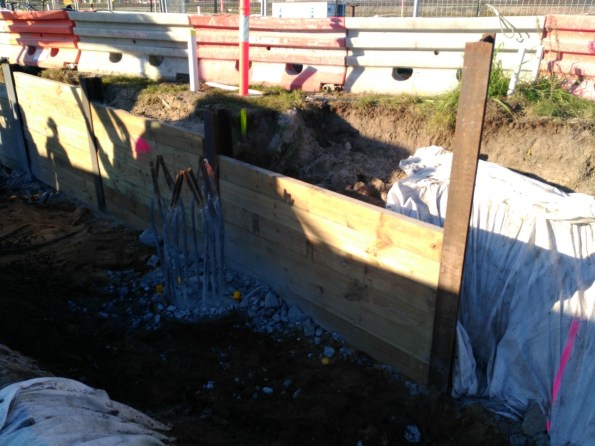 Figure 1 – Abutment A Excavation, Canal Bridge
Rather than reactivating Emanon to install further UC’s, they used a discarded railway line and used an excavator to drive it into the ground. There were a number of issues with this;
- The railway line did not have the same local geometry as the UC’s;
- The correct toe depth was not achieved;
- Previous impact or damage to the railway line was not known;
- A verification of the revised temporary design was not signed off;
- A Senior Project Engineer had not signed off on the approved installation method of the temporary works.
I therefore closed the excavation and had it backfilled until the design could be approved or verification rectified the design. This was to the annoyance of the foreman and superintendent with the usual retort of, “but we’ve always done it this way”.
I took measurements of the local geometry of the railway line and instructed our temporary works designer to calculate the suitability. The soil properties were extracted from the GI and assumptions had to be made on the yield strength of the railway line (200 MPa). Brom’s method for laterally loaded piles was used and considered both short and long pile failure modes. A FOS of 2 was implemented in the verification. The design was then verified by a second temporary works designer, once complete the excavation could be reopened.
If you were wondering, the state of the reo cage in the pile in the foreground has had an NCR raised against it as the piling subcontractor forced it into the CFA pile using an excavator bucket rather than vibrating it into place.
 Holdfast Training Services Trial Blog
Good blog James. I think this is exactly the kind of short and sharp things that people should be putting on the blog. Much better for discussion than a mini TMR or a cut and paste.
I might be missing something but assuming the embedment and soil are the same as the other piles could the temp works designer not have done a quick check in bending assuming a cantilever or checked the ratios for I (is it same steel grade) (JM will probably shout at me for overlooking something)
Tony
One thing I’ve overlooked (which you might one to look in to) are the properties of steel rail tracks. I think you should be more than ok with the yield strength as in the UK 600MPa is a low value with + 1200MPa possible in very high strength rails. The downside to using these for temporary works is they have relatively low toughness (not sure how low) and given it is probably recycled (big tick for sustainability) a concern as brittle failure could be caused from an accidental action if even minor defects exist from previous use, handling, or driving it in. I’d be concerned about this in an ongoing excavation where contact with a bucket is quite likely.
Sorry just read noticed that toe depth wasn’t achieved so my hand calc comment is irrelevent
Hi Tony,
Thanks for your comments.
I was worried about the yield strength of the steel as it was highly corroded and excavated the previous week on site, so yes great for sustainability but I wanted to be conservative with my estimate. I checked the steel over for any notching defects that could lead to stress raisers but the rail looked relatively sound.
I’ll take note of bucket impacts in the site diary for any remediation work that may be needed.
James
All seems sensible to me…probably got some heat from the operatives.
The temporary wall is a Berlin wall.
James – it is important that you do some rapid assessment calcs on things like this irrespective of the other managerial actions that are appropriate on site.
The timber boards are simple beams subject to an active soil state ( limit the flexural strength to about 5N/mm2) This gives you a udl on the rail section and you could look at this as a fixed earth wall segment.
Incidentally the issue with rail sections is not normally corrosion it is fatigue. A material that has undergone a high number of sub yield stress cycles reduces in strength.
In this case the ask on the rail ( I suspect) will be so low as to not have to worry