Archive
Thoughts on Quality Assurance
Introduction. From my time on phase 2 I have been heavily involved with quality management and, for the sake of discussion, I thought I’d articulate what I’ve learnt. If anybody in the UK or Aus has been similarly involved in QA or would like to provide additional comments on the alternative perspective, I welcome your thoughts and insights.
Quality Assurance is an interesting and broad topic that:
- forms an integral element of USACE’s role as the client’s representative
- comprised a large majority of my day-to-day activity on phase 2, and
- provided good links into the full breadth of engineering activities from project scheduling, contract management, finance, safety, and technical engineering.
The following paragraphs highlight what I believe to be the key elements of QA from my experience to date, pointers on how to ensure it is covered effectively along with a little info on some issues faced on the JOC project. It is not exhaustive and it began to run the risk of progressing into a full-blown essay – Please feel free to ask for more detail on anything you’d like to know more on.
The Preconstruction Conference. Prior to any construction work, these are held in order to ensure mutual understanding i.e between the client and principle contractor. It is apparent that these are often not done properly with patchy attendance from the quality team. The Contractor quality control (CQC) team is fundamental to ensuring the quality of the finished product so the whole CQC chain of command should be included in these meetings. This ensures a proper understanding of the client’s priorities and design intent are passed on to the QC and QA team members with less opportunity for misunderstanding or interpretation.
The Quality Assurance Plan. This are an excellent management tool but is often neglected or not even written but, without them, co-ordination of QA objectives can be extremely difficult. This must be considered a high priority for anybody involved in the management of a large project and is particularly pertinent to our future role as PQEs. East Campus is fortunate to be in possession of a detailed QA plan and its content can be broken down into the following sections:
- Govt staffing requirements and the functions of each QA team member
- Govt trg requirements and qualification levels required for each team member
- Govt pre-award activities
- DFOW list (see below)
- Govt monitoring and testing activities (responsibilities, frequency, detail, standards referenced)
QA reports. Similar to a site diary for supervision of site work, quality management requires accurate daily reports. These often seem tedious and unnecessary at the time of writing but invaluable several months later when a claim is received from the Contractor. As a rule, the daily reports should include details of:
- Meetings attended and instructions given
- Results of tests, deficiencies observed in work and actions taken.
- Developments that may lead to a change order or claim against the government (bad weather, RFIs received or design conflicts/deficiencies identified).
- Progress of work (incl manpower and equipment on site), causes and extent of delays.
- Safety Issues.
Deficiency tracking system. Elements of work which the QA team believe fail to meet the requirements of the contract must be recorded in a database for monitoring. This allows the client to know how much work was completed right first time and also prevents deficient work being covered up and forgotten. This is particularly important as, from my experience, contractors prefer to separate their production and CQC with deficient work often being monitored and corrected by a separate ‘Tiger team’ once work has moved forward. The deficiency list must be updated regularly with status, and dates of corrective action. From experience, I can confirm that this action is always best performed before the sub-contractor leaves the site!
Defined Features of Work (DFOWs). Any item of work with a separate and distinct method of applied QC including inspection, testing and reporting can be considered a DFOW. The principal is close to that of producing a product or work breakdown (PBS or WBS) with the addition of each DFOW item containing detailed lists of paperwork required from the contractor, products to be used, preparation and execution requirements, and testing & inspection regime for acceptance. For me, I often found myself relying on this paperwork more than the drawings to understand and QA the work I was responsible for.
Control phases. USACE conceptualize quality control into a three phase process consisting of a preparatory phase, initial phase and, finally, an acceptance phase. More often than not, quality issues on site can be attributed to a failure in the preparatory phase, making it the most important from a QA perspective. This may run counter-intuitively to anybody that views the QA team as primarily focused on the acceptance process. Briefly, the ‘prep phase’ should answer the following questions:
- Are materials on hand, and if not, when and how will they be arriving & stored?
- Are delivered materials as per the contract requirements and stored properly?
- What exactly do the contract specifications and submitted paperwork require to happen?
- What is the procedure for accomplishing the work? i.e sub contractor’s method of works, including health and safety assessment and sources of potential conflict etc…
- Are we all happy? This is a final chance for parties to air concerns with the plan or nature of work. The cost and time implications of discussing these concerns later will often be much higher so is quite important.
As built drawings. This is an important product for the end-user. The team here in East Campus hopes for updated drawings every month but the contract only requires them upon final completion. This can frustrate attempts to review work and identify conflicts before they become issues. It is recommended that, if possible, submission of these is specific and agreed in writing with appropriate penalties for failing to comply. To be effective, a review procedure must be in place.
Quality Assurance Testing. The general rule followed by USACE is that QA should test the work at approximately 5% of the Contractor’s QC frequency. This commitment to, basically, duplicate work the client has already paid the Contractor to do should be understood and appreciated in terms of the workload generated for the QA team as well as the value gained by the client in terms of verifying the Contractor’s efforts. I have, at times, felt that the Contractor has taken advantage of this overlap of responsibilities, making the following point even more relevant.
Quality Control Requirements. The Contractor must be required to provide the CQC function in terms of the roles performed and the qualifications of those that perform them. My greatest issues with the CQC team on the JOC project have been:
- QC being performed by unqualified personnel (an electrical engineer inspecting the placement of reinforcement for structural concrete)
- Double-hatting manpower (fine until you have a full day of concrete placement and your QC rep has to supervise it “remotely” as they’re elsewhere on site inspecting other features of work – ensure the contract specifies different roles as “not to be performed by an individual performing other role” if possible)
- 3rd Party testing inspectors being considered sufficient (Relying on the concrete testing technician to QC a concrete placement – the contractor is now demolishing $44,000 of concrete pavement because of this. Unsurprisingly, the technician was only concerned with slump testing etc… and not the location of expansion joints or texture applied during finishing).
Baseline schedule. Is it submitted by the contractor and accepted by the relevant engineer / manager? Is it resource loaded, with updates (complete or just status) submitted monthly? A function of QA is to identify potential delays and to do this, comparison must be made between the schedule and actual progress on site. Identifying potential delays or poor progress early can help prompt the contractor into recovering time before it becomes an issue.
Summary. Ultimately, a much longer post than I had originally intended. Hopefully, it gives you a flavor of the nature of QA work and can function as a starting block for anybody responsible for establishing the quality management process on future projects.
Smoke without fire
A relatively long post on Fire Stopping, not fashionable but an issue that can cost project success if ignored.
I am currently, among other things, managing the fire stopping design and installation for the Skanska-Astra Zeneca site in Cambridge. Like most large scale non domestic construction at the moment, the project is unable to conform to the approved documents (Approved Doc B (part 2: buildings other than dwellings). This is in large part due to the approved documents not keeping up with the requirements of the industry, electrical installations are becoming more complex and IBMS systems are adding huge volumes of cabling over traditional sites.
In order to gain building control approval, my project is being delivered via a Fire Engineered Solution. We are governed therefore by a Fire Strategy that has been designed by ARUP Fire, in consultation with the client and building control.
We have engaged an independent fire consultant (International Fire Consultants Ltd) to approve our designs, which are then signed off by building control. Where we are unable to meet the required standards, we attempt to work within previous fire tests, or adapt designs to meet pre certified layouts or equipment. Where an issue cannot be resolved through changing geometry or material, we can apply to use an Expert Assessment, a technical assessment made by either a product manufacturer or the Fire Consultant and based on relevant test data from which an assessment for a different layout or usage can be made. When we cannot convince the Fire Consultant that a solution is adequate however, the last resort is to conduct an independent test to prove that a suggested layout and equipment can be used safely.
Due to the cost of fire testing (around £15,000 per test sample for a 3mx3m wall section) and more importantly the delay (earliest available tests are currently January-March due to increased testing following Grenfell) various Skanska sites are sharing test data to gain consultants approval.
This week, due to the absence of the package manager on a nearby site, I went to Warrington to witness a test commissioned by Skanska to test an array of cable and containment combinations.
The tests are relatively simple, you build a wall to the same construction as you intend to use on site in a 3mx3m frame, install all the services you require, and fire stop the wall with your designed solution, generally a mixture of Ablative coated Batt and Intumescent Mastic. You then hand the wall over to the independent testing company, they apply the face of the wall to a furnace, add thermocouples and set fire to it.
This test was to gain a 60min fire rating for both insulation and integrity. Insulation being defined as not exceeding an increase of 180K in temperature on the non-exposed side and integrity meaning that the construction of the wall, services and fire stopping does not fail during the test period.
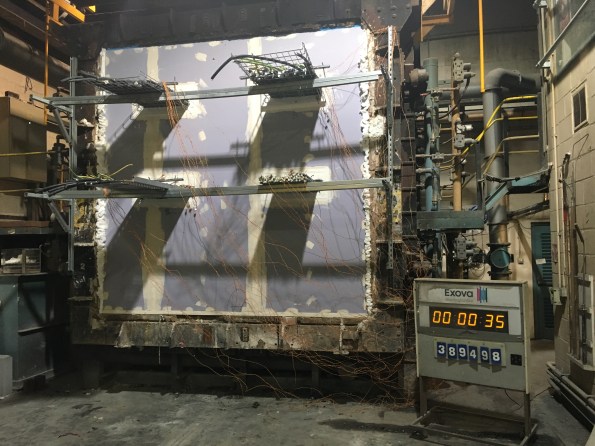 Figure 1. Test sample at start of test, trailing wires are thermocouples
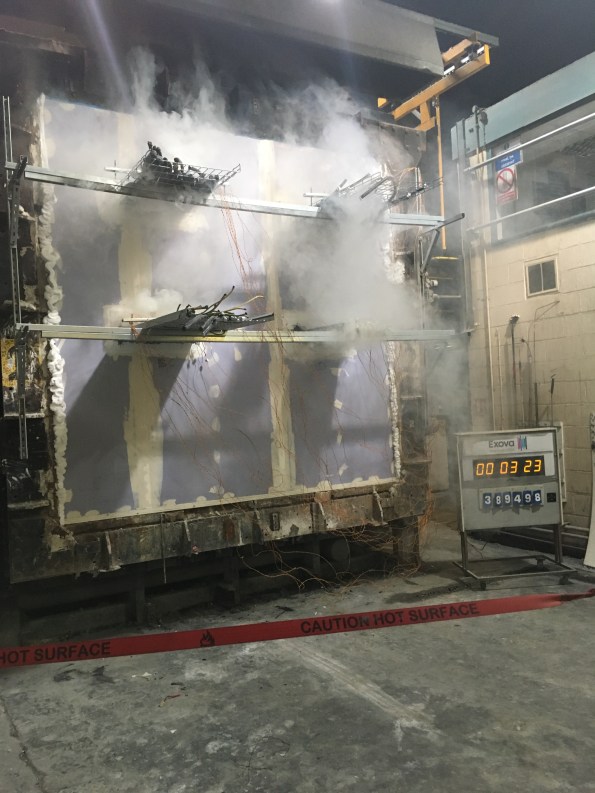 Figure 2, Wall after only 3 mins of exposure. Large amount of smoke on non-exposed side.
The large amount of smoke experienced early in the test was surprising, however this was due largely to the amount of time it takes for an intumescent material to react to the heat and the amount of space between cables that cannot be reached with mastic.
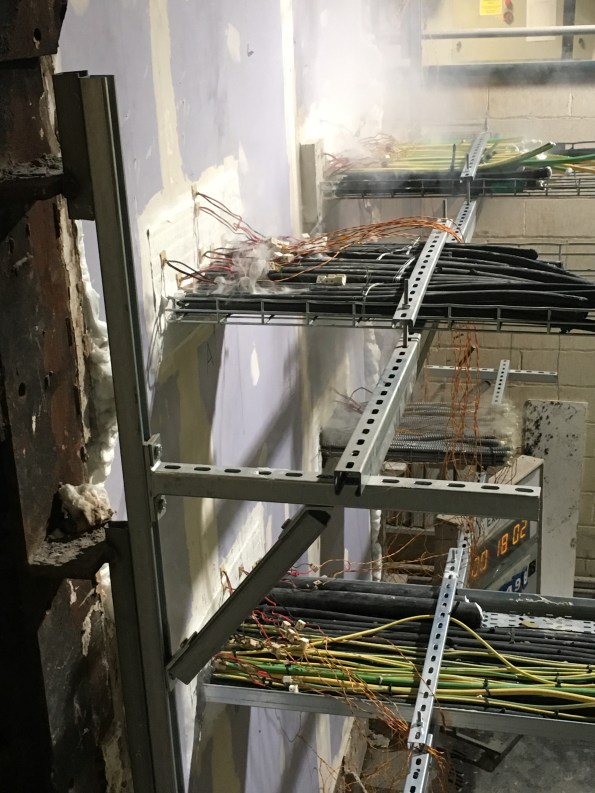 Figure 3. 18 mins Smoke penetration almost stopped.
On the lower two penetrations a black mastic was used. Black mastic uses graphite which offers increased expansion and is often used in fire sleeves to crush plastic pipes (but it much more expensive than traditional fire stopping mastic). It can be seen that the smoke ingress through the two penetrations treated with black mastic has almost entirely ceased by 18 mins into the test. The two penetrations treated with a traditional microporous carbonaceous foam continued to leak smoke throughout the test.
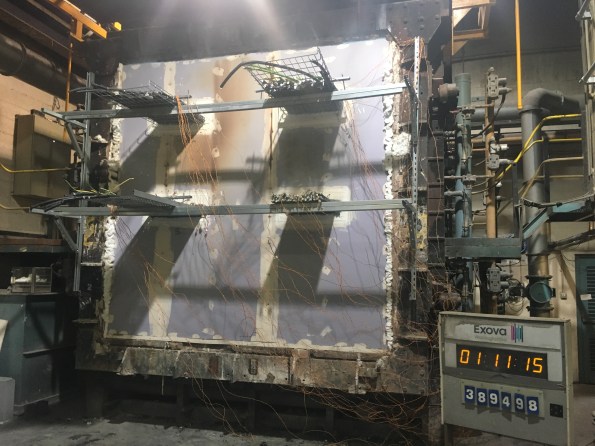 Figure 4. Wall at end of test.
By the time the test was completed, all of the samples had maintained integrity, however the bottom right sample had failed insulation after only 24 mins. This was a modular wiring system and the metal outer sheaths conducted the heat very quickly. It can also be seen that the wall construction its self was close to failing by completion, and in fact as soon as the furnace was stopped, the change in pressure led to fail along the seams.
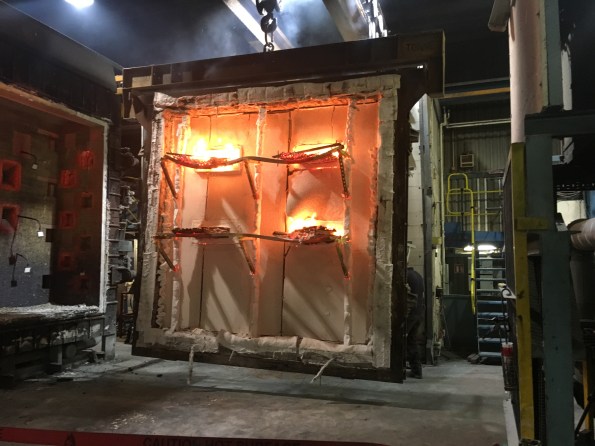 Figure 5. Exposed face immediately after test stopped.
Reverse of wall after removal from furnace. Note the amount of deflection in the unistrut system. It often seems like the regulations or guidance lead us to over engineer solutions, however after only 60mins the support system had almost catastrophically failed, as soon as service supports fail in a fire situation, the weight of the unsupported services crushes the fire stop material and possibly the wall construction its self, leading to rapid fire spread.
A relatively long post about burning down a wall, but good experience in escalation of solutions to overcome design or regulatory issues. The cost of gaining a bespoke solution is relatively low for a large project, however the time taken to complete a test (from booking to report issued) is often too long for a project, especially is the issue is identified late. This solution is generally a last resort or when a costly risk has been identified early and the completion of a test can stop the risk becoming realised.
 Holdfast Training Services Trial Blog