Trying to avoid skill fade. Trying.
I finished the PET Cse (Civil) in 2016 and subsequently found a reasonable amount of Attribute 1 & 2 ‘stuff’ in my time as an STRE 2IC to try and stay competent. You may recall from your visit to Chilwell a few months back, I mentioned the need to actively seek to find faults in Clk Wks work, firstly to ensure that what is designed won’t fall over and kill horse riders in Cyprus, but from a selfish perspective, to avoid the dreaded ‘skill fade’ everybody uses as an excuse to palm stuff off to Reservists in Arup.
Anyway, I am now employed as one of two Infra Requirements desk officers in JFSp (ME), looking after Infra across the entire Broader Middle East. Yesterday I was walking around TAJI (Iraq) and noticed this:

T-Wall on the piss (coincidentally missing a tie)
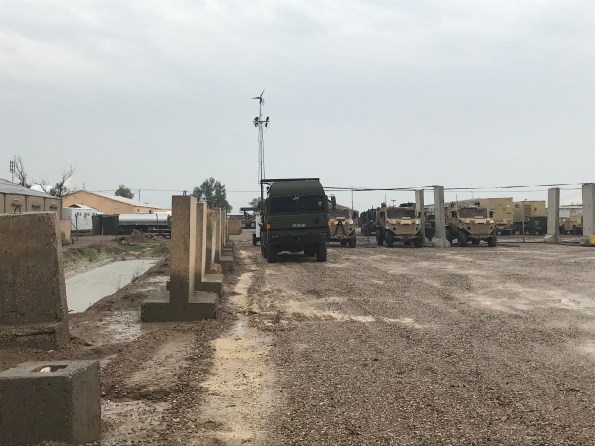
Surface water and drainage ditch filling up

12ft, 6 ton dominoes. No end anchorage to resist anticlockwise rotation.
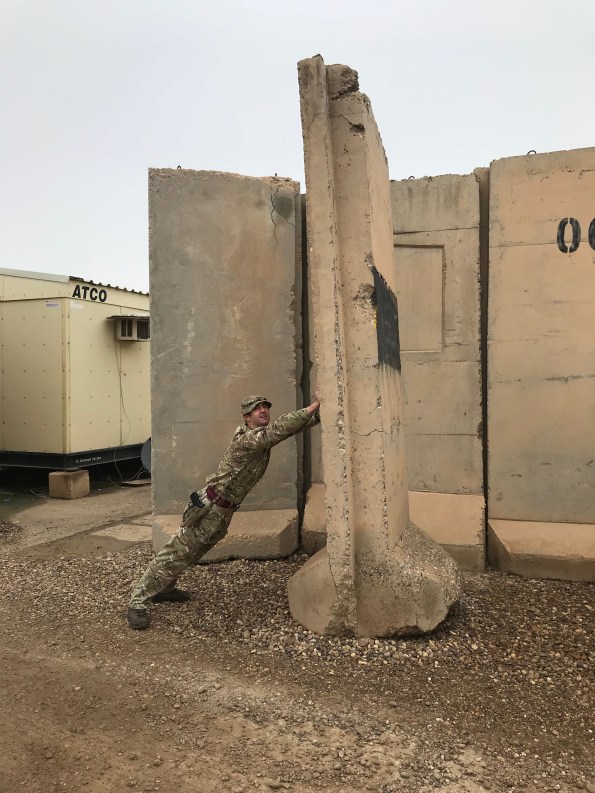
Some idiot tempting fate. Note the rounding of the base reduces the surface area, increasing edge stresses.
Someone, in their infinite wisdom, has decided that they want a cam net to provide shade in the car park. The net is to be draped over the top of the 12 x T-Walls which are arranged in 2 x rows of dominoes, connected to lifting eyes at the tops by ratchet straps which serve as ties. Yip, ratchet straps. There are a couple of ‘ties’ missing, but the alarm bell sounds something like ‘where are the anchor points at either end of this arrangement?’. My point being that when 1 goes, more will follow.
I sheepishly present my ‘back of an envelope’ calcs below. No ground investigation exists, but it is very obviously clay (bordering on impermeable) judging by the pools of water all over camp. I conservatively assess it to be a soft to firm clay and assume a GBC of 75 kPa (Cobb’s Structural Engineers Pocket Book p100). No wind data to hand so I’ve used a notional 1 kPa which translates to a force of 6kN acting at 2m, applying a 12kNm moment at the base.

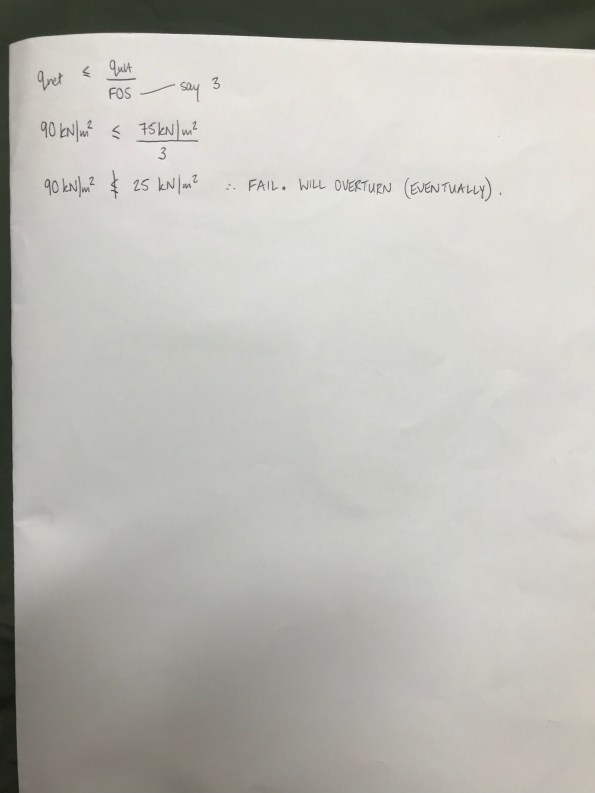
A few limitations/ assumptions (risk) in my assessment:
- I don’t actually know the shear strength of the porridge clay.
- I don’t have any wind data, made that up too.
- My section modulus is not perfect.
- I do everything conservatively because I want to prove this fails because it just looks wrong.
Feel free to rip me to shreds on the calcs. The important thing here is that there is already evidence of the T-Wall overturning so calcs aren’t actually required to raise the risk to PJHQ (although they might give me some credibility when dealing with a flat head who likes cam nets).
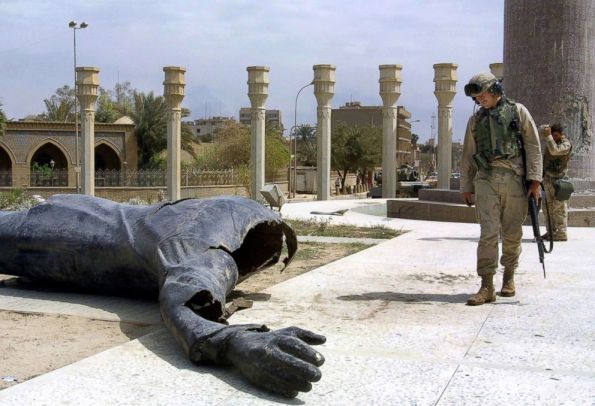
Nonetheless, I reckon this T-wall is going to come down like Saddam Hussein’s statue. Hope this gives you an idea of the sort of ‘stuff’ you can do to try and maintain competency when you have finished the course.
 Holdfast Training Services Trial Blog
Thanks Daz. Interesting to see a taster of PQE’ing in action. How did your findings go down with the CoC? Who did the responsibility actually sit with? Finally, how was it rectified and was it a cheap short-term or laborious long-term solution?
James, my report has sent rockets up a few 45535. Probably not helped by the fact I submitted 4 reports from 3 camps across 2 JOAs in an afternoon then dropped the mic and ran out. (There are a few other RtL things I identified that I will try and post for your interest when I have the time).
On a serious note, my Comd (Comd JFSp (ME)) is rightly treating this as a matter of urgency and the Duty (Risk) Holders will have the RtL remedied. A pleasant change after being told to bugger off by the grumpy building custodian who said I was being risk averse.
So, as I understand it, COMBRITFOR is the duty holder, the responsibility to move the walls rests with us (UK) because we put them there, but SOS-i (think yank KBR) will do the works. The work itself is quick and cheap to do (just move the T-Walls to the construction stores yard), it is internal politics and pissing contests that cause delays.