All hands to the pump
For those that don’t know I am working on a demolition and rebuild project in Woking. One of the main challenges during my phase 2 has been the live shopping centre and services running around and through the site. As John would say RISK!
Well yesterday that risk was realised when the demolition subbie struck a live water main. I was on site minding my own business when I got a shout and went over to see a 6″ pipe distributing water at some pressure. The pipe had been exposed the day before so it could be isolated in the next few days.
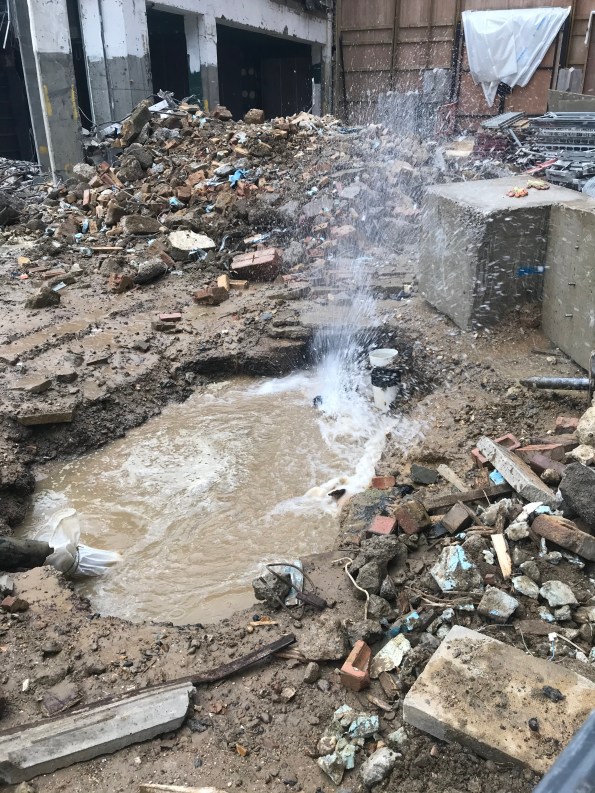
The location of this strike could not have been worse. It is on slight high ground with 3 key low areas around it.
To the left is the demolition site where machines are digging out existing foundations, back filling and constructing a pile mat onto. For those just going through this on phase 1 I’m sure you can reel off the problems flooding a site conducting those activities pose.
To the right ground beams and concrete substructure walls are being cured ready to be back filled and loaded with the GF slab. Again water is not helpful.
Behind is the live shopping centre. As we have demolished part of the shopping centre, the only thing separating the elements and the public is a temporary protection tunnel and crash deck. It has been weathered but would not stand up to a flood, this flooding would mean closing the shopping centre.
What happened next. Well I instantly went into PITCHPOLE mode and started using demo arisings to create a barrier between the water and the shopping centre. We then had to make a pretty hasty decision what to do with the water so dug a trench to encourage the water along the side of the piling mat.
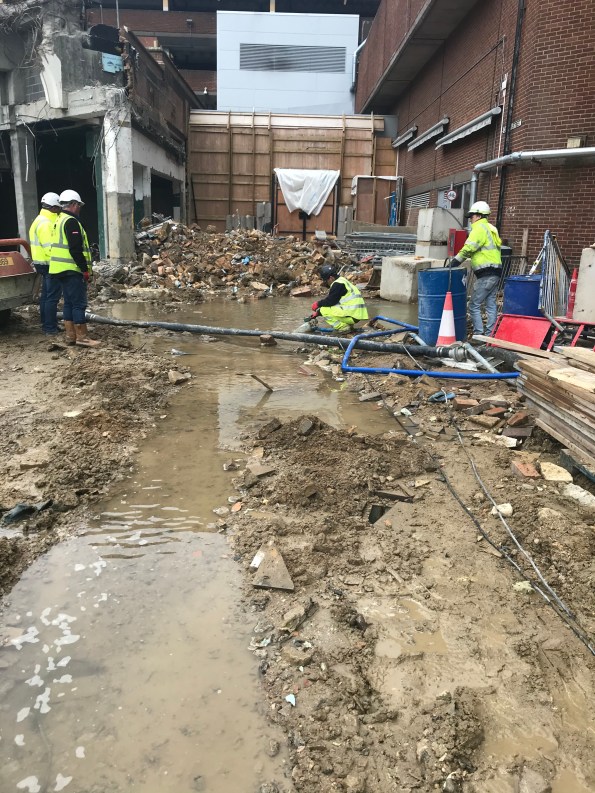
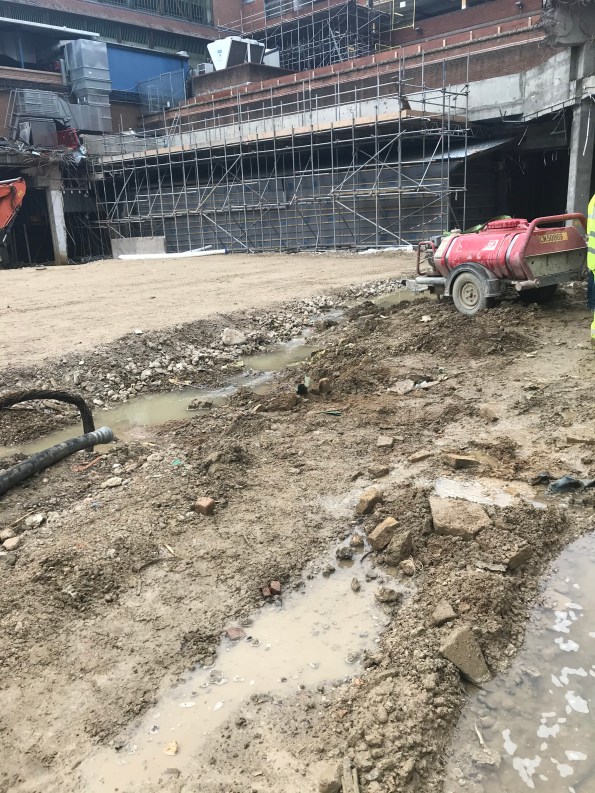
I phoned the M&E engineer for the area and he managed to stem the flow by isolating a valve but couldn’t turn off the entire flow due to it being on a ring main serving greater Woking, they cannot do without water. We made some phone calls and got a large pump on site within 10mins to match the flow of the leak and have stemmed the flooding. Affinity water are not coming onto site until the end of the week so this pump must be run 24/7 until they isolate the ring. 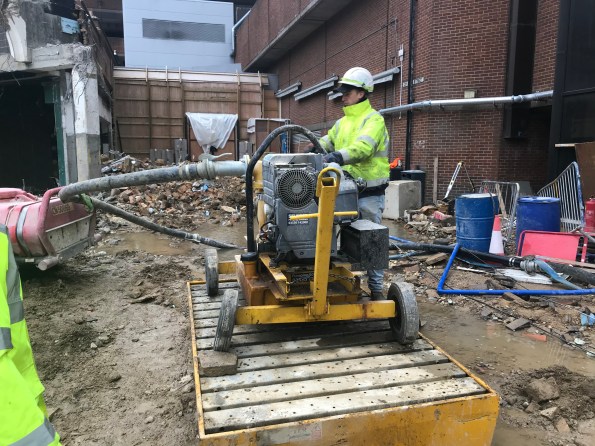
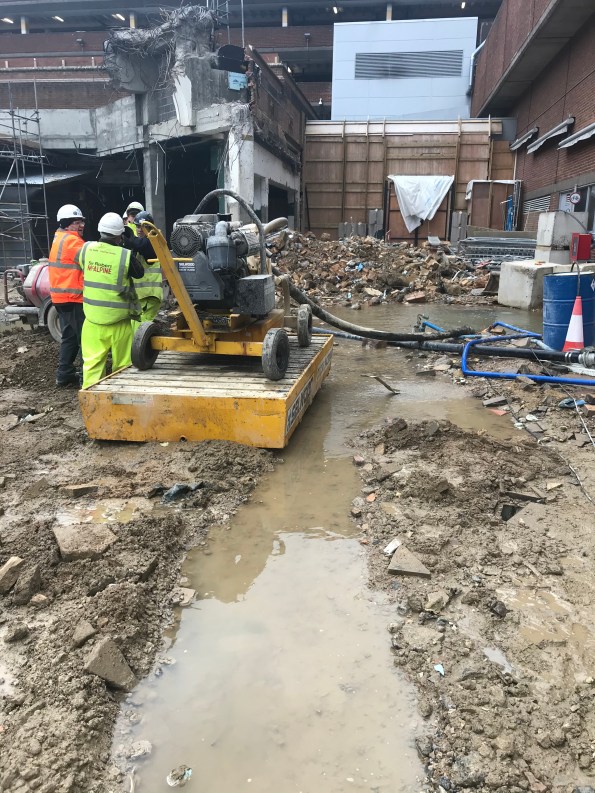
I’ve been reflecting on our actions and the impacts and if we could have done anything better. As it is we chose to protect the live shopping centre and the concrete curing. We have potentially jeopardised the piling mat by diverting the water towards it, a plate bearing test happening on site today may shine some light to whether this has actually caused damage.
I constantly was suggesting leading a trench into a live foul drain and letting gravity help but there is little appetite to do that considering the disruption it would cause to current works. Also there is the consideration of overwhelming the foul system.
 Holdfast Training Services Trial Blog
What is the commercial impact of this Ash and is the subcontractor footing the bill? I imagine the minute this water leaves the pipe it is considered as trade effluent and so would have to be disposed of under a discharge consent? I guess the increased volumes you are experiencing may be increasing your bill.
The demo subcontractor will fit the bill for any claims made by the neighbouring subcontractors, there are yet to be any as we did a pretty decent job of making sure they only wrecked their own job. The piling mat still passed its plate bearing tests and at the moment it seems like there is no long term damage.
Damaging the pipe itself apparently fits no bill. This blew my mind that the water company will not ask for any money to fix their water pipe, we are also not being charged for the waste of water as it was before our metered connection.
Regarding the increased flow under the discharge consent I’m afraid I don’t know. I have a feeling that we have not notified anyone of an increase in water into the system and are just hoping nobody asks. This seems to be the attitude throughout, I think as we are discharging into the whole of Woking town centres main sewer even if we increase our discharge significantly, unless it’s contaminated with fuel or concrete nobody will trace it back to us. An attitude that has only been caught out once.