This is what we always do…
I’m working on the construction of a 17 storey concrete framed hotel for Liverpool City Council. The project is part of a wider scheme of redevelopment that has 10 plots being redeveloped in close proximity. The plot adjacent to my project is a 14 storey concrete framed office building which will be the Northern Headquarters for the Royal College of Physicians (RCP).
The RCP project has reached the stage where its tower crane can be dismantled. As part of this plan a 500t mobile crane will be brought in to lift off the tower crane jib. The only place the mobile crane can set up is across the main access gate to both my project and RCP. This will cause significant disruption for at least the 2 days required for the lifts. In addition to this, 2 days has been allocated to the construction of a 300mm thick crane mat using 120m3 of 6F1.
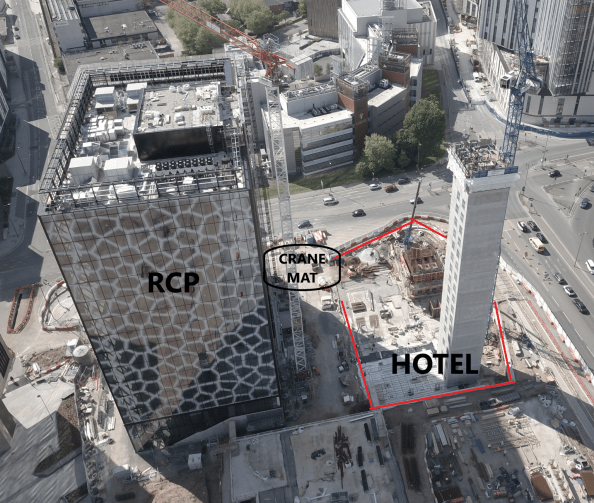
The ground conditions across the scheme are sandstone bedrock and the area where the crane will set up is a 150mm thick reinforced concrete slab. When questioned if the crane mat was necessary the response wasn’t completely convincing. It seems that a crane mat has previously been used on this scheme and so a consultant has been tasked to design the mat.
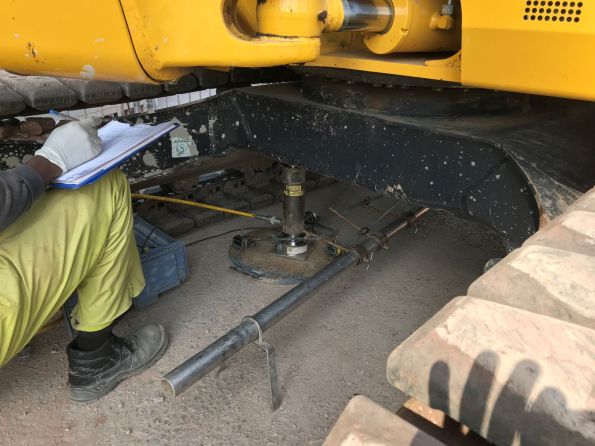
With the prospect of an additional 2 days of delay to my project and the associated Compensation Event claim, it was agreed that plate bearing tests could be carried out to confirm if the crane mat was required. Unsurprisingly, the concrete slab on top of sandstone bedrock proved to be a sufficient base for the crane outriggers. As such, my project has saved 2 days of delay, £14k of overheads for our concrete frame subcontractor, 120m3 of 6F1 and the cost of employing a groundwork’s subcontractor to complete the crane mat. Not too bad for 1hr of testing at a cost of a few hundred quid!
In many ways senior management are ruthless with commercial aspects of the project and exploiting savings and Compensation Event claims. On the other hand, I have been surprised at how unwilling people are to challenge the way we do things on site or question what information the decision was based upon.
Has anybody else been surprised at how unwilling people are to challenge the way things are done?
 Holdfast Training Services Trial Blog
Broady, I have witnessed the same approach. Not so bad on the temporary works side but permanent works is a different story. The PC would rather just accept the design, which is often over specified and very conservative or rely on what they have done previously. The view is that trying to make the design more efficient or proposing an alternative is often a “waste of time” and “fighting a losing battle with the designer”. On the other hand, with the finite horse power we have, the ruthlessness with commercial aspects seems to be a quicker and more efficient way to save on cost.
Broady, we have had a similar issue but pushing the designer paid off. I am also planning the removal of a tower crane in the middle of a city. We are to work over a weekend and entirely close off one road, redirecting bus services and pedestrians in order to lift the boom onto the street then load to trucks. When the crane went up a mattress was built on the street to protect a heritage sewer. Now that site is 70% complete we have a large steel platform within the site at street level (RL 23) while excavation continues below. Originally the designers said the working load of the platform was a 50T vehicle and this has been universally accepted on site for two years.
Come the removal planning, looking at the size of the steel members used and running few calcs of our own, we asked if we can get a 400T crawler crane on the platform and the designer has said yes!
Possibly the nature of a design and build contract but as a site we have pushed for change in different several areas and most of the time been successful.
Two interesting points immediatly jump out. The first being that designs are often overly conservative and can be reduced, or used to greater advantage, if challenged. The second is the reluctance of non techincal managers to engage in engineering even when they have competent adivce to hand.
Both have some reasonable roots. The first frequently arises because the fee structure for design lends itself to quick and dirty calulations that deliver a safe scheme with minimal effort. What fee there is left is then held to address the RFIs that don’t go away on their own i.e. better design would cost more. The poor design crashed out by the lowest level you dare delegate it to will be addressed on site before anyone refers the worst/hardest issues to the design office. To do better would cost more and you’d answer questions in the design office that might never have left site. You won’t get more than you pay for. Those of phase 3 might commment.
The second issue is because the PMs etc. probably have experience in challenging designs the rule of thumb for which in the design office is that any change that might deliver a saving should cost as much to design/check as it saves. This was handed down to me as a junior consulting engineer years ago by our insurers who were of the view that the reason for a change once a desing is completed should always be to deliver better quality, save time or improve safety, not to save money because every ‘new’ design imports additional insurance risk. With a little more wisdom one might question whether sustainability and the tripple bottom line were appreciated in this guidance. I would also suggest it was never inteded to be a hard and fast rule but it does lend credance to the view that consultancts might not be the most helpful when it comes to an ‘unnecessary’ change; easier to save money in the contract.
I would end by noting that I don’t support poor quality design, and, I do believe you should understand what is being done, ask why and continue to challenge the unecessary throughout your career because that is the only way our profession will improve and deliver the value that it should. Nice post.