Waiting vs Wasting Time
Not sure if anyone else has seen this one site but after several months of Phase 2 and establishing oneself in the mix I’ve come to the revelation that often RMAS DS were indeed right; “Any decision is better than none”.
All too often works or indeed a whole section have been delayed and the opening defence seems to be, “I was waiting for…”
Granted in a context of multi-million pound projects and one of the most dangerous industries, a pause for thought is certainly warranted and shooting from the hip can cause more problems than it solves. However with the assumed project management tools and programming on site the vast majority of decisions can be made with the prescribed intent in mind and a desire to push onward – or suffer additional costs through standing time, much less missed gateway reviews or payments.
What initially baffled me was that no one wanted to be the one to make the decision, and therefore be accountable, but would much rather wait and see, hoping someone else would, and then jumping on the bandwagon after. Perhaps it is from a military mindset where critical decision making is encouraged and reinforced, but I wondered if this was seen industry wide or is just a culture on this site? Clearly some critical decisions remain the purview of key (and legally binding) individuals however even a decision as little as deciding how much concrete could be required for a routine pour was often led by a group discussion, resulting in whatever the most senior person decided as the clock struck 1730.
It doesn’t appear to be from a lack of understanding or engineering ability as when I’ve discussed issues with other engineering team members they know what they want to do and how to do it, but seem to fail at the final “execute” hurdle. Nor does it seem to stem from a lack of confidence in their abilities. It would seem the overriding fear is that they fail to make the “perfect choice” and end up costing a few pounds more. Stranger still the maxim of an 80% plan executed now vs 100% plan 5 mins late fell on deaf ears (Replied with the “Why not just wait for the 100% plan?”…).
Perhaps cash really is king and one’s worth to a project is directly measured in how much they’ve cost the project?
A cursory article search gives a brief overview and not unsurprisingly, delays are more often than not attributed to waiting for others.
(Construction Workers Waiting at the Job Site Saps Productivity and Profits (trekkergroup.com))
Curious to hear other’s experiences and what the industry driver could be?
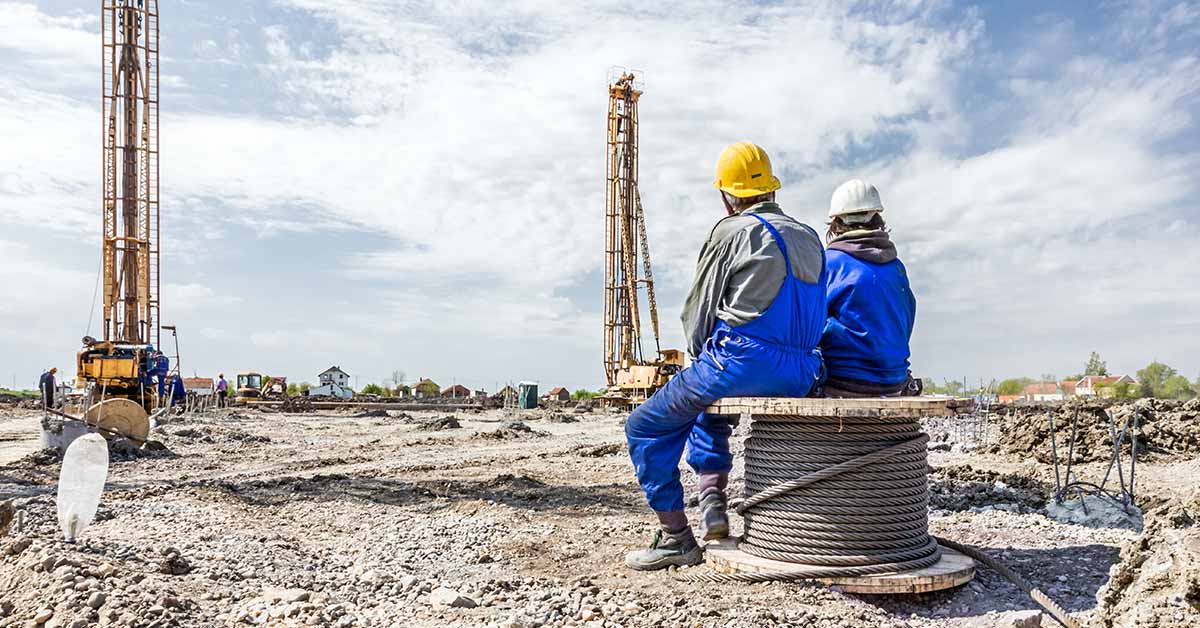
(Image from https://www.trekkergroup.com/construction-workers-waiting-at-the-job-site-saps-productivity-and-profits/ published 31 Jul 2018, Trekker Group, accessed 07 Nov 2023).
 Holdfast Training Services Trial Blog
I get the very same thing over the pond, on both the contractor and government side, no one wants to make a decision as they feel they will be blamed.
I wonder if it’s more the work culture that is created in the construction industry, I’ve found it be a very blame central game. If somethings gone wrong, the first thing the principal contractor wants to know is who was the cause so they can offload blame. But then again if something goes wrong and it does cost money, the budget holder or client will want to know why and I’ve found they rarely accept “someone took a risk got it wrong” as a good answer.
Poses an interesting comparison with our own “day jobs” where often young officers complain that the MoD is too Risk Averse – maybe we’ve actually got it good by comparison? Being given the opportunity and support to make a decision, potentially get it wrong, but then learn from it.
On the contrary, I have seen some great examples of engineers (and site supervisors) with a well-tuned ability to conduct rapid cost analysis in order to inform such decisions. They have obviously spent time equipping themselves with the knowledge and experience to do so and can reel off productivity rates and associated costs without hesitation. I think culture is important in this regard, particularly for junior engineers. Some of the better managers seem to force their fearful juniors into making big decisions but remain much more interested in the justification they present for the decision (in the context of the iron triangle), rather than the consequences. Importantly, they place emphasis on the fact that there is rarely one right solution and often numerous ways of achieving the outcome.
My experience has often been that the project support roles (H&S, QA, enviro, commercial) are much worse in this regard. Decisions that could be and should be made by such individuals are time after time deferred to engineers under the caveat of ‘not understanding the intricacies of works on-site’.
To borrow from Sir Humphrey: “here was an important job to be done and Everybody was sure that Somebody would do it. Anybody could have done it, but Nobody did it. Somebody got angry about that, because it was Everybody’s job. Everybody thought Anybody could do it, but Nobody realized that Everybody wouldn’t do it. It ended up that Everybody blamed Somebody when Nobody did what Anybody could have.”
I’ve been lucky that I’ve had an experience more similar to Jamie – while some contractors like to dither, we have mechanisms in place that does allow for rapid decision making using “engineering judgement”. Similar to Jamie’s second point, I’ve also found its the supporting roles who suffer from analysis paralysis.
Ali, apologies for the delayed reply, but a great post and a couple of points to make.
Do not underestimate the level of responsibility you may be required have as an OC. The argument that the ‘army is risk adverse’ is very much situation dependant. In bks it ‘can’ be a struggle but on ops, sometimes the responsibility can be significant and something you need to be prepared for.
Some do ‘shy away’ from responsibility, but that is what ‘one’ gets paid for. No one wants to fail, but someone has to lead and make decisions and take risk.
The bottom line is certainly the main effort for ‘private’ companies because they are there to make a profit otherwise they wouldn’t exist. This is not something we, as ‘armed forces personnel’, are used to but need to be aware as we often rely upon those that do.
Great Post. thanks.