Designing for Tendor.
I have been on site now for nearly a month and am quickly picking up tasks from all over the place. One of the main items I have been put in charge of is a 6km pipeline running from the Spencer Gulf to site, designed to carry seawater in and a separate pipe to return the brine water. The pipeline was designed by KBR, procured by John Holland (JH) and is in the process of being installed by York Civil. Up to now no one from JH has taken any ownership of the pipeline so it seems a good chance to actually contribute something worthwhile to the project. I have been looking after it for two weeks now and these are some of the issues I have come across:
Design and Procurement
The pipe itself and all of the fittings are to be procured by JH and free issued to York Civil. The JH team responsible for this procurement is based in Brisbane and has worked directly off the KBR drawings to procure all of the items. This has led to a number of issues, firstly individual responsible for procurement is not subject matter experts or an engineer; this has contributed to key items being missed in the procurement process including all of the gaskets and bolts. Secondly the initial design used for the tender process appears to have been done using geographical data and aerial photography this has resulted with a design that is not suitable for the ground and as a result considerable redesign is being conducted on site, which will result in some serious variation orders from York Civil. In addition these changes have resulted in many of the items procured already being inadequate or insufficient for the new design, some of which have long lead times, such as the pipe itself which has come from Turkey. This leads into the third point which is that the procurement teams method seems to be to request quotes from various suppliers; they then choose the cheapest supplier. It appears that no consideration is given to the suppliers’ location and delivery times. For example six automatic air valves are being shipped from Israel taking 8 weeks to arrive despite there being manufactures in South Australia.
Stakeholders
The pipeline runs across some private land, through existing easements, however the landowners were up aware of the easement. Currently they have ourselves putting a pipeline through it and the local power supplier constructing an overhead power line, to get power to our site. This has resulted in a re-route of the pipeline and narrowing of the working corridor. One of my tasks has been to construct a dilapidation report along the route in order to ensure compliance with guidelines laid down by the local environment agency.
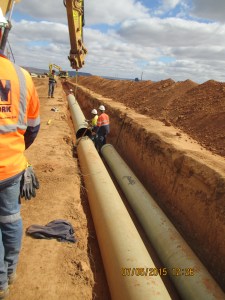
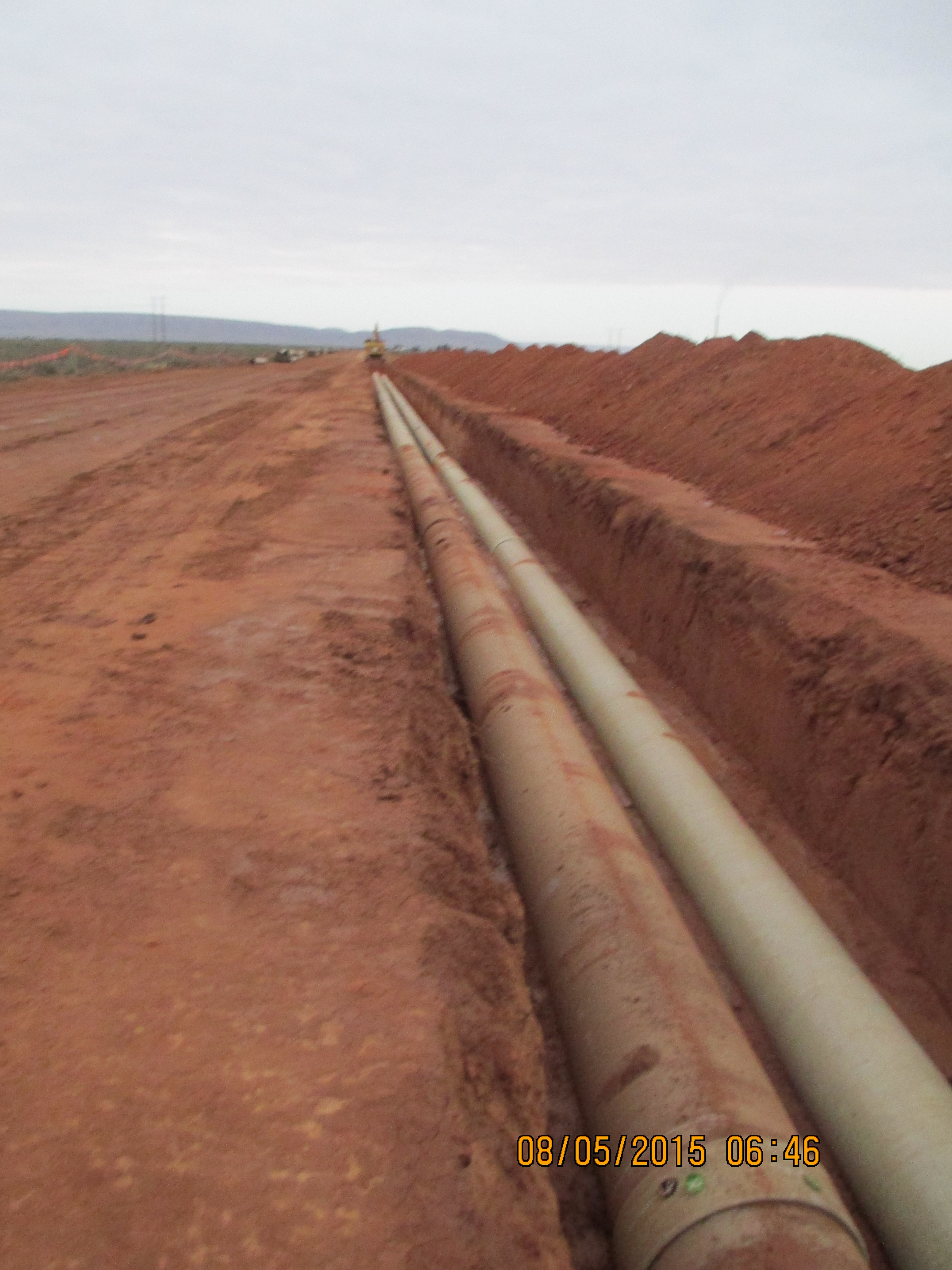
The pipeline beginning to be lifted into place.
Construction
The drawings issued for construction along with the specifications have resulted in a design that is almost impossible to build. For example, the design requires a compaction to be provided by mechanical means around the pipes in layers of 150 mm. Once the pipes are in the trench there is insufficient space to fit equipment to compact or to test the levels of compaction. The designers are up willing to renegotiate the levels of compaction because the specification of the pipe has already been reduced by JH in order to reduce the cost. At the moment we are working with the sub-contractor to develop some trial areas to establish if the desired levels of compaction can be met by any other means.
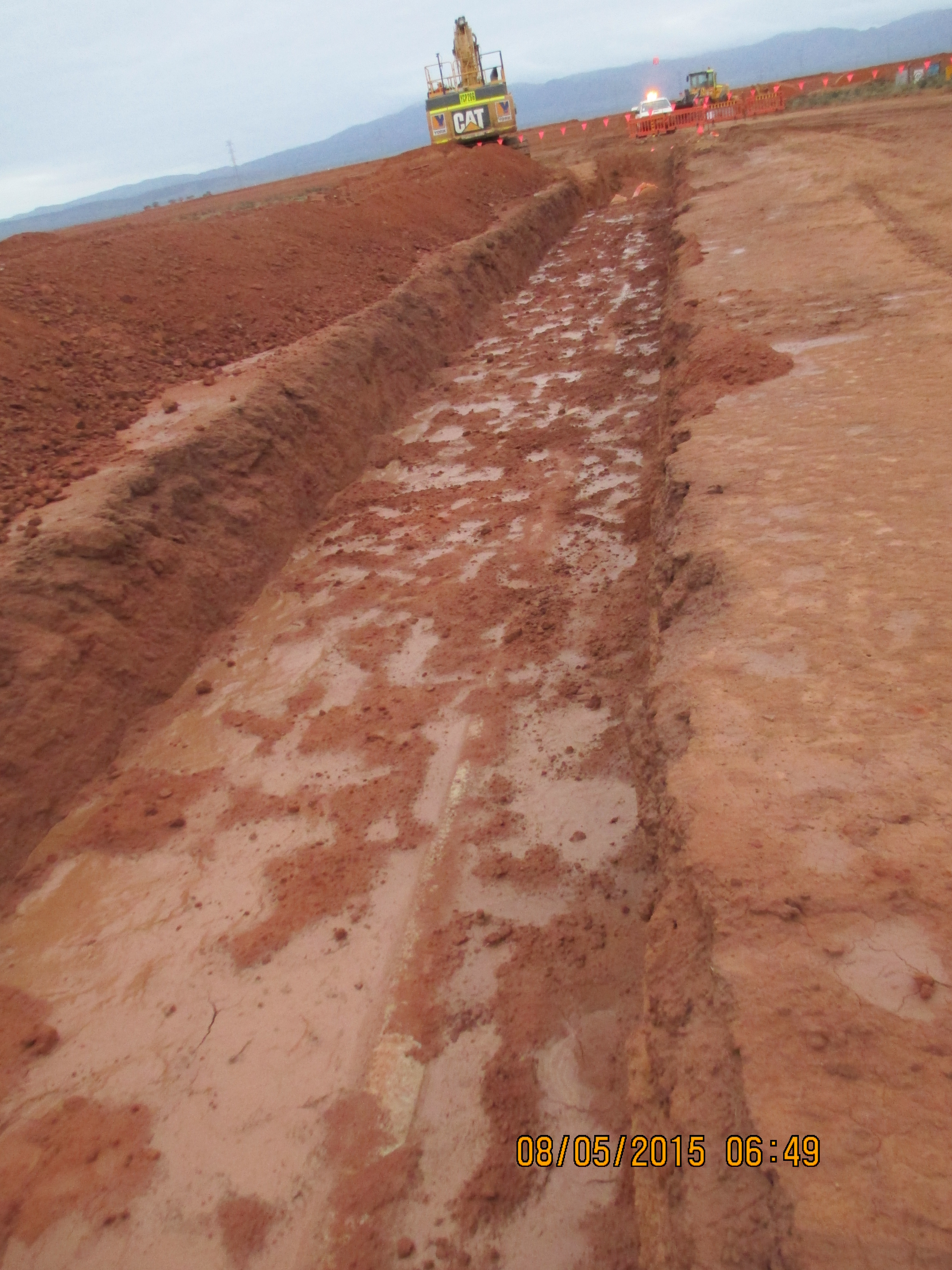
A shot of the trial compaction area- walking in and damping down with water.
Linked in to the compaction of the pipes is the requirement in the specification for the subcontractor to check the internal diameter of the pipe following compaction. At the moment the subcontractor have not found a method of how to do this; the pipe has a number of bends so a laser cannot be used. Again because of the reduction in the specification of the pipe the designers are not willing to remove this requirement.
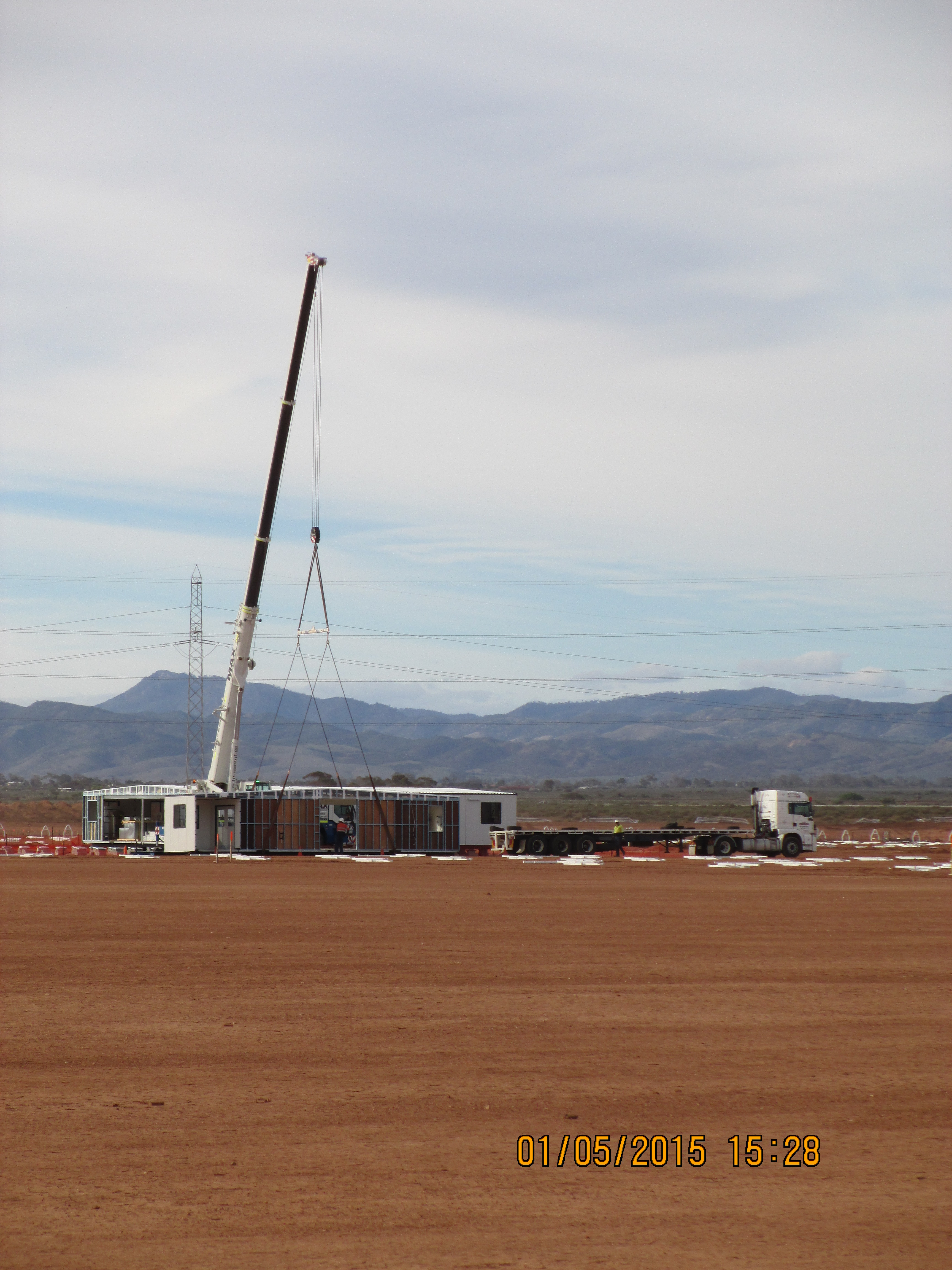
One of the other items I was running with was installing of 16 modular buildings that will form the permanent offices and amenities on site.
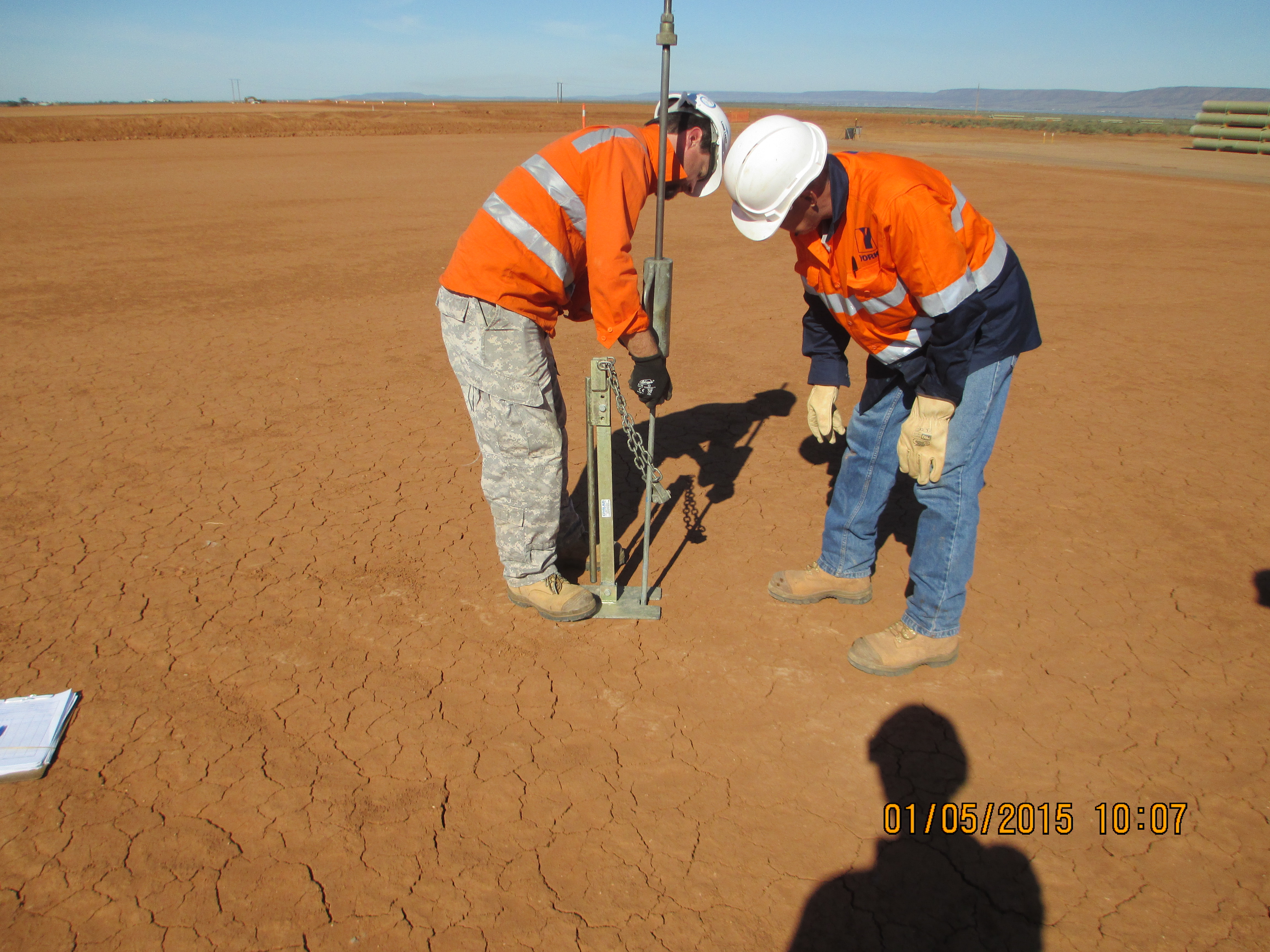
I thought I would add this for all you civils out there, seems to be some advanced version of the cone penetrometer, I did ask the guys how it worked, but they were just working it out for themselves!
 Holdfast Training Services Trial Blog
Oh dear a good summary of the pitfalls of offsite procurement! This seems to be a recurring theme as it was apparent that when I visited the contractors commercial team on the Medway Valley Bridge project (Olly Child’s placement) the site team there were having similar technical/contractual issues with a head office based procurement system that is HQ’d only 15 miles away from the project. It sometimes makes more sense to have a ‘buyer’ based on site during the early part of the contract. They can then liaise with and identify the project team programme needs, but also be aware of the bigger picture in terms of the company’s procurement policy and any specific framework supply agreements and preferred sub-contractors that need to be used. Regards Greg
I love the scale of your project. We think our site is enormous because you can’t shout across it!
Oooh-geotechnical stuff 🙂
Its a Dynamic Cone Penetrometer that can be used with correlations to get CBR. Have a look here:
http://www.lab-quip.co.uk/dynamic-cone-penetrometer-dcp
Could be worth checking that someone who knows what they are talking about are designing the foundations for your cabins, especially if they are being stacked, otherwise you might have a leaning tower in that type of soil!
I feel your pain Matt. As Greg alluded to we have a dislocated centralised procurement system on site. If we require something we have to submit the request form which sticks to details of the items and time frames. It does not take in to account pre researched availability or the finite engineering details that make something fit for purpose. Our procurement manager then sources and sets up the contract for the items. On a number of occasions he has missed the mark and we have suffered similar issues to you. On the other hand we are bound to use a set supply chain and cannot deviate from that. The closes village to site has a Rebar and Concrete Subby, he’s only a small outfit but perfect for a job we have coming up. Great I hear you say, we can pump some money in to the local area and try to demonstrate we’re not just the people causing noise and dust pollution. However, using them has been vetoed down because they are not on the list even though they were the cheapest tender…makes no sense!