Sundrop Farms Update
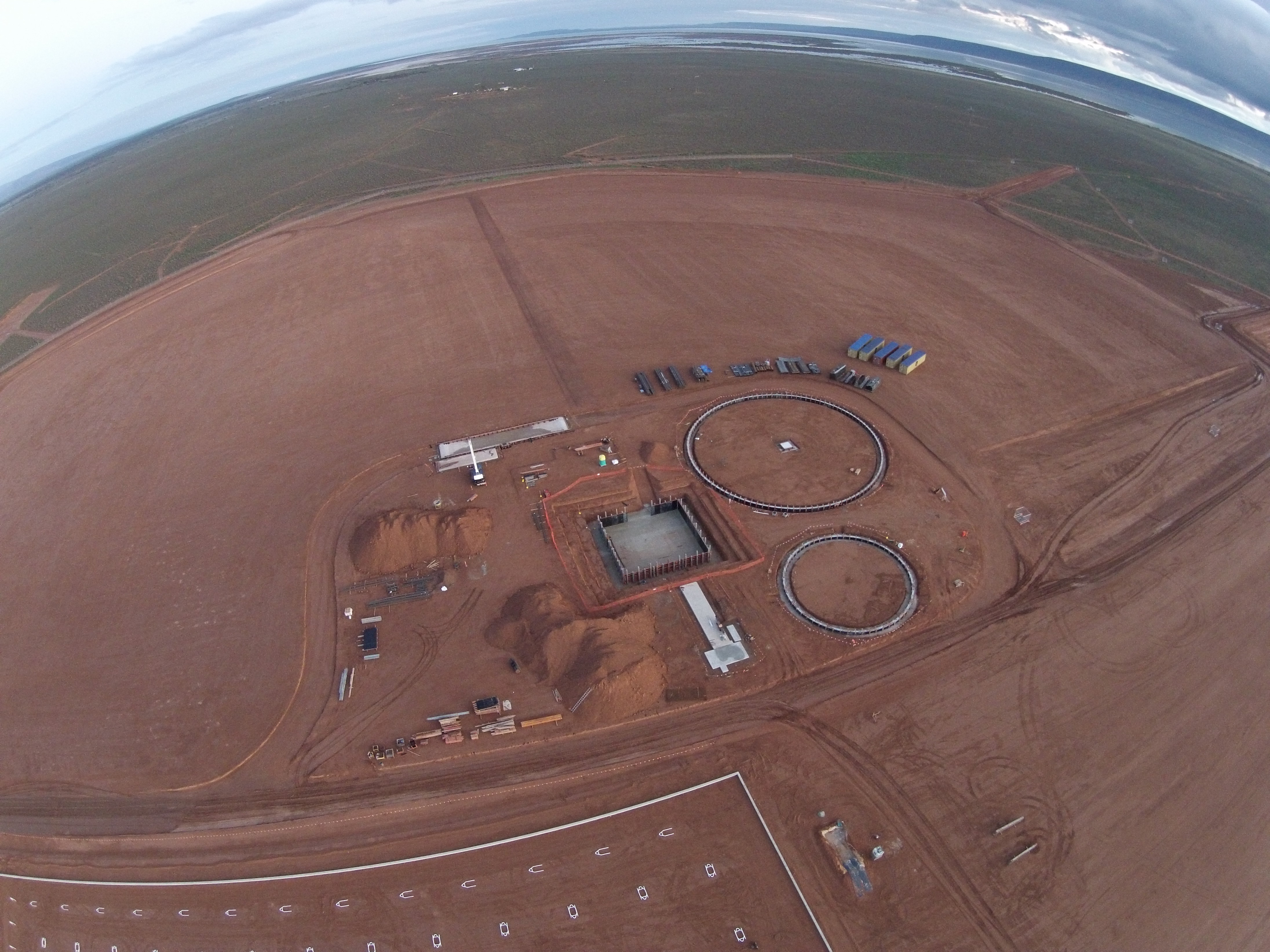
This blog aims to provide an update on the Sundrop Farms project to date and highlight a couple of issues currently experienced in site. In terms of progress the photographs below were taken by the client using a drone and summarise where the project is up to. The first photo shows the power island and some of the foundations now getting poured. The two circular foundations are for the two Thermal Energy Storage tanks, the larger has a capacity of 22000 m³ and will maintain the water at a temperature of 95 °C and the smaller has a capacity of 6000m³ and will maintain the water at 43°C. The square foundation in the centre is for the solar tower, currently we are waiting on site for 200 bolts, 4m in length that will sit within concrete for the base plate of the 115m tower to be bolted to. The tower itself is based on the design of a wind turbine tower and is getting manufactured locally. For a sense of scale you can see the 40ft iso containers positioned in the top right of the photo.
The progress on the greenhouses can be seen on the photo below. The first two greenhouses form part of Separable Portion 1, construction on the one on the left hand side of the photograph began in Apr 15 and the erection of the steel work that forms the frame of the greenhouse began last week. The amenities building is the complex to the bottom right and comprises of 16 modular buildings that have been lifted into position and fit out over the last 8 weeks. One of my responsibilities so far has been the management of the installation and the final inspection of the complex last week. Following the handover the subcontractor attempted to submit their practical completion notification certificate. On looking over their contract there was no definition of the term practical completion or mention of the certificate and what this means. The definition of completion was given, but part of the definition was the requirement to have completed the commissioning, with power, water or sewerage connections currently not in place this cannot happen. The completion of the building also marks the start of the liability period, so clearly it is within our interest to delay this for as long as possible. What I also found missing out of the contract was the completion date, which was left blank. The commercial manager on site has now taken this on and has sent them an official letter rejecting their notification of practical completion. The proposed solution is to seal the buildings up and wait until October, when it is planned that the services will be in a position to connect to, then bring them back on site to commission; with the electrical subcontract still in the tender stage I think that this is still slightly ambitious.
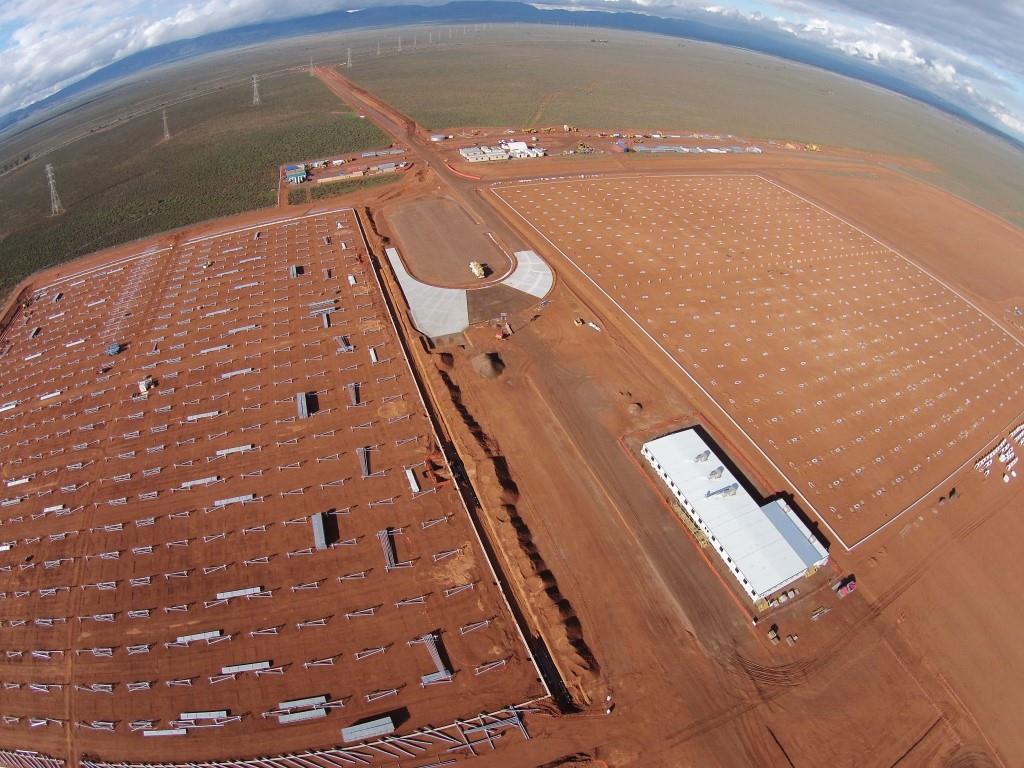
The biggest site wide issue at the moment is rain, we have had 39mm in the last 4 days, the average for the whole of June is 24mm. It started raining here on Sunday and has continued with varying amounts since. Access to site is via a dirt track that runs parallel to the permanent road, which can be seen at the top of the photo above. The permanent road has been completed up to the point where it needs sealing, the subcontractors are waiting for the final detail of the main junction to be confirmed prior to sealing. The access road is getting to the point where it is impassable, I had to recover a 4×4 on Monday and we have had a number of delivery trucks stuck. The situation is compounded by the fact that the toilets are reaching capacity and diesel needs refilling by Friday. The John Holland response so far has been to soldier on, leaving the decision to subcontractors to make a call on whether to work or not. The reason behind this is that the extension of time due to inclement weather clause was removed from the head contract between JH and the client, JH then passed this risk on the subcontractors by removing the clause from all of its subcontracts. Currently the Health and Safety manager and the package lead are at logger heads over this. As far as emergency access is concerned this is maintained by the fact that the permanent road could be used, in addition the risk on site is minimal as there is minimal work being conducted. Obviously if the toilets or diesel become an issue this will change the situation. The image below shows my UTE after attempting to inspect the trenches on the pipeline.

 Holdfast Training Services Trial Blog
Hi Matt, how are the 200 bolts going to be positioned/fixed? Cast in place or post drilled? Is there a template you are using to ensure they line up?
Regarding the temporary road, is there option to lay some hard-core and cap with a layer of blinding concrete. We have done that on our ramp which has made it much easier to get lorries out.
What is keeping the water hot? Ground source heat pumps, you might have already covered it..?
Damo,
The bolts are cast in using a template consisting of two rings, each made up of four sections, we are having a work shop today to discuss how this is physically going to work. The temp road has been graded a number of times, however we have a water main running underneath it, it is about 1.5km long so the cost of blinding would be quite high (I would think?). The honey sucker got into site this morning, thank god. The hot water is in a closed circuit and passes through a heat exchanger with the water/steam coming from the solar system. The primary use of the hot water is for the distillation of seawater, this can be coordinated to happen when the thermal energy is at the max and stored on site.
On the subject of the contract adjustment. The common apporach in regards the distinction between what the contractor is expected to put up with and what shifts the risk back to the promoter is expressed in Cl 60 NEC3. Here it states that if weather is outside that experienced in a 10year period for the location, then it’s no longer all on the contractor. If the contractor allowed this to be waived well it’s unsual.
On weather conditions USACE determine the number of days where work is unachievable each month for each location. Each contractor is then given these days as a standard extension to their contract time wise but no extra monies are paid out. This reduces the contractors risk of having to pay liquidated damages for weather issues but does scupper their attempts to claim extensions for other activities. The average days worked for Harrisburg in January is about 5 because of the snow!
Matt,
Intrigued by the road issue. When graded was this to a cross fall and is there any ditching – none evident on your photo. If not then little surpise at the issue, which as John says is probaly not within normal or reasonable expectation adn therfore contendable.