Two Fifty One – Learning Simple Lessons (commercial x 2 and drainage clashes).
Two Fifty One – Learning Simple Lessons (commercial x 2 and drainage clashes).
Off hiring. As a way of reducing site clutter I arranged with the plant hire company (Select – an internal within Laing O’Rourke) to off-hire some RMD soldiers and Haki stairs.
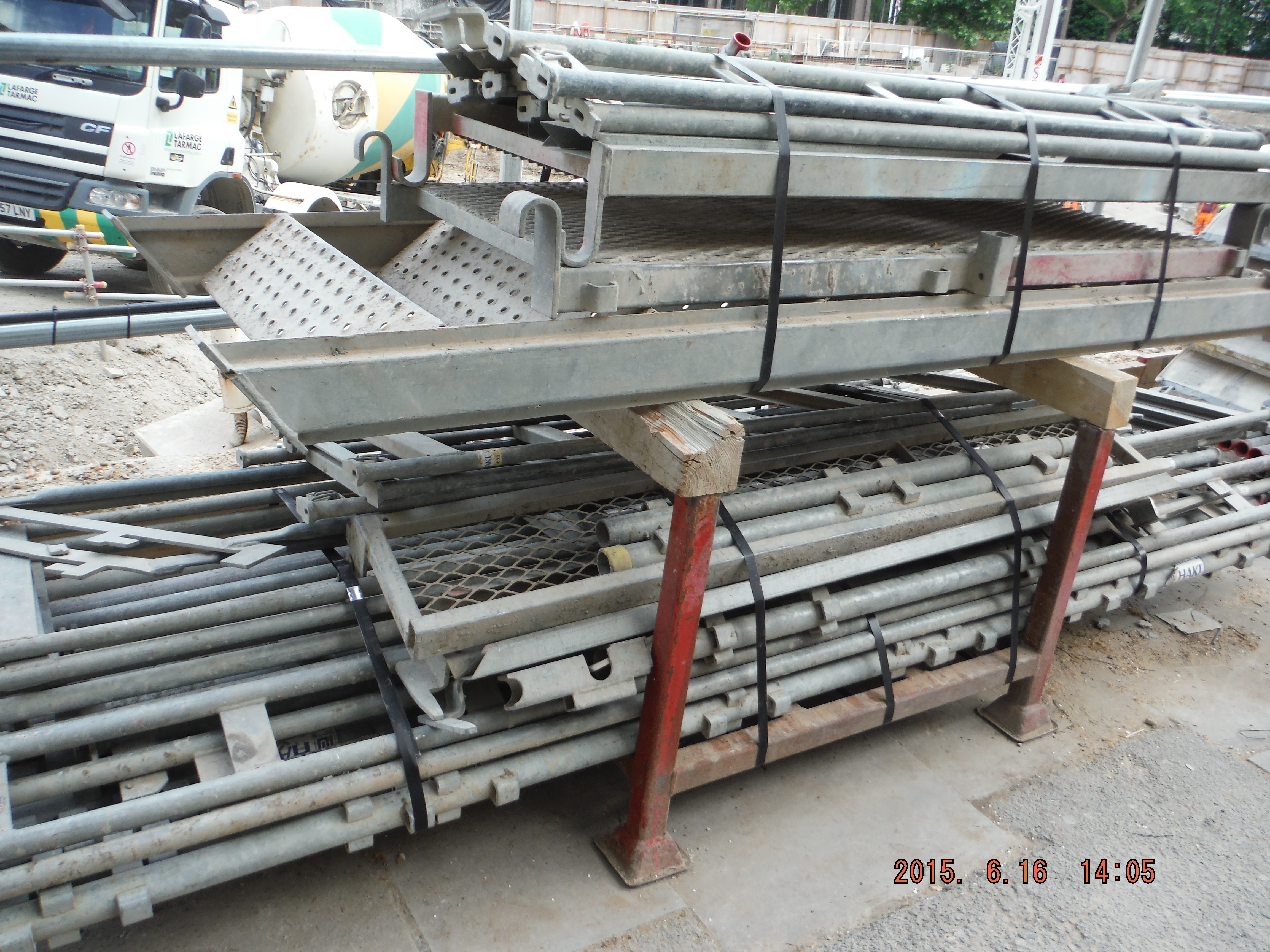
Haki stairs for off-hire
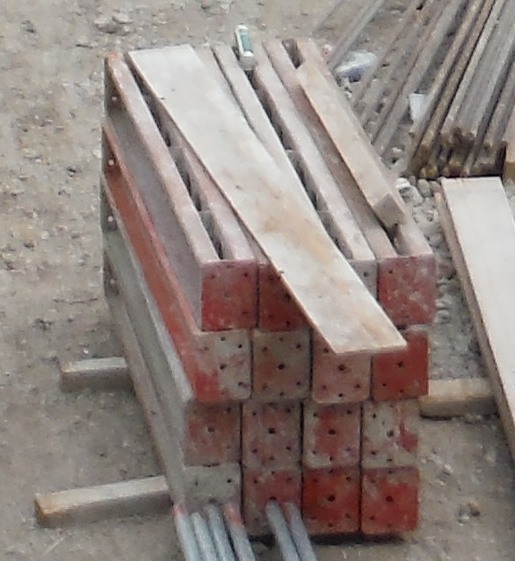
20 RMD soldiers for off-hire
Simple and straightforward intent. Clearly getting rid of equipment would also mean the items are no longer paid for. So a few days later a 40ft low loader arrives from the plant hire company to collect the formwork. Utterly ridiculous size vehicle to remove the items which are small as shown above. A couple of weeks later and we receive a £300 collection bill! So in theory it would be cheaper to keep the items on site for months, than return them.
In short, the message is don’t forget about transportation/mobilisation costs of equipment. Albeit not a bank breaker, but a useful lesson early on.
Take off take offs.
Discussed on blogs recently was the subject of calling off drawings. I’ve called this “take off” here. Within the Two Fifty One project, my next focus is to plan the installation of the basement drainage. It is not a big job; the square area is about 1900m². However, having had the drainage runs priced from the drainage drawings by a Quantity Survey it makes sense to use their lengths and itemised totals as a check against the materials supplier totals. Lesson here is (I hope) that generally a lot of the length, area and volume calculations have already been completed for the project; therefore there is no need to repeat all of the work. However, caution must be applied to blindly assuming all is correct, designs have not changed, and it was priced correctly in the first place. Lesson – speak to the QS team (they aren’t just people who say no to all material orders!)
Drainage Clashes
The Two Fifty One development’s basement is founded upon 300 plus piles split between a raft pile cap for the tower and a series of smaller pile caps for the office. There are also two tower crane bases within the basement area.
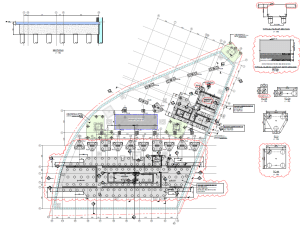
General arrangement pile cap layout
The drainage design was produced on a standalone drawing with neatly drawn foul and surface water runs spanning between manholes.
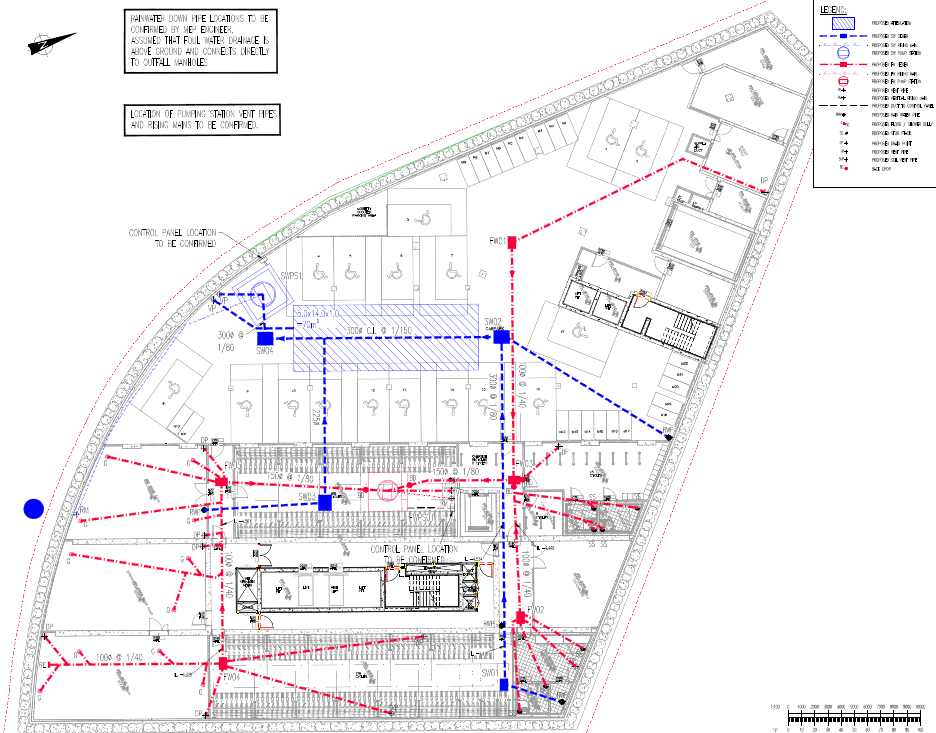
Drainage layout
Overlaying the 2 drawings (pile caps, tower crane footings and drainage) highlighted 6 pretty obvious clashes.
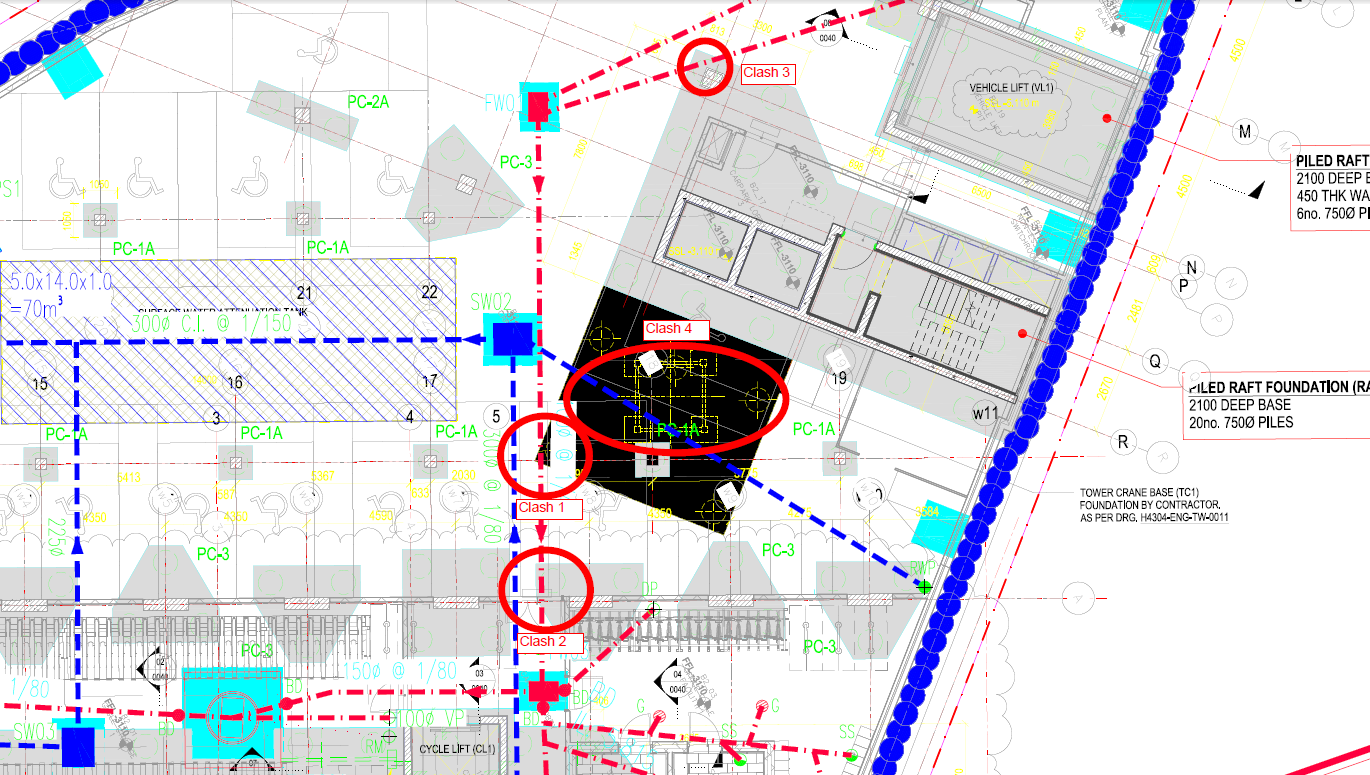
Clashes identified (1-4 shown).
3D images exemplify issue:

Clash 1 and 2 – Drainage run with corners of pile caps
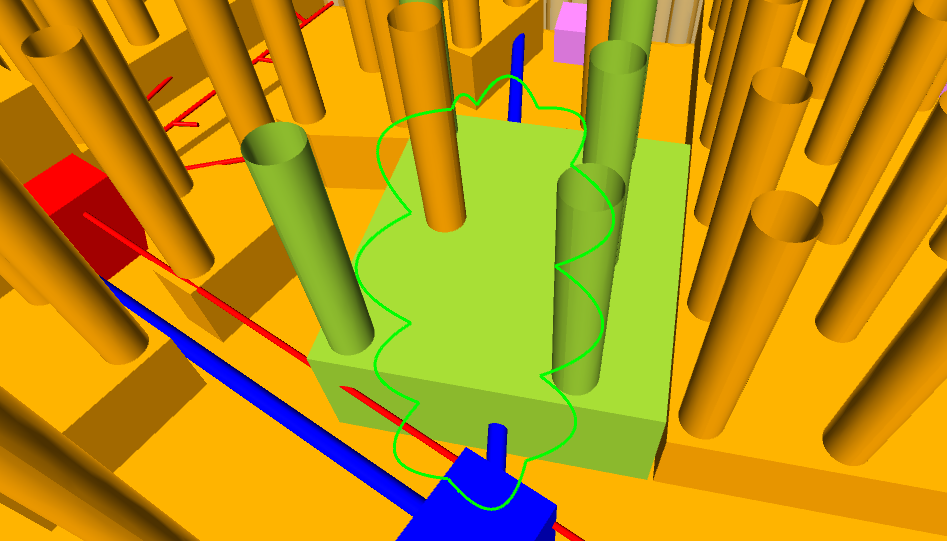
Clash 4 – Drainage run with tower crane base
I would think, as the designer was asked to do the overlay, they would have amended the layout. Nope and in fact the designer warned us (contractor) that these changes may delay the issue of the reinforcement drawings! So an RFI later, a much improved drainage layout was produced.
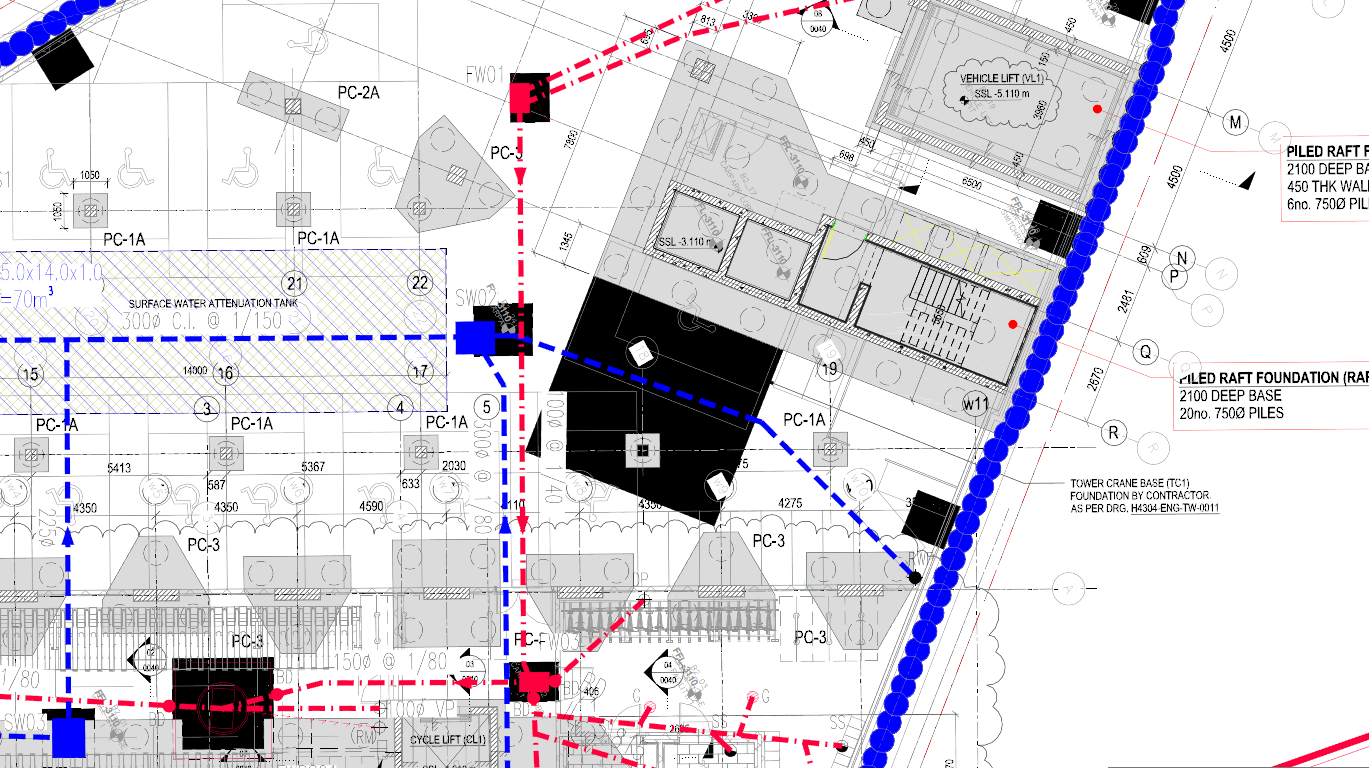
After: Clashes resolved (1-4, noting 4 sits better regarding position of tower crane base)
Without wishing to get into another pre-novation discussion, the time to resolve this issue is at the client’s cost (main contract still not signed so design risk currently sits with client). So I hope this will yield success in about a month when the drainage installation starts.
 Holdfast Training Services Trial Blog
Presume you face a collection cost at some point regardless so earlier and ouit of the way now remains an advantage?
Bet he QS have prices on a take of on the level with an allownace for additions and not the actual fittings you need. Lets see what comes out!
Drainage design now has change of direction without rodding access so should be rejected by building control. Is the alteration to design a result of chosen construction methodology i.e. not the designers issue so a contractor redesign cost? My experience suggests that the actual instal would have worked anyway because ground workers know how much curve you can get onto a run before is ceases to be straight and they’ll do it anyway in order to accomodate build issues with the chambers (which won’t be as drawn on the nice 3D model!). Essentially if it passess through at an oblique angle it’s a problem, if it clips a corner it’s probably not. if its perpendicular its either a redesign or core through unless caught early when it’ll be a sleved through job.
Hi Richard – many thanks for the pointers. Regarding the off-hire – yes cost would have been incurred at some stage but could have been combined with other items to make better efficiency of the vehicle.
Regarding the drainage points – I understand there is an element of making it work on site, but I wanted to try and resolve some of these issues before it gets to that stage. Thanks for the point regarding rodding access – yes that has been noted and will form part of the redesign to ensure it complies with building control [Drainage and waste disposal – Approved Document H]. I cannot see what the allowable change in direction is before a new access point is required, other than “access should be provided at […] a bend”. Assuming a bend is anything other than a straight(!) I suspect additional access will be required.
I am going to admit ignorance. I don’t know when “easy bends” cease to be defined as straight. I recall that pipes can deviate by about 8 degrees at a joint without using a bend and think that is about the limit of i. You can also intorduce a bend on entry or exit from a chamber; 22.5 degree if my memory serves. Guz – any more recent and relevant details you can add?
You’ll get away with a large radius 15 degree bend, but nothing bigger or tighter.
Is that 15 dgree bend on entry/exit to chamber or within a run length?
Within a run. You can get away with more on entry to a manhole by installing a backdrop with a rodding access. I’ve got a good example of that if anyone needs it?
If your drainage installers are good they’ll be able to look at your areas of concern and recommend some appropriate measures to resolve. Just be aware of what the purpose of each area is. Adding rodding points is fairly painless unless it’s in an area that the architect deems unacceptable to have a plate in the floor, in which case you’ll have to think of another solution. The drainage lads won’t care if it’s a car park or the lobby, they’ll just want to get it in so they can be paid. On that note ensure they’re fully aware of the pour schedule that will follow them, otherwise they’ll focus on the long straight sections first (they make more money on it) and leave the gullies and stuff to the end which could impact on your concrete if left unchecked. The voice of experience!