Sundrop Farms HV Design and Installation
The installation of the high voltage (HV) system for the Sundrop Site began earlier this month. This blog aims to give an insight into the design and some of the issues that have arisen so far with the installation. The electrical design for the Sundrop Farm project was initially done by KBR, then handed over to CNF & Associates. The onsite installation of all electrical items on site is subcontracted to Broadspectrum. On site John Holland (JH) have got an electrical supervisor come engineer who monitors the subcontractor.
Design
The HV design is based on a ring main with the 33kV coming in via overhead lines to the main switch board kiosk, which then feeds six transformers that are positioned around the site via a network of underground cables. Each of the four greenhouses has its own transformer, as well as the balance of plant area and a separate one for the generator/turbine. In addition to the mains supply the site also has a 1.5MWe steam generator and equivalent sized standby diesel generator. These generators supply 415V to a 33kV step up transformer to reticulate the generator output back into the site HV system. The steam generator can only operate in parallel to the mains power, operating as a base load generator and will not operate when the standby generator is in operation. The diesel generator can only operate when the mains supply is disconnected and will only supply the critical loads to site, 1.5MVA. Critical loads on site are based on ensuring the crop is not damaged on site. These comprise of 100% operational irrigation system, 50% operational cooling system and 100% operational heating system.

Sundrop Farm HV Design – If anybody wants a clearer copy of the image please ask.
Harmonics
The majority of the loads on site come from rotating machinery, primarily from 1152 motors that are used to circulate air around the greenhouses. Because these loads are non-linear they have the potential to generate significant harmonics. For the civil’s out there harmonics are bad they have the potential to increase the current in the system, causing increased heating in equipment and conductors, shortening machines life and increasing running costs. In addition limits are generally set by Utilities Company on the amount Total Harmonic Distortion (THD) a consumer can have, in this instance it is 1.67% allowable. The estimated value for Sundrop Farms exceeded the value set by the utility company, South Australia Power Networks (SAPN).
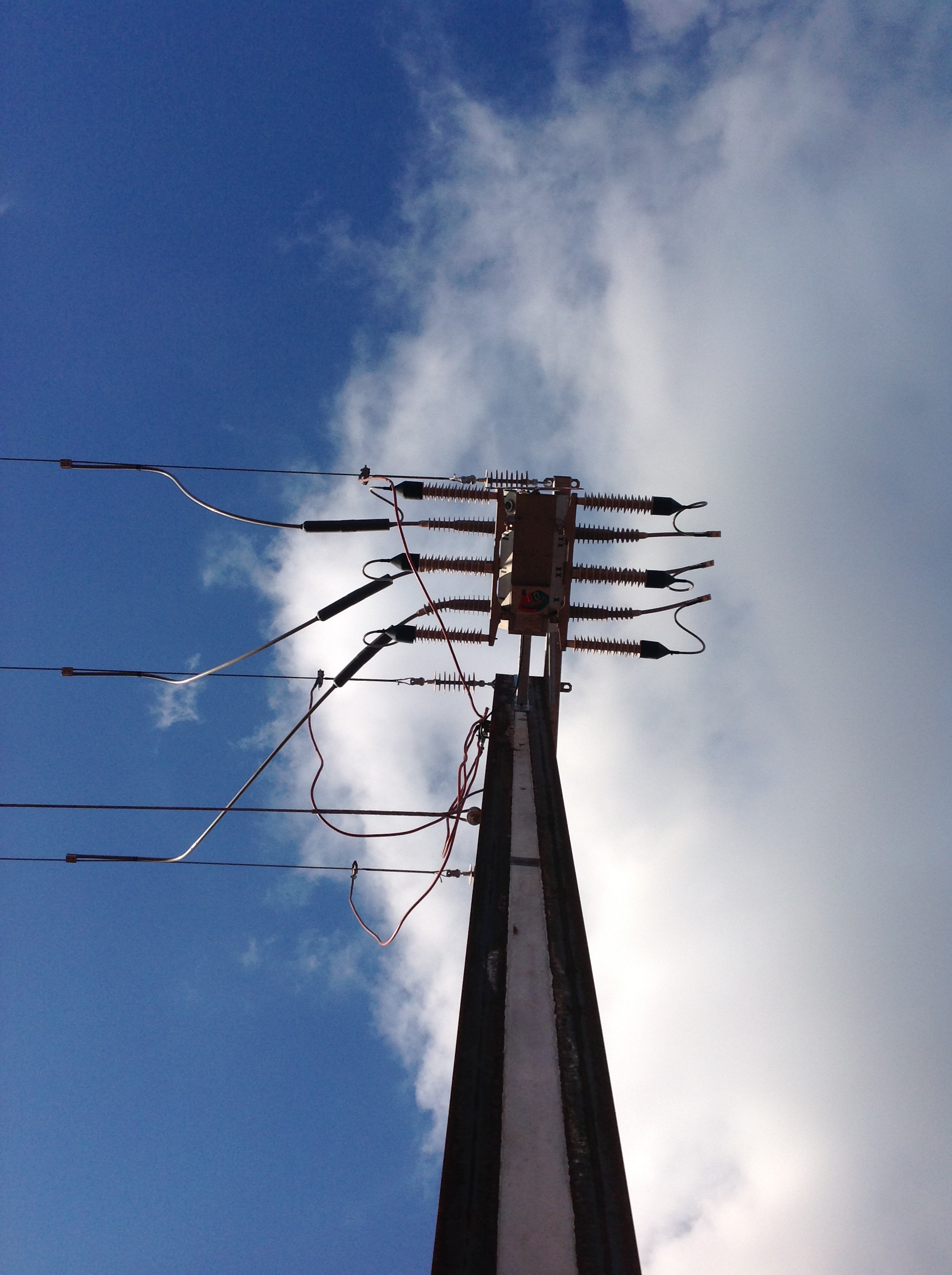
Pole Mounted Switch above the 33kV Kiosk
To reduce this value the designers had a number of options, rectifiers, harmonic filters or pulse width modulators. All of which have significant cost implications, for the site this was estimated to be around $500k. However SAPN failed to meet the date which they were due to supply power to the site by. They failed to get the necessary permission to erect the HV line across a recognized heritage area, thus their installation was delayed. With this leverage and through negotiation with SAPN, JH were able to move the point of common coupling which is where total harmonic distortion is measured to a substation 6km away. The resistance of the circuit was increased by this additional cable length and reduced the effect of the harmonics to a limit that was acceptable to SAPN. The impact on the project of not having power to site – zero as we have yet to get the HV transformers in position.
33kV vs 11kV
Another point I picked up on early in the project was that the onsite distribution changed from 11kV to 33kV on the designs. Through a value engineering process it was identified that significant savings could be realized by removing the 33kV switchroom and the 33kV to 11kv transformer and reticulate power around the site at 33kV, this design change saved approximately $800k. Other savings realized by this change included being able to use smaller cables which equates to quicker installation time and cheaper purchase costs.
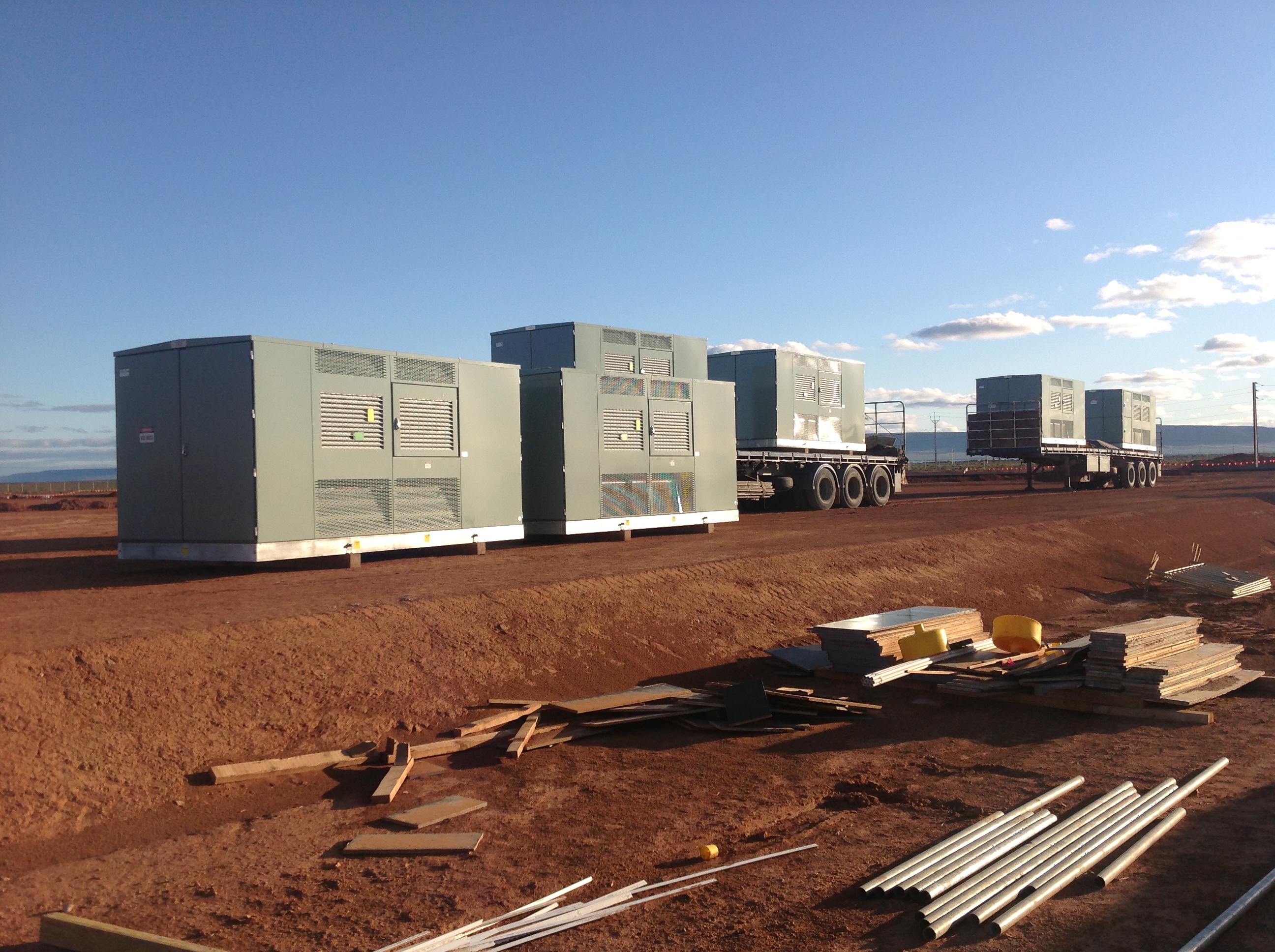
Schneider Transformers arrive on site – the unloading of these became an issue when it was identified that they weighed 12t, not the 9t on the drawings!
Installation
The design called for the cables to be direct laid. However when the installation contractor began to develop their program it quickly became apparent that this wouldn’t work on site. The way the cable was routed and the fact that the cable was coming off the same drum meant that the trench would have been open for up to three weeks. This would have resulted in severe access issues across the site and opened JH up to multiple claims from other subcontractors. The solution was to install conduit in the majority of the areas across the site and then pull the cable. The actual cost of switching was between the two was seen as cost neutral. Laying conduit involves more work but it means that the plant used for the installation can be off site much quicker. In addition JH were able to supply the majority of the conduit free of charge, as we had surplus on site from a previous project.
The cable pulls themselves required some detail planning, the longest was 370m long. The cable was pulled using a trailer mounted winch which was in turn connected to a Ute. Even with the weight of the Ute, lubrication in the conduit and rollers the friction encountered during the pulls was such that a second Ute had to be attached to the first to stop it moving.
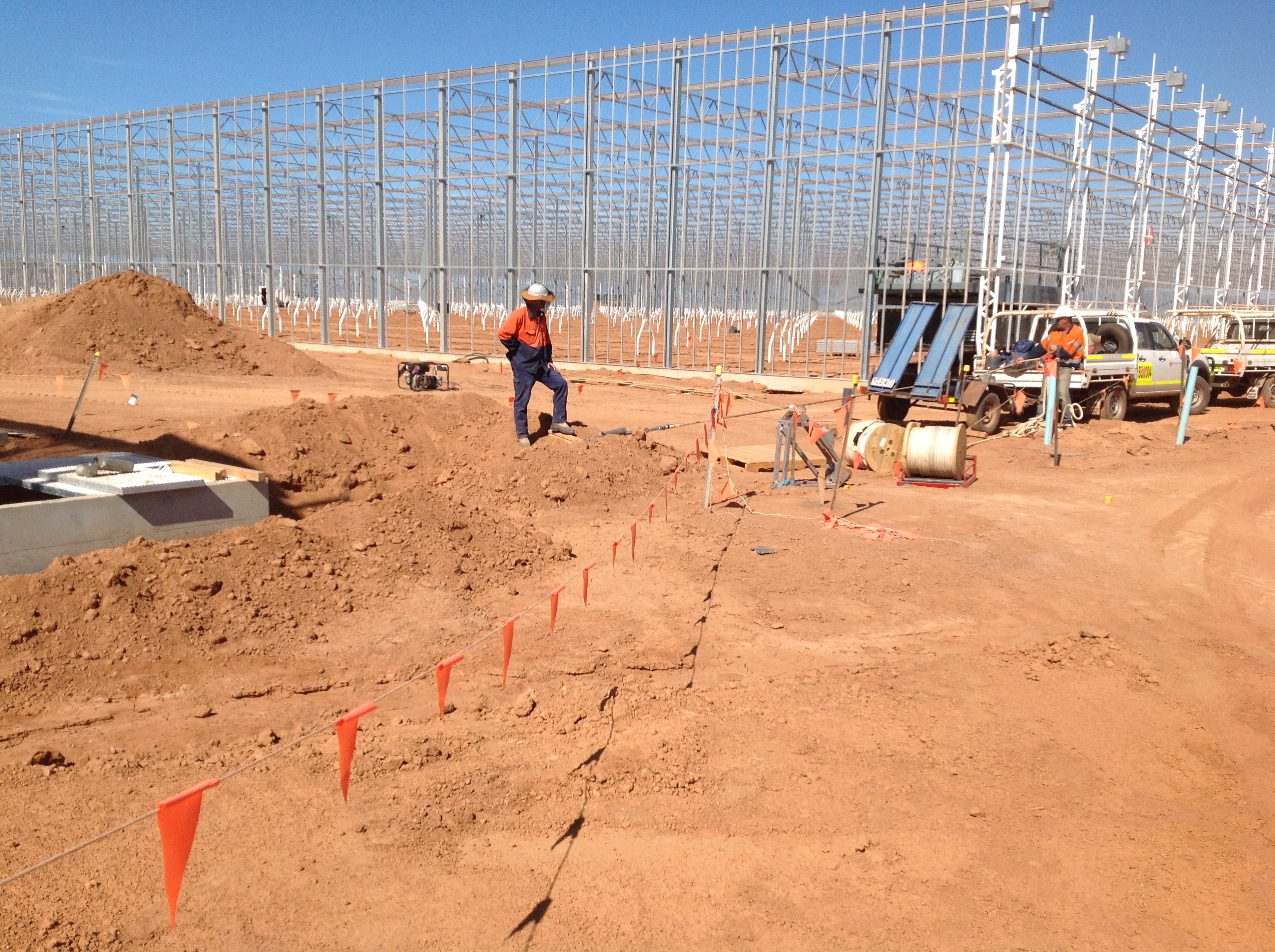
A poor image of one of the cable pulls taking place.
Other issues encountered so far on site have arisen from the transformers and kiosks supplied by Schneider. The original HV cable in the design was supposed to be three single core cables, however this was switched to a single three core cable, to reduce costs (this was free issued by JH, again surplus from a previous project). However this change was not communicated to Schneider, and as a result none of the cables now fit in to the transformers gland plates because the larger diameter three core cable has a bigger bend radius. The solution to this problem is still in discussion. The current plan is to terminate the cables prior to the transformers getting lifted into position and install new gland plates on site. Not necessarily a big job, but as with everything electrical to get it done to the correct standard will be costly.
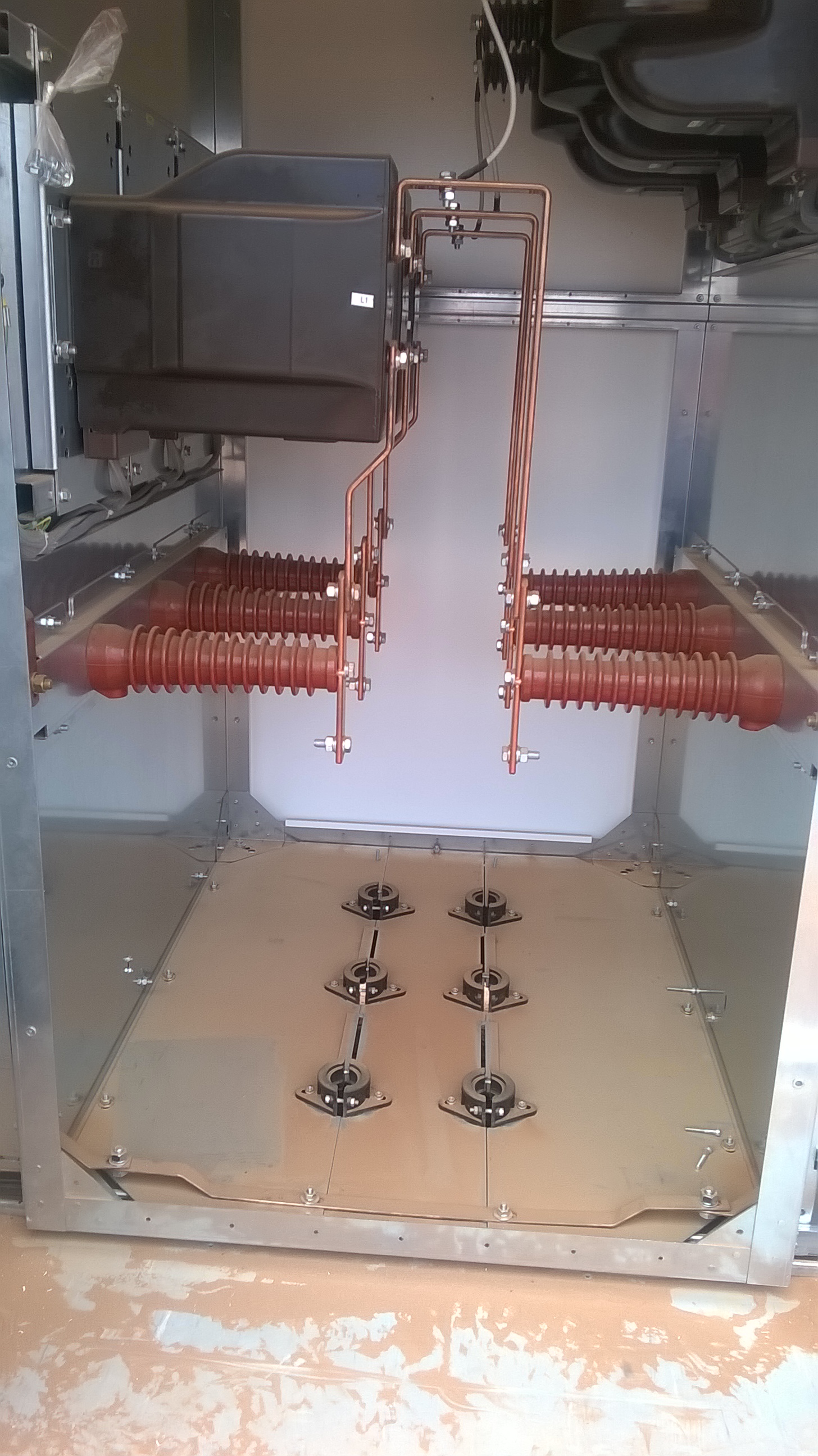
The Gland plates in the current transformers – perfect for three single core cables, not so good for a single three core cable.
One of the positive aspects of the installation is that the subcontractor we are using. Broadspectrum are engaged by JH to do the HV and also by our subcontractors VDH and Aalborg who are responsible for the greenhouses and solar energy system respectively. Although this was not planned it does mean that a lot of the potential issues between the various scopes of work, in terms of gaps and interconnectivity have been elevated. Also as the subcontractors are both form overseas it ensures the work carried out is to Australian Standards.
 Holdfast Training Services Trial Blog
When you say that the ‘point of common coupling’ was moved 6km further upstream presumably that was just a testing point and didn’t mean JH had to install that 6km of cable?
JH appear to do a lot of free issuing of equipment. Do they have problems with over buying for jobs? It doesn’t sound like the purchasing department are up to much. By the time the accountants have transferred equipment from one project to another they are costing time and money. Alternatively if they are not doing this then the metrics upon which projects are measured are likely to be skewed at board level.
Henry’s observation is a good one, there were obvious opportunity costs for the project associated with using the “spare” equipment from other jobs but to call it free hides the fact that JH have had to manage and account for the material, store and maintain it and presumably pay for transportation to your site.
How does JH track this and against which project is the accounting done? Is there any way of finding out whether JH actually saved money overall?.
Henry – Yes, that’s right, it is just the point where the measurement is taken. I’m not sure if over estimating quantities is a generic problem across JH. I do know I have over 400m worth of spare GRP pipe that we are going to have to pay some one to dispose of. When I checked why this had happened the procurement team passed it back to site, saying someone told them we needed it. As the CAD file shows ever section of pipe there should be no reason for this.
With regards to the finances, I don’t think there is an internal way of tracking this movement. The cost of the items is already absorbed to the previous job, as far as I am aware it doesn’t get transferred across, so yes there is an element of skewing. With regards to weather we are saving money, personally I don’t think we are. I know the cost of moving the five containers containing electrical gear was $45,000. If you add on costs of cranes for unloading, redesign costs to make sure it can be used and the fact that three containers worth of kit is still sat here and probably not going to be used, I doubt any actual savings will have been made.
There doesn’t seem to be an internal system for tracking this type of transaction, it all seems to be done by word of mouth.
If anybody wants some GRP pipe let me know…
Matt,
Interesting to hear you too are having gland issues… I too have experienced the issues of ‘free-issuing’ of equipment.
My example is the temporary construction power distribution boards, where the procurement strategy seemed sensible at first but has lead to all manner of issues.
Apart from the almost identical cost the intent was to purchase the boards from a different subcontractor opposed to hiring from the one actually subcontracted to do the works, so that JH could then save costs down the line by subsequently free-issuing to future projects.
The upshot is a lot of the boards are damaged and probably not repairable/useable – so is there really a saving? I doubt it.
Hi Matt
Can you get the calculations for the earthing of the substations?
Matt,
Who were you in negotiation with at SAPN with regards to the delay of permanent HV power to site? I’m presuming it must have been someone in a distant office otherwise it would have been very easy for your bluff to be called with regards to not having transformers on site and therefore being in mutual delay. We’re facing a similar problem on our site, although it is the client delaying the installation.
John, I will chase them down. They are currently in the process of digging the grids and some “long welding rods” were delivered last week.
Rich, yes the negotiations were done between one of our national construction managers off site. The only representatives we see on site are the SAPN workers.