Archive
Similar…..Only Bigger
At the end of the second week I find myself in a similar situation to Ryan as I too am now fully immersed in Cross Rail although we have yet to truly establish who’s shaft is truly bigger.
I am attached to Lain O’Rourke team working on the C502 Contract which is the construction of the Liverpool Street Station ventilation and services shaft at present but is due to expand to include the Liverpool Street and Moorgate Cross rail ticket halls in the near future. I will not repeat Ryan’s intro to the Cross Rail act but would refer you to his last blog if you are interested.
The Liverpool Street Station ventilation shaft is a top down build comprising of 12 levels over a depth of 52 metres. The shafts purpose is to provided ventilation, maintenance access to platforms for E&M services and to act as emergency access and egress from the Cross Rail tunnels.
At time of arriving on site all piling work has been completed and the capping beam had been cast. A working surface for the first mass concrete pour had been constructed and the steel fixers and carpenters were commencing fitting of the first reinforcement cages in preparation for the pouring of the first slab of the main build.
Following a comprehensive week of induction and Health and Safety last week I have finally been set to work and given the responsibility for rebar detailing for the future slabs, columns and beams as the project progresses. Key to this role is a clear understanding of the construction sequence and understanding how the various structural elements of the shaft will be tied together. Neither of which I am fully up to speed with just yet….some more reading required.
In addition I have been made responsible for a temporary shaft from which another Cross Rail will injection grout in order to stabilise the ground for tunnels that will run next to the site. At time of arrival the main slab had been poured and the excavation beneath the slab had almost been completed. First task has been to break out the concrete in the piles to find the couplers from which the bottom slab rebar will be connected. The couplers were put in place with the reinforcement cage through a bentanite slurry and then concrete poured to form the piles. It was not a surprise to discover that some of the couplers were either missing in action or misaligned. For these the concrete piles have been drilled and rebar starter bars have been resin fixed into the piles. Begs the question why not drill and resin fix all starter bars to avoid breaking out the concrete piles….answers on a post card.
Europe’s biggest construction project…no biggie!
Following a period of leave, which I mostly spent in a darkened room recovering from the Phase 1 onslaught, I joined the CrossRail project as part of the BamFerrovialKier (BFK) Joint Venture.
Proposed as one of the most significant construction projects ever undertaken in the UK, CrossRail is designed to increase rail capacity in London by 10%, slashing journey times and bringing large areas of regeneration. The route will run over 100km from Maindenhead and Heathrow in the west through to Shenfield and Abbey Wood in the east.
The route will incorporate 38 stations, 9 of which will be new builds and a number more will receive signifincant upgrades. Approximately 1.5million people will be brought within 45minutes of central London and the route allignment is designed to connect the city’s key emplyment, leisure and business districts.
The Crossrail Act 2008 formalised CrossRail Plc to act as the ‘client’ and is in effect Transport for London under another name. The scale of the project ensured that separate contracts were let which defined discrete elements of the overall build. The construction program in outline is shown here, if you’re having trouble sleeping, so I won’t go into it any further!
Crossrail let a number of contracts to the BFK JV which largely comprised work at 4 locations: Bond Street, Tottenham Court Road and Farringdon stations, aswell as an maintenance and emergency escape shaft at Fisher Street (where Mike Burton made his name!) bfk stations
In outline, and very basically, the contracts hierarchy is as follows Contractual Relationships. The contracts are all NEC3 forms of contract which offer inherent protection to the many small contractors which work for BFK. The contractual relationship with CrossRail Plc, acting as the client is ‘target cost’, but one in which CrossRail has added a number of ‘Z’ Clauses which make it one of the most onerous that the QS team here has seen. According to the Kerry, the AQS here BFK have taken it on the chin in order to secure the contract, but it is looking highly likely that they will make a loss come the end of the project. As an aside, Kerry is not only a commercial ninja, she is also devastatingly attractive. Whilst Greg is clearly a ruggedly handsome man, I am suddenly very interested in the contractual considerations of the CrossRail project……
Coming right down to my level, at the coalface, I’ve been attached to the Sprayed Concrete Lining (SCL) team in the Head Office at Hanover Square. SCL will be used to stabilise the ground around the platform tunnels, cross tunnels and main concourses at each station location. Sprayed concrete is a mixture of cement, aggregate, admixtures, accelerators and water projected at high velocity from a nozzle which will produce a mass directly applied to the substrate. For the CrossRail tunnels, a number of layers will be sprayed, which include a primary and secondary later, regulating layers and waterproofing. Each layer is dictated by a different specification and a bespoke mix must be developed tested and endorsed by CrossRail.
Astonishingly, these mix designs aren’t yet in place with the exception of the primary layer. The ‘Eye of Sauron’ has turned on the massively undergunned SCL team, who I think are hoping that I may be their saviour. Little do they realise that I was too busy shovelling Mrs Hoopers home baking into my face to pay much attention to the concrete lectures. Sorry Richard!
So my role will intially comprise of running the concrete testing procedures in order to get the Material Compliance Reports endorsed ahead of spraying the secondary lining. Look forward to some good TMR fodder related to why the mixes are repeatedly failing due to low fibre content, and poor flexural strength. Following the acceptance, I’ll be managing the spraying at Tottenham Court Road ahead of moving down to Farringdon later in the year.
Have you got a spare £2,915,000 for a 3 bedroom apartment?
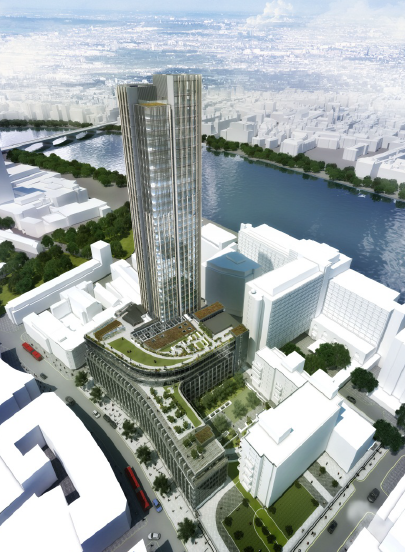
I started last week on the South Bank Tower in London with Mace Group. Normally as PET students we work with a principal contractor that will actually do some construction themselves. Not so with Mace. As a construction management contractor, they are the principal contractor but all works are sub-contracted. With staged tendering throughout the project this means the client gets the best deal (theoretically).
What does this mean for me?
Will I get enough experience to get through CPR? Well I believed so before the attachment and I still do so now one week in. The post I have assumed is Assistant Construction Engineer. The Construction Engineer and I are responsible for all temporary works on the site, and also all Mace sites south of the River Thames including the Tate Modern extension. My principle focus is the Tower, but as with all sites there are lots of problems that need temporary works input.
Some background to the site.
CIT Group purchased the South Bank Tower in a joint venture with Jadwa Investment (a Saudi investment company) in June 2010. Since then KPF were contracted as the Architect and Adams Kara Taylor as the Design Engineers.
Works include a 12 storey extension on the existing brutalist designed 30 storey reinforced concrete tower block built in the 1970s by John Laing Construction Limited. This will be mixed office and residential space. Apartments start from £900,00 for 1 bedroom. The podium building (with commercial space) at the base of the Tower will have a 3 storey extension. There is a new basement, as well as a link span between the podium and the Tower.
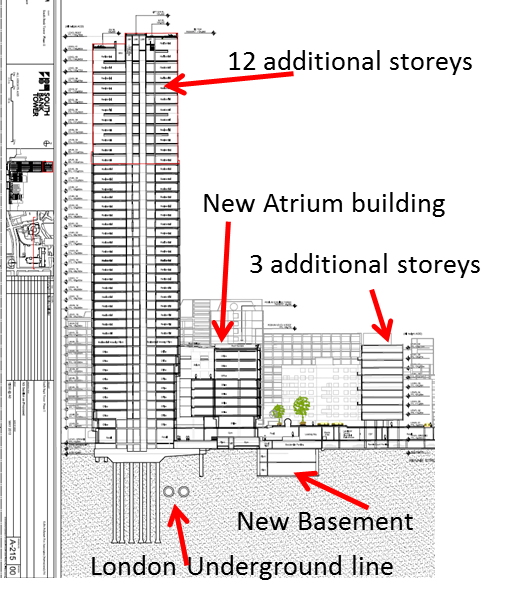
Towards the middle of next month J Coffey (sub-contractor for the core reconfiguration) will complete all works up to level 30. This will allow PC Harrington to setup their slip forming rig, and hopefully start slipping at the start of April.
The designers (Adams Kara Taylor) have not designed for any temporary states during construction. They only ‘do’ the finished article and check temporary works plans as satisfactory. So, on my plate I have the erection of Tower Crane 4 (TC4) on level 42 to plan once the slip is complete, tying Tower Crane 1 (TC1) to the core at levels 28 and then 34, the temporary works on the basement (that is remarkably like Ex Cofferdam), core alterations to the podium buildings to consider, the foundation plan for tower crane 3, and the grillage design for a crane on top of Lambeth Met Police Station.
So in conclusion:
I understand this is a different approach I am taking to Phase 2, as I am not directly managing a task, but there is plenty of opportunity for me to do this later in my 10 months. Right now I am learning; the complexity of the project, the real engineering language that civilians use, applying my understanding of engineering and attempting to do so in a time efficient manner.
All
If you can face reading more posts – I post at http://www.roselliott.wordpress.com
I’ve included some photos and a timelapse of a bridge move which you may find interesting!
RE
“Everything is Awesome!”
I am actually enjoying being in the design office. Not because of the hours of never ending spreadsheets which mushroom in to new ones every time you think one is done. Not because the architect changes the size of the building every time I log on which really mucks up your heat and cooling load calculations and means I have to recalculate everything daily. It is because sometimes I get the chance to be part of something unique and world famous.
2 weeks ago I was in West Point as part of the mechanical consultancy team from Baltimore. My line manager and I were invited to attend a Quality Assurance review for the new barrack block which New York District are taking the lead on. West Point is enormous. Granted it runs 4 year college degree schemes and is not just a military finishing school. This place is built to last and actually has Ivy League Status (3rd in the ranking after Harvard and Princeton). Started by the Corps of the Engineers in 1802 following the Revolutionary War with Britain, it has been a seat of learning since the Sausage Factory was merely a prep school and is expanding. They need more accommodation
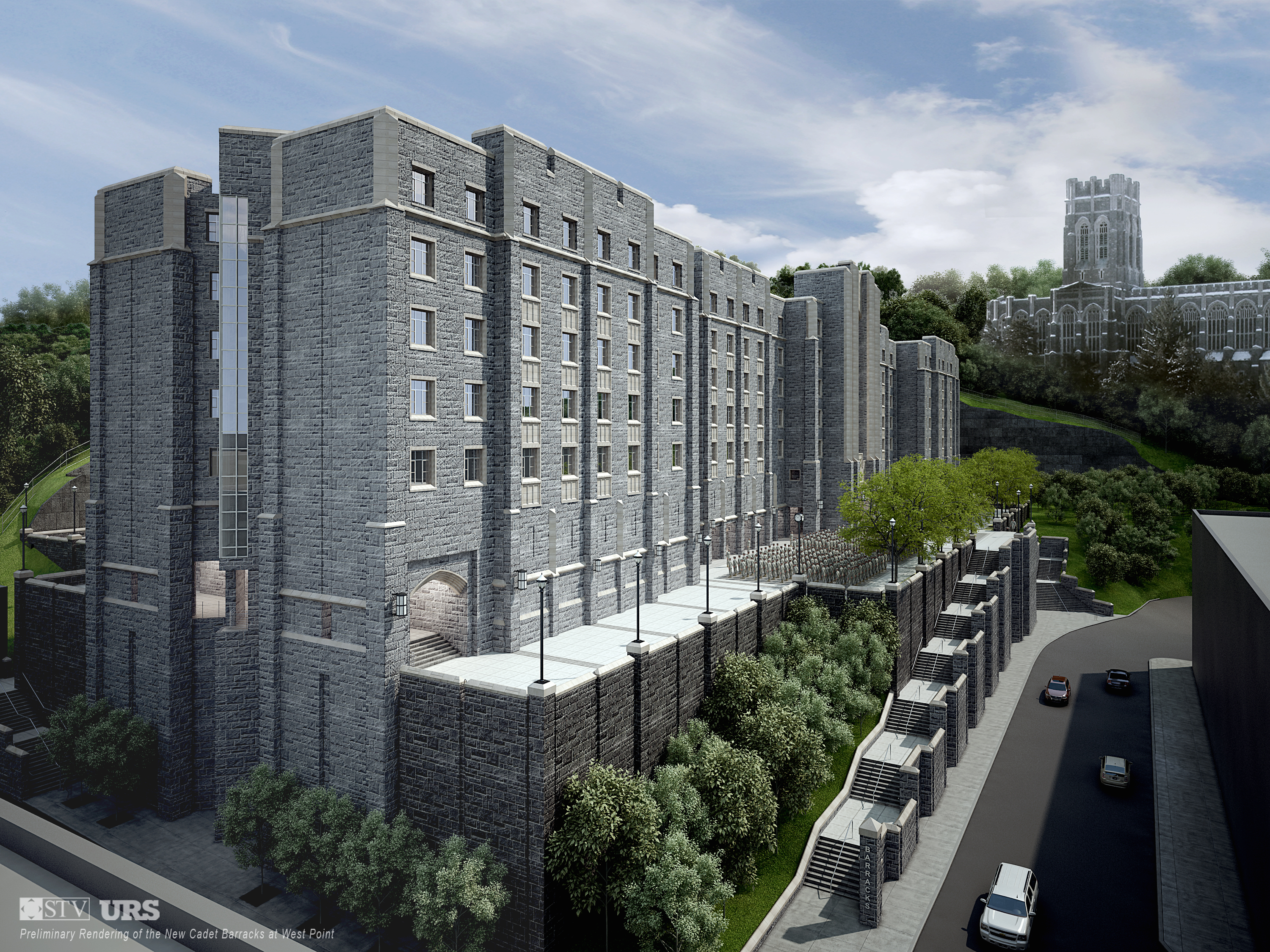


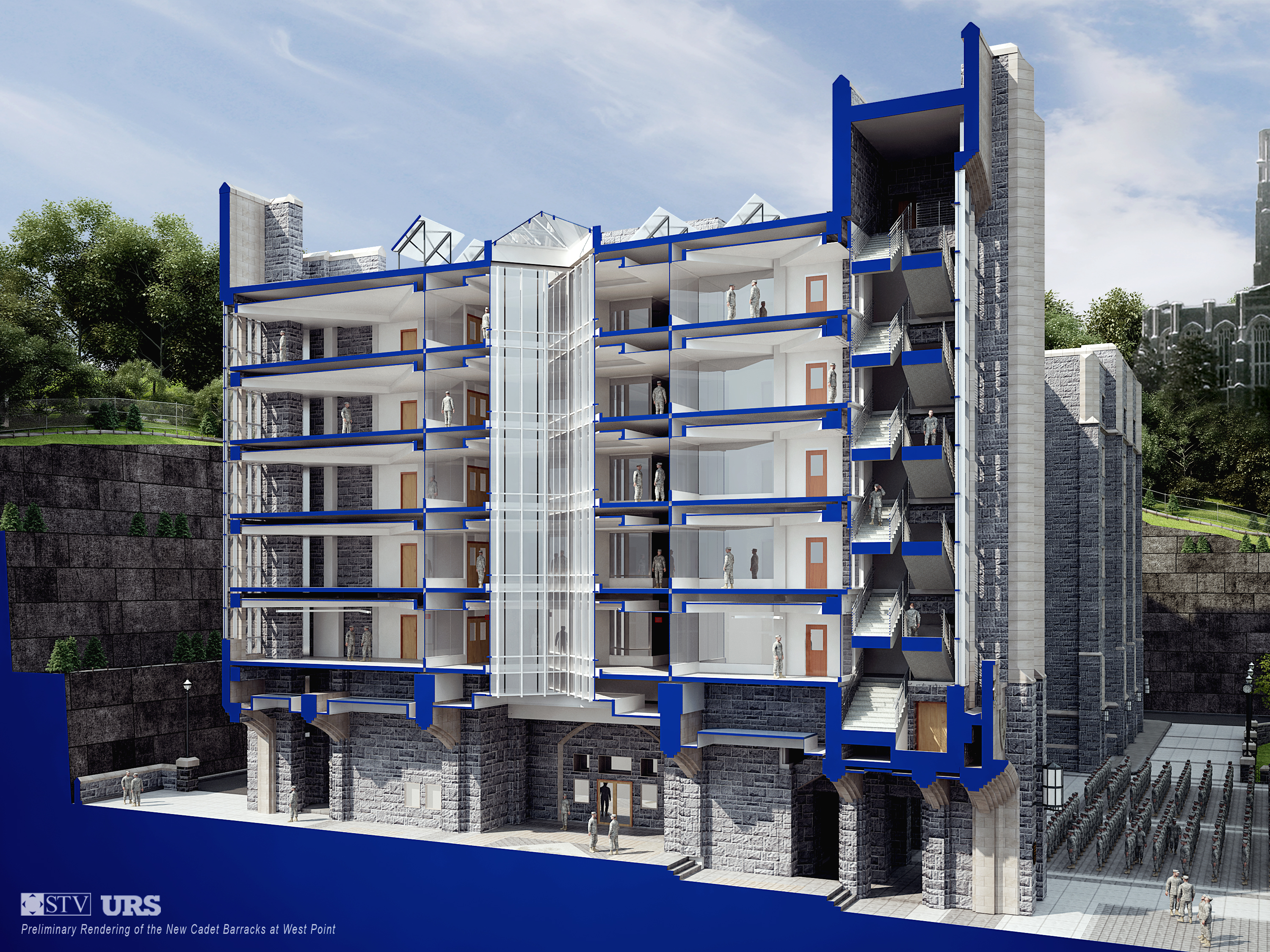
Some Renderings to show how the new barracks will look.
The new building philosophy is to make buildings as green as possible (ideally to 0% emissions) by reducing energy loss and increasing efficiency (hence lots of glass and big open spaces to circulate air more freely). Sadly PV installations have been rejected (the generals over the river Hudson didn’t like the idea of seeing the stony fortress with sparkly roofs) and geothermal not practical (there is surprisingly little space for the extra outhouses and the place is built on sheer granite cliffs) so efficiency and use of natural cooling and heating are the key. So how do I fit in? The new buildings are all to have radiant flooring for cooling and heating which is very bold. A system of pipes set in the concrete floor laid in a topping slab 8 inches thick through which hot or chilled water is pumped to provide the necessary comfort conditions. So in heating season the floor provides radiant heat and in cooling the ceiling absorbs away the heat and cools the air. This system still requires a boiler and chiller but as the energy transfer is through water they are smaller and losses transferring the water to the rooms are considerably less. A Dedicated Outdoor Air Supply (DOAS) is necessary to prevent condensation build up but this is a fraction of the size of a standard ducted air system. The problem is the designer nominated has never designed this system before. So we were there as technical experts to asses the the viability of the system because if it is successful this system will be used in the refurbishment of all the living accommodation. Granted, everything my Line Manager and I knew was from 5 papers we read before arriving but it was enough. The main concern was raised by the Head of Maintenance who, until now, has only ever managed buildings with big air handling units using fan coil units to heat and cool the rooms. Big ducts and inefficient fans with big chillers and boilers make this an inefficient system but as the the building maint teams are full of guys nearing 60, Head of Maintenance is worried about training them up on a new system.
The rest of the team was their to review the project management plan, the general management processes and the commissioning process (which New York District want to do themselves). This internal review takes members of other districts to check the process, providing the sanity check that the whole project is going to work. This is an interesting concept because they have the manpower to achieve this, especially as New York is a tiny District with only a handful of projects going on. So after a foot of snow trapped us in the hotel we blitzed through the design and came up with the following recommendations for the radiant floor system:
The rooms should not have switches on the windows to turn off the system. The rooms could still be heated/cooled with out significant energy waste (the windows are the size of cat flaps anyway!) but a dew point sensor needs to be installed so that the system does cut if the room reaches dew point to prevent condensation from building up.
The current floor design calls for a layer of insulation between the topping slab and the structural slab. We think that putting the pipe system in the structural slab will make the cooling ability of the system more efficient because there is less thermal mass for the cooling effect to pass through. The current design anticipates the floor will cool the rising hot air when most cooling takes place in the ceiling. In the top floor an extra cooling slab is needed in the ceiling to ensure that these rooms benefit from the cooling.
The design needs to be reviewed by someone with technical experience – ASHRAE have been carrying out studies recently on the system to establish the best way of achieving the effect but there is not a lot of experience in this country in design.
The recommendations were accepted and we even managed to convince the Head of Maintenance to talk to Dartmouth College (New Hampshire) who installed this in 2006 where their head of maintenance was equally dubious but now loves it particularly because there are no fan coil unit filters to be changed from the top of a step ladder! Construction has started on site and they are having to blast away 70,000 tons of granite cliff to make room for it.
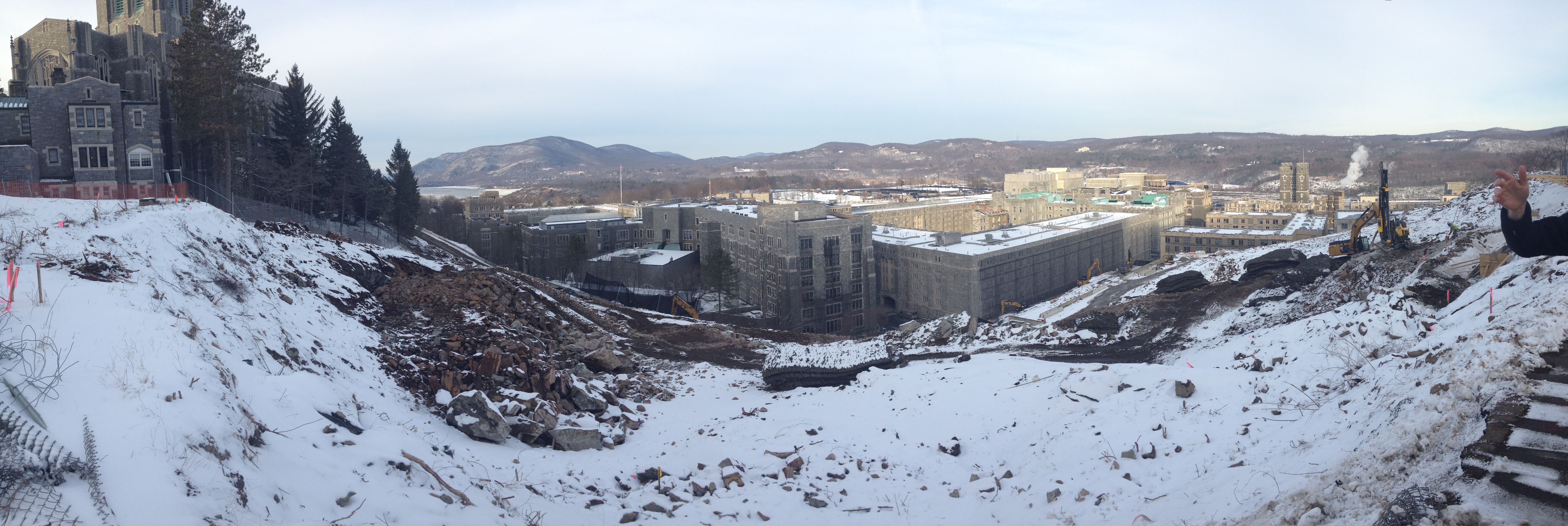
The site today. Note the big bundles used to tamp the explosions and the explosive drilling rig on the right.
Meanwhile back in Baltimore the Marina is still plodding along. Despite a few deadlines passing we are all getting extra time especially because the architect changes the design everyday. My solar wall has been canned because the architect doesn’t think the external wall will take the weight which he could have factored in if we had been involved for the start of the process and not at the 30% point. We have now sized the VRF system but still have to work through all the spaces that don’t need VRF, work out the exhaust rates, calculate make up air rates, add gas radiant heaters to work areas etc. My mentor is getting obsessive about some really trivial details which is also slowing me down. Currently he is planning to upgrade the current portable dust collector with an industrial grade wood mill sawdust extraction system for the saw bench because his only reference book on the subject is the Guide to Industrial Ventilation. He also asked the user if they would like the new ferrari system which they are now keen to install. In reality the current portable system more than meets the needs of the new users who only use the saw once a week max. We have had 2 snow days which is another reason we got more time particularly as New York had more snow days. This was even after the Project manager in New York called the head of design in Baltimore to question our ability to complete the job but then went straight to the head of engineering (the equivalent of a captain going to a full Col because Troopy might be late). Needless to say the PM is now back in his box.
I have been deemed ready for my next project in March which will now be a Visitors Control Center (think large guardroom with conference rooms) and if there is time another barrack block renovation in Aberdeen complete with “Collabratorium” meeting rooms. Lots to do.
And in other news:
Today here was a stabbing in the 7/11 over the road from the office which was a little out of the ordinary even in Baltimore just like the tornado that touched down 50 miles south of us. Puxsatawny Phil predicted 6 more weeks of winter on Feb 2nd and despite a 39% success rate the little bugger was right this time. The polar vortex is back next week. We managed to get a long weekend at Disneyworld Florida and stayed in the Shades of Green resort specifically reserved for serving and retired members of the US armed forces for next to nothing and a discounted park ticket. I am still the best Dad ever especially after selflessly taking my daughter to meet all the princesses. And the title of this piece is the theme tune to the new Lego movie which I took the kids to see and can’t get out of my head, but it seems quite apt.
Work Life Balance
As I sit in the office on a Saturday, I find the below very appropriate…
Get off my land, you can’t park here and what’s this big pipe?
This week I have established that the crux of this construction project will not be the temporary works designs, rubbish ground conditions or water, it is going to be one of frustrating logistics, the snakes nest of buried services on the site and getting in each other’s way! Due to the number of different phases of the Power Station Redevelopment there is an unusual hierarchy of contractors working on the site which I have likened to a Regiment in PPP with Holdfast:
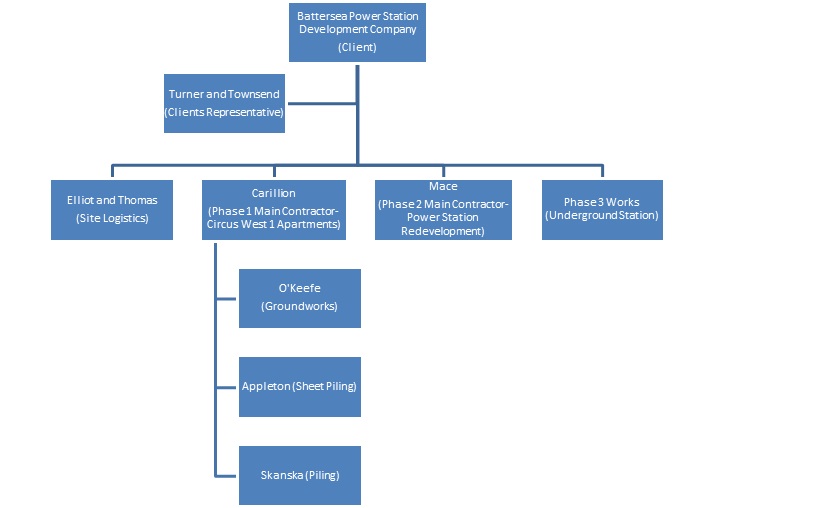
So I see ourselves in Carillion as a Squadron HQ working to achieve the Regiment’s (Client’s) main aim of the development of the power station and surrounding area. As the main contractor for phase 1 we employ a number of sub-contractors to complete various elements of the tasks. I liken these to the Troops in a Squadron and the site engineers and project managers are like the Troop Commanders. We tell them to do something, they then fill out loads of paperwork (risk assessments and method statements) that I check and send back to them red-penned, they get the go ahead to do the job and I check it-just like being a Sqn 2IC again! They have Black Hat Supervisors who are like the Troop Staff Sergeants, the Banksmen are like the JNCOs and the labourers are the Sappers. The Contractors (Troops) try and pull the wool over Carillion’s (Sqn SHQs) eyes to get away with minimal work!
The unusual part about this project is that Carillion are also part of the big picture that I class as the ‘Regiment’. We are just the 1st part of the redevelopment that will include renovating the power station into retail, offices and residential and the building of an underground station on site. Therefore the client employs Elliot and Thomas to control site logistics. They man the security gates, control communal areas of the site generally manage the land. I liken these to Holdfast for two reasons: the first being that they seem to do all the odd jobs that we used to get soldiers to do; the second being that to get them to agree to anything requires a ridiculous amount of paperwork and they are about as flexible as a piece of concrete! My Monday morning started with me spending 45 mins trying to negotiate where I could park the vehicles of my GPR surveying team. Despite me asking nicely they were not allowed to park in the space nest to the gate they were surveying near, instead they got sent about 1km around the site, into the muddy groundworks box, through the wheel wash back to 50m from where they started. Two days later I got a call from their boss to say that we had put a pedestrian barrier ‘on their land’ that I had not filled out a permit request for and London Underground wanted to put a borehole there. Today I found out it was my land and I was well within my rights to be there!
The rest of this week seems to have been spent organising moving a fence back 3m to fit my HV substation in. This requires a GPR survey, Network Rail Approval of the risk assessment and method statements, confirmation of Japanese Knotweed removal and the moon to align with Venus and some other stars before it gets done!
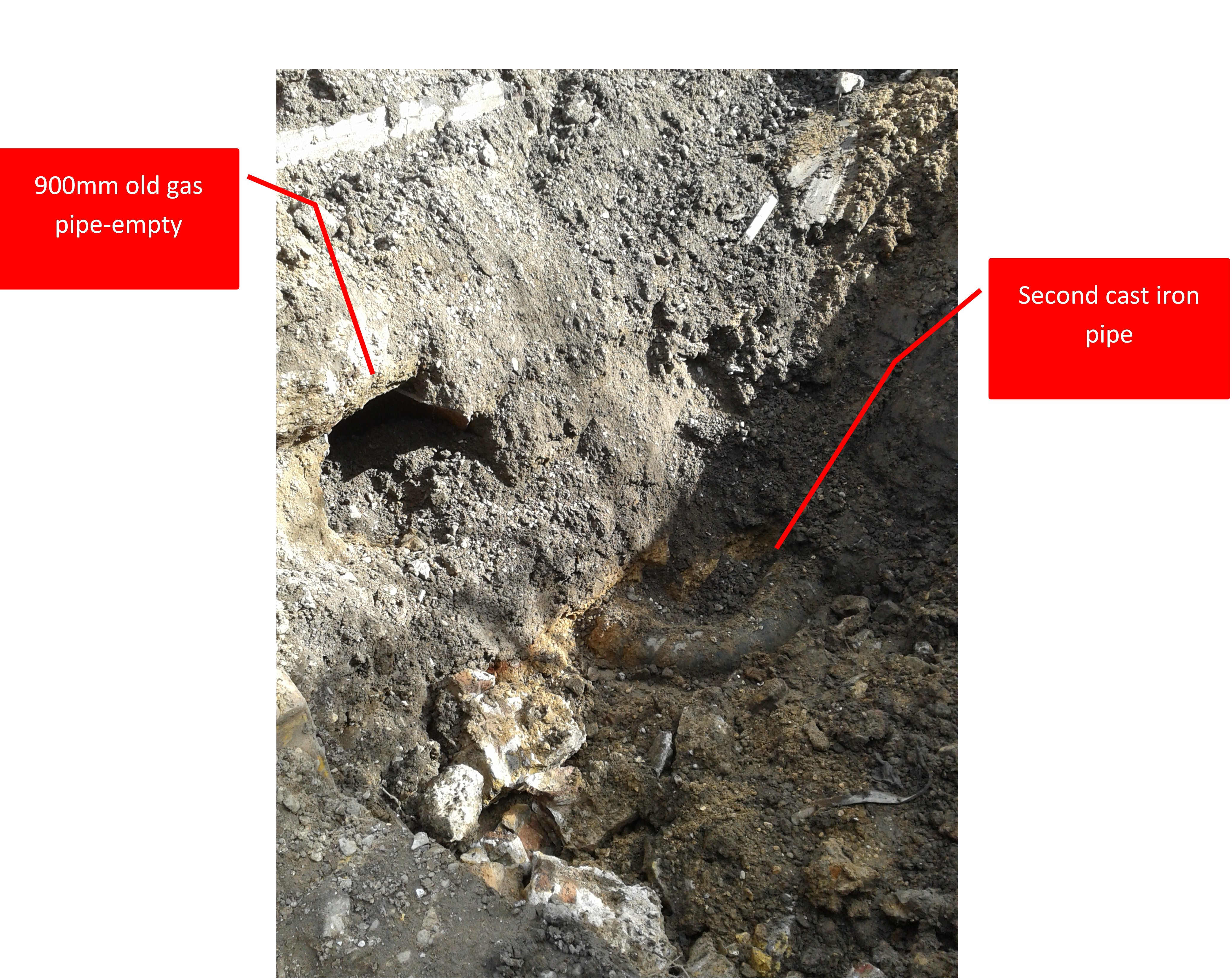
And the most exciting part of the week was the unearthing of the big fat f-off pipe. Shown as a ‘faint’ signal on the GPR survey the boys uncovered this 900mm diameter cast iron pipe:
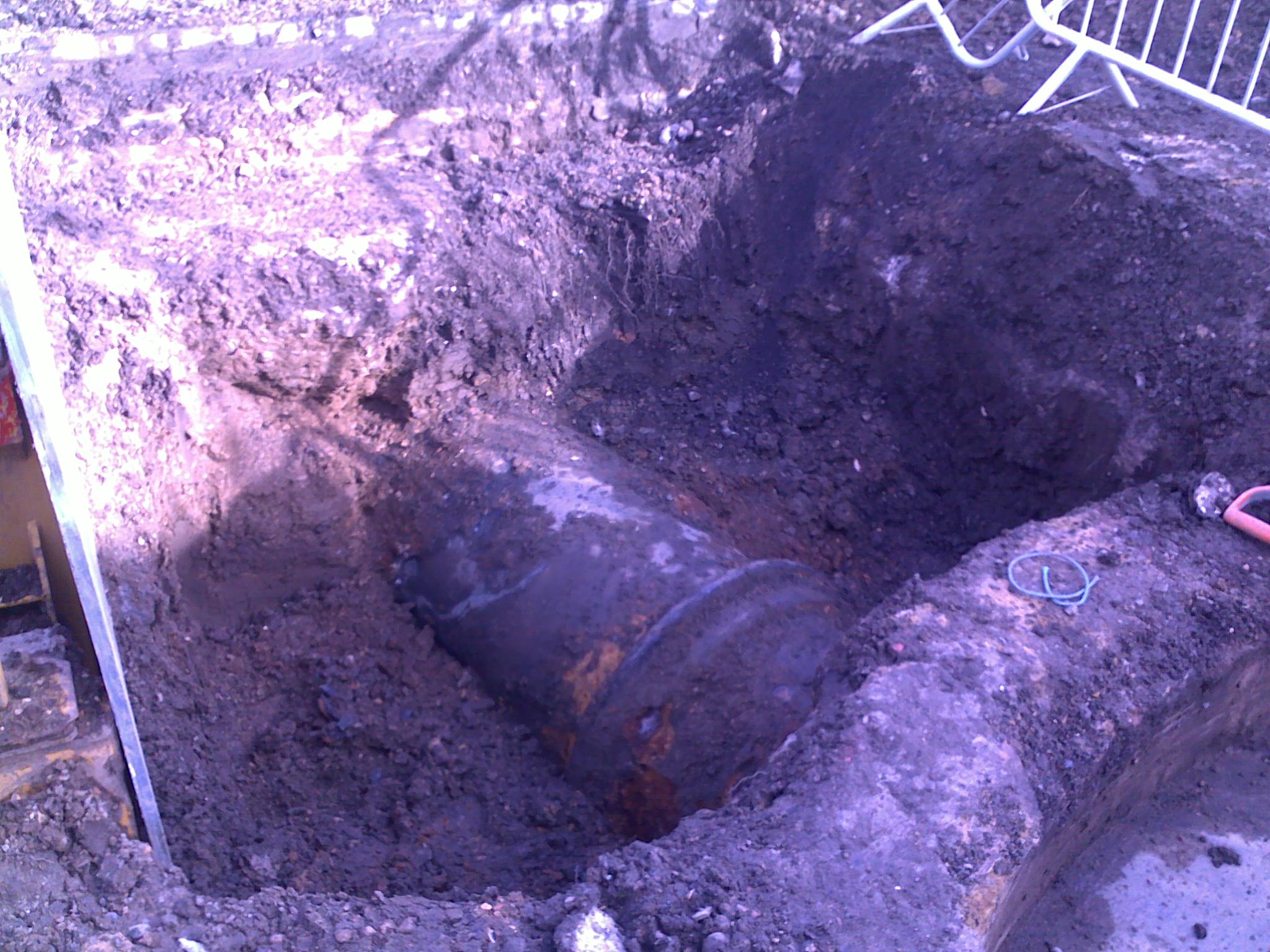
We then had to wait for Carillion Utilities to come and tap the pipe. This involves strapping a device which adjusts the pressure to ensure that whatever is in the pipe doesn’t leak out when they then hand drill into the pipe. This pipe proved to be an empty gas pipe probably from the old gas works the other side of Battersea Dogs Home. Now able to progress with the already 1 week behind schedule drainage they broke through the old gas pipe shown in the left hand side of the picture just in time to find his little brother hiding underneath! My money is on another disused gas pipe but we will have to wait and see what the experts say as the clock ticks and the drainage slips even further behind time!
P.S. My other key learning points this week have been:
-No longer can you trust people to not get hit by a big truck even though you got taught how to cross the road at around age 5. Pedestrians must be enclosed in steel barriers that need calculations to ensure they don’t get blown over in the wind, tsunami or other predicted natural disaster.
-Workers will mutiny if they don’t have the following: a smoking shelter within a 5 min radius of their work area (which also required temporary works design and a lift plan despite being a 4 man lift), a toilet with hot running water also as close and a moon on a stick.
-I should set up some kind of testing and inspection business because you can make a lot of money out of it. So far I have 3 different people getting paid to come and look at the foul water drains we are installing, all doing exactly the same thing!
Useful? Or am I a dinosaur?
In an attempt to get back on subject and make my blog sound less like an internal monologue that has spilled out into the public realm.
As DII (at least the last time I looked) is stuck in the Office dark ages I don’t think many will have really used some of this stuff, but you RSME issued computers, your work computers and probably any personal copies of Office are probably more up to date so this might be useful.
The ‘References’ tab on current versions of Word seems to be particularly useful and I wish I’d found it earlier.
References. I’ve been playing with it recently and it allows you to enter your references in a central location and then cite them in the main body of the document with a simple click of the mouse and seemingly to Havard standards! It will then auto-generate a references list wherever you want to put it in the document in the correct format.
Captions. Using the ‘Insert Caption’ function you can tell Word whether you’re annotating a Figure or a Table and it will auto number them, removing the problem of manually re-numbering if you decide to add another photo at the beginning of the document. Word will then auto-generate a list of Figures and Tables for you and give it the correct page number.
Cross-referencing. Should you need to refer to Figure X in your main body of the document you can do this using the ‘Cross-reference’ option it works for paragraphs too, it will then know to look in the right place. I don’t think this auto-updates BUT when it comes to finishing the document it seems that you can just right click on the entry in the main body and ‘update field’ it will then refresh the para or figure number for you.
I don’t know if I’ve just been a member of the slow reading class here and you’re all well aware of this or if everyone else has wasted time cross-referencing documents and manually generating contents list. If it’s the latter then hopefully this will make life easier for you all.
Old Bridges, New Bridges, Socks
Since last blog, things have not progressed massively with the work I am doing. I have completed the culvert sizing a preliminary draft reports for the 9 small bridges in South WA, and BG&E have just be given the contract to assess 14 more. It is not difficult work, just time consuming. BG&E are happy to take it currently as there is little on the plate for the waterways department and it keeps a regular client happy.
I have recently picked up a feasibility study on a Bridge up North in a town call Three Springs. It is a simple 2 span flat slab structure over a seasonal drainage channel that has been assessed by Main Roads WA (MRWA) as reaching its capacity. The reason for this is a recent revision of the standard vehicle loads. From the previous T44 classic truck load, it is now a fictional vehicle based on a 3 trailer road train with an additional UDL along its length. This puts the bridge in the critical basket.

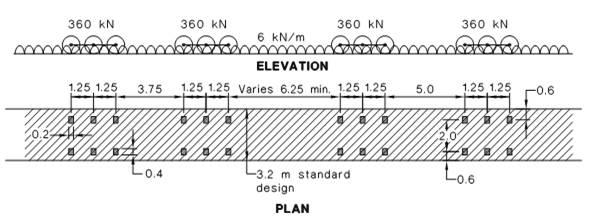
The plan is to check the capacity of the existing bridge then apply several methods to ascertain the effect, and price all against the cost of replacement. The bridge has been assessed as having a strength of 30m/mm2, and the steel a strength of 247N/mm2. Half the battle is working with awkward numbers from converting to metric after calculation in imperial units in 1960. I am using a grillage analysis programme called ACES with though better than QSE is still pretty cumbersome and crashes frequently.
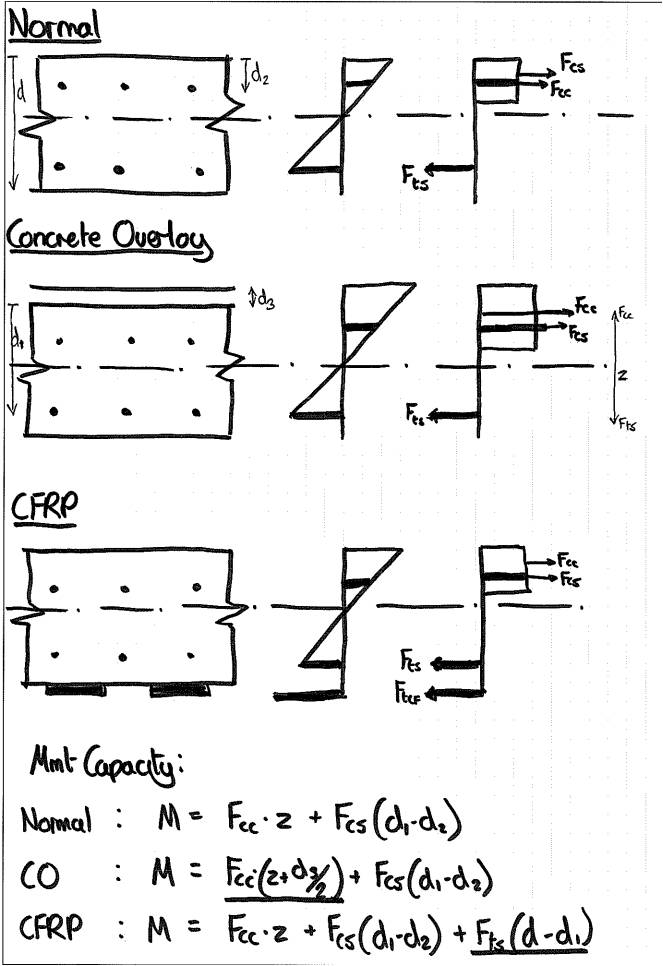
The methods will be: (1) A concrete overlay slab. (2) Carbon Fibre Reinforce Polymer (CFRP) strips on the soffit/surface.
The overlay slab works by increasing the depth of the section thereby increasing the amount and quality of concrete in compression at the outer fibres. This concrete overlay is keyed into the existing slab by steel -reinforcing bars glued in with epoxy resin and bent at 90degrees to the vertical to allow for shear and stop the slab slipping off. This method works fine in practice if the issue is one of sagging capacity. An additional depth of unreinforced concrete above a large hogging moment will have little effect.
The Sika Carbodur CFRP strips are simply epoxied to the underside of the slab at regular spacings and work as an increased tensile member at the extreme fibre of the section. A quick couple of calculations this morning tells me that the moment capacity of the section can be increased by 30kNm by use of 4 strips per m. This method has the reverse issue of the concrete overlay as it does nothing for a hogging moment unless strips can be applied on the top. In this case it would be much easier. Helpfully Sika provide a downloadable design package to assist.
Cost calculations (uber rough at this stage, and including for labour) tell me that the concrete overlay option will be almost 75% cheaper than the CFRP strips. But this detail will be refined when I can establish exact lengths of the CFRP as they will not be required to run the whole length of the bridge and can be curtailed to suit the induced moments.
See attached sketch for a rough idea of what is going on, but my initial thoughts are that a combination of the 2 would be most appropriate as the hogging moments appear large and a relatively small increase in section depth will give an increased factor of safety for sagging.
In other news, the CEO of the Shire of Murchison is back from holiday, and sent me an email to say she has a lot of money to spend on a bridge. Not too sure how commercially savvy she is as she informed me that she has not read my proposal yet and the BG&E fee has not been agreed. That said, I think the pricing is fair and hope that we will be given the contract next week. To the best of my knowledge there are no other tenders and they need the bridge fast so it bodes well. If won, I will take the reins of the project, hopefully getting some decent PM and contractual experience, with the intent to complete design before I leave.
I walking about the office in socks an Ozzie thing or is this common practice in the UK too?
Off to Bali tonight for the weekend, but not taking my board. I don’t want to do a Corby on the way back!
What Colour is My Parachute or…. Do I have ADD?
I found a document today that says the typical noise level for a quiet office or library is 40 dBA. I tested this figure against the actual value in my office. The mean value in the office was 36.4 dBA which gives you an idea of what it’s like on a daily basis, this absence of noise leaves me alone with the thoughts that rattle around in my head. I’m sure that those of you that know me are thinking they are cynical, overly critical ones and ones about the geeks I’m surrounded by that make me laugh. In truth it’s probably best that conversation isn’t common here; I referred to myself as a retard yesterday which resulted in a few shocked expressions, the only person I can speak to normally here is the ex-Garrison Engineer that has just turned up on the project management team.
Anyway the thoughts that I’m left with have been fairly neutral as I watch me excel spreadsheet countdown the days until a return to normality. Fine ladies and gentlemen of the Royal Engineers are not designed to sit in an office environment like this but those of us on Phase 3 are doing our best to conform. For me this has involved writing 2 reports longer than TMRs, doing design and cat 2 checks. I usually have a number of things hanging around that need picking up and dropping at random whilst waiting for someone else to do something with it. What I have found is that things hang around for a really long time and then suddenly reach the top of someone else’s to do list before the deadline, kind of like trotting along with the fat blokes on a PFA only to realise you’ve got 15 seconds to cover the final 100 metres, or a reverse hurry up and wait arrangement. This REALLY doesn’t suit me, throughout our time in industry it’s natural to consider whether you would want this job, or someone else’s job, and could spend the remainder of your working life doing it, often my answer has been no. I found myself getting a little bored of site although the human capacity for stupidity kept that fresh but now I’m bored beyond belief (even more bored than TELIC when we’d eat huge amounts of sweaty cheese just before bed just to make our dreams interesting). There is a variety of project work to do but it all goes so slowly I find it hard to be stimulated after the initial reading in and then reaching the first obstacle where I’m completely reliant on other depts to move it along. Continually reviewing the same thing over and over with different partial factors is purgatory.
Why is this?
Has a career characterised by office firefighting, exercise planning where I was mostly solely responsible for output and the BGHQ 24 hour planning cycles of CAST and BATUS left me permanently scarred and unable to concentrate on anything longer than a few days? Have I been condemned to trying to find the employment equivalent of University Challenge where I get asked no more than 3 questions per subject? Do I have Army induced ADD? The answer must be no, I’m still writing AERs and TMRs far better than I thought I would manage, I’ve done other things that have had long lead ins so what is it? I can only think that working in an office quieter than the average library is part of the problem. But I think the biggest problem is a lack of complexity or at least the right type of complexity, Nick Fielding will laugh at the concept of ‘enjoying the complexity’ but genuinely I think this is the problem.
So that was an insight to what I have to listen to on a daily basis, if I make it to Jul without screaming it will be an achievement.
 Holdfast Training Services Trial Blog